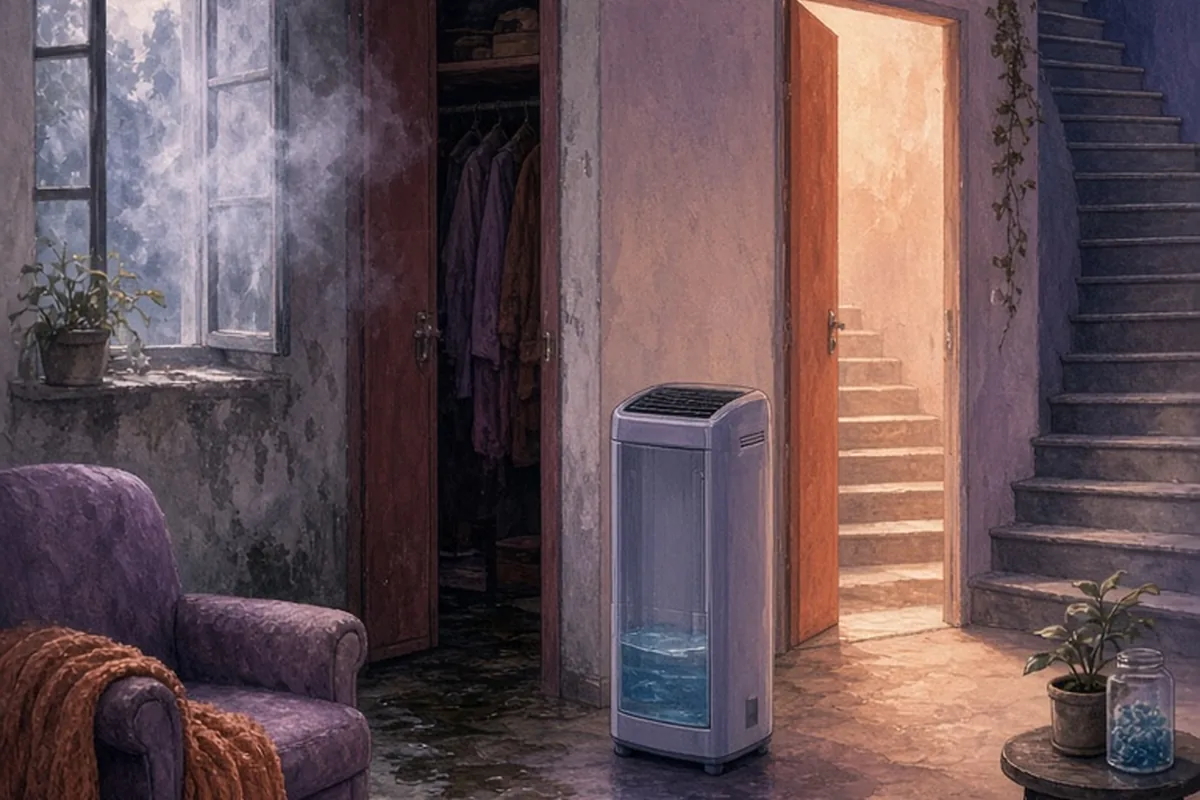
To get rid of moisture, increase airflow by running exhaust fans and opening windows, remove standing water immediately, and use a properly sized dehumidifier to pull excess vapor from the air. In compact areas like closets or cabinets, place moisture-absorbing desiccants, keep furniture slightly away from walls to encourage air circulation, and repair plumbing leaks promptly to stop moisture at the source.
Excess indoor moisture can quietly settle into fabrics, drywall, and window frames, leaving behind heavy air, musty odors, and lingering damp spots. Lowering humidity levels protects your belongings, preserves building materials, and makes everyday living spaces feel significantly more comfortable.
Identifying Where Indoor Moisture Originates
Before applying fixes, pinpointing where excess water vapor enters the home helps prevent wasted effort on temporary solutions. Indoor moisture typically stems from three distinct categories: interior living habits like long showers and unvented cooking, mechanical issues such as slow pipe leaks or roof gaps, and structural intrusion where ground moisture seeps through concrete foundations or crawl spaces.
A practical way to test an affected surface is the foil test. Tape a twelve-inch square of aluminum foil tightly against a damp basement wall or floor with duct tape around all four edges. Leave it sealed for twenty-four hours. If moisture forms on the room-facing side of the foil, high room humidity and ambient condensation are the primary culprits. If water droplets gather on the underside against the wall, moisture is penetrating through the building envelope from the outside, requiring exterior grading or sealing rather than just internal ventilation.
Using Targeted Ventilation to Evacuate Humid Air
Ventilation remains the most straightforward method for removing vapor before it spreads into surrounding living areas. Kitchens and bathrooms produce substantial amounts of steam in short bursts, which quickly migrates toward cooler surfaces throughout the house if not captured at the point of origin.
Run dedicated exhaust fans during every shower and keep them operating for fifteen to twenty minutes afterward to clear lingering moisture from tiles and ceiling drywall. In the kitchen, turn on the range hood exhaust whenever boiling liquids or simmering food. When outdoor weather is dry and mild, open opposing windows for ten to fifteen minutes to create a cross-breeze, which rapidly flushes stale, moisture-laden air out of the building. Note that opening windows during hot, humid summer afternoons or steady rainstorms can introduce additional moisture, so monitor outdoor humidity before relying on open-air venting.
Selecting and Operating a Mechanical Dehumidifier
When passive airflow is insufficient, a mechanical dehumidifier provides active control by drawing humid air across refrigerated coils, condensing the moisture into a collection tank or continuous drain hose. Dehumidifiers are particularly valuable in basements, laundry rooms, and climate zones where outdoor humidity remains high for weeks at a time.
Choose a unit rated appropriately for your room square footage and dampness level. An undersized unit will run constantly without lowering humidity sufficiently, driving up electric bills while leaving surfaces clammy. Place the machine away from walls and curtains to ensure unobstructed intake and exhaust. Aim to maintain an indoor relative humidity level between thirty and fifty percent. Lowering humidity below thirty percent can dry out woodwork and irritate nasal passages, while letting it climb past fifty-five percent creates conditions where dust mites and mold spores thrive.
Eliminating Moisture in Closets, Cabinets, and Small Spaces
Small, enclosed storage areas frequently trap pockets of humid air because they lack natural air currents. Closets with solid doors, under-sink vanity cabinets, and pantry corners are especially vulnerable to stale moisture, which can ruin leather shoes, wrinkle hung garments, and create persistent musty smells.
Replace solid closet doors with louvered options or leave doors cracked open periodically to invite circulation from adjoining rooms. In tightly confined spaces where running an electric appliance is impractical, position moisture-absorbing tubs or hanging bags containing calcium chloride crystals or silica gel. These compounds passively absorb ambient water vapor and collect liquid brine in a lower reservoir. Remember to replace or recharge these desiccants regularly once the crystals dissolve, as saturated units lose their ability to pull further moisture from the air.
Managing Window and Wall Condensation
Condensation forms whenever warm, humid indoor air collides with cold window glass, exterior-facing corner walls, or uninsulated pipes. When surface temperatures drop below the dew point of the surrounding air, water droplets settle onto trim and sills, where pooling water can rot wood and blister paint.
Wipe away morning window condensation promptly using a microfiber towel or squeegee so water does not seep beneath caulk lines. To address the underlying thermal bridge, consider applying plastic window insulation film during colder months or upgrading to double-pane energy-efficient windows. Keep heavy drapes open several inches during cold snaps to allow heated room air to reach window panes, which prevents localized pockets of stagnant, chilling air from condensing along the bottom edge of the glass.
Controlling Subgrade Moisture in Basements and Crawl Spaces
Subgrade spaces sit directly against earth that holds rainfall and groundwater, making them major contributors to household dampness through concrete porosity and soil evaporation. Moisture in a basement or crawl space naturally rises upward through flooring into upper living quarters through the stack effect.
Cover exposed dirt floors in crawl spaces with a durable, heavy-duty polyethylene vapor barrier of at least six to ten mils thickness, overlapping seams and securing them up the foundation walls. On the home exterior, direct gutter downspouts at least five to ten feet away from the foundation and verify that landscaping slopes away from the perimeter walls. If hydrostatic ground pressure consistently forces water through the slab, installing an interior perimeter drain tile and sump pump system provides active water evacuation before dampness can enter the basement air.
Adjusting Everyday Habits to Minimize Daily Moisture Output
Everyday domestic routines introduce noticeable volumes of water vapor into living spaces. Small behavioral adjustments can significantly reduce the baseline humidity load on your home without requiring major financial investments.
Cover pots and pans with lids while cooking to trap steam on the stove instead of releasing it into the kitchen. Keep indoor laundry drying strictly confined to outdoor lines or vented dryers; hanging wet laundry inside on drying racks can introduce several pints of water vapor directly into living areas. Additionally, group houseplants together in well-ventilated rooms and avoid overwatering them, as plant transpiration and damp soil surfaces steadily release moisture into the surrounding room.
Illustrative Scenarios
Resolving Persistent Closet Moisture and Odor
An illustrative household noticed a persistent musty odor and damp clothing inside a master bedroom walk-in closet located against an exterior north-facing wall. The closet was kept tightly shut, and heavy coats were packed closely against the drywall. After verifying there were no active plumbing leaks, the homeowner replaced the solid closet door with a louvered panel, pulled hanging clothing four inches away from the exterior wall to restore airflow, and placed a refillable calcium chloride desiccant container on the top shelf.
Key point: Combining passive airflow improvements with targeted moisture absorbers eliminates trapped pockets of stagnant humidity without requiring complex structural renovations.
Frequently asked questions
What is the ideal indoor humidity level to prevent excess moisture?
The recommended indoor relative humidity ranges between thirty and fifty percent. Maintaining levels in this range keeps living spaces comfortable while preventing condensation on windows and walls. You can track this accurately with an inexpensive digital hygrometer placed at eye level in your main living area.
Can opening windows make indoor humidity worse?
Yes, opening windows can increase indoor moisture if outdoor air is warmer and more humid than indoor air, such as during summer rainstorms or humid mornings. Only use open windows for ventilation when the outdoor humidity and dew point are lower than those inside the home.
How often should I empty or replace moisture absorbers?
Most desiccant tubs and hanging bags last between thirty and sixty days, depending on the ambient humidity level of the space. Check them bi-weekly and replace or refill the crystals once the active pellets have completely dissolved into the collection chamber.
Why does moisture keep gathering around window sills?
Moisture gathers on window sills because cold outdoor glass chills the warm, humid air inside the room down to its dew point. Poor insulation, high indoor humidity, and restricted airflow from closed curtains combine to cause localized condensation on the lowest, coldest surface.
Your next step
Place a digital hygrometer in your dampest room today to measure the baseline humidity, then run dedicated exhaust fans or a dehumidifier until the reading stays consistently between thirty and fifty percent.