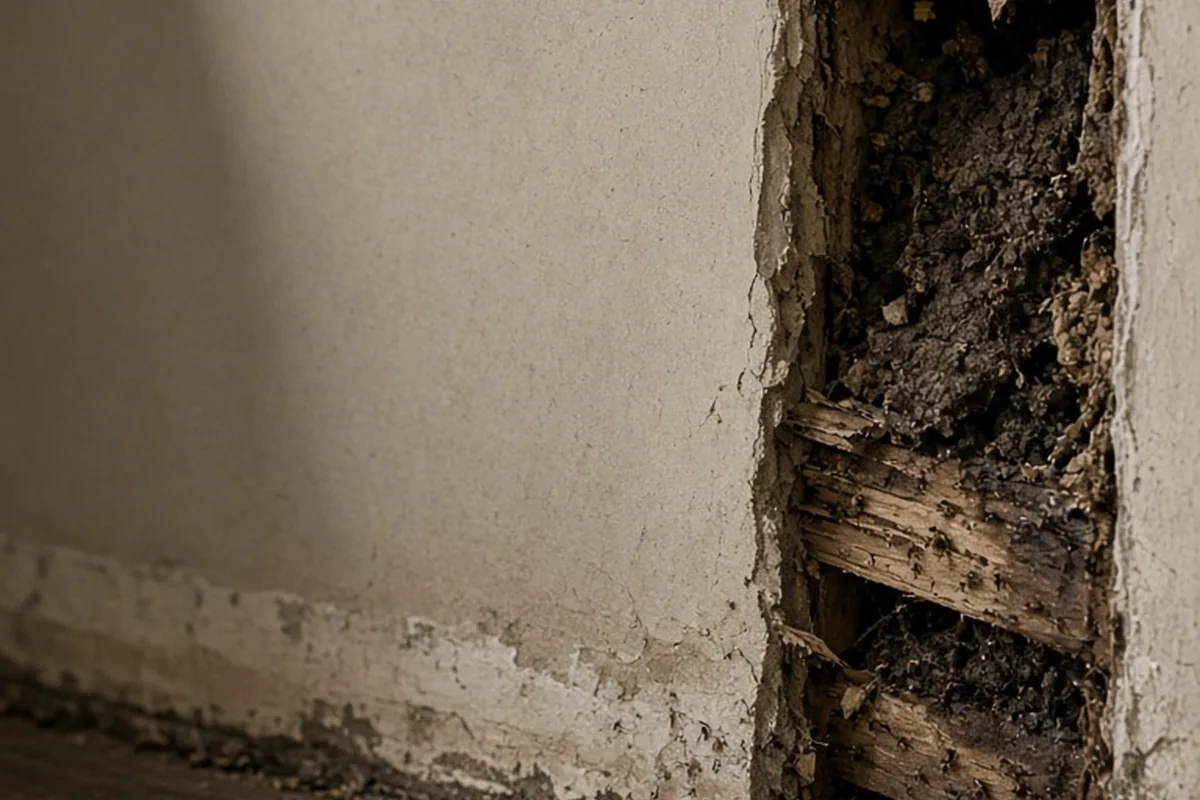
To get rid of moisture ants permanently, you must eliminate their damp habitat and nesting material. Locate and repair any active plumbing or structural leaks, then completely remove and replace the decayed or water-damaged wood where the colony lives. Clean up remaining foragers using vacuuming or targeted non-repellent gel baits. Finally, lower indoor humidity with dehumidifiers and seal exterior perimeter entry points to prevent new colonies from establishing.
Moisture ants are opportunistic invaders that establish colonies inside damp, decaying structural framing, subfloors, and humid wall voids. Unlike pests that attack sound timber, their presence serves as a direct indicator of an underlying water problem that requires systematic moisture control, structural repair, and targeted eradication.
Identifying Moisture Ants and Assessing Colony Damage
Moisture ants, primarily belonging to the genus Lasius, are small insects ranging from yellowish-red to deep brown and measuring between one-eighth and three-sixteenths of an inch in length. Some species produce a faint citronella or lemon scent when crushed, which distinguishes them from common house ants. While homeowners frequently mistake them for carpenter ants or subterranean termites, moisture ants have a distinct single node on their waist and a rounded thorax without the distinct structural indentations seen in other wood-nesting species. Correct identification ensures you choose the proper management strategy rather than applying ineffective generic insecticides.
The primary threat of moisture ants stems from where they choose to live rather than how they feed. These insects do not consume wood fibers, nor do they possess the jaw strength to tunnel through dry, sound structural framing. Instead, they excavate cavities inside timber that has already been softened by fungal decay, dry rot, or persistent water leaks. As they hollow out wet framing to expand their nursery chambers, they push out debris piles composed of coarse wood fragments, sawdust, dead insect parts, and soil particles. Finding these debris deposits beneath baseboards, around plumbing fixtures, or along foundation walls confirms an active nest embedded in deteriorated material.
Pinpointing and Resolving Hidden Water Intrusion
Eradicating moisture ants begins with eliminating the excess moisture that sustains their habitat. These colonies cannot survive in dry wood, so locating the moisture source is more critical than chemical treatments. Common problem areas include slow drain line leaks beneath kitchen sinks, failing wax rings on toilets, flashing defects around exterior windows, and roof leaks dripping into attic framing. In basements and crawlspaces, chronic dampness often results from poor perimeter grading, cracked foundation walls, or missing ground vapor barriers that allow ground water to saturate adjacent floor joists.
To locate hidden moisture, conduct a systematic inspection using a pinless moisture meter alongside a strong flashlight. Check for localized wood discoloration, bubbling drywall paint, soft spots in subfloors near bathtubs, and musty odors behind storage cabinets. Once identified, address the plumbing or structural fault immediately by tightening pipe joints, resealing exterior caulking, or replacing damaged exterior siding. Drying out the area deprives the colony of the humid microclimate required for brood development, causing the population to stall and preventing satellite colonies from forming elsewhere.
Excising Infested Timber and Removing Core Nests
Applying surface insecticide sprays without removing water-damaged wood provides only temporary relief. Over-the-counter contact sprays kill surface worker ants but rarely penetrate deep into saturated structural voids where the queen and pupae reside. When alarmed by repellent sprays, the colony may fracture and scatter into adjacent wall cavities, complicating long-term management. The most reliable solution is the physical removal of the infested, rotted wood hosting the primary nest.
Carefully cut away all rotted framing, subflooring, or sill plates until you reach solid, dry lumber. Have heavy-duty plastic disposal bags ready to contain the rotted material immediately upon extraction, which prevents dislodged ants and fungal spores from spreading throughout the living space. Use a shop vacuum fitted with a high-efficiency particulate air filter to vacuum up exposed ants, eggs, and leftover debris directly from the open wall cavity. Once the cavity is clear and thoroughly dry, rebuild the framing with pressure-treated or structurally sound kiln-dried timber.
Applying Targeted Baits and Desiccant Dusts
In situations where immediate structural replacement is delayed or where nests extend into inaccessible wall voids, targeted baiting offers a practical way to suppress worker populations. Slow-acting sweet or protein gel baits containing active ingredients like borate or indoxacarb allow foraging ants to consume the bait and carry it back to share with the queen and brood via trophallaxis. Place bait stations directly along established scent trails near baseboards, pipe penetrations, and damp junctions, keeping them away from heavy foot traffic.
Desiccant dusts, such as food-grade diatomaceous earth or boric acid, provide effective physical control in enclosed, non-living spaces. When puffed lightly into dry electrical voids, under subflooring, or between wall studs, these abrasive powders cling to the outer waxy layer of an ant's exoskeleton, leading to fatal dehydration. Apply dusts sparingly using a hand duster so that ants walk across the thin film rather than avoiding heavy clumps. Always wear an appropriate dust mask during application, and avoid applying loose powders in open living areas where pets or children could inhale them.
Managing Crawlspace Humidity and Subfloor Ventilation
Crawlspaces and unheated basements are frequent epicenters for moisture ant activity due to high humidity and poor air circulation. Ambient relative humidity levels above sixty percent create ideal conditions for wood-decay fungi, softening floor joists and creating suitable nesting spots. To prevent this, install a heavy six-mil or ten-mil polyethylene vapor retarder across the entire crawlspace floor, overlapping the seams by at least twelve inches and taping them securely to seal out soil moisture.
Ensure the crawlspace has adequate cross-ventilation or install an energy-efficient crawlspace dehumidifier designed to maintain indoor humidity below fifty percent year-round. Check that downspouts route rainwater at least five feet away from foundation walls to prevent ground pooling against the subfloor. Regularly inspect insulation around cold-water pipes to stop condensation from dripping onto adjacent joists. Creating a consistently dry, well-ventilated crawlspace removes the environmental conditions required for wood decay and ant nesting.
Sealing Exterior Entry Points and Landscaping Buffers
Preventing moisture ants from reinvading requires establishing a clean physical separation between your home and exterior nesting sites. In natural environments, moisture ants nest beneath rotting logs, buried tree roots, landscaping ties, and dense organic mulch. When these damp outdoor materials lie directly against a home's foundation, workers easily exploit foundation cracks, weep holes, and gaps around utility lines to enter indoor spaces.
Maintain a clear gravel or bare-soil perimeter of at least twelve to eighteen inches between your foundation and any decorative garden mulch or ground cover. Trim overhanging tree branches and shrubs so they do not touch siding, gutters, or roofing materials, as these can act as bridges for foraging insects. Use a high-grade exterior silicone-acrylic sealant to close expansion joints, cracks in concrete foundations, and gaps where cables and plumbing pipes enter the building envelope. Installing fine stainless-steel mesh over crawlspace vents keeps pests out while maintaining airflow.
Illustrative Scenarios
Resolving a Subfloor Infestation Beneath a Leaking Shower
A homeowner noticed persistent trails of small yellow-brown ants entering their primary bathroom along the baseboard trim. Applying standard aerosol sprays repeatedly killed foraging workers on the floor, but new trails reappeared within days. A moisture inspection revealed an undetected leak along the shower pan seal that had saturated the plywood subfloor beneath the tile. The homeowner paused chemical treatments, removed the rotted subflooring, repaired the plumbing seal, and treated the interior wall void with boric acid dust before replacing the subfloor with new plywood.
Key point: Addressing the root plumbing leak and removing water-damaged framing eliminates the colony's food and nesting structure, producing permanent results that surface sprays cannot achieve.
Frequently asked questions
Do moisture ants bite humans or damage sound furniture?
Moisture ants do not bite humans, possess no sting, and pose no direct health hazard. They also do not infest dry, sound wooden furniture, as they require high moisture levels and decaying cellulose to survive.
Can moisture ants cause structural collapse on their own?
Moisture ants do not create structural damage by themselves because they only hollow out wood that is already compromised by rot. However, their presence indicates severe moisture and fungal decay that can weaken structural framing if left unresolved.
Will standard aerosol bug sprays eliminate a moisture ant colony?
Standard aerosol sprays kill only foraging worker ants on contact and often cause the hidden colony to scatter deeper into wall cavities. Lasting elimination requires finding the moisture source, removing damp wood, and using slow-acting baits that reach the queen.
Your next step
Inspect your home for active plumbing drips, clean gutters, and soft framing today, as eliminating damp wood remains the single most effective way to remove moisture ants permanently.