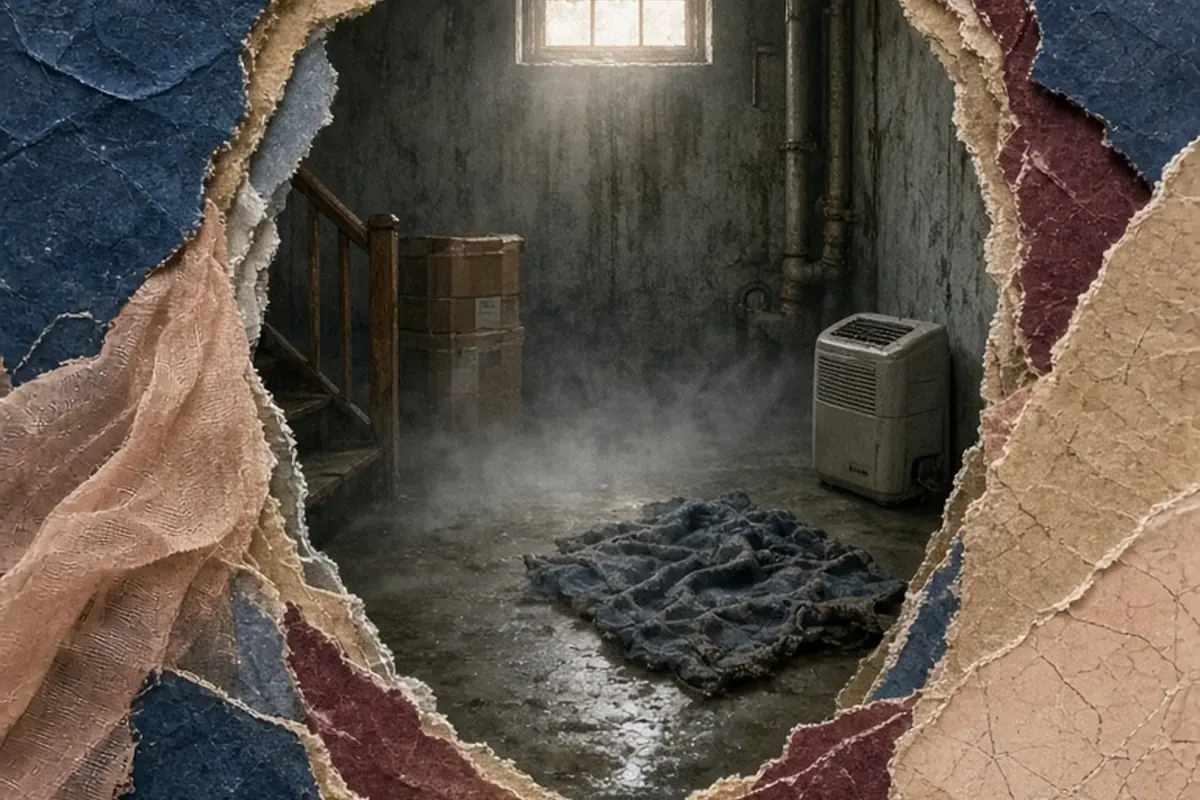
To get rid of a moisture smell in your basement, identify and repair any active water leaks, lower indoor relative humidity to between 30 and 50 percent with a dehumidifier, and thoroughly clean affected hard surfaces using a mixture of water and distilled white vinegar or oxygen bleach. Discard water-damaged cardboard and carpet, improve air circulation with fans, and direct exterior drainage away from foundation walls to stop damp air from returning.
A heavy, damp odor in a lower level usually signals that excess moisture has accumulated in the air, concrete, or stored belongings. Tackling the odor requires a systematic approach that addresses both the airborne smell and the underlying water sources that sustain it.
Identifying the Root Causes of Basement Moisture and Odor
Basements are naturally prone to dampness because they sit below ground level where soil moisture, cool temperatures, and limited sunlight converge. When warm, humid air from outside or upper floors enters a cool basement, the air temperature drops to its dew point, causing moisture to condense on cold concrete slabs, masonry walls, and exposed water pipes. Over time, this chronic surface moisture combines with organic dust particles, creating the recognizable earthy, stale aroma associated with damp basements.
Moisture also migrates directly through foundation walls via capillary action and hydrostatic pressure. Even without standing water or visible puddles, porous concrete can wick gallons of groundwater inward every day. Additionally, internal issues like loose pipe fittings, leaking water heaters, poorly vented clothes dryer ducts, or unsealed crawl spaces can release pints of water vapor into the air every hour. Pinpointing the primary delivery mechanism is the essential first step before spending money on cleaning products or equipment.
To test whether dampness is coming from the ambient air or passing through the foundation itself, tape a one-foot square piece of clear plastic wrap or aluminum foil tightly to an exposed section of the concrete wall using moisture-resistant tape. Leave the material in place for forty-eight hours. If water droplets form on the outer surface facing the room, high indoor humidity is condensing onto the cool wall. If droplets appear underneath the foil against the masonry, groundwater is actively migrating through the foundation barrier.
Lowering Humidity Levels with Active Dehumidification
The fastest way to stop odor-causing microscopic growth is to reduce the relative humidity in the space below fifty percent. Microbial spores thrive when ambient humidity stays consistently above sixty percent. Setting up a dedicated dehumidifier capable of handling the square footage of your basement actively pulls moisture out of the air, interrupting the life cycle of mildew and preventing building materials from absorbing ambient vapor.
Select a dehumidifier sized appropriately for the conditions of your lower level rather than just floor area. A damp basement measuring one thousand square feet often requires a unit rated to remove thirty-five to fifty pints of water per day, whereas an extremely wet basement with visible seepage may need a seventy-pint unit or a continuous commercial-grade model. For convenience and consistent operation, position the machine near a floor drain or sump pit and connect a direct gravity-drain hose so the unit does not automatically shut off when an internal reservoir fills.
While a dehumidifier dries the air, it has clear operational limits. Running an undersized unit in an open basement with continuous foundation leaks will cause the compressor to run constantly without achieving target humidity levels, resulting in high electricity bills and premature appliance failure. Dehumidifiers control ambient vapor, but they do not solve physical water penetration through masonry or leaking plumbing lines.
Deep-Cleaning Masonry, Floors, and Unfinished Walls
Once humidity levels begin to drop, concrete floors, unfinished foundation walls, and exposed wood framing require thorough surface washing to neutralize embedded organic residue. Standard household air fresheners and scented sprays only mask damp odors temporarily and often combine with the musty smell to create an even more unpleasant environment. True odor removal requires breaking down the organic compounds left on hard surfaces.
A practical cleaning wash can be mixed using equal parts warm water and distilled white vinegar, or by dissolving one cup of oxygen bleach powder in a gallon of hot water. Apply the solution to concrete walls and slabs using a pump sprayer or heavy-duty sponge mop, allowing it to sit wet on the surface for ten to fifteen minutes before scrubbing with a stiff-bristled utility brush. White vinegar introduces mild acidity that cuts through mineral deposits and neutralizes alkaline odors, while oxygen bleach lifts deep-set organic debris without releasing harsh chemical fumes.
Avoid using chlorine bleach on porous concrete or unsealed wood. Chlorine evaporates quickly on porous substrates, leaving water behind inside the small pores of the concrete, which can actually feed lingering dampness after the initial chlorine smell dissipates. After scrubbing, wipe down the walls with clean damp towels and use heavy-duty floor fans positioned close to the ground to dry the masonry completely within a few hours.
Sorting and Decontaminating Porous Stored Belongings
Porous items stored in a damp basement act like giant sponges, absorbing water vapor and trapping musty scents deep inside their fibers. Cardboard boxes, old paperback books, untreated lumber, wool rugs, upholstered furniture, and seasonal clothing are common culprits. Even if the basement air becomes completely dry, retaining heavily contaminated porous items will keep the moisture odor circulating through the entire house.
Systematically inspect all stored possessions, separating salvageable items from compromised materials. Cardboard boxes that feel soft or display dark spotting should be emptied and recycled immediately, as cellulose provides an ideal food source for odor-producing microbes. Hard goods, plastic items, and metal tools can be washed with warm soapy water, rinsed, and dried. Washable fabrics should be laundered in the warmest water safe for the fabric, supplemented with one cup of baking soda or white vinegar during the wash cycle.
For sentimental paper goods, hard-cover books, or delicate textiles that cannot be laundered, place them inside a sealed plastic storage container alongside several open trays of activated charcoal pellets or baking soda for two weeks. The porous carbon absorbs the volatile compounds causing the smell without exposing fragile items to liquid cleaners. If upholstered furniture or mattresses have absorbed moisture down into their core foam layers, professional upholstery cleaning or total replacement is usually necessary.
Upgrading Storage Methods to Prevent Future Odor Absorption
After cleaning and clearing out damp belongings, returning items to the basement requires changing how they are stored. Placing items directly onto concrete floors exposes them to cold temperatures and potential capillary moisture rising through the slab. Creating a physical separation between your possessions and the building envelope protects belongings from absorbing damp aromas over seasonal transitions.
Replace every cardboard storage box with heavy-duty polypropylene or polyethylene plastic bins that feature airtight rubber gasket seals on their lids. These airtight containers prevent humid ambient air from penetrating dry textiles, documents, and seasonal decorations. Store these bins on raised, heavy-duty wire metal shelving or freestanding plastic racks rather than sitting directly against exterior foundation walls, which allows air to circulate freely around all four sides of the items.
Consider keeping small moisture absorbers inside individual storage bins that hold moisture-sensitive goods like leather boots, family photo albums, or wool blankets. Reusable silica gel canisters or hanging desiccant bags collect any residual humidity trapped inside the container when it was closed, giving an added layer of localized defense against stale odors.
Managing Outdoor Drainage to Stop Groundwater Seepage
The most effective way to keep moisture smell out of a basement permanently is to control roof runoff and ground water before it reaches foundation walls. When rain gutters clog or downspouts dump water right beside the basement perimeter, soil becomes saturated. This saturated earth exerts hydrostatic pressure against the walls, pushing damp vapor and liquid water through foundation joints and micro-cracks.
Inspect your exterior gutter system at least twice a year to clear leaf debris and ensure downspouts extend a minimum of five to ten feet away from the foundation perimeter. Splash blocks, corrugated extension pipes, or underground PVC leader pipes can carry large volumes of water safely out into the yard. Additionally, check the grade of the soil around the house; earth should slope downward at least six inches over the first ten feet away from foundation walls to encourage positive drainage.
Correcting exterior landscape grading and downspout direction is relatively low-cost and frequently eliminates up to eighty percent of basement dampness problems. However, if your home sits at the bottom of a steep hill or over a high natural water table, exterior grading alone might have limits. In those cases, interior perimeter drain tiles combined with a dedicated sump pump system may be necessary to manage heavy groundwater loads.
Sealing Cracks and Improving Mechanical Air Circulation
Direct air pathways and small structural openings allow damp earth odors and humid crawl space air to seep freely into living areas. Sealing visible gaps in foundation masonry and around utility penetrations blocks vapor entry and prevents drafts from carrying musty basement air up into upper living floors.
Inspect the foundation interior for hairline cracks, holes around plumbing intake lines, electrical conduits, and gaps along the sill plate where concrete meets the wood subfloor. Clean away loose debris with a wire brush and fill cracks with hydraulic cement or high-grade polyurethane masonry sealant. For rim joists and sill plates, applying rigid foam insulation sealed around the edges with expanding spray foam stops warm indoor air from condensing against cold rim wood during winter months.
Air movement helps keep basement air fresh once entry points are sealed. Running an energy recovery ventilator (ERV) or a dedicated basement exhaust fan equipped with a humidistat can periodically swap stale, damp air for filtered outdoor air without creating massive energy penalties. Ensure all supply and return HVAC ducts passing through the basement are tightly taped with aluminum foil duct tape to prevent the furnace from pulling basement odors into bedrooms and living spaces upstairs.
Frequently asked questions
Can I use air fresheners or scented candles to get rid of a basement moisture smell?
Air fresheners and scented candles only mask damp odors temporarily by overpowering them with synthetic fragrance. They do not remove the moisture or organic particles causing the smell, and the fragrance will fade while the underlying musty odor remains.
What is the ideal humidity level to prevent basement smells?
Keep basement relative humidity between 30 and 50 percent during all seasons. Humidity levels above 55 to 60 percent create favorable conditions for microscopic organic growth and noticeable damp odors.
Will opening basement windows help clear out the damp smell?
Opening windows only helps if the outdoor air is cooler and drier than the air inside your basement. On hot, humid summer days, opening basement windows brings in warm moisture that condenses on cold concrete surfaces, worsening the damp smell.
Is white vinegar or bleach better for cleaning musty basement walls?
Distilled white vinegar or diluted oxygen bleach is generally better suited for porous basement surfaces like concrete and wood than chlorine bleach. Vinegar and oxygen bleach penetrate surface pores to lift organic debris without leaving excess moisture behind or releasing harsh fumes.
Your next step
To eliminate basement moisture smells for good, place a digital hygrometer in the room to measure relative humidity, run a properly sized dehumidifier set below fifty percent, and extend exterior downspouts at least five feet away from your foundation.