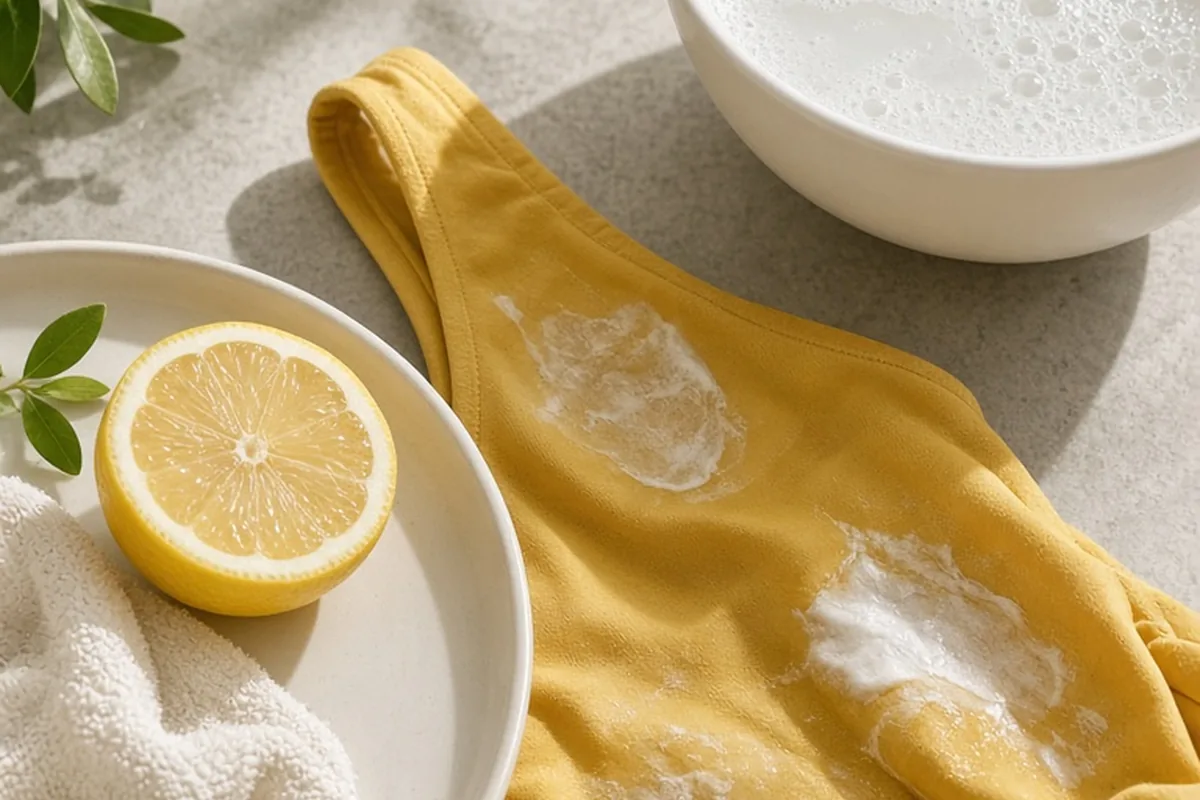
To get sunscreen out of a swimsuit, pre-treat the stain with liquid dish soap, diluted white vinegar, or a baking soda paste to dissolve oily and mineral binders. Let it sit for twenty minutes, rinse thoroughly in cool water, and hand-wash using a mild detergent. Avoid hot water, chlorine bleach, and mechanical dryers, which can chemically bake avobenzone or mineral sunscreen stains permanently into synthetic swimwear fabric.
Swimwear fabrics like spandex, elastane, and nylon are engineered to stretch and resist water, but their tight synthetic weaves readily trap the oils, chemical filters, and mineral pigments found in sun protection products. Acting quickly with the right gentle degreasers and lifting agents can restore your swimsuit without degrading its elasticity or fading its vibrant color.
Understanding Why Sunscreen Leaves Stubborn Marks on Swimwear
Sunscreen stains typically fall into two categories depending on the active UV-filtering ingredients in your lotion or spray. Chemical sunscreens frequently contain avobenzone, an organic compound that provides broad-spectrum protection. When avobenzone comes into contact with iron particles present in tap water or pool water, it triggers an oxidation process that forms an insoluble, rust-colored reddish-yellow residue. This reaction explains why a light-colored or white swimsuit may look completely clean when you exit the water, only to develop bright orange discoloration once washed.
Mineral sunscreens, on the other hand, rely on physical blockers such as zinc oxide and titanium dioxide suspended in rich emulsions of silicone, plant oils, or synthetic waxes. These physical barriers do not cause an iron oxidation reaction, but their opaque white pigments embed deeply into the porous knit of synthetic swimwear. Combined with body oils and sweat, mineral formulas leave stubborn chalky streaks and water-repellent greasy patches that standard machine washing cannot easily dissolve.
Recognizing which type of sunscreen caused the mark allows you to select an appropriate cleaning agent. Oily carriers and mineral chalkiness respond best to emulsifying detergents and mild alkaline powders, whereas avobenzone-induced rust tones require acid-based treatments to break down the iron-avobenzone molecular bond.
Choosing the Right Household Pretreatments for Swim Fabric
Standard laundry detergents are formulated for natural fibers like cotton and often struggle to break down heavy lipid bases without hot water. Because high temperatures destroy the elastane fibers in swimwear, effective stain removal depends on targeted pretreatments applied directly to dry fabric before immersion. Concentrated liquid dish soap is one of the most reliable options because it is specifically designed to cut through grease and oil without requiring thermal activation.
For mineral sunscreen films and general odor buildup, a gentle paste made from baking soda and warm water provides mechanical lifting power without abrasive scratching. Baking soda absorbs the lipid foundation of the lotion while neutralizing trapped pool chemicals. Alternatively, a solution of equal parts distilled white vinegar and cool water offers mild acidity to loosen mineral buildup and avobenzone residues. Avoid using concentrated industrial cleaners, as they can weaken fine synthetic threads.
Step-by-Step Process to Lift Oily and Mineral Sunscreen Stains
Begin by placing the dry swimsuit on a clean, flat surface with a clean towel tucked inside the garment to prevent the stain from transferring to the opposite layer. Apply a small amount of liquid dish soap directly to the discolored area, gently working it into the fibers using your fingertips or an extra-soft toothbrush in circular motions. Allow the degreasing agent to sit on the fabric for fifteen to twenty minutes so it can penetrate the oil matrix holding the sunscreen pigments.
Next, submerge the swimsuit in a basin filled with cool or lukewarm water mixed with a teaspoon of gentle, non-bleach liquid laundry detergent. Swish the suit through the soapy water for two to three minutes, focusing gentle manual pressure on the stained sections. Never wring or twist the fabric aggressively, as this can snap delicate elastic filaments. Rinse the garment thoroughly under cold running water until every trace of suds is cleared, then inspect the stained area before drying.
Treating Stubborn Orange and Yellow Avobenzone Oxidation
If your swimsuit has developed yellowish-orange rust stains from avobenzone reacting with hard water, basic degreasing alone will not eliminate the discoloration. The iron-avobenzone complex must be lifted using a mild acid or a specialized rust-removing formulation designed for laundry. Lemon juice combined with fine table salt creates a natural chelating paste that can loosen iron bonds when applied directly to the stain and left in indirect daylight for thirty minutes.
When using acidic remedies, always perform a small spot test on an unexposed inner seam to ensure the acid will not alter the fabric dye. Commercial oxygen-based stain removers labeled safe for synthetics can also be used as a pre-soak in cool water for several hours. Ensure the product does not contain chlorine, which instantly darkens and fixes avobenzone marks into permanent synthetic blemishes.
Common Laundry Mistakes That Permanently Damage Swimwear
The most critical mistake when cleaning sunscreen-stained swimwear is using traditional chlorine bleach. Many people assume bleach will brighten white or light-colored swimsuits, but chlorine acts as a catalyst that binds avobenzone permanently to synthetic fibers, turning pale stains into permanent bright neon orange patches. Chlorine also chemically degrades spandex and Lycra, causing elasticity loss, sagging, and yellowing of the core elastane threads.
Another widespread error is applying heat through hot wash cycles, steam irons, or mechanical clothes dryers. Synthetic swimwear materials are thermoplastics that soften under heat; high temperatures cause oily sunscreen residues to melt deeper into the synthetic polymer, sealing the stain permanently. Always rely strictly on cool or cold water washes and allow swimsuits to air-dry flat away from direct, harsh sunlight.
Routine Care and Preventive Habits to Protect Swimwear
Preventing deep sunscreen stains is significantly easier than extracting them once dried and oxidized. Whenever possible, apply your sunscreen at least fifteen to twenty minutes before dressing in your swimsuit. This waiting period allows the sunscreen emulsion to absorb fully into the skin and form its protective dry film, minimizing the amount of product that rubs off onto the edges of straps, necklines, and waistbands.
Additionally, establish a habit of rinsing your swimwear in fresh cold water immediately after leaving the pool or beach. A quick freshwater rinse flushes out topical sunscreen oils, salt crystals, and chlorine before they have time to dry into the fabric weave. While a rinse does not replace periodic deep cleaning with gentle soap, it drastically reduces the chemical reactions that cause stubborn discoloration.
Frequently asked questions
Can I put my sunscreen-stained swimsuit in the washing machine?
Hand-washing is strongly recommended for delicate swimwear, but you can use a washing machine if you place the suit inside a mesh laundry bag. Choose a gentle or delicate cycle with cold water and mild liquid detergent, ensuring you skip the spin cycle to protect the elasticity.
Why did my white swimsuit turn orange after washing it?
This color change happens when the active chemical filter avobenzone reacts with trace minerals, particularly iron, present in tap water or pool water. The resulting chemical reaction creates a rust-like compound that produces bright yellow or orange marks on light fabrics.
Is baking soda safe to use on bright or patterned swimsuits?
Yes, baking soda is a gentle, color-safe mineral powder that will not bleach or strip synthetic dyes when used in a mild paste. Mix it with water rather than vinegar if you want to focus purely on oil absorption without acidic exposure.
How do I dry a swimsuit after treating a sunscreen stain?
Gently press the swimsuit between two clean dry towels to absorb excess moisture without wringing or stretching the material. Lay the garment completely flat on a drying rack in a shaded, well-ventilated area away from direct sun and heat sources.
Your next step
Inspect your swimsuit for discoloration immediately after use, pre-treat affected spots with liquid dish soap or baking soda in cool water, and air-dry flat to keep your swimwear clean, flexible, and vibrant all season long.