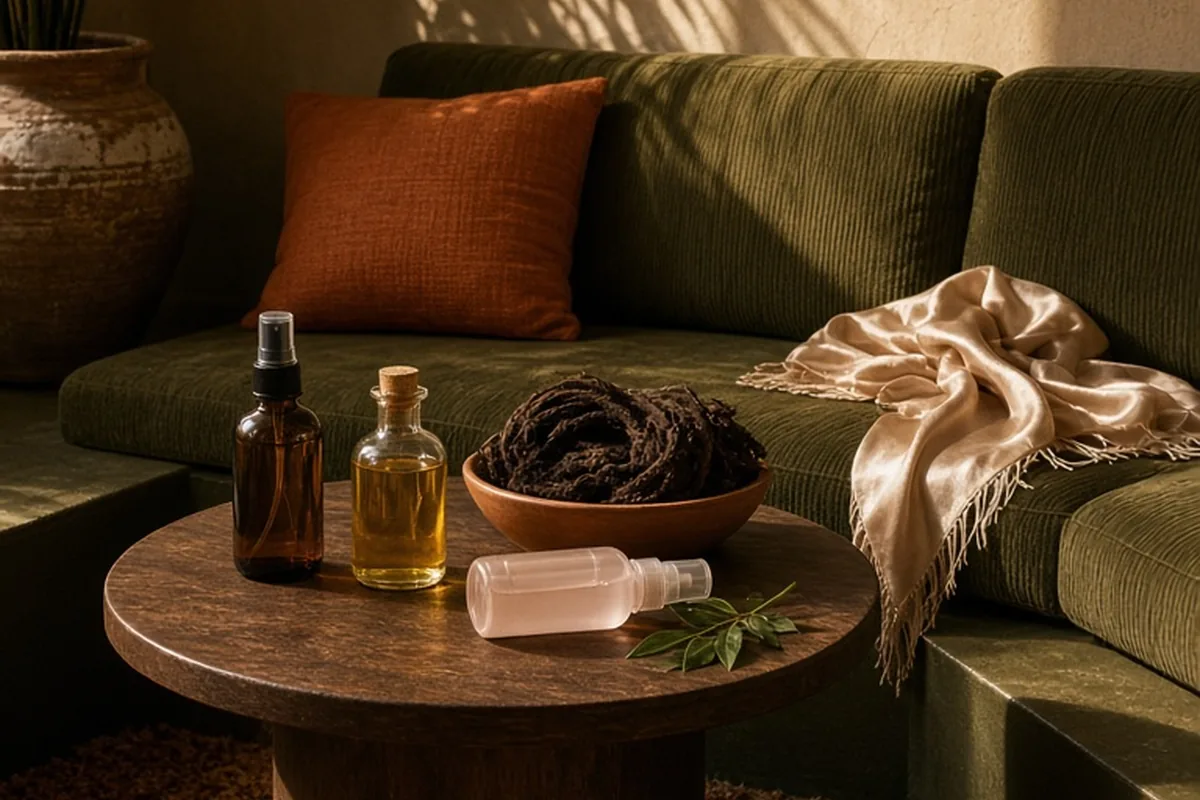
To keep locs moisturized, mist them several times a week with plain water or a pure rosewater spray, then immediately seal that hydration with a lightweight botanical oil such as jojoba or sweet almond oil. Avoid heavy butters, waxes, and creamy leave-in conditioners that create internal buildup. Always sleep in a satin or silk scarf to prevent ambient moisture loss and friction.
Locs thrive on a balanced care routine because the dense matrix of tangled hair fibers requires internal hydration without accumulating heavy product residue. Establishing a simple, water-first moisturizing practice preserves flexibility, enhances natural shine, and protects your locs from the internal brittleness that leads to thinning over time.
Understanding the Difference Between Hydration and Sealing
True moisture comes exclusively from water, not from oils, greases, or pomades. Hair is naturally porous, meaning water molecules enter the shaft and temporarily swell the cuticle, softening the protein structures within each strand. In locked hair, hundreds of individual strands are compacted together, creating an environment where water must penetrate deep into the center of the cylinder to maintain elasticity. If hair fibers remain deprived of water, they lose their natural flex, turning rigid and vulnerable to snapping under tension, styling, or daily movement.
Oils and plant butters do not add water to hair; instead, they function as occlusives or sealants that slow down the rate at which water evaporates. Applying a heavy oil or butter directly onto dry locs does not moisturize them. In fact, it creates an impermeable barrier that blocks atmospheric moisture and future water applications from penetrating the core. Over time, hair sealed while dry becomes perpetually brittle on the inside while feeling deceptively greasy on the surface. Effective loc care always requires applying a water-based liquid first, followed immediately by a light oil to lock that hydration into the strands.
Formulating and Applying a Daily Hydrating Mist
A practical daily or alternate-day hydration routine begins with an effective liquid spray mixed in a clean continuous-mist spray bottle. Pure distilled water works well as a base because it lacks the dissolved minerals found in tap water that can cause dullness over repeated applications. You can enhance distilled water by blending it with pure organic rosewater in equal parts. Rosewater provides a mild natural fragrance and possesses a balanced pH that helps smooth the outer cuticle layer without leaving any sticky residues. If your environment is moderately humid, adding a half teaspoon of pure vegetable glycerin or aloe vera juice can draw additional ambient moisture toward the locs.
Application technique is just as crucial as the formulation itself. Hold the spray bottle roughly six to eight inches away from your head and mist your locs evenly from root to tip until they feel damp to the touch, but never soaking wet. After misting, gently squeeze your locs with your palms in a downward motion to encourage the liquid droplets to travel inside the loc shaft rather than simply sitting on the surface fibers. A common trade-off involves the use of glycerin or aloe vera: while both offer exceptional humectant benefits, excessive glycerin in arid climates can pull moisture out of the hair shaft into the dry air, while unrefined aloe vera can leave small white flakes if not strained properly through a fine mesh filter.
Selecting Lightweight Sealing Oils That Prevent Buildup
Once your locs are lightly dampened with your hydrating mist, you need a thin layer of oil to coat the fibers and seal the moisture inside. Traditional hair products designed for loose hair often rely on mineral oils, petroleum jelly, beeswax, or dense shea butter to smooth frizz. When applied to locs, however, these thick substances become trapped in the internal core where water cannot rinse them away, eventually creating greyish residue, sour odors, and permanent lint accumulation. The ideal sealing oils for locs are lightweight, cold-pressed plant oils that absorb cleanly and wash out easily with mild shampoo.
Jojoba oil is widely regarded as an optimal choice because its molecular structure closely mimics natural human sebum, making it easily tolerated by both the scalp and the hair shaft. Sweet almond oil, argan oil, and grapeseed oil also offer light, smooth slip that seals moisture without leaving a greasy sheen or heavy weight. To apply, pour a nickel-sized amount of oil into your palms, rub your hands together to warm the liquid, and gently glide your hands down the length of your damp locs, paying special attention to the ends, which represent the oldest and driest parts of your hair. Avoid saturating your scalp with daily oil; the scalp naturally generates its own sebum, and overloading the skin with external oils can disrupt the scalp barrier and trigger flaking.
Cleansing Thoroughly to Restore Moisture Absorption
A counterintuitive truth about locked hair is that regular washing is the foundation of lasting moisture. When locs go unwashed for long periods, an invisible crust composed of environmental dust, sebum, dead skin cells, and dried sweat accumulates around each loc. This buildup acts as a hydrophobic barrier that prevents external mists and water from sinking into the hair fibers. Washing your locs every two to three weeks with a residue-free, clarifying shampoo strips away this outer shield, resetting the hair so it can drink in fresh hydration during and after the wash.
During wash day, avoid thick, creamy conditioners completely. Cream conditioners contain emulsifiers, silicones, and quaternary ammonium compounds designed to coat loose strands for detangling, but inside a mature loc, those smoothing agents get trapped permanently. Instead of cream conditioning, opt for warm water rinses, occasional herbal tea rinses made from chamomile or rosemary, or a dedicated hair steaming session. Steaming uses warm vapor to open the cuticle scales and infuse pure moisture directly into the center of the loc without introducing any solid matter that could morph into residue.
Protecting Moisture Overnight and Minimizing Friction
Maintaining moisture during the day is only half the battle; nighttime habits often undo your hydration efforts. Standard cotton pillowcases and sheets are highly absorbent materials that pull natural oils and moisture directly out of your hair fibers while you sleep. Additionally, the constant friction between hair and rough cotton weave frays the outer edges of your locs, creating loose fuzz that readily catches lint, pet hair, and airborne dust particles. Over months of unprotected sleep, the moisture deficit deepens, and lint becomes embedded permanently into the interlocking hairs.
To preserve internal hydration and eliminate friction, cover your hair every night with a satin or silk bonnet, a long loc sock, or an open-ended satin dread wrap. If head coverings frequently slip off while you rest, switch to a high-quality satin or silk pillowcase so your hair glides smoothly across the fabric without moisture absorption. The same principle applies to daytime wear: when wearing cold-weather beanies, baseball caps, or safety helmets, choose headwear lined with smooth satin or wear a thin satin cap underneath. This prevents abrasive fabrics like wool and synthetic polyester from stripping moisture and snapping perimeter locs.
Adapting Moisture Strategies to Loc Maturity and Climate
Moisture needs shift dramatically depending on the maturity of your locs and your local environment. Starter locs, particularly those formed with comb coils or two-strand twists, require a cautious approach because excessive liquid can soften the pattern and cause unravelling before the locking process establishes itself. For starter locs, hydration should be limited to very light surface mists paired with careful palm-rolling, ensuring the hair dries completely within an hour. In contrast, mature locs have developed a dense, felted core that can handle generous misting, but they also take significantly longer to dry, which introduces the risk of internal dampness if misted heavily before bed.
Seasonal adjustments are equally important for long-term hair health. During dry winter months, indoor heaters reduce ambient humidity, accelerating the rate at which water evaporates from your hair. You may need to mist your locs daily and introduce a slightly richer sealing oil, such as sweet almond or avocado oil, to counteract dry indoor conditions. In hot, humid summers, your locs naturally absorb ambient moisture from the air, meaning you can reduce misting frequency to once or twice a week while prioritizing clarifying washes to clear away sweat and excess sebum. Paying attention to how your locs feel when you gently bend them—supple like leather versus brittle like dry twigs—tells you exactly when to adjust your routine.
Frequently asked questions
Can I use leave-in conditioner on my locs to keep them soft?
Most standard leave-in conditioners contain thick creams and silicones that do not rinse cleanly from the center of mature locs, resulting in persistent internal buildup. If you want to use a leave-in product, choose a clear, completely liquid formula specifically formulated for locs, or stick to a basic mist of distilled water and pure rosewater.
How often should I moisturize my locs throughout the week?
Most people achieve the best results by misting their locs two to four times a week, followed immediately by a light sealing oil. The precise frequency depends on your local climate, hair porosity, and activity level, so adjust your schedule if your locs feel dry or stiff to the touch.
Does drinking more water actually help moisturize my locs?
Adequate internal hydration supports healthy sebum production and overall hair growth from the follicle level, which benefits your scalp. However, existing loc lengths consist of non-living keratin fibers that cannot be hydrated from the inside out, meaning topical water application remains necessary to prevent surface dryness.
Why do my locs feel dry even though I put oil on them every day?
Oils are sealants that lock moisture into hair, but they do not contain any water on their own. If you apply oil to hair that is already dry, you coat the outer fibers in grease while leaving the internal structure parched, preventing outside water from entering and causing the hair to remain stiff.
Your next step
Inspect your locs today by gently squeezing a few mid-shaft sections; if they feel stiff or dry, mix equal parts distilled water and pure rosewater in a spray bottle, mist them lightly until damp, and smooth two drops of jojoba oil over the surface to immediately replenish flexible hydration.