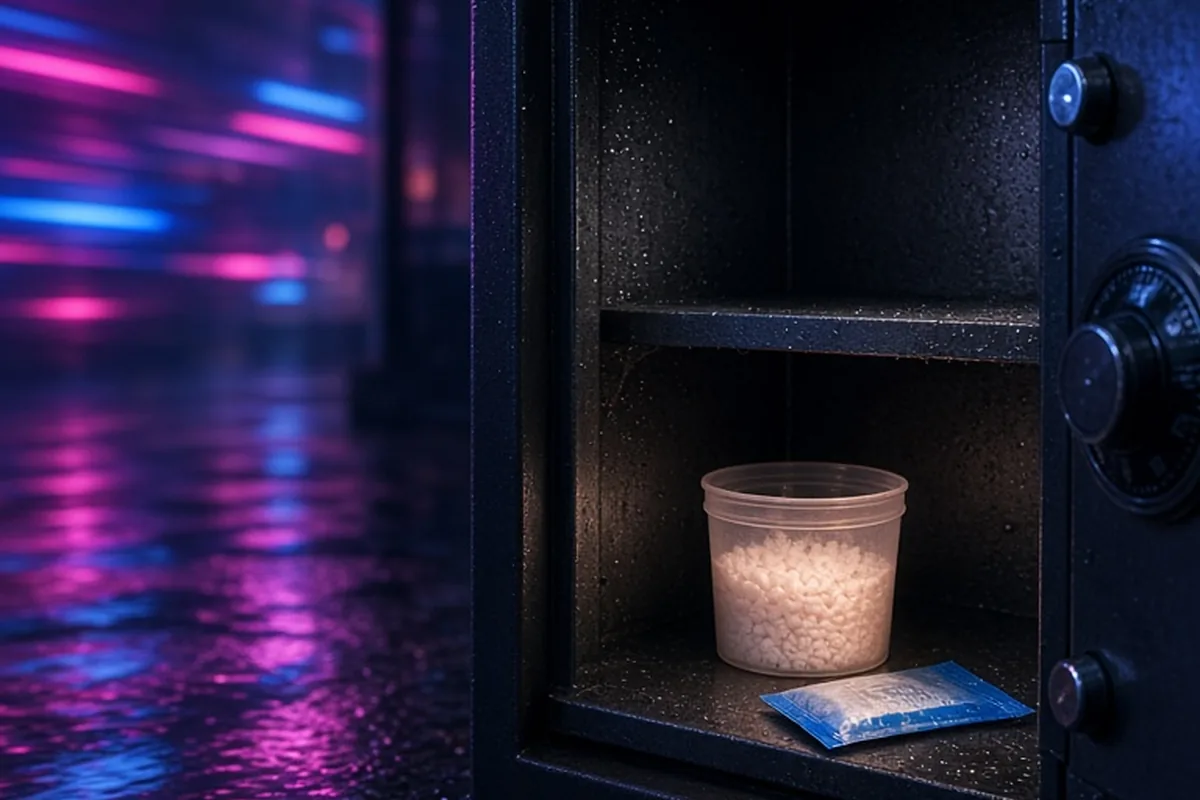
To keep moisture out of a safe, combine passive desiccants like rechargeable silica gel packs with an electric dehumidifier rod for active heat circulation. Place the safe in a climate-controlled room away from exterior walls, inspect and clean the door gasket regularly, and seal sensitive paper documents or heirloom metals in airtight containers before storing them inside.
Heavy-duty home safes protect valuable assets from theft and fire, but their sealed construction frequently traps ambient humidity inside. Without ongoing moisture management, stagnant damp air creates an environment where rust, mildew, and paper deterioration flourish unseen.
Why Safes Trap Moisture and Create Condensation
The construction that makes a safe secure against theft and heat is the same feature that makes it vulnerable to humidity accumulation. Fire-resistant safes achieve their thermal ratings by sandwiching a moisture-rich composite mix, concrete, or gypsum board between steel walls. In a fire, this material releases water vapor to cool the interior, but during normal room temperature fluctuations, small amounts of that manufacturing moisture can migrate into the interior storage chamber. Because high-security safes rely on heavy rubber gaskets and tight mechanical tolerances, this trapped vapor has no natural escape route.
When ambient temperatures change rapidly, the steel body of the safe responds differently than the air inside it. Cold air settling against external walls or floor slabs cools the safe walls below the dew point of the internal air, causing microscopic droplets to condense onto bare metal, paperwork, and felt lining. Even opening the safe on a humid summer afternoon allows moist room air to flood the interior, which gets sealed tight when the door swings shut. Recognizing that a safe behaves like a miniature, unventilated atmospheric capsule helps you understand why deliberate humidity controls are necessary.
Choosing and Positioning Passive Desiccants
Passive desiccants work by drawing ambient water vapor out of the air and holding it inside porous chemical structures without requiring an electrical connection. The most common and effective option for standard household safes is silica gel, which can absorb substantial moisture relative to its weight. Modern silica gel units often come in perforated aluminum canisters or heavy-duty plastic housings with color-changing indicator beads that shift from blue to pink, or orange to green, when the material reaches its absorption limit.
For smaller drawer safes or compact lockboxes, desiccant pouches containing bentonite clay or molecular sieves provide dependable passive protection. To maximize effectiveness, place desiccants near the bottom or middle of the safe where airflow settles, rather than wedging them into a top corner. The primary trade-off with any passive system is that its capacity is finite. Once the granules saturate, they cease collecting moisture and must be baked in an oven or plugged into an outlet to regenerate; failing to maintain a recharging schedule will leave your safe unprotected.
Installing Active Electric Dehumidifiers and Heating Rods
For larger standing gun safes or multi-shelf utility safes, active dehumidifier rods offer a continuous, hands-off solution to moisture control. These slim, low-wattage heating tubes sit horizontally along the floor of the safe and maintain a consistent, gentle warmth. By slightly elevating the internal temperature a few degrees above the surrounding room, the rod raises the air dew point, preventing condensation from ever forming on cold metal surfaces and establishing a continuous upward convection current that circulates dry air through every shelf.
Installing an electric rod typically requires running a specialized power cord through a pre-drilled pass-through hole in the safe wall or using an internal electrical outlet kit. While heating rods require very little electricity and function for years without replacement parts, they do require access to a reliable wall outlet and cannot operate during extended power outages. Additionally, in extremely hot climates where a safe is kept in a warm environment, a heating rod will slightly elevate interior temperatures, so avoid placing heat-sensitive media like photographic negatives or magnetic tapes directly adjacent to the element.
Selecting the Ideal Room Location and Environmental Setup
Where you anchor your safe significantly influences its internal humidity levels. Placing a safe in unconditioned spaces like a basement, garage, outdoor utility closet, or next to a laundry room or bathroom exposes the exterior shell to massive moisture spikes and cold concrete floors. Basements in particular constantly exchange vapor through unsealed foundation slabs, which passes directly into the bottom of a steel safe that rests flat on the ground.
To create a stable baseline, position your safe in an interior, climate-controlled room such as a primary bedroom closet, home office, or central storage room. If you must install a safe over a concrete subfloor or inside a basement, place a closed-cell rubber mat, composite spacer, or treated wooden platform beneath the unit to break thermal bridging. Keeping a minimum clearance of two inches between the back of the safe and external walls prevents cold outdoor temperatures from cooling the rear steel plate and generating localized condensation.
Protecting Vulnerable Papers, Metals, and Collectibles
Different materials degrade at different humidity thresholds, making layered internal packaging an essential practice for mixed storage. Paper documents, bank notes, passports, and stock certificates are hygroscopic, meaning they greedily soak up ambient water vapor, causing ink bleeding, yellowing, and musty odors. Storing critical paperwork inside heavy-duty Mylar pouches, archival polyester sleeves, or waterproof document cases with dedicated mini-desiccants provides an impenetrable barrier against humid safe air.
Metallic valuables, including collectible coins, heirloom jewelry, knives, and firearms, face oxidation and tarnish when exposed to trapped humidity. Coat steel surfaces with a thin barrier of microcrystalline wax or corrosion-inhibiting oil before long-term storage, and house precious metal coins inside inert, airtight acrylic capsules. Avoid storing leather holsters, wool sheaths, or cardboard boxes inside your safe alongside metal goods; these organic materials naturally draw and hold moisture against adjacent steel surfaces, accelerating deep pitting and rust.
Monitoring Internal Humidity and Setting Maintenance Schedules
Without a monitoring tool, you have no way to verify whether your moisture controls are functioning until you notice rust spots or mildew. Placing a compact digital hygrometer with an easy-to-read screen on a middle shelf allows you to check internal relative humidity (RH) every time you open the safe. An optimal relative humidity range for general household items and mixed valuables falls between 35 percent and 50 percent; dropping below 30 percent can dry out wood accents and leather, while exceeding 55 percent dramatically raises corrosion risk.
Pair your hygrometer readings with a structured calendar reminder to inspect the safe interior every four to six weeks. During these checks, inspect indicator beads on passive silica units, verify the warm operation of heating rods, and briefly air out the cavity if humidity readings creep upward. Routine visual checks also provide an opportunity to inspect the silicone or rubber perimeter door gasket for cracks, warping, or dust buildup that might prevent a tight seal.
Restoring a Safe Affected by Dampness and Odors
If your safe has already developed a damp interior or a sour, musty smell, you must fully eradicate the fungal spores and residual moisture before returning your valuables to the shelves. Begin by emptying the safe completely and taking all removable carpeted shelves and fabric dividers outside into direct sunlight, which naturally dries fibers and neutralizes odor-causing mildew. Wipe down the interior steel walls with a cloth lightly dampened with a mild solution of white vinegar and water, taking care not to soak internal felt linings or mechanical lock linkages.
Allow the safe door to remain propped open with an oscillating fan blowing directly into the interior for at least twenty-four hours until the entire space is bone dry. Before reloading your contents, place a temporary open container of activated charcoal or dry baking soda inside for two days to absorb lingering air odors. Clean and dry all individual items thoroughly prior to returning them inside, as placing a single damp item back into the enclosure will restart the cycle of contamination.
Illustrative Scenarios
Managing Humidity Across Seasonal Climate Swings
A homeowner installed a fireproof safe in a main-floor closet to protect family records and coin collections. During the transition from dry winter heating to humid spring weather, the homeowner noticed the safe interior smelled stale and the paper sleeves felt limp. Testing revealed the internal relative humidity was reading 68 percent because the fireproof safe walls held residual moisture and the closet lacked active airflow. The homeowner added a small digital hygrometer, switched from loose storage to archival sealed pouches for documents, and placed a 750-gram rechargeable silica canister inside the safe while elevating the unit off the closet floor with a rubber mat.
Key point: Layering barrier storage with an appropriately sized desiccant and an internal hygrometer stabilizes humidity regardless of seasonal shifts outside the safe.
Frequently asked questions
What is the ideal relative humidity level to maintain inside a safe?
The ideal relative humidity for most mixed valuables, documents, and metals is between 35 percent and 50 percent. Keeping humidity within this range prevents mold growth and corrosion while avoiding excessively dry conditions that can crack aged wood or dry out leather accents.
Can I use household baking soda or raw rice to absorb moisture in a safe?
Uncooked rice and open baking soda are not recommended for long-term safe moisture control because they have limited absorption capacities and can attract pests or spoil over time. Commercial silica gel canisters and clay desiccants are engineered specifically to trap water vapor safely and can be regenerated repeatedly.
How often do rechargeable silica gel packs need to be dried out?
Rechargeable silica gel units typically need regeneration every four to eight weeks, depending on the volume of the safe, the ambient room humidity, and how often the door is opened. Checking the built-in color-changing indicator beads during your regular monthly inspection tells you precisely when to recharge the unit.
Your next step
Place a compact digital hygrometer inside your safe today to establish your baseline humidity reading and identify whether your valuables require immediate desiccant or heating rod protection.