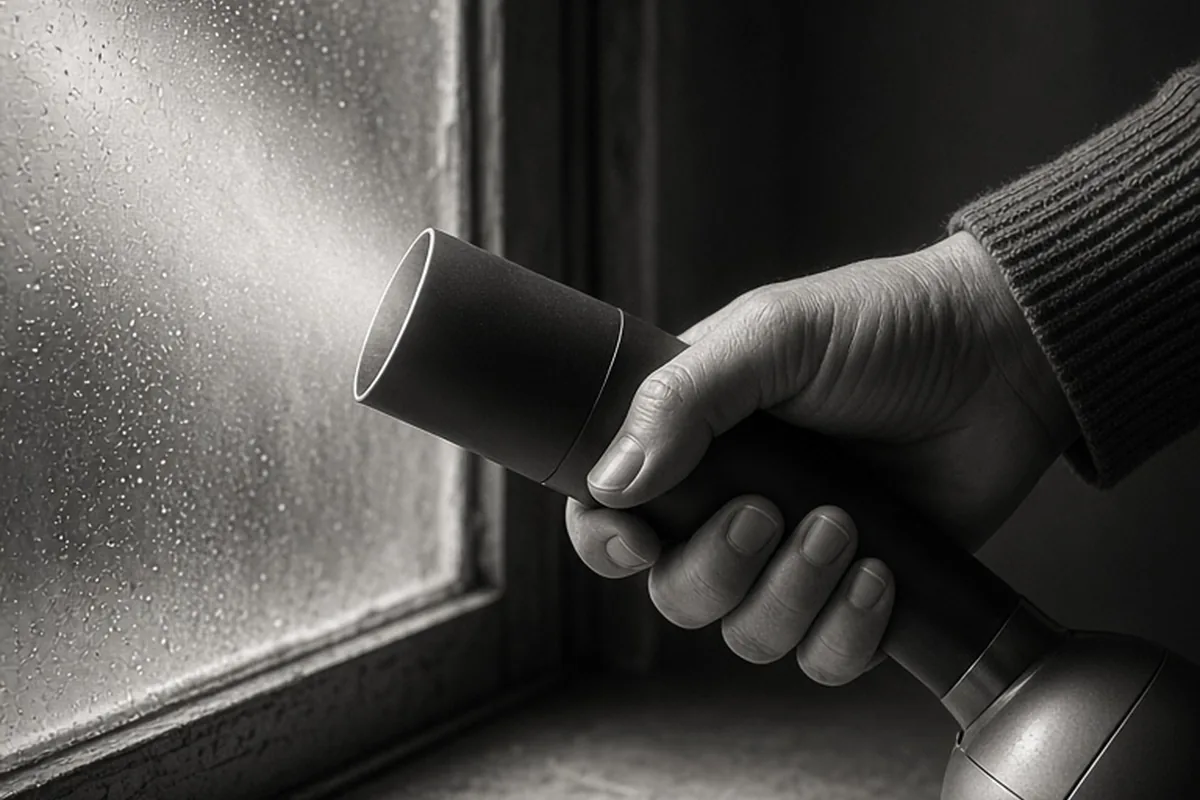
To temporarily clear moisture from between double-pane windows using a hair dryer, hold the appliance six to eight inches away from the glass on a low or medium heat setting. Move the nozzle in steady, sweeping circles across the foggy section for ten to fifteen minutes. The warm air heats the glass pane, helping trapped condensation evaporate, though the mist will return once the glass cools unless the compromised seal is repaired.
Discovering a persistent haze or trapped water droplets inside a double-pane window can be frustrating for any homeowner. While a household hair dryer offers an accessible way to clear the glass for an immediate view, applying heat to insulated glass units requires careful handling and realistic expectations about long-term results.
Why Moisture Accumulates Between Insulated Window Panes
Modern energy-efficient windows, known structurally as insulated glass units, rely on two or three panes of glass separated by a spacer bar. The hollow spacer bar contains a desiccant material designed to absorb residual humidity during manufacturing. The entire perimeter is sealed with industrial compounds like polyisobutylene and silicone to maintain an airtight, watertight barrier, often trapping an insulating gas like argon or krypton inside. When this perimeter barrier remains intact, the space between the panes stays completely dry regardless of outdoor weather.
Over time, daily temperature swings cause the glass and frame materials to expand in the sun and contract in the cold, an ongoing physical cycle known as solar pumping. This continuous movement places mechanical stress on the perimeter seals. As the seal weakens, atmospheric air carrying moisture slowly enters the airspace. The internal desiccant eventually reaches its saturation limit and cannot absorb additional humidity. When outdoor temperatures drop below the dew point of that trapped internal air, the moisture condenses against the colder glass pane, creating a cloudy, hazy view that cannot be wiped away from either side.
How Hair Dryer Heat Affects Trapped Condensation
Using a hair dryer to clear window fog works through basic thermodynamic principles. Directing warm air onto the surface of the glass raises the temperature of the pane itself, which subsequently warms the small pocket of air sealed between the two layers. Warm air has a higher capacity to hold water vapor than cold air. As the internal temperature climbs above the local dew point, visible water droplets evaporate back into a gaseous state, making the window look clear again within a few minutes.
It is essential to recognize that heating the glass does not physically eliminate the moisture from the unit; it merely converts liquid droplets into invisible gas suspended within the gap. In some instances where a seal has a tiny microscopic puncture, the rising internal pressure from the heated air might push a fraction of the vapor out into the room. However, because the structural seal remains broken, the surrounding humid air will re-enter the cavity as soon as the glass cools, causing condensation to reform during the next temperature fluctuation.
Step-by-Step Method for Safely Drying Window Panes
Applying heat to residential window glass requires a measured approach to prevent accidental damage. Before beginning, clean both the interior and exterior surfaces of the window thoroughly so you can clearly distinguish between surface dirt and internal moisture. Ensure the work area is dry and clear of any obstacles, and use a grounded extension cord if your window is located far from a power outlet.
Begin by setting your hair dryer to its lowest heat and airflow settings to gently introduce warmth to the pane. Hold the nozzle roughly six to eight inches away from the glass, pointing it at the wettest section. Maintain a continuous sweeping motion across the fogged surface rather than focusing on a single spot. Gradually increase the heat setting to medium after two or three minutes of steady warming. Continue moving the dryer in wide overlapping strokes until the haze dissipates, which typically takes between eight and fifteen minutes depending on the size of the pane.
Once the glass appears clear, do not turn the appliance off abruptly while pointed at the window. Shift the hair dryer to its cool setting for one or two minutes, sweeping it across the glass to help lower the surface temperature gradually before removing the heat source entirely.
- Clean the exterior and interior glass surfaces before starting to inspect the moisture pattern clearly.
- Maintain a minimum distance of six inches between the hair dryer nozzle and the glass pane.
- Keep the hair dryer moving continuously in wide, overlapping circular or horizontal motions.
- Use low to medium heat settings exclusively, avoiding high heat settings that concentrate thermal energy.
- Finish the process with a sixty-second cool-down pass using the dryer cold shot or cool setting.
Managing the Risk of Thermal Shock and Glass Breakage
The primary danger when using a hair dryer on double-pane glass is thermal shock. Glass is a relatively poor conductor of heat, meaning that when high heat is concentrated on one small area, that section expands rapidly while the surrounding, cooler glass remains rigid. This localized differential expansion generates intense tensile stress along microscopic imperfections on the glass edges, which can cause sudden, irreversible stress cracks spanning the entire pane.
The risk of thermal shock multiplies significantly during cold winter months when the outer glass pane is exposed to freezing outdoor air while the inner pane is heated with a hair dryer. To minimize this hazard, avoid performing this procedure on extremely frigid days. Never place the nozzle directly against the glass, and never apply maximum heat to cold glass. If you feel the glass surface becoming hot to the touch rather than moderately warm, back the hair dryer away immediately and allow the heat to distribute evenly across the surface.
Comparing Temporary DIY Methods with Permanent Fixes
While a hair dryer provides a quick cosmetic fix when you want clear windows for a gathering or clear view, homeowners should weigh this short-term effort against permanent restoration methods. A hair dryer requires recurring time and effort because condensation inevitably returns within hours or days. Furthermore, repeated thermal cycling can further weaken the perimeter adhesive, speeding up the breakdown of the remaining seal.
Permanent solutions fall into three main categories: commercial defogging, insulated glass unit replacement, and complete window replacement. Professional defogging involves drilling micro-holes into the spacer, rinsing the interior glass with drying agents, and installing micro-vents. While defogging can restore visibility, it does not restore the original insulating gas. Replacing just the insulated glass unit involves keeping the existing window frame while swapping out the double-pane glass insert, which restores complete thermal efficiency at a fraction of the cost of total window replacement.
- Hair Dryer: Free, immediate cosmetic clarity, but lasts only hours to days and does not fix the broken seal.
- Professional Defogging: Moderate cost, clears visible staining and installs relief vents, but does not restore insulating gas.
- Insulated Glass Unit Replacement: Restores full thermal performance and new desiccant seals while keeping the existing sash and frame.
- Full Window Replacement: Highest cost, necessary only if the surrounding sash, frame, or wall opening has suffered structural decay.
Signs That Your Window Requires Professional Replacement
Not all foggy windows can be restored with simple warming or defogging methods. When moisture sits inside a sealed unit for several months or years, the minerals and chemicals carried in the water vapor begin to react with the glass surface. This chemical leaching creates permanent white hazing, mineral rings, or iridescent etching that cannot be dissolved or evaporated away, even if the trapped air is completely dried.
Additionally, check the bottom spacer bar inside the unit for standing water, dark mold accumulation, or rust. If you notice pooling water or distorted spacer seals, the structural integrity of the insulated glass unit is fully compromised. In these scenarios, spending time with a hair dryer will produce little to no improvement because the glass itself is etched or the water volume is too high. Contacting a local glass specialist or window manufacturer to order a replacement glass unit is the most cost-effective and permanent course of action.
Frequently asked questions
Can using a hair dryer permanently repair a failed window seal?
No, a hair dryer only evaporates the visible condensation currently suspended between the panes. It cannot repair the cracked sealant, restore depleted desiccant, or replace lost insulating gas, so moisture will return when temperatures drop.
How long will a double-pane window stay clear after using a hair dryer?
Depending on indoor humidity levels, outdoor temperatures, and the size of the seal breach, the window may stay clear for anywhere from a few hours to several days. The fog will reappear as soon as the internal air cools down to its dew point.
Will applying heat to my window void my manufacturer warranty?
Directly applying intense heat to an insulated glass unit may void specific glass or seal warranties if it causes thermal cracking or frame warping. Review your window warranty terms or contact the manufacturer before attempting DIY heating fixes.
Is it better to heat the interior or exterior pane of the window?
Heating the interior pane from inside the room is generally safer and more practical, as ambient room temperatures reduce the severity of thermal shock. However, you must still maintain a low heat setting and keep the dryer moving steadily.
Your next step
Inspect your foggy window in natural daylight to determine whether the haze is temporary moisture or permanent mineral etching, then request quotes from local glass providers for an insulated glass unit replacement.