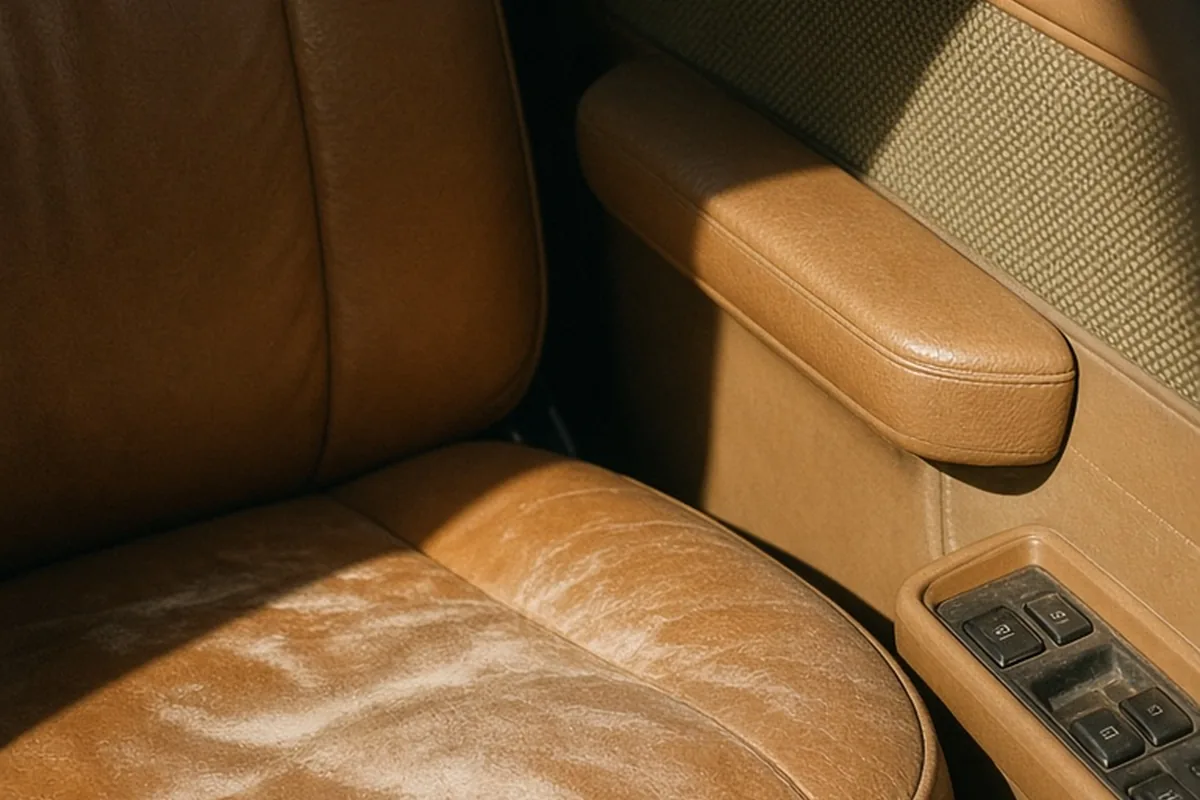
To remove sunscreen from a car interior, match your cleaning method to the surface material. For leather and vinyl, gently massage a diluted mild dish soap solution or dedicated interior cleaner into the grain with a soft microfiber towel or detailing brush, wipe clean with damp water, and apply conditioner. For fabric seats, treat the oily mark with dish soap or gentle upholstery cleaner, blot thoroughly, and let air-dry.
Sunscreen is an essential summer skin protectant, but its water-resistant oils and mineral UV blockers easily transfer onto car door panels, armrests, steering wheels, and seat bolsters. Because sunscreen formulas are specifically engineered to resist moisture and cling to surfaces, wiping them with dry napkins or plain water usually smears the chalky haze further into textured automotive materials.
Why Sunscreen Stains Vehicle Interiors So Easily
Automotive cabins are composed of textured plastics, synthetic leather, top-coated natural hides, and woven fabrics. When sunscreen rubs off your elbows, legs, or hands onto these surfaces, two main types of ingredients cause visible discoloration. Mineral sunscreens rely on physical UV filters like zinc oxide and titanium dioxide, which are bright white powders ground into fine particles. These microscopic particles embed themselves deeply into the faux-grain texture of plastic dashboards and leather seats, leaving an unsightly white film that does not dissolve in water.
Chemical sunscreens, on the other hand, contain active compounds like avobenzone and homosalate suspended in heavy cosmetic oils, silicones, and waxes. While they may not look starkly white immediately upon application, these oils bond with automotive clear coats and synthetic vinyl layers. Over time, heat and ultraviolet exposure inside a parked vehicle can bake these cosmetic oils into the surface grain, causing slick discoloration, dust accumulation, or yellowing if left untreated for extended periods.
Removing Sunscreen from Leather and Synthetic Leather Seats
Modern automotive leather seats are almost always finished with a protective polyurethane clear coat, while synthetic leather seats are made entirely of vinyl or polyurethane. Harsh household degreasers or solvent-based chemicals can strip this protective layer and cause premature cracking or peeling. The safest approach is to start with mild surfactants that lift oils without dissolving the protective coating.
To clean leather or leatherette, mix a few drops of mild, fragrance-free dish soap into a bowl of warm water until lightly sudsy. Dip a clean microfiber towel into the water, wring it out until it is barely damp, and gently work the solution into the white residue using circular motions. If the sunscreen is embedded in perforated leather or textured grain, use an ultra-soft horsehair detailing brush to agitate the suds without scratching. Immediately wipe the area with a second microfiber towel dampened with clean water to remove soap residue, followed by a dry cloth. Once the surface is completely dry, apply a dedicated automotive leather conditioner to replenish moisture and restore a uniform matte finish.
Clearing Chalky White Residue from Textured Plastic and Vinyl Trim
Door armrests, window sills, and center console lids are frequently made of hard or semi-flexible textured plastic. These areas take the brunt of sunscreen contact from bare forearms and knees. Because the plastic grain is often deeper than leather grain, a simple flat wipe with a rag rarely reaches the bottom of the texture where zinc oxide sits.
For textured plastics, an automotive all-purpose cleaner diluted to a gentle interior ratio (typically 10 parts water to 1 part cleaner) or a mild dish soap solution is ideal. Spray the cleaner directly onto a soft-bristled interior detailing brush rather than saturating the panel. Agitate the surface gently in crosshatch and circular patterns to lift the chalky mineral residue out of the micro-crevices. Wipe the emulsified grime away with a plush microfiber towel. If a faint white cast remains after drying, apply a water-based interior trim dressing to nourish the plastic and balance the finish without creating a greasy glare.
Treating Sunscreen Marks on Fabric Upholstery and Seatbelts
Fabric upholstery absorbs the oily carrier agents in sunscreen much faster than non-porous materials do, creating dark, grease-like stains surrounded by faint white mineral rings. Seatbelts are also prone to sunscreen buildup where they rest against the neck and shoulder. Because fabric fibers hold onto oils, treating these stains requires an emulsifying agent that can break down lipids without bleaching the fabric dye.
Begin by blotting any fresh, wet sunscreen with a dry paper towel, taking care not to rub the product deeper into the cushion foam. Apply a small amount of liquid laundry detergent or dedicated upholstery foam cleaner directly to the spot. Work the cleaner into the fibers using a damp microfiber cloth or a soft nylon upholstery brush. Allow the solution to sit for three to five minutes, then press a clean, damp towel firmly into the fabric to absorb the lifted oil and soap. For seatbelts, pull the belt all the way out, clamp it gently so it does not retract, clean the affected webbing with soapy water, and allow it to dry completely before releasing it.
Handling Baked-In Stains and Stubborn Sunscreen Spots
When sunscreen has been exposed to hot vehicle cabin temperatures for weeks or months, the oils polymerize and mineral powders adhere tightly to the finish. Quick surface wipedowns are usually insufficient for these aged marks, and aggressive scrubbing will only damage the surrounding materials. The solution is controlled dwell time and repeated gentle passes.
For stubborn spots on plastic or vinyl, apply an automotive interior cleaner foam or a gentle citrus-based interior degreaser designed for cabins. Let the foam sit on the stain for one to two minutes to soften the dried carrier oils before brushing lightly. In extreme cases on durable plastics, an automotive cleaning sponge or an ultra-fine detailing eraser can be used with light pressure and plenty of soapy lubricant. However, avoid heavy pressure, as abrasive friction can alter the factory sheen and leave a permanently glossy or faded patch.
Household Products to Avoid Inside Your Vehicle
When faced with stubborn white sunscreen smudges, it can be tempting to grab whatever powerful cleaner is in the household cupboard. Many common household cleaners, however, contain solvents and abrasives that cause irreversible damage to car cabins. Knowing what to avoid is just as critical as knowing what to use.
Avoid using standard magic erasers with heavy hand pressure on dark plastics, coated leathers, or painted interior buttons, as melamine foam acts like ultra-fine sandpaper and can scrub away texture and protective clear coats. Never use pure isopropyl alcohol, acetone, nail polish remover, or harsh bathroom degreasers on leather or soft-touch dash plastics, as they can strip dyes, dissolve adhesive bonds, and turn vinyl brittle. Bleach and hydrogen peroxide should also be strictly avoided, as they will permanently discolor fabric upholstery and weaken seatbelt webbing.
Practical Habits to Prevent Future Sunscreen Buildup
Preventing sunscreen transfer is significantly easier than repeatedly scrubbing deep cabin textures throughout the warm seasons. Simple behavioral adjustments and protective interior treatments can keep your car looking fresh even with daily sunblock use.
Allow sunscreen to absorb into your skin for ten to fifteen minutes before getting into the car, which minimizes wet lotion transfer. Keeping a small pack of gentle, alcohol-free interior detailing wipes in your glove compartment allows you to quickly dab armrests and door handles right after a drive before the lotion bakes in the sun. Additionally, applying a dedicated ceramic interior protectant or UV-resistant vinyl seal to high-contact surfaces creates a sacrificial barrier that prevents future mineral particles from lodging into the material grain.
Illustrative Scenarios
Restoring a Textured Door Armrest
A driver noticed heavy white, chalky patches across the textured black plastic door panel and center console armrest after a week of beach trips. Dry wiping and generic glass cleaner failed to remove the marks, leaving the plastic looking faded and cloudy. The driver switched to a mild dish soap solution agitated with a soft-bristled makeup brush to reach into the plastic grain, wiped the area dry with microfiber, and applied a water-based matte interior protectant.
Key point: Textured plastic holds physical mineral blockers deep in its grain, requiring soft mechanical agitation with a brush rather than flat wiping or harsh chemical solvents.
Frequently asked questions
Can I use baby wipes or makeup remover wipes on my car interior?
Alcohol-free, gentle baby wipes can work well for quick touch-ups on fresh sunscreen spills because they contain mild surfactants. However, avoid oil-based makeup remover wipes or wipes containing heavy moisturizers, as they can leave greasy streaks that attract dirt.
Why does the white mark reappear after the plastic dries?
If white marks return once the surface dries, the cleaning solution likely dissolved only the surface oils while leaving mineral particles like zinc oxide trapped in the texture. Repeating the cleaning process with a soft detailing brush will physically lift those remaining mineral deposits.
Will sunscreen permanently damage car leather seats?
If left uncleaned under intense summer heat, the oils in sunscreen can soften the protective polyurethane topcoat of automotive leather and cause localized discoloration. Cleaning the residue promptly and conditioning the leather preserves the coating and prevents long-term damage.
Your next step
Inspect your vehicle's high-contact surfaces, mix a gentle soapy water solution, and use a soft-bristled brush with a microfiber cloth to lift the residue before the next sunny drive.