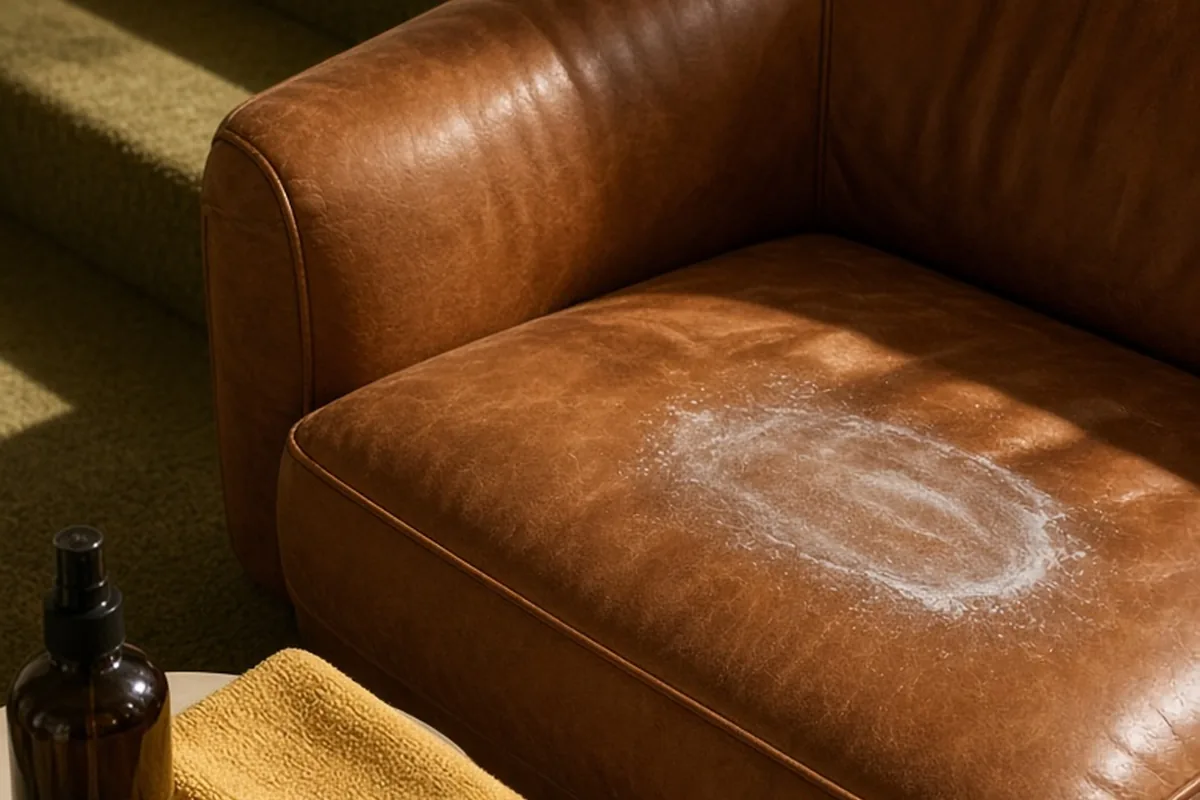
To remove sunscreen from leather, wipe away fresh residue with a dry microfiber cloth, then work a pH-neutral leather cleaner or a dilute mixture of mild dish soap and warm water across the stain using gentle circular motions. Wipe away loosened residue with a barely damp cloth and dry immediately. For chalky mineral sunscreen, lift stubborn particles with a soft detailing brush before applying a conditioning balm.
Sunscreen transfer is one of the most frustrating warm-weather hazards for vehicle interiors, luxury handbags, and leather furniture. Sun protection formulas combine heavy oil-in-water emulsions, waterproofing silicones, and physical light-reflecting powders that settle deeply into the microscopic grain of the hide, leaving unsightly white streaks or sticky dark patches.
Understanding Why Sunscreen Clings to Leather Surfaces
Sunscreen is engineered specifically to resist moisture, sweat, and friction, which makes it particularly stubborn once it transfers onto upholstery or apparel. Most modern sunscreens fall into two categories: chemical absorbers and mineral barriers. Chemical varieties rely on organic compounds suspended in oils, wax bases, and synthetic emollients. When these ingredients press against leather, the oils bond readily with the protective clear coat of finished leather or soak directly into the porous fibers of untreated hides. Over time, heat inside a closed car or sunlit room causes these synthetic oils to soften the leather's top finish, drawing the stain deeper into the substrate.
Mineral sunscreens present a different challenge because they contain inorganic particulates like zinc oxide and titanium dioxide. These compounds do not dissolve in water or typical light detergents. Instead, they act as an ultrafine white pigment that packs tightly into the natural texture and creases of the leather hide. Merely wiping the surface with a wet paper towel tends to smear these insoluble particles across a wider radius, cementing them into microscopic crevices. Recognizing whether you are addressing a greasy chemical smudge or an insoluble mineral film helps you select the correct cleaning agent without stripping the natural color of your item.
Essential Supplies and Pre-Cleaning Spot Testing
Before applying any cleaning agent to leather, assemble materials that lift residue mechanically and chemically without abrading the hide. High-quality microfiber cloths with a tight, lint-free weave are essential because their split fibers grab oily films far better than flat cotton or paper products. You will also benefit from a soft-bristled horsehair detailing brush, which gently dislodges mineral powder from textured grain without scratching the polyurethane clear coat used on automotive seats. For cleaning solutions, a dedicated pH-balanced leather cleanser is ideal. If one is unavailable, combine two cups of lukewarm distilled water with a few drops of mild, fragrance-free liquid castile soap or gentle dish soap.
Testing your chosen cleaning agent on a hidden section of the leather is a mandatory safety measure. Apply a drop of the solution to an inconspicuous area, such as the underside of a sofa cushion, inside an interior seam of a handbag, or low on the skirt of a car seat. Lightly rub the spot with a clean white cloth and wait ten minutes to confirm that no dye transfers onto the fabric and the leather does not darken or dry with a chalky halo. Avoid household cleaners like bleach, isopropyl alcohol wipes, vinegar solutions, and abrasive kitchen sponges, as their harsh pH balances can degrade the protective sealant and cause permanent discoloration.
Step-by-Step Removal Process for Finished Leather
Finished and pigmented leathers make up the vast majority of modern car interiors, durable sofas, and daily accessories. These hides feature a colored basecoat topped with a clear protective layer, offering reasonable defense against immediate liquid absorption. To begin, blot away any fresh, wet sunscreen pooling on the surface with a dry microfiber cloth, pressing straight down without dragging the stain outward across clean areas of the panel.
Next, introduce your cleaning solution using controlled moisture rather than soaking the material. Saturate your horsehair brush or a fresh microfiber cloth with the diluted soap foam or leather cleaner, tapping off excess moisture. Work the foam across the affected area using light, overlapping circular strokes. This motion coaxes the emulsified oils out of the texture without pressing the liquid deeper into needle punctures or perforation holes. Once the stain lifts into the suds, immediately wipe the area with a separate microfiber cloth moistened with plain distilled water to remove soap residue. Pat the surface dry with a third, dry cloth to prevent lingering moisture from sitting on the seams.
Dissolving Chalky White Residue from Mineral Sunscreens
Mineral sunscreens often leave behind a ghost-like white film that resists standard soap and water. Because zinc oxide and titanium dioxide are suspended in hydrophobic polymers, traditional water-based cleaning agents slide off without breaking down the binding medium. To loosen this stubborn barrier, you need a cleaning agent capable of dissolving the oily carrier without melting the leather's polyurethane coating. An automotive interior cleaner formulated with citrus degreasers or an oil-free micellar cleansing water can serve as an effective intermediary.
Apply a small volume of micellar water to a microfiber towel and press it firmly against the chalky zone for twenty to thirty seconds. The micelle molecules bind to the oily film enveloping the mineral grains, breaking their adhesion to the hide. Follow up with your horsehair brush, working in gentle figure-eight patterns to dislodge the loosened zinc particles. Wipe the slurry away promptly with a damp cloth. If faint white lines remain lodged in deep grain lines, a specialized vinyl and leather cleaning eraser designed for automotive detailing can be used with feather-light pressure, ensuring you do not scrub through the colored topcoat.
Managing Stains on Perforated and Ventilated Car Seats
Perforated leather seats in modern vehicles require deliberate care because cleaning agents and dislodged sunscreen can easily get pushed down into the ventilation holes. If liquid cleaner saturates the foam padding beneath the hide, it can cause mold, lingering odors, and damage to seat-heating or cooling grids. When treating perforated leather, never spray cleaning solutions directly onto the seat surface under any circumstances.
Instead, create a rich, dry foam by shaking your leather cleaner in a foaming dispenser bottle or agitating it vigorously inside a shallow bowl with your brush. Scoop only the airy foam onto the bristles of your horsehair brush, leaving excess liquid behind. Brush lightly over the perforations, allowing the suds to lift the sunscreen from the surface rim of each hole. Immediately chase the brush with a shop vacuum fitted with a soft brush attachment held a half-inch above the seat to extract loose foam from the openings. Finish by blotting the panel with a dry microfiber towel wrapped around your fingers to absorb any stray droplets.
Protocols for Unfinished Aniline, Semi-Aniline, and Suede
Unfinished leathers, such as pure aniline, pull-up hides, nubuck, and suede, lack a protective topcoat. These materials are exceptionally porous, meaning sunscreen transfers immediately into the dermal fibers, creating a dark, greasy spot that darkens upon contact. Water-based washing methods will often leave a permanent water ring on these surfaces, exacerbating the original damage. If you catch the stain immediately, coat the oily mark generously with an absorbent dry powder, such as food-grade cornstarch or talc, and allow it to sit undisturbed for eight to twelve hours to draw the lipids out of the hide.
After the resting period, gently brush the powder away with a soft bristle suede brush. For set-in stains on suede and nubuck, use a specialized suede eraser to gently rub the fibers, breaking up hardened oils before grooming the nap back in a uniform direction. If the leather is smooth aniline, any remaining discoloration may require a dedicated solvent-based aniline degreaser spray that evaporates quickly without saturating the core. When dealing with high-value aniline garments or bespoke furniture, calling a certified professional leather restorer is usually the safest alternative to aggressive home scrubbing.
Rehydrating and Conditioning the Leather Grain
Cleaning sunscreen from leather necessarily strips away some of the natural and synthetic moisture that keeps the hide pliable. Surfactants that dissolve sunscreen lipids also dissolve beneficial conditioning oils, leaving the top layer vulnerable to cracking, premature aging, and ultraviolet fading. Once the leather has dried completely for at least two hours following cleaning, you must restore its moisture equilibrium with a premium leather conditioner.
Choose a water-based leather balm containing natural waxes, such as beeswax or carnauba, and nourishing oils that match the original sheen of your leather. Avoid petroleum-derived oils and silicone-heavy sprays, which create an artificial, slick shine that attracts dust and makes future sunscreen transfers harder to clean. Apply a dime-sized amount of conditioner to an applicator pad and massage it evenly across the entire panel, not just the previously stained spot, to maintain consistent color and luster. Allow the conditioner to absorb for twenty minutes before buffing the surface with a dry, clean microfiber cloth.
Illustrative Scenarios
Restoring Sunscreen-Smudged Perforated Bolsters
A driver noticed white sunscreen streaks along the dark leather side bolsters and perforated center cushions of their vehicle after a beach trip. Traditional baby wipes had smeared the white mineral film across the grain and left dried white rings inside several ventilation holes. Switching approaches, the driver applied a low-moisture foam cleanser using a horsehair brush, working in gentle circles to dissolve the surface grease without saturating the cushion foam. A clean shop vacuum quickly pulled the loosened suds from the holes before a damp microfiber wipe cleared away the remaining mineral residue.
Key point: Using dry foam and targeted suction lifts oily mineral residue out of textured grain and perforations without pushing moisture into interior seat components.
Frequently asked questions
Can I use alcohol prep pads or hand sanitizer to remove sunscreen from leather?
No, you should avoid alcohol-based wipes and sanitizers on leather surfaces. Concentrated alcohol dissolves the polyurethane protective clear coat and strips away the underlying dye, leading to permanent discoloration and peeling.
Why did my leather turn white again after the spot dried?
This happens when insoluble mineral sunscreen ingredients like zinc oxide were spread around rather than completely lifted off the surface. Repeat the cleaning process using a soft detailing brush and a pH-balanced cleaner to extract the dried mineral powder from the grain.
Will leather cleaner prevent future sunscreen stains from transferring?
A cleaner alone does not prevent transfer, but following up with a quality leather conditioner or ceramic leather coating creates a sacrificial barrier. This barrier slows down oil absorption and makes subsequent sunscreen smudges much easier to wipe clean with a dry cloth.
Your next step
Inspect your leather in good natural light, identify whether the stain is finished or unfinished hide, and begin with the mildest foaming method before applying a protective conditioner.