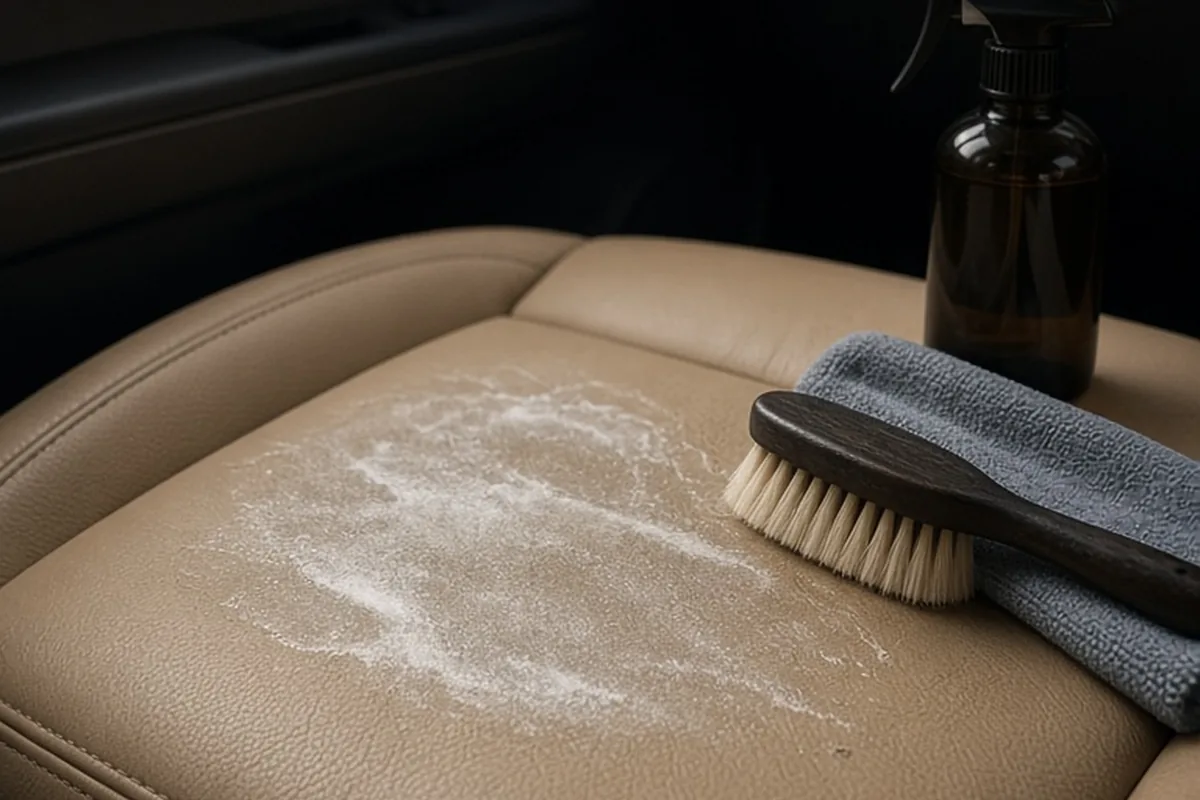
To remove sunscreen from a leather car interior, first wipe away loose residue with a damp microfiber towel. Spray a dedicated pH-balanced leather cleaner or a diluted mild castile soap solution onto a soft-bristled brush, gently agitate the white mineral stains in circular motions, and wipe clean with a separate damp cloth. Finish by applying a quality leather conditioner to restore moisture and protect the topcoat.
Sunscreen stains are among the most persistent automotive interior blemishes because mineral filters and water-resistant emollients bind tightly to the protective topcoat of vehicle leather.
Why Sunscreen Leaves Persistent Stains on Automotive Leather
Sunscreen formulations are engineered to create a durable, water-resistant barrier on human skin, but those exact properties make them difficult to remove from automotive leather. Modern sunscreens contain physical mineral blockers, such as zinc oxide and titanium dioxide, suspended in a matrix of synthetic oils, silicones, and waxes. Most modern car seats are constructed from coated leather, meaning the dyed animal hide is sealed beneath a protective polyurethane clear coat. When sunscreen transfers from arms or legs onto a seat, the oily carriers penetrate the microscopic texture of the polyurethane coating while the insoluble white mineral pigments settle into the grain valleys, creating unsightly, chalky streaks that standard water wiping cannot lift.
Vehicle cabin conditions significantly accelerate this bonding process. During warm weather, the internal temperature of a parked vehicle can easily climb above one hundred and thirty degrees Fahrenheit. This intense heat softens both the leather topcoat and the sunscreen oils, encouraging the oily binders to seep deeper into the grain. As the vehicle cools down in the evening, the oils re-harden, trapping the chalky white minerals beneath a resilient, water-repellent film. Standard interior detailing wipes typically smear these oils across the surface rather than lifting them, resulting in larger, hazy white smudges across seat bolsters, center consoles, and door panels.
Essential Cleaning Tools and Products to Avoid
Selecting the proper tools ensures you remove sunscreen deposits without compromising the factory finish of your seats. A dedicated, pH-balanced automotive leather cleaner is the most reliable option because its surfactant profile emulsifies synthetic oils and lifts mineral pigments without degrading the clear coat. Alongside your cleaner, assemble three clean microfiber towels with a medium pile, a soft-bristled horsehair detailing brush, and a spray bottle filled with distilled water. Horsehair bristles are particularly valuable because they provide enough mechanical action to dislodge pigment from the leather grain while remaining soft enough to avoid micro-scratching delicate topcoats.
Knowing what products to avoid is equally important for preserving your upholstery. Melamine foam sponges, commonly known as magic erasers, act as micro-abrasives that physically sand away the protective clear coat and factory dye, leaving permanently dull, discolored patches. Similarly, aggressive solvents like isopropyl alcohol, acetone, nail polish remover, hand sanitizer, and heavy-duty degreasing dish soaps strip essential plasticizers from the leather finish. While these harsh chemicals may dissolve the white sunscreen residue instantly, they leave the underlying hide brittle, faded, and vulnerable to accelerated cracking, peeling, and permanent staining.
Step-by-Step Cleaning Process for Fresh Sunscreen Marks
When dealing with fresh sunscreen transfers that occurred within a few hours or days, taking swift action prevents the mineral oils from embedding deeply into the texture. Begin by inspecting the area under bright, natural light to locate all transfer points. Take a dry, clean microfiber towel and gently blot the surface to pick up any loose, greasy top layers. Avoid pressing down hard or dragging the towel across the seat during this initial step, as aggressive friction can push floating mineral particles further into the textured crevices of the leather grain.
Once excess surface cream is removed, apply two to three sprays of pH-balanced leather cleaner directly onto the bristles of your horsehair brush rather than spraying the seat directly. Work the brush across the white marks using gentle, overlapping circular motions, allowing the light foam to encapsulate the oils and suspend the mineral particles. Immediately wipe away the suspended foam using a clean microfiber cloth dampened with distilled water, using light sweeping passes. Finish by buffing the area completely dry with a separate dry microfiber towel, checking the surface from multiple angles to verify that no pale residue remains.
Techniques for Removing Dried and Stubborn Mineral Stains
Sunscreen stains that have baked into automotive leather over several weeks or months require a multi-stage approach with extended cleaning dwell time. Because the carrier oils have cured onto the clear coat, a light wipe-down will only remove surface grime, causing the white chalky outline to reappear as soon as the leather dries. To tackle old stains, use a dedicated foaming pump bottle to dispense a thick foam cleaner directly over the stained zone. Thick foam clings to textured leather without running down the seat, giving the surfactants time to break down hardened synthetic waxes without saturating the hide.
Allow the foam to dwell on the stain for forty-five to sixty seconds to loosen the bond between the minerals and the polyurethane topcoat. Next, gently agitate the area using a soft detailing brush, alternating between circular motions and back-and-forth linear strokes aligned with the leather grain pattern. Wipe away the grime using a clean microfiber towel folded into quarters, flipping to a clean facet after every wipe to prevent re-depositing the lifted sunscreen. If faint white mineral outlines remain after the surface dries, repeat the foaming and agitation cycle a second time rather than applying heavier physical pressure, which could damage the coating.
Special Care for Perforated and Ventilated Leather Seats
Modern vehicle seats equipped with climate-controlled ventilation or built-in heating elements feature perforated leather patterns that demand extra caution during cleaning. The tiny holes in perforated upholstery lead directly into internal foam cushions, heating grids, and electric fan assemblies. Spraying liquid cleaners directly onto perforated seats causes fluid to drain into these holes, where trapped chemicals and moisture can degrade the underlying foam cushioning, produce mildew odors, or cause the circular edges of the leather perforations to swell, curl, and harden permanently.
To safely clean perforated seating, always aerate your cleaner into a dry foam or apply a small amount to your brush bristles, shaking off any excess liquid so the brush is barely damp. Work across the perforated panels using rapid, light strokes to clean the surface plane without forcing foam downward into the openings. Immediately follow each pass with a dry microfiber cloth wrapped firmly around your hand to lift surface moisture. If cleaner inadvertently bubbles inside the perforations, hold a wet-dry vacuum hose with a soft brush attachment a fraction of an inch above the seat to extract the trapped liquid without scratching the leather.
Restoring Moisture and Protecting the Leather Finish
Thoroughly removing sunscreen and its stubborn carrier oils inevitably strips away some of the natural moisture and surface conditioning agents from the leather clear coat. Once the cleaned leather is completely dry to the touch, applying a high-grade automotive leather conditioner is necessary to restore suppleness, prevent the clear coat from drying out, and restore a uniform factory sheen. Select a water-based conditioner formulated specifically for modern top-coated automotive upholstery that incorporates ultraviolet inhibitors and leaves a non-greasy, matte finish.
Apply a nickel-sized amount of conditioner to a microfiber applicator pad and massage it evenly across the entire seat section rather than just the cleaned spot, ensuring consistent color and texture across the panel. Allow the conditioner to absorb for ten to fifteen minutes, then buff away any excess residue with a clean, dry microfiber towel. To prevent future sunscreen transfer during summer months, consider keeping a washable towel or dedicated seat protector over high-contact areas, and allow personal sunscreens to absorb fully into your skin for ten to fifteen minutes before entering the vehicle.
Frequently asked questions
Can I use baby wipes or household disinfectant wipes to remove sunscreen from car seats?
Household disinfectant wipes and baby wipes should be avoided on automotive leather because they often contain alcohol, harsh astringents, or moisturizing lotions not formulated for coated hides. These chemicals can slowly dissolve the clear coat and leave behind sticky residues that attract more dirt. Stick to dedicated automotive leather cleaners or mild, diluted castile soap instead.
Why does the white sunscreen stain keep reappearing after the leather dries?
Sunscreen stains reappear because the carrier oils have been wiped away while the heavier physical mineral pigments, such as zinc oxide, remain trapped deep within the leather grain. When the surface is wet, the minerals become transparent, but they turn opaque and white again as soon as moisture evaporates. A second cleaning pass with a soft-bristled brush and foaming cleaner is needed to mechanically lift the remaining minerals.
Will white vinegar safely remove sunscreen from leather car seats?
While diluted white vinegar is sometimes suggested as a home remedy, its acidic nature can dry out automotive leather and erode the protective clear coat over repeated use. If commercial leather cleaners are unavailable, a safer home alternative is a few drops of mild castile soap mixed into warm distilled water applied with a microfiber cloth.
Your next step
Inspect your vehicle seats in clear lighting, gather a soft-bristled horsehair brush, clean microfiber towels, and a pH-balanced leather cleaner, and test a hidden spot before gently cleaning the visible stains.