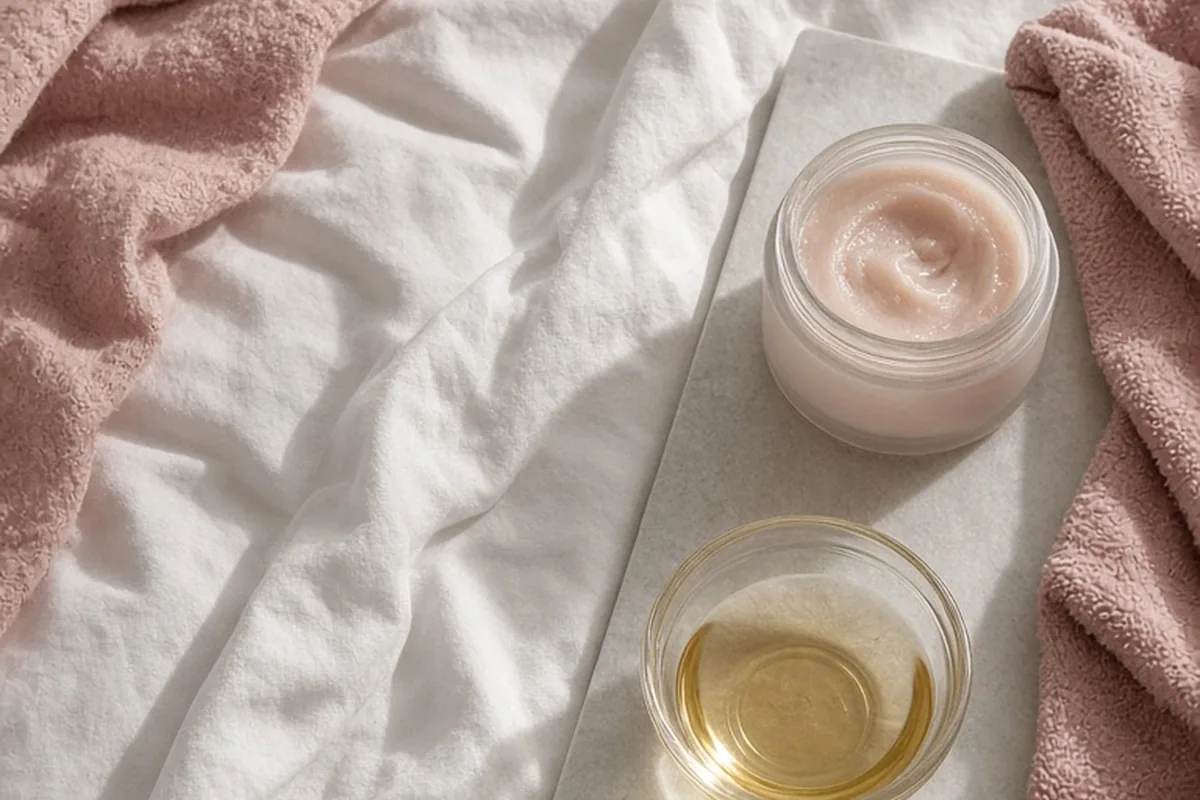
To completely remove sunscreen from your skin, massage an oil-based cleanser, cleansing balm, or micellar water over dry skin for about sixty seconds to break down water-resistant polymers and UV filters. Rinse thoroughly with lukewarm water, then wash with a gentle water-based cleanser to lift away remaining residue and leave your skin balanced without stripping natural moisture.
Daily sun protection is essential for skin health, but modern long-wear and water-resistant formulas are specifically engineered to stick tightly to your skin through heat, sweat, and moisture.
Why Sunscreen Resists Standard Water and Quick Washes
Sunscreen formulations rely on film-forming agents, waxes, and silicones such as dimethicone to ensure that UV filters remain evenly distributed across the skin surface throughout the day. These ingredients are intentionally hydrophobic, meaning they repel water so that swimming, sweating, or humidity does not wash away the protective shield. When you attempt to remove these formulas using only plain tap water or a very mild, non-foaming lotion cleanser, the water simply glides over the hydrophobic film rather than dissolving it.
When sunscreen residue accumulates on the skin overnight, it traps natural sebum, dead skin cells, airborne pollutants, and cosmetic pigments inside the pores. Over time, this buildup can contribute to congested follicles, microcomedones, and localized inflammation. Understanding that sunscreens are oil-soluble compounds clarifies why standard water-based washing methods frequently leave behind a tacky, invisible film that requires a more targeted cleansing strategy.
The Double Cleansing Technique for Thorough SPF Removal
The double cleansing method is widely considered the most effective way to eliminate stubborn sunscreen without aggressive scrubbing. This process relies on the basic chemical principle that like dissolves like. An initial lipid-rich cleanser bonds with the oil-based filters, sebum, and silicone resins on the face, effectively liquefying them so they can be rinsed away with water.
To perform this properly, begin by applying your oil cleanser or balm to completely dry hands and a dry face. Gently massage the product across your forehead, cheeks, nose, and jawline in circular motions for forty-five to sixty seconds, paying close attention to the crevices around the nostrils and the hairline. Introduce a small amount of lukewarm water to emulsify the oil into a milky fluid, rinse thoroughly, and immediately follow with a standard water-based cleanser to wash away residual water-soluble sweat and cleansing agents.
- Apply your cleansing oil or balm directly onto dry skin using clean, dry hands.
- Massage gently for roughly one minute to melt down water-resistant polymers and pigments.
- Add warm water to transform the oil into an emulsified milky liquid before rinsing clean.
- Follow with a gentle foaming, gel, or cream cleanser to remove any remaining surface residue.
Choosing the Right First Cleanser for Your Skin Type
Selecting the proper first-step cleanser prevents unwanted dryness or excess congestion, as different skin profiles respond differently to various carrier oils and surfactant systems. For individuals with oily or blemish-prone complexions, lightweight cleansing oils formulated with high-linoleic oils, such as sunflower seed, safflower, or grapeseed oil, break down sunscreen efficiently without leaving heavy, pore-clogging residues. Look for cleansing oils that contain built-in emulsifiers so that the product rinses completely clean with water.
If you have dry, mature, or compromised skin, rich cleansing balms containing shea butter, squalane, or plant ceramides provide extra cushioning against friction while conditioning the lipid barrier. Those with reactive or rosacea-prone skin may prefer fragrance-free micellar water soaked onto a soft, reusable cotton pad. While micellar water avoids the need for heavy oil massage, it is important to press the saturated pad gently against the skin for a few seconds to let the micelles work, rather than dragging the pad aggressively across sensitive areas.
Dissolving Mineral Filters Versus Chemical UV Absorbers
Mineral sunscreens rely on inorganic physical particles, namely zinc oxide and titanium dioxide, suspended in a thick emulsion to reflect and scatter light. These mineral particles cling tightly to epidermal texture and are notoriously difficult to dissolve with standard foaming cleansers alone. When mineral formulas dry down, they can settle into fine lines and pores, often requiring a slightly longer oil massage to fully dislodge the microscopic mineral grains from the skin.
Chemical sunscreens, by contrast, utilize organic compounds like avobenzone, octisalate, and homosalate that absorb into the very top layers of the stratum corneum to transform UV rays into harmless heat. While chemical formulas generally feel lighter and leave less visible powder residue, their solvent systems and synthetic stabilizers are still water-repellent. Both categories benefit significantly from an oil-based initial cleanse, but physical mineral sunscreens require extra attention to visual boundaries like the eyebrows, beard lines, and jawline where white cast particles often linger.
Removing Sunscreen from the Body, Neck, and Sensitive Areas
Body sunscreens are often formulated to be significantly more water-resistant and adhesive than facial products, making them harder to rinse away with ordinary shower gel. To remove thick body lotions and sport sprays from the shoulders, chest, back, and arms, applying a shower oil or an emulsifying body wash directly to dry skin before turning on the water can rapidly dissolve the protective coating.
Delicate areas require thoughtful handling. The eyelids and under-eye zone are covered by much thinner skin that is susceptible to irritation from aggressive rubbing. Use a dedicated, ophthalmologist-tested micellar fluid or gentle balm to dissolve water-resistant eye SPF, working in slow, downward motions. Do not forget the back of the neck, the ears, and the chest, as these high-exposure zones collect substantial product and daily grime that require identical cleansing attention during your evening routine.
Cleansing Mistakes That Trigger Irritation or Breakouts
A common pitfall when removing sunscreen is relying solely on disposable makeup wipes. Wipes tend to smear dissolved product, sunscreen filters, and environmental dirt across the face rather than fully removing them from the skin. Furthermore, the repetitive mechanical friction from textured wipe materials can compromise the delicate skin barrier, causing low-grade inflammation and sensitivity over time.
Another frequent mistake is using excessively hot water in an attempt to melt off water-resistant formulas. Scalding water strips away vital intercellular lipids, leading to trans-epidermal water loss, redness, and reactive oil overproduction. Similarly, over-cleansing by using harsh, high-pH bar soaps or abrasive physical facial scrubs can damage the acid mantle. Effective sunscreen removal relies on the chemistry of oil-dissolving surfactants rather than physical force or extreme water temperatures.
Post-Cleansing Care to Restore Skin Balance
Once sunscreen and environmental impurities have been thoroughly rinsed away, your skin is primed to absorb restorative evening skincare. Thorough cleansing temporarily shifts the skin's surface moisture levels, making it helpful to replenish hydration immediately with a non-alcoholic soothing toner, essence, or serum containing humectants like glycerin, hyaluronic acid, or panthenol.
Conclude your evening regimen by sealing in hydration with a nourishing moisturizer appropriate for your skin type. Look for barrier-supporting ingredients such as ceramides, cholesterol, fatty acids, or colloidal oatmeal. This restorative step ensures that the skin barrier remains strong and resilient, ready to tolerate daily sun exposure and active topical treatments the following morning without dryness or flaking.
Frequently asked questions
Can I remove water-resistant sunscreen with plain micellar water?
Yes, micellar water can remove sunscreen if you saturate a soft pad thoroughly and allow it to sit on the skin for several seconds before wiping. However, for heavy water-resistant or mineral formulas, a dedicated cleansing oil followed by a gentle water rinse is generally more thorough.
Will using a cleansing oil to remove sunscreen cause acne breakouts?
Using a properly formulated cleansing oil that emulsifies with water will not cause breakouts because it rinses completely away. Problems typically occur only if the oil is not emulsified and rinsed with a second water-based cleanser, leaving heavy residue behind.
Do I need to double cleanse if I only wore non-water-resistant sunscreen?
If you wore a light, everyday chemical sunscreen without water resistance, a single thorough wash with a balanced foaming or gel cleanser may be sufficient. However, if your skin feels coated or you notice clogged pores, adding an oil-based first step can improve clarity.
How do I know if all my mineral sunscreen has been removed?
Clean skin should feel soft and balanced without any chalky white residue, tackiness, or persistent slip when lightly touched with clean fingers. Gently patting your face with a dark, damp towel can also reveal whether mineral white cast pigments remain.
Your next step
Assess your current evening cleanser, and try adding an emulsifying cleansing oil or gentle balm to dry skin tonight to see if your face feels cleaner and more comfortable.