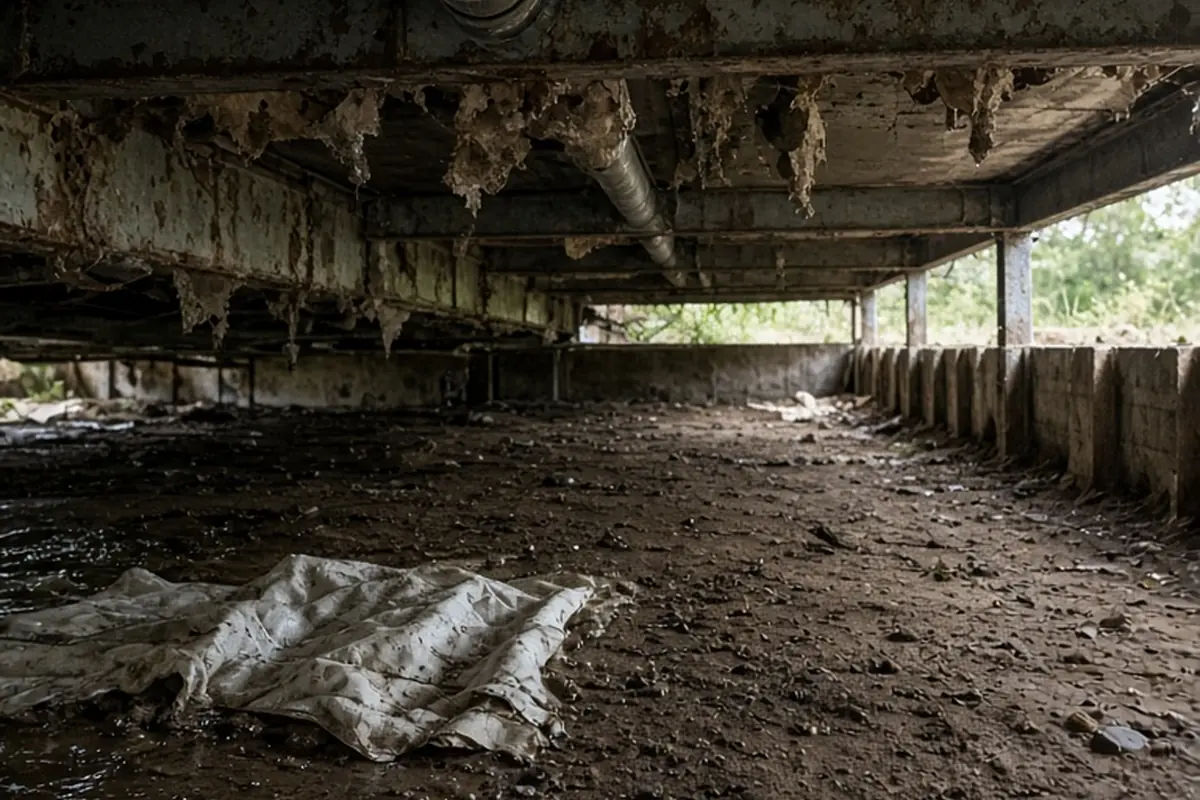
To stop moisture under a mobile home, cover the bare ground completely with a six-mil polyethylene vapor barrier, overlapping seams by twelve inches and taping them securely. Next, ensure skirting vents provide one square foot of ventilation per one hundred fifty square feet of ground space. Finally, slope exterior soil away from the home and repair any sagging underbelly fabric.
The crawlspace beneath a manufactured home is particularly vulnerable to damp conditions because ground moisture naturally evaporates upward into enclosed skirting. Without intervention, this trapped humidity rots subfloors, rusts steel chassis frames, and degrades underbelly insulation.
Laying a Continuous Ground Vapor Barrier
Uncovered earth continually releases moisture into the enclosed perimeter of a mobile home. On warm days, ground evaporation rises against the underbelly, soaking into insulation and condensing along the steel frame rails. Installing a heavy-duty vapor barrier is the single most effective baseline defense against this invisible evaporation cycle.
To install the barrier properly, clear the ground of sharp rocks, construction debris, and standing debris that could puncture the plastic. Lay black or clear polyethylene sheeting with a minimum thickness of six mil across the entire dirt floor. Overlap all sheet seams by at least twelve inches and seal them continuously using specialized vapor barrier tape or heavy-duty moisture-resistant acrylic tape. Extend the plastic slightly up foundation piers and perimeter walls, weighing down edges with smooth bricks, sandbags, or landscape staples.
While six-mil plastic is the standard recommendation, high-traffic crawlspaces or rocky ground conditions often benefit from ten-mil or reinforced cross-laminated sheeting. Thicker barriers resist punctures when you must crawl beneath the structure for routine plumbing checks. The primary trade-off is higher initial material cost and slightly more weight during handling, but the long-term durability significantly reduces maintenance intervals.
Balancing Skirting Ventilation and Cross-Flow Air
Skirting keeps rodents and harsh weather away from home systems, but completely sealing it without deliberate airflow creates a humid microclimate. Natural cross-ventilation allows damp crawlspace air to escape before it reaches dew point temperature on cool surfaces beneath the home.
A practical rule of thumb is providing one square foot of free vent opening for every one hundred fifty to three hundred square feet of crawlspace area, assuming an intact ground vapor barrier is present. Position vents within three feet of each corner to prevent stagnant dead-air pockets where humidity lingers. Use louvered vents with fine wire mesh to keep insects and pests out while allowing air to circulate freely from opposing sides of the home.
Homeowners in cold climates often debate whether to close skirting vents during winter to keep pipes warm. Closing vents entirely traps rising soil moisture and furnace duct condensation, which can quickly rot the subfloor. A balanced approach is insulating the water pipes directly with heat tape and foam sleeves while keeping baseline ventilation open, or utilizing automatic temperature-controlled louvers that modulate airflow without creating prolonged air stagnation.
Managing Exterior Surface Drainage and Gutters
Many moisture problems under mobile homes originate outside the footprint. When roof runoff or landscape water pools against the skirting base track, water seeps directly under the perimeter onto the crawlspace soil, overwhelming even well-installed vapor barriers.
Inspect the perimeter ground slope around the home. The soil should slope downward away from the skirting at a rate of at least one-half inch per foot for the first six to ten feet. If the home sits in a depression or flat terrain, install continuous gutters and downspouts along the roofline. Add rigid downspout extensions that carry water at least four to six feet away from the base before discharging it.
In persistent low spots where water naturally gathers, consider installing an exterior French drain or shallow swale to redirect surface runoff before it reaches the skirting. The limitation of regrading in established mobile home parks is often proximity to neighboring lots, so coordinating water diversion paths that do not discharge onto adjacent property is necessary.
Inspecting Underbelly Fabric and Plumbing Connections
The bottom board, or belly wrap, is a durable woven fabric suspended beneath the chassis to hold floor insulation in place and protect against drafts. When water collects inside this membrane, it sags noticeably, holding stagnant moisture directly against wooden joists and subflooring.
Crawl underneath with a powerful flashlight to inspect the entire bottom board for low, heavy hanging spots. Small pinhole leaks from supply lines or loose drain pipe couplings often drip silently inside the belly wrap for months before appearing inside living quarters. If you find a sagging section, carefully make a small exploratory slice in the fabric to drain accumulated water, then trace and repair the offending pipe fitting.
Once internal repairs are complete and wet fiberglass has dried or been replaced, patch the membrane using specialized bottom board tape or belly repair patches. Standard duct tape degrades rapidly in crawlspace environments and will drop off within months. Never seal over wet insulation, as trapping dampness against joists guarantees wood rot over time.
Venting Appliances and Ducts Directly Outdoors
Venting household appliances improperly is an avoidable cause of crawlspace moisture. Clothes dryers, bathroom exhaust fans, and kitchen vents remove huge volumes of moist air from living spaces; if that air discharges beneath the mobile home, it creates instant condensation on cool structural surfaces.
Check that dryer exhaust ducts transition directly through the skirting wall to the outdoors rather than terminating underneath the floor. Use smooth, rigid or semi-rigid metal ductwork instead of flexible ribbed vinyl, which traps lint and restricts airflow. Ensure the outside termination hood features a functioning backdraft damper to block exterior moisture and drafts when the dryer is off.
Similarly, verify that bathroom exhaust lines route all the way out through the roof, gable, or exterior wall. When bathroom ducts disconnect or terminate inside floor cavities, showers pump gallons of humid air into the underbelly weekly, leading to mold growth and musty odors inside closets and baseboards.
Sealing HVAC Air Leaks and Duct Condensation
During warm summer months, central air conditioning pushes cold air through supply ductwork running inside the crawlspace. When warm, humid crawlspace air contacts cold, uninsulated metal or thin flex ducts, the ducts begin to sweat profusely, dripping water onto the bottom board.
Inspect supply trunk lines and crossover ducts for torn insulation and broken joints. Seal all sheet metal seams and collar connections with fiber-reinforced duct mastic or metal foil-backed tape. Ensure the ductwork is wrapped in at least R-6 or R-8 fiberglass duct insulation with an intact outer vapor retarder jacket, taped at every seam to keep warm air off cold metal.
Additionally, seal around the floor boots where supply registers enter the interior rooms. Unsealed gaps between the floor cutout and the metal boot allow humid crawlspace air to be drawn upward into living areas by normal home pressure differences, raising indoor humidity and straining air conditioning systems.
Frequently asked questions
Should I keep skirting vents open or closed during winter?
In most situations, skirting vents should remain at least partially open during winter to allow ground moisture and duct condensation to escape. To prevent frozen pipes, insulate water lines directly with heat tape and foam rather than closing crawlspace airflow entirely.
What thickness of plastic sheeting is best under a mobile home?
A minimum thickness of six-mil polyethylene plastic is recommended for ground vapor barriers under manufactured homes. If you must crawl under the home regularly for storage or maintenance, ten-mil or reinforced poly sheeting offers better puncture resistance against gravel and debris.
Can I install a dehumidifier in a mobile home crawlspace?
A standard dehumidifier is ineffective in a traditionally vented skirting setup because incoming outdoor air continuously replaces the dried air. Dehumidifiers are only practical if the crawlspace is fully encapsulated, sealed, and mechanically conditioned to building code specifications.
How do I know if moisture is damaging my underbelly insulation?
Look for sagging, heavy sections in the woven bottom board material beneath the chassis, which indicate pooled water. You may also notice persistent musty smells inside the home, soft spots in the subfloor around plumbing fixtures, or visible rust along the steel frame rails.
Your next step
Take a flashlight underneath your mobile home to check for bottom-board sag, verify complete ground plastic coverage, and confirm that all skirting vents and dryer exhausts remain clear of obstructions.