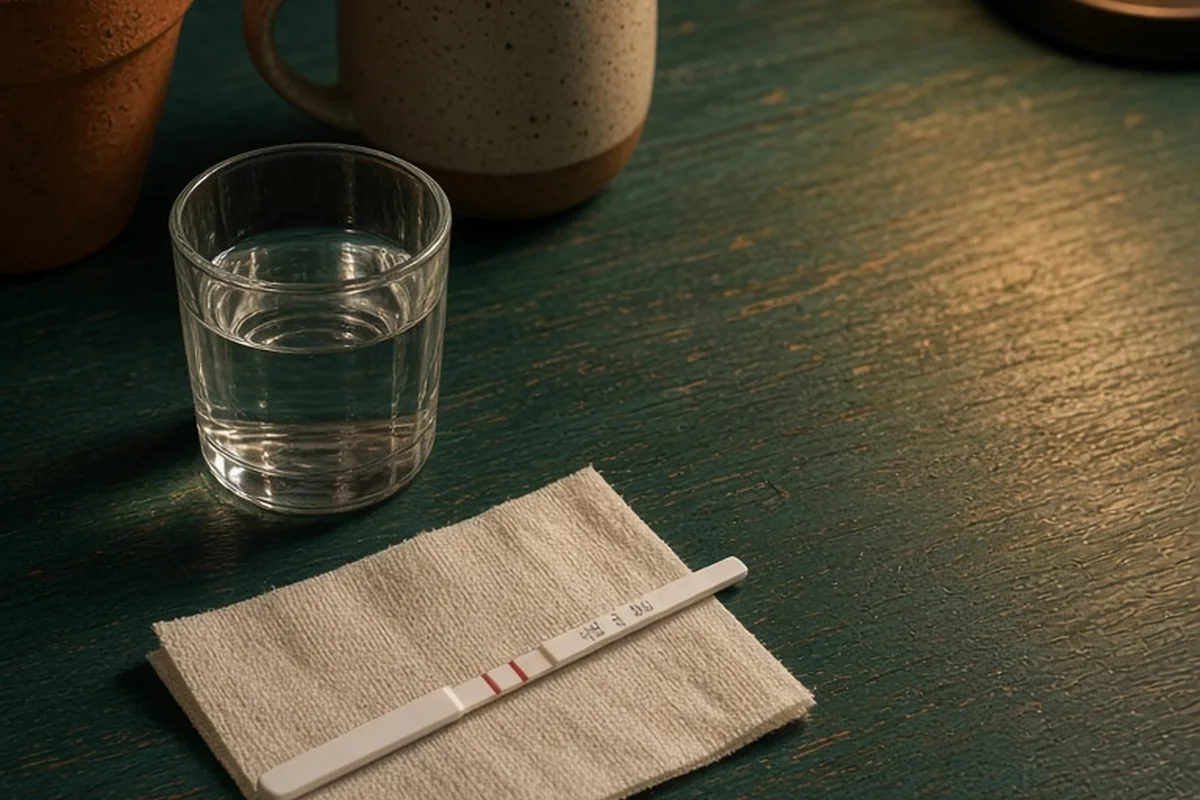
To use ovulation strips, begin testing your urine daily several days before your expected ovulation window, ideally in the afternoon or early evening. Dip the strip into collected urine for the package-specified time, lay it flat, and read the result within ten minutes. A positive result occurs only when the test line is as dark as or darker than the control line, signaling an LH surge roughly 24 to 36 hours before ovulation.
Ovulation predictor kits measure luteinizing hormone in your urine to pinpoint when your body is preparing to release a mature egg. Because sperm can survive in the reproductive tract for up to five days while an egg remains viable for only twelve to twenty-four hours after release, finding this hormonal window allows you to schedule intercourse when conception is most likely.
Calculating When to Start Testing Based on Your Cycle
Determining the right day to start using ovulation strips depends directly on the total length of your menstrual cycle. Cycle day one is always the first day of full, bright-red menstrual bleeding, not light spotting. In a typical twenty-eight-day cycle, ovulation generally occurs around day fourteen, meaning the luteinizing hormone surge begins one to two days earlier. To ensure you do not miss the start of the surge, count backward fourteen to seventeen days from your expected next period. For a standard twenty-eight-day cycle, you would start testing on cycle day ten or eleven.
If your cycle length varies from month to month, base your testing start date on your shortest cycle over the past six months. For example, if your cycles range between twenty-seven and thirty-two days, subtract seventeen from twenty-seven to begin testing on cycle day ten. Starting earlier requires using more test strips across the month, but it prevents you from missing an early surge. Testing too late, by contrast, risks missing the surge entirely, which can lead to the false assumption that you did not ovulate during that cycle.
Selecting the Best Time of Day and Managing Fluid Intake
Unlike home pregnancy tests that require concentrated first-morning urine to detect human chorionic gonadotropin, ovulation predictor strips generally perform best with urine collected between late morning and early evening. Luteinizing hormone is synthesized by the pituitary gland early in the morning and takes several hours to filter into your urine in detectable quantities. Testing between noon and eight in the evening frequently captures the peak concentration of the hormone more clearly than testing immediately upon waking.
Hydration levels significantly affect the accuracy of paper test strips. Drinking large volumes of water, tea, or other beverages shortly before testing dilutes your urine, which can lighten the test line and produce a false negative even when your body is experiencing a surge. To achieve a reliable reading, avoid urinating and limit your fluid intake for approximately two to three hours before collecting your sample. Maintaining a consistent testing time each day also provides a cleaner baseline for comparison.
Performing the Test Step by Step for Clean Results
Collecting your sample properly prevents dye bleeding and invalid strip results. Collect urine in a clean, dry plastic or glass container rather than holding the absorbent tip directly in the urine stream, unless you are using a specialized midstream test stick. Remove the paper strip from its protective foil pouch immediately before use, holding it by the colored handle end to avoid touching the testing membrane with your fingers.
Immerse the absorbent end of the strip into the urine sample vertically, ensuring the liquid level does not go past the printed maximum line. Hold the strip in the liquid for the exact duration specified in the product packaging, which is typically between five and ten seconds. Remove the strip and place it on a clean, flat, non-absorbent surface such as the edge of the collection cup or a countertop. Start a timer immediately according to the manufacturer guidelines, usually between five and ten minutes. Never read the test after the maximum time limit has passed, as drying urine can leave faint evaporation lines that resemble false positives.
Interpreting Test Lines Versus Control Lines Correctly
The most common mistake when using ovulation strips is reading them like home pregnancy tests. On a pregnancy test, any faint line in the test region indicates a positive result. On an ovulation test, a faint test line is considered negative. Luteinizing hormone is present in low baseline amounts throughout your entire menstrual cycle, so faint test lines are completely normal on non-fertile days. A test is positive only when the test line is visibly as dark as, or darker than, the control line.
To track your progress accurately, compare each daily strip against previous days to watch for a darkening progression. The control line verifies that the capillary action of the strip worked properly; if no control line appears, the test is invalid regardless of whether a test line is visible. Many people choose to tape their daily strips onto a tracking sheet or log photos in a cycle-tracking application to observe how their personal hormone levels rise from a faint shadow to a bold, definitive peak.
Timing Intercourse Around a Positive Luteinizing Hormone Surge
A positive ovulation strip indicates that the brain has released a surge of luteinizing hormone, which triggers the ovarian follicle to rupture and release an egg roughly twenty-four to thirty-six hours later. Because mature eggs survive for only twelve to twenty-four hours after release, the optimal time for intercourse begins the moment you detect the surge. Having viable sperm already present in the fallopian tubes before the egg arrives offers the highest statistical probability of fertilization.
A practical intercourse plan involves having sex on the day you record your first positive test and again the following day. If your partner has normal semen parameters, having sex on the day prior to the surge, the day of the surge, and the day after covers the entire peak fertility window. Once the surge has passed and the test lines become lighter again, the fertile window generally closes within twenty-four to forty-eight hours.
Troubleshooting Faint Lines, Rapid Surges, and Absent Peaks
Some individuals experience what is known as a rapid LH surge, where hormone levels spike and drop within a narrow window of eight to twelve hours. If you test only once per day, you might see a moderate line on Monday afternoon, miss the peak overnight, and see a faint line again on Tuesday afternoon. If your strips darken slightly but never reach a full positive, try testing twice per day—once around noon and once around seven in the evening—as soon as you notice the test line beginning to deepen in color.
Persistent challenges can also arise from underlying hormonal conditions or anovulatory cycles. For instance, people with polycystic ovary syndrome often have naturally elevated baseline levels of luteinizing hormone, which can cause strips to look nearly positive for weeks at a time or yield multiple false peaks before an actual egg matures. If you test consistently across multiple cycles and never detect a surge, or if every test appears positive regardless of cycle day, consulting a healthcare provider or reproductive specialist can help clarify your hormonal profile.
Combining Strips with Cervical Mucus and Basal Body Temperature
While ovulation predictor kits are effective at signaling your body's intention to release an egg, they cannot confirm that an egg was successfully released. An LH surge can occasionally occur without mechanical ovulation, a situation known as a luteinized unruptured follicle. To build a more complete picture of your fertility, consider cross-referencing your strip results with secondary physical fertility markers such as cervical fluid and basal body temperature.
In the days leading up to your LH surge, rising estrogen levels cause cervical mucus to become clear, slippery, and stretchy, resembling raw egg whites. Following ovulation, progesterone rises and causes your resting body temperature to increase by approximately zero point five to one degree Fahrenheit. By using ovulation strips to time intercourse before the egg releases and tracking basal body temperature to confirm the subsequent thermal shift, you gain comprehensive insight into both the opening and closing of your fertile window.
Frequently asked questions
Can I use first-morning urine for ovulation strips?
Most standard ovulation strips work best with urine collected between late morning and early evening because luteinizing hormone is processed into urine throughout the day. Unless your specific kit instructions explicitly recommend morning testing, afternoon testing between noon and eight in the evening delivers the most reliable results.
Does a faint test line mean I am close to ovulating?
A faint test line is technically a negative result because baseline levels of luteinizing hormone are present throughout your cycle. While a line that gradually darkens over consecutive days can indicate an approaching surge, you should only consider yourself at peak fertility once the test line matches or exceeds the control line in darkness.
How many days in a row will an ovulation test stay positive?
Most people detect a positive test for one to two consecutive days during their cycle. Ovulation typically occurs twenty-four to thirty-six hours after the initial surge appears, so your first positive result is the most critical marker for timing intercourse.
Why did my ovulation test get darker and then lighter without a true positive?
Hormone levels can fluctuate slightly throughout a cycle, or a very brief LH surge may have occurred between your daily testing intervals. If you suspect your peak happens quickly, testing twice daily as the line begins to darken can help capture the true high point.
Your next step
Determine your shortest cycle length, subtract seventeen days to set your starting test date, and test your afternoon urine consistently until the test line matches or exceeds the control line.