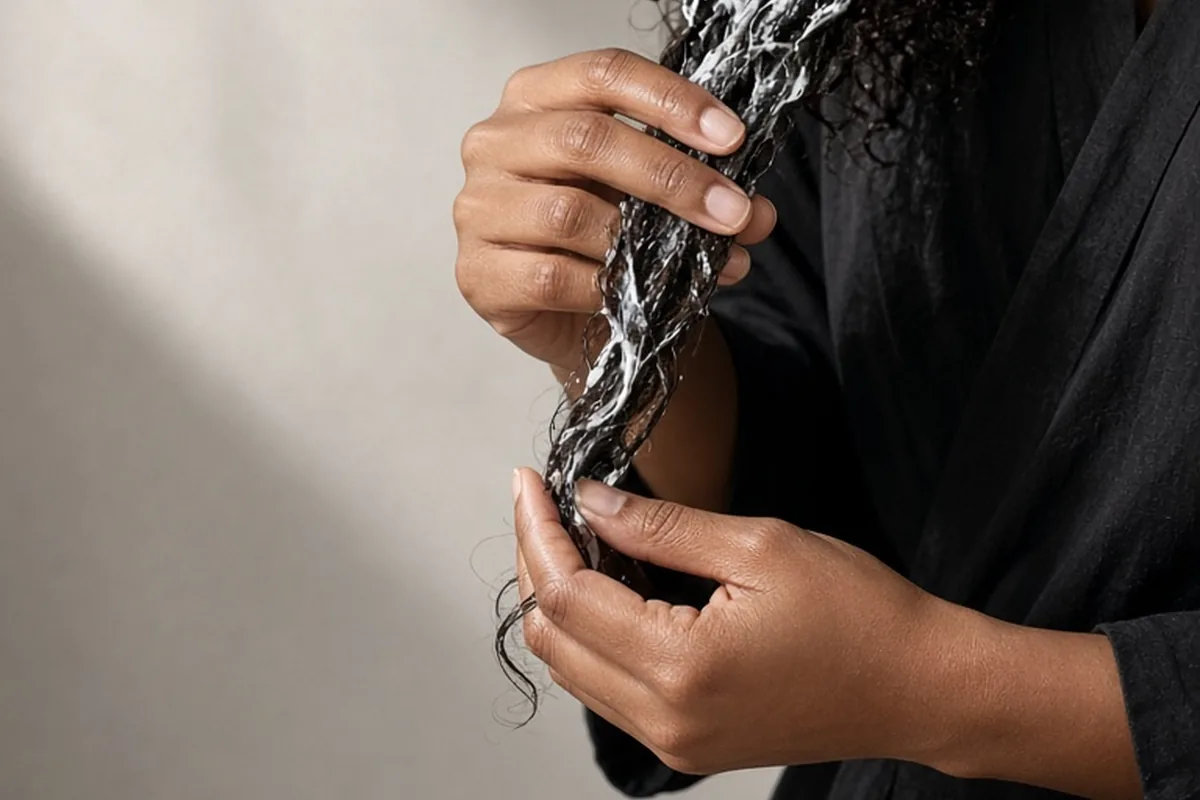
To use a Shea Moisture hair mask, shampoo your hair first and gently squeeze out excess water. Scoop a generous amount of mask and distribute it evenly from mid-lengths to ends using your fingers or a wide-tooth comb. Leave the treatment on for ten to thirty minutes, optionally applying gentle heat for deeper penetration, and then rinse thoroughly with cool or lukewarm water before styling.
Shea Moisture deep treatment masks are formulated with rich plant butters, botanical extracts, and nourishing oils designed to restore moisture and elasticity to dry, damaged, or textured hair. Getting salon-quality results at home depends heavily on proper preparation, precise application, and understanding how your specific hair texture interacts with heavy emollient formulas.
Prepping Your Strands with the Right Cleansing Routine
Applying a deep conditioning mask over dirty or product-laden hair prevents the rich ingredients from penetrating the hair shaft. Hair naturally accumulates environmental pollutants, sebum, and residue from leave-in styling creams, silicone serums, and edge controls. When you layer a dense mask over this invisible barrier, the treatment merely sits on the surface, leaving hair greasy rather than hydrated. Starting with a thorough cleanse lifts the hair cuticles slightly and clears away buildup so the active nutrients can reach the cortex.
Use a gentle clarifying shampoo or a sulfate-free moisturizing shampoo depending on how much styling residue is present. Lather at the scalp and work down the strands, rinsing completely with warm water to help soften the cuticle layer. After washing, resist the urge to apply the mask to soaking-wet hair. Water fills the porosity gaps within the strand; if your hair is dripping wet, it will dilute the rich cream and cause much of the product to slide down the drain. Instead, gently squeeze your hair with hands or blot it with a microfiber towel until it is damp but not dripping before reaching for the jar.
Sectioning and Distributing the Mask Evenly
Shea Moisture masks have thick, buttery consistencies that require deliberate distribution to ensure uniform coverage. Scooping a handful and rubbing it only over the top layer of your hair leaves the under layers dry and brittle while weighing down the crown. To distribute the treatment properly, divide damp hair into four manageable quadrants using non-snag sectioning clips. If you have particularly dense or tightly coiled hair, working in six to eight smaller sections provides significantly better control.
Take a quarter-sized to palm-sized amount of mask per section, depending on your hair length and density. Rub the formula between your palms to warm the shea butter base, making it easier to spread. Apply the product starting roughly two inches away from your roots, working downward toward the ends, which represent the oldest and most vulnerable parts of your hair. Use your fingers to rake the product through each section, followed by a wide-tooth detangling comb or flexible wet brush to coat every strand. Avoid applying heavy amounts directly to the scalp unless the specific formula is labeled for scalp use, as concentrated raw butters can clog follicles and contribute to flaking.
Managing Processing Time and Adding Gentle Heat
Allowing the mask to sit on your hair for the recommended duration gives the emollient oils and humectants adequate time to bind to the hair shaft. For a standard maintenance treatment, leaving the mask on for ten to fifteen minutes works well for normal to slightly dry hair. If your hair is chemically processed, high in porosity, or severely dehydrated, extending the treatment time to thirty minutes delivers deeper softness and improved elasticity.
Adding indirect heat is one of the most effective ways to boost performance, particularly for low-porosity hair whose tightly closed cuticles resist moisture intake. Once the mask is distributed, twist your hair loosely and secure it beneath a plastic processing cap. You can sit under a hooded dryer on a low or medium setting, use a heated thermal conditioning cap, or wrap a warm, damp towel over the plastic cap for fifteen to twenty minutes. The gentle warmth opens the hair cuticle, allowing shea butter, argan oil, and fatty acids to absorb deeply. Avoid leaving deep conditioners on for multiple hours or sleeping with them overnight, as over-saturating the hair with moisture can weaken the protein structure and lead to hygral fatigue.
Choosing the Right Formula for Your Hair Type and Porosity
Shea Moisture produces a variety of masque formulas targeted at distinct hair needs, and selecting the right one prevents issues like protein stiffness or greasy heaviness. Low-porosity strands typically thrive with lighter, humectant-rich formulas containing honey, aloe, or light oils, whereas high-porosity strands benefit from heavier butters and structural proteins that seal gaps in damaged cuticles.
Consider how your hair responds to protein and moisture balance when selecting your product from their core offerings:
- Raw Shea Butter Deep Treatment Masque: Best for dry, transitioning, or damaged hair requiring intense moisture and lipid replenishment without high protein concentrations.
- Manuka Honey & Mafura Oil Intensive Hydration Masque: Ideal for low- to medium-porosity hair that needs deep softening, slip, and intense humectant moisture without lingering stiffness.
- Jamaican Black Castor Oil Strengthen & Restore Treatment Masque: Formulated with hydrolyzed keratin and peppermint oil, making it suitable for color-treated, heat-damaged, or fragile hair needing strength.
- Coconut & Hibiscus Radiance Masque: Designed for thick, curly patterns seeking definition, frizz reduction, and lightweight shine without excessive weight.
Rinsing Technique and Post-Treatment Styling Steps
Thorough rinsing is essential to prevent product buildup and maintain natural movement. Once your processing time is complete, take your hair down and rinse under lukewarm to cool running water for several minutes. Lukewarm water helps remove excess surface oils without stripping the deposited moisture, while a cooler final rinse encourages the cuticle layer to lay flat, creating a smoother surface that reflects light and locks in hydration.
Because Shea Moisture masks are deeply conditioning formulations, you do not need to follow them with a traditional rinse-out conditioner. Doing so is redundant and can overwhelm your strands. After rinsing until the water runs completely clear and your hair feels silky rather than slippery, gently squeeze out excess water. Follow up immediately with your preferred leave-in conditioner, styling cream, or sealing oil using the Liquid-Oil-Cream (LOC) or Liquid-Cream-Oil (LCO) method to preserve your newly restored hydration.
Establishing Frequency and Troubleshooting Common Application Issues
Determining how often to use a Shea Moisture mask depends on your daily styling habits, heat exposure, and baseline hair health. For most hair textures, incorporating a mask once every one to two weeks provides sufficient deep conditioning without creating buildup. If you frequently use hot tools, swim in chlorinated pools, or have bleached hair, a weekly deep treatment can restore lost suppleness. Conversely, if your hair feels limp, gummy when wet, or overly soft to the point where it loses its curl pattern, you may be over-conditioning and should scale back use to once a month.
If you notice dullness or white residue after your hair dries, you are likely either using too much product, applying it to soaking wet hair, or not rinsing thoroughly enough. If your hair feels brittle and stiff after using a restorative mask like the Jamaican Black Castor Oil line, your strands may be sensitive to protein overload. In that scenario, switch to a purely moisturizing, protein-free formulation such as the Manuka Honey & Mafura Oil treatment for your next few wash cycles to restore natural flexibility.
Frequently asked questions
Should I apply a Shea Moisture hair mask to wet, damp, or dry hair?
Apply the mask to clean, damp hair that has been gently blotted with a towel. Applying to soaking wet hair dilutes the rich formula and causes it to run off, while applying to dry hair makes even distribution difficult and uses far more product than necessary.
Can I leave a Shea Moisture hair mask in my hair overnight?
It is not advisable to leave deep conditioning masks on overnight. Prolonged exposure to intense moisture can cause hygral fatigue, which weakens the hair fiber and makes it susceptible to breakage; stick to the recommended ten to thirty minutes.
Do I need to shampoo after using a Shea Moisture hair mask?
No, shampoo should only be used before applying the mask to cleanse the hair and open the cuticle. After the mask has processed, rinse thoroughly with cool or lukewarm water and proceed straight to your leave-in conditioner or styling products.
How often should I use a Shea Moisture hair mask?
Most hair types benefit from using a deep treatment mask once every one to two weeks. If your hair is fine or healthy, once a month is often enough, while severely dry or color-treated hair may benefit from weekly treatments.
Your next step
For your next wash day, clarify your strands, towel-blot until damp, and apply your chosen Shea Moisture mask from mid-lengths to ends under a warm cap for twenty minutes.