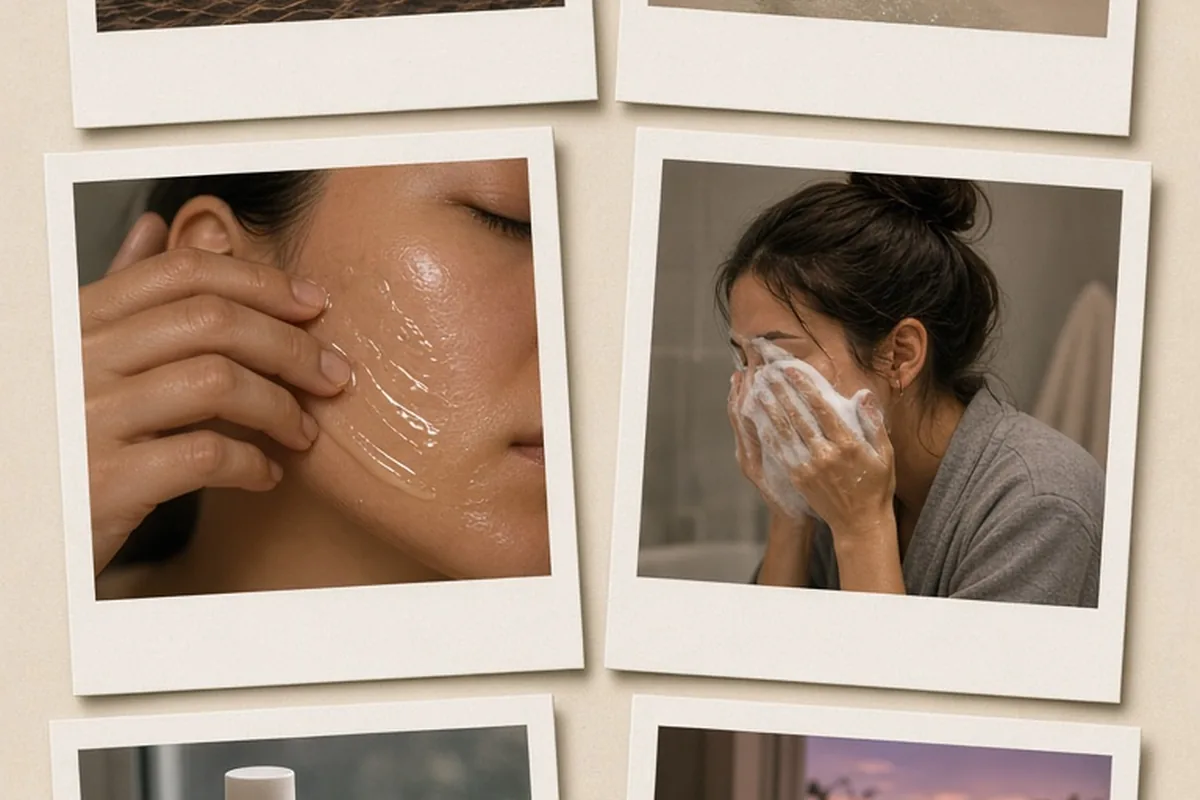
To thoroughly wash sunscreen off your face, use the double cleansing method each evening. Start by massaging an oil-based cleanser, cleansing balm, or micellar water onto dry skin for sixty seconds to dissolve water-resistant UV filters and film-forming polymers. Rinse with lukewarm water, then follow immediately with a gentle water-based facial cleanser to remove lingering sweat, impurities, and oil residue without stripping moisture.
Sunscreen provides essential daily protection against ultraviolet radiation, but durable, long-wearing formulas are specifically engineered to resist sweat, water, and natural skin oils throughout the day. When evening arrives, simply splashing water or rushing through a single quick wash can leave behind stubborn chemical filters, mineral powders, and emulsifiers that trap sebum inside pores.
Why Standard Cleansers Often Fail to Remove Sunscreen
Modern sunscreens rely on sophisticated polymer matrices, silicone bases, and hydrophobic bonding agents to stay put through humidity, friction, and daily movement. Chemical UV filters like avobenzone and octisalate, as well as physical barriers like zinc oxide and titanium dioxide, are fundamentally lipophilic, meaning they dissolve in oil rather than water. A basic water-based foaming gel or quick splash often slides right over these water-resistant barriers, spreading the product around the perimeter of the face rather than fully breaking down the protective film.
When sunscreen residue lingers on the skin overnight, it creates an occlusive layer that mixes with oxidized sebum, environmental pollutants, and dead skin cells. Over several days, this buildup can contribute to congested pores, tiny comedones, and a dull, uneven skin texture. Furthermore, nighttime serums and hydrating moisturizers cannot penetrate effectively through an unwashed film of UV filters. Understanding that sunscreen is chemically designed to resist simple water rinsing is the first step toward building an effective nighttime routine.
The Double Cleansing Method Explained Step-by-Step
Double cleansing is widely regarded by skincare specialists as the gold standard for completely removing tenacious cosmetic products. The process relies on the core chemical principle that like dissolves like: an oil-rich first step liquefies oil-based sunscreen ingredients, while a water-based second step washes away water-soluble debris. To execute this correctly, always begin with dry hands and a completely dry face. Dispense a nickel-sized amount of cleansing oil or balm, then gently warm the product between your fingertips before applying it directly to your skin.
Spend forty-five to sixty seconds smoothing the product across your face using gentle, circular motions, paying special attention to the hairline, jawline, and the crevices around your nose where sunscreen tends to accumulate. Next, add a small splash of lukewarm water to your face; this crucial step emulsifies the oil, turning the clear liquid or melting balm into a milky white emulsion that releases its grip on the skin. Rinse thoroughly with lukewarm water until the slick feeling dissipates. Immediately follow with a mild, water-based gel or cream cleanser, working it into a soft lather to capture any remaining residue before a final rinse.
Selecting the Right First Cleanser for Your Skin Type
Not all oil-based cleansers behave identically, and matching your first cleanser to your unique skin profile prevents unwanted breakouts or excessive dryness. Those with oily or acne-prone skin often worry that cleansing oils will cause blemishes, but lightweight formulations containing non-comedogenic oils—such as jojoba, squalane, sunflower seed, or caprylic triglycerides—rinse away cleanly without leaving pore-clogging film behind. Emulsifying cleansing balms formulated with calming botanical extracts can also melt dense sunscreen layers without triggering excess sebum production.
If your skin leans dry, mature, or sensitive, rich cleansing balms containing shea butter, ceramides, or oat kernel oil provide extra cushioning against friction while conditioning the lipid barrier. Sensitive skin types should prioritize fragrance-free formulas to avoid contact irritation around the delicate eye area. A practical trade-off to consider is that while ultra-nourishing balms feel comforting on dry complexions, they require thorough emulsification and attentive rinsing to avoid leaving a slightly occlusive sheen that might interfere with lightweight leave-on serums.
Gentle Alternatives for Non-Oil Cleansing
If you prefer to avoid cleansing oils or balms due to personal preference, active breakouts, or specific sensitivities, micellar water serves as a highly capable alternative. Micellar solutions contain microscopic clusters of surfactant molecules called micelles suspended in soft water. When applied to a soft cotton pad, the oil-attracting tails of the micelles bind to the hydrophobic sunscreen particles, lifting them off the surface of the skin without requiring aggressive mechanical rubbing.
To use micellar water properly for sunscreen removal, thoroughly saturate a reusable or disposable cotton round and hold it gently against your skin for five seconds before wiping softly outward. For thick or water-resistant sunscreens, you may need two passes with fresh pads until the cotton comes away completely clean. While many micellar product labels suggest rinsing is optional, splashing your face with fresh water or following up with your regular gentle face wash ensures that surfactant residue does not linger and cause subtle irritation over time.
Tackling Heavy Mineral and Water-Resistant Sport Formulas
Water-resistant sports sunscreens and high-percentage mineral formulas containing non-nano zinc oxide present unique removal challenges. These products are formulated with specialized waxes, silicones such as dimethicone, and film formers designed to withstand heavy perspiration and water immersion. Consequently, they resist quick washing far more stubbornly than daily chemical moisturizing lotions. Attempting to scrub these robust formulas away with an abrasive washcloth or harsh physical scrub will only disrupt your moisture barrier, leading to redness and flaking.
When cleansing heavy physical filters, allow your oil cleanser or balm to sit on dry skin for an extra thirty seconds before beginning your massage. This gives the emollients time to soften and break the structural bonds of the mineral paste. If an initial double cleanse still leaves a faint white cast or chalky feeling along the jawline, repeat the first oil-cleansing step with a smaller amount rather than aggressively increasing physical scrubbing pressure. Taking a methodical, gentle approach protects the delicate stratum corneum while achieving thorough cleanliness.
Temperature, Technique, and Common Cleansing Mistakes
The physical mechanics of how you wash your face influence the outcome just as much as the products you choose. A frequent mistake is using steaming hot water in hopes of dissolving stubborn sunscreen more quickly. In reality, hot water strips essential intercellular lipids, triggers facial flushing, and exacerbates underlying conditions like rosacea or eczema. Conversely, ice-cold water hardens oils and balms, preventing them from emulsifying properly and leaving a sticky residue. Lukewarm water provides the ideal balance for optimal rinsing and barrier comfort.
Another common oversight is rushing the process or applying excessive pressure. Aggressive rubbing pulls at delicate facial skin—especially around the periorbital area—without improving cleansing efficiency. Instead, use the soft pads of your middle and ring fingers in gentle, outward spirals. Be sure to cleanse overlooked zones such as the temples, underneath the jaw, the front of the neck, and the tops of the ears if you applied sun protection there earlier in the day.
Post-Cleanse Care and Assessing Skin Cleanliness
Once you finish cleansing, the skin should feel soft, supple, and clean, never tight, squeaky, or parched. A squeaky-clean sensation is actually a sign of barrier disruption, indicating that your cleansers have stripped away natural moisture along with the sunscreen. To verify that your sunscreen has been fully removed without over-washing, gently pat your face with a clean, white towel or sweep a toner-dampened cotton pad across your cheek; if no colored tint, greasy sheen, or chalky powder remains, your cleansing routine is effective.
Immediately following your evening wash, lock in hydration while your skin is still slightly damp. Apply a hydrating toner or serum containing humectants like glycerin or hyaluronic acid, followed by a nourishing barrier moisturizer with ceramides or fatty acids. Consistent, thorough sunscreen removal paired with restorative evening hydration keeps pores clear and maintains an optimal skin barrier, ensuring your skin remains healthy, calm, and receptive to your daily protective products.
Frequently asked questions
Can I remove sunscreen using only water and a regular facial wash?
While a standard water-based cleanser may wash away light, non-water-resistant daily moisturizers with SPF, it often struggles with long-wearing and water-resistant formulas. Using only a single gentle wash can leave behind microscopic sunscreen particles and silicone residues that may eventually clog pores. If you prefer not to use an oil cleanser, using micellar water before your standard wash provides adequate removal power.
Will using an oil-based cleanser cause acne or breakouts?
Cleansing oils and balms formulated with emulsifiers rinse away completely with water and typically do not cause breakouts when used correctly. The key is to massage the oil thoroughly on dry skin, emulsify it with lukewarm water until it turns milky, and follow with a gentle water-based cleanser. Opt for non-comedogenic oils such as jojoba or squalane if you have acne-prone skin.
Do I need to double cleanse if I wore sunscreen but stayed indoors all day?
Yes, if you applied water-resistant or mineral sunscreen in the morning, the UV filters and film formers remain on your skin regardless of your activity level. These ingredients do not evaporate and still need to be dissolved to prevent them from trapping sebum and dead skin cells overnight. A double cleanse or micellar water step ensures your skin is fresh for nighttime recovery.
How can I tell if my mineral sunscreen is completely washed off?
You can tell your mineral sunscreen is completely removed when your skin feels soft to the touch with no lingering chalky film, white tint, or waxy resistance. Wiping a damp cotton round across your jawline or forehead should show zero residue. If your skin feels coated or water still beads heavily on your face after washing, a small amount of sunscreen remains.
Your next step
Examine your evening routine tonight and incorporate an oil-based cleanser, cleansing balm, or micellar water as a first step before your regular wash to keep your skin fresh, clear, and thoroughly clean.