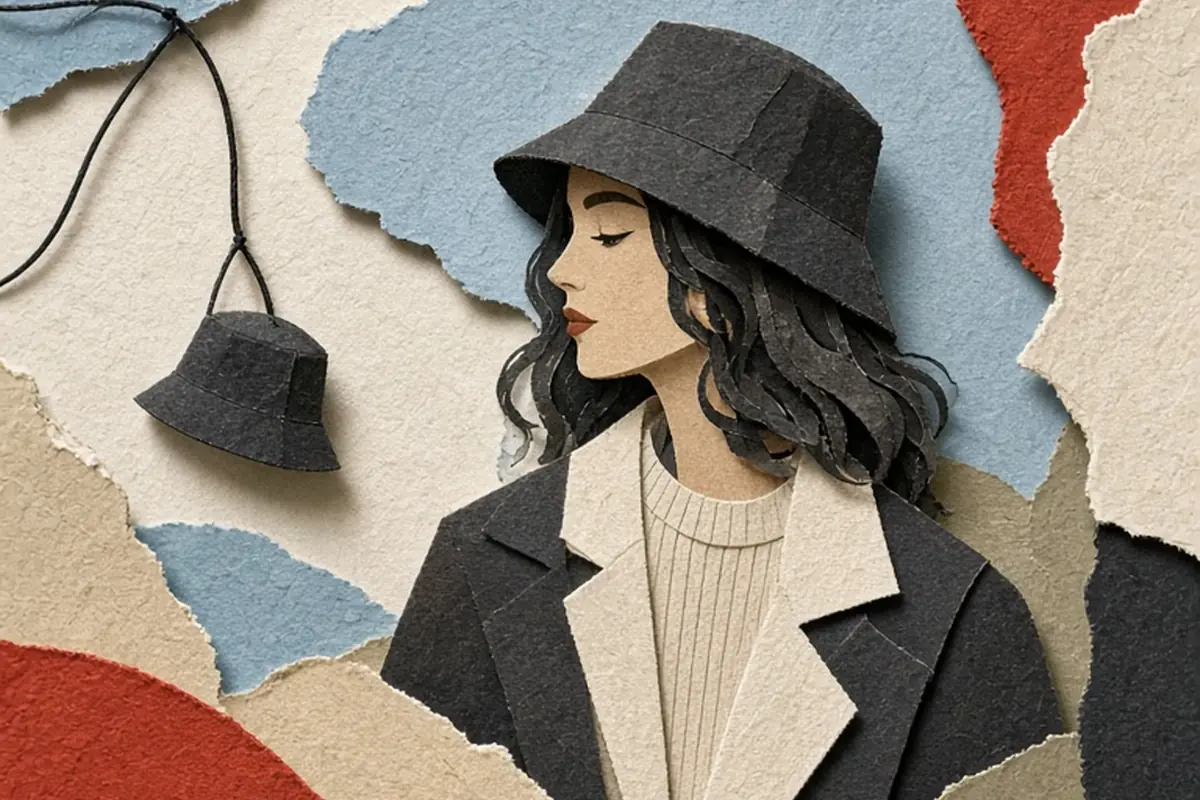
To wear a bucket hat effortlessly, balance its relaxed, circular shape with structured or intentional clothing. Choose a brim width that suits your facial features, opting for narrow brims for casual wear or wider brims for drama and sun coverage. Position the crown slightly back on your head to keep your face visible, and pair the hat with grounded staples like tailored trousers, oversized blazers, simple ribbed tees, or minimalist slip dresses.
Once reserved for utilitarian outdoor gear or nineties streetwear, the bucket hat has become a versatile modern accessory that bridges casual ease and sharp personal style.
Selecting the Right Brim Width, Crown Depth, and Fit
The overall silhouette of a bucket hat dictates how it frames your face and interacts with the rest of your outfit. A standard short-brim bucket hat sits close to the skull with a downward-sloping edge that ends near the brow line. This profile creates a subtle, sporty look that integrates easily into daily outfits without dominating your visual presence. In contrast, wide-brim designs flare outward, offering greater sun protection while introducing a dramatic, editorial line that demands simpler accompanying garments.
Crown depth is equally critical for both comfort and proportion. A crown that is too shallow will perch awkwardly on top of the head, making the hat feel unstable and visually disconnected from your hair. A crown that is too deep will slip down over your ears and cast heavy shadows across your eyes, obscuring your expressions. To find a balanced fit, look for a hat that rests securely around the widest part of your head—just above the ears—without squeezing, allowing you to tilt the front brim upward slightly to open up your face.
Material structure also influences how the hat sits. Soft, unstructured cotton or washed canvas molds to the shape of your head, creating a slouchy, relaxed aesthetic suited for weekend errands or beach outings. Stiffened twill, structured nylon, or felt holds a crisp, defined geometric shape, making the hat feel more deliberate and polished when paired with sharper wardrobe pieces.
Styling Hair Around the Brim for Balance and Comfort
The way you style your hair directly alters how a bucket hat sits and frames your features. When wearing hair down in loose waves or straight textures, pulling the hair forward over the collarbones helps soften the horizontal line of the brim. If you have fine or flat hair, pushing the hat slightly back on the crown leaves your hairline or front fringe visible, preventing the hat from overwhelming your face.
For individuals with textured, curly, or voluminous hair, sizing up is often essential to prevent flattening curls or creating unwanted tension at the temples. Wearing a satin-lined bucket hat can also reduce friction and preserve curl definition. Allowing curls to spill out naturally around the brim creates a striking contrast between the clean curve of the hat and the organic texture of the hair.
Updos require strategic positioning. High ponytails and topknots will push a bucket hat off-balance, causing it to sit askew. Instead, opt for a low chignon, a nape ponytail, or twin low braids. These arrangements anchor the lower half of your hairstyle while allowing the hat crown to rest cleanly against your head. Leaving a few soft tendrils loose around the ears and jawline adds dimension and avoids a severe, swept-back look.
Everyday Casual Formulas: Elevating Streetwear and Denim
A bucket hat naturally complements relaxed, casual clothing, but relying solely on oversized sweatpants and athletic tees can make an outfit appear unconsidered. To elevate an everyday look, introduce clean lines and contrast textures. Pair a neutral cotton bucket hat with high-waisted straight-leg denim, a tucked-in fitted ribbed tank, and low-profile leather sneakers. The fitted top balances the volume of the hat, while crisp denim gives the outfit a tidy structure.
Layering adds dimension to simple streetwear combinations. A chore jacket, an open poplin button-down shirt, or a cropped utility jacket worn over a basic base layer creates visual interest through varying hemlines. If your outfit consists entirely of loose, boxy silhouettes, use a crossbody bag or a belt to define your waist and maintain clear proportions.
Footwear choices help set the overall tone of a casual ensemble. Chunky lug-sole loafers or clean retro sneakers ground the rounded shape of the hat, whereas flip-flops or worn gym shoes can lean too far into purely utilitarian territory. Aim for items that feel purposeful rather than haphazard.
Pairing Bucket Hats with Tailoring and Smarter Silhouettes
One of the most modern ways to wear a bucket hat is by contrasting its casual origins with tailored, formal garments. Pairing an unstructured accessory with a sharp blazer, wide-leg pleated trousers, and pointed-toe boots creates an intentional tension between relaxed and formal aesthetics. This combination works best when the hat is constructed from a refined fabric, such as matte faux leather, wool blend, or clean-finished twill.
When pairing a bucket hat with dresses, look for streamlined or architectural silhouettes rather than overly busy ruffles. A solid ribbed knit midi dress or a minimalist silk slip dress paired with an unadorned bucket hat creates an effortless, understated look. The key is allowing the hat to act as a relaxed counterbalance to the dress's elegance without competing for attention.
A classic seasonal pairing is the trench coat and bucket hat. A crisp cotton or water-resistant nylon hat worn with a belted beige trench coat and ankle boots delivers practical weather protection while maintaining a sharp, cohesive aesthetic. Keep the color palette cohesive—such as tonal creams, navy, or olive—to ensure the outfit feels integrated.
Adapting Materials Across Warm and Cold Seasons
Bucket hats are versatile year-round accessories when selected in fabrics appropriate for the weather. In spring and summer, breathable materials like washed cotton, lightweight linen, and open-weave crochet keep your head cool while providing sun shade. A crochet bucket hat introduces tactile warmth and a handcrafted feel to summer sundresses, swimwear, and linen shorts sets.
During fall and winter, transitioning to heavier, insulating textiles transforms the bucket hat into a practical cold-weather staple. Options in shearling, faux fur, corduroy, and boiled wool provide warmth while adding rich texture to heavy coats and knitwear. A plush shearling bucket hat paired with a structured wool overcoat and a chunky knit scarf creates a cozy yet chic cold-weather silhouette.
Wet weather calls for specialized materials like technical nylon, coated canvas, or vinyl. These water-repellent styles protect your hairstyle from light rain without the bulk of an umbrella. Match a technical nylon bucket hat with a weather-resistant anorak or an oversized quilted jacket for a functional, rain-ready aesthetic.
Mastering Color Coordination and Pattern Placement
Choosing between a neutral or a statement bucket hat depends on how you want the accessory to function within your wardrobe. Solid neutrals—such as black, ecru, camel, navy, and olive—offer maximum versatility and easily integrate into existing capsule wardrobes. A monochrome look, where your hat matches the exact shade or tone of your coat or knitwear, creates an elongated, polished visual line.
If you choose a bucket hat with a bold pattern, such as checkerboard, floral, tie-dye, or animal print, let the hat serve as the primary focal point of the outfit. Pair patterned hats with solid, understated clothing items so the visual elements do not clash. For instance, a leopard-print bucket hat works well against a black crewneck sweater and dark-wash jeans.
Alternatively, tie a colorful hat into an outfit by echoing one secondary color from the hat in your shoes, handbag, or jewelry. This subtle color connection creates a harmonious look without appearing overly matched or rigid.
Avoiding Common Styling Mistakes and Proportion Traps
A common mistake when wearing a bucket hat is pulling it down straight and flat over the forehead. This hides your eyes, casts harsh shadows over your face, and creates an unflattering silhouette. Instead, tilt the hat back slightly so the front edge clears your eyebrows, exposing your forehead and framing your eyes naturally.
Another pitfall is pairing a slouchy, unstructured bucket hat with exclusively loose, oversized, and weathered loungewear. While comfort is important, stacking multiple unstructured items together can make the outfit look accidental. Balance slouchy hats with at least one crisp, well-fitted garment, such as tailored trousers, a structured leather belt, or a fitted mock-neck top.
Over-accessorizing near the face can also create visual clutter. Because a bucket hat already draws attention to your head and jawline, avoid wearing large statement earrings, heavy layered scarves, and oversized sunglasses simultaneously. Opt for clean hoop earrings or simple studs to let the hat remain the focal accessory.
Illustrative Scenarios
Finding Proportion for an Outdoor Gathering
Elena was invited to a sunny outdoor brunch and wanted to wear a new wide-brim cotton bucket hat for sun protection. Her initial instinct was to pair it with a voluminous peasant maxi dress. When she looked in the mirror, the combination of wide brim and billowing fabric made her frame feel overwhelmed and shapeless. Rather than abandoning the hat, she swapped the loose dress for high-waisted linen trousers, a fitted sleeveless tank, and leather slide sandals. She tilted the hat back slightly to expose her brow line. The fitted top balanced the wide brim, giving her clear proportions while staying comfortable in the sun.
Key point: Balancing a wide-brim hat with fitted garments prevents your silhouette from being overpowered by excess volume.
Integrating Streetwear Accessories into a Smart-Casual Wardrobe
Sam wanted to wear a black faux-leather bucket hat to an evening dinner with friends but worried it felt too casual and sporty for a smart-casual restaurant. Her first attempt paired the hat with a graphic hoodie and joggers, which felt underdressed for the venue. Instead of changing hats, she adjusted her outfit: she layered an oversized charcoal wool blazer over a crisp white tee, paired them with straight-leg dark denim, and added pointed-toe ankle boots. The sleek texture of the leather hat complemented the sharp tailoring of the blazer, creating an intentional, fashion-forward look.
Key point: Pairing casual accessories with structured tailoring elevates the overall look into a cohesive smart-casual outfit.
Frequently asked questions
How should a bucket hat sit on your head?
A bucket hat should rest comfortably around the circumference of your head just above the ears without feeling tight. Tilt the hat slightly backward on the crown to keep your eyebrows and eyes visible, which opens up your face and creates a balanced silhouette.
Can you wear a bucket hat with short hair?
Yes, bucket hats look great with short hair, including pixies and bobs. Position the hat farther back on your head so front bangs or texture remain visible, or tuck side pieces behind your ears to highlight your jawline and cheekbones.
How do you prevent a bucket hat from flattening your hair?
Choose a bucket hat with a slightly looser fit or a satin interior lining to reduce friction and pressure. You can also apply texturizing spray or dry shampoo at the roots before putting on the hat, allowing you to quickly fluff your hair back up when you take it off.
Your next step
Choose one bucket hat in a versatile neutral fabric, test it tilted slightly back with a fitted top and structured trousers, and adjust the brim to frame your face comfortably.