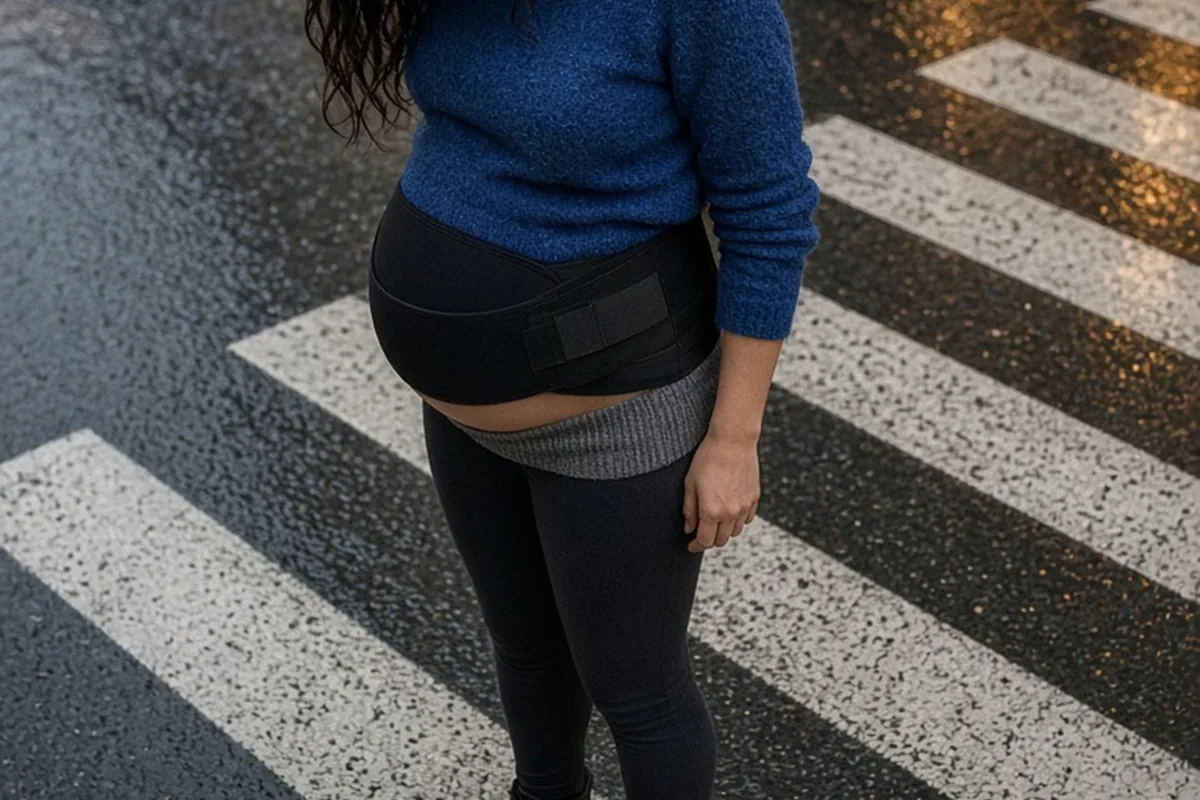
To wear a maternity belt, position the widest support pad low across your lower back and sacrum, then wrap the main strap underneath your belly just above the pubic bone. Fasten the closure so it provides gentle upward lift without squeezing your abdomen. Adjust the side tension straps while standing, ensuring you can comfortably slide two flat fingers beneath the band.
A maternity belt serves as temporary external support during pregnancy, redistributing the weight of a growing abdomen across the pelvis and spine to ease physical strain during daily movement.
Understanding the Different Styles of Pregnancy Support Belts
Before putting on a support garment, it helps to identify which specific design you have, as different models serve distinct needs and fasten in slightly different ways. Standard single-strap belly belts feature a contoured band that cradles the lower abdomen with an adjustable hook-and-loop closure at the side or front. Multi-piece support systems, often called three-in-one pelvic belts, include a broad lumbar back piece, an under-belly cradle strap, and an optional upper stabilization band that rests above the bump to prevent shifting. In contrast, seamless tubular bands provide light compression without rigid straps or fasteners.
Choosing how to wear your garment depends on your specific physical routine and where you experience the most fatigue. For example, a single adjustable band works well for running errands or walking the dog, whereas a multi-piece support harness is typically reserved for longer periods on your feet or when managing pronounced sacroiliac joint discomfort. Lightweight tubular bands, on the other hand, are best suited for gentle smoothing and holding up unbuttoned maternity trousers rather than targeted joint stabilization.
Step-by-Step Instructions for Proper Belt Placement
Correct anatomical placement is the most critical factor in achieving relief and avoiding unnecessary pressure on your baby bump. Begin by standing upright in front of a mirror with relaxed posture. Center the widest, reinforced section of the belt across your lower back, positioning it just over your sacrum and hips rather than high across your natural waist. Bring both ends forward, positioning the front section low beneath the curve of your belly so that it rests just above the pubic bone.
Fasten the primary closure securely against the opposite side, making sure the strap follows the lower contour of your abdomen in an upward cradling motion. If your belt includes auxiliary side tension straps, gently pull them forward simultaneously to evenly distribute the tension, then press them onto the front panel. For instance, if you notice the front band cutting into your mid-abdomen, unfasten the sides, slide the entire garment downward by two inches, and refasten so the strap acts like an upward hammock rather than a constrictive belt.
Dialing in the Right Tension and Fit
Finding the balance between gentle lift and excessive constriction requires testing your movement after fastening the belt. A properly fitted maternity belt should feel like a firm, supportive pair of hands gently lifting your belly toward your spine. It should never compress the bump inward, leave deep indentations on your skin, or restrict natural diaphragmatic breathing. A dependable guideline is the two-finger test: after securing the straps, you should be able to slide two fingers flat between the band and your skin without struggling.
Perform a quick movement check before heading out for the day by taking a few deep breaths, sitting down on a firm chair, and walking several paces. If the band digs uncomfortably into your thighs or lower ribs when seated, the tension is either too tight or the belt is positioned too high. Simply loosen the auxiliary side straps while sitting, or temporarily unhook the front flap if you plan to remain seated for an extended period, as support belts are primarily engineered for upright activity.
Recommended Duration and Timing for Daily Wear
While a maternity belt offers noticeable relief during active tasks, it is designed as a dynamic aid rather than an all-day garment. Wearing a support belt continuously for hours on end can encourage your deep abdominal and postural muscles to become overly reliant on external reinforcement. Most physical therapists and maternity practitioners suggest limiting continuous wear to roughly two to three hours at a time, focusing on intervals when you are actively standing, walking, or doing household chores.
Plan your belt usage around specific activities that typically trigger fatigue or pelvic soreness. For example, you might wear the belt during your morning commute, grocery shopping, or an afternoon walk, and then remove it once you sit down at your desk or relax on the sofa. Taking regular breaks allows your natural stabilizing muscles, including your transverse abdominis and pelvic floor, to engage and maintain strength throughout your pregnancy journey.
Layering Over Clothing and Managing Restroom Breaks
Direct contact between rigid elastic fasteners and sensitive pregnancy skin can occasionally cause friction, sweating, or mild chafing. To prevent irritation, wear your maternity belt over a soft, breathable base layer, such as a seamless cotton tank top, maternity camisole, or high-waisted leggings. Layering the belt over an undergarment also keeps the support strap cleaner for longer, reducing the need for frequent washing that can degrade the elastic fibers over time.
Frequent bathroom visits are a standard reality of pregnancy, making practical layering essential throughout the day. Wearing your support belt over a base layer allows you to slide undergarments down without completely removing and readjusting the entire harness system. If your outer outfit consists of a dress, you may prefer wearing the belt directly over your slip or bike shorts, keeping bathroom adjustments straightforward without having to re-secure the velcro fasteners from scratch.
Common Adjusting Mistakes to Avoid
One frequent error is wearing the front strap directly across the center of the abdomen rather than underneath it. Positioning the band across the mid-belly creates inward abdominal pressure, which can exacerbate indigestion, cause heartburn, and fail to provide the intended lower pelvic support. Always verify that the front edge sits low along your pelvic crease, directing support upward and backward toward your lumbar spine.
Another common mistake is tightening the belt to compensate for an ill-fitting size. If you find yourself pulling the tension straps to their absolute limit to feel any support, or if the hook-and-loop tabs barely overlap, the belt is the wrong size for your current gestational stage. Most maternity garments allow for progressive expansion, but as your bump expands during the late second and third trimesters, transitioning to a larger size ensures the support panels remain centered over your anatomical pressure points.
Safety Precautions and When to Remove the Belt
Listening to your body is essential when utilizing any pregnancy support accessory. If you experience sudden sharp pains, tingling or numbness in your legs or groin, pelvic cramping, or shortness of breath while wearing the belt, take it off immediately. These sensations typically indicate that the strap is either cinched too tightly or impinging on local nerves and blood vessels near the hips and lower abdomen.
A maternity belt is intended to assist with typical, mild postural fatigue and musculoskeletal discomfort; it is not a treatment for underlying medical conditions. If you have been diagnosed with pregnancy complications such as placenta previa, preeclampsia, or unexplained abdominal pain, consult your OB-GYN, midwife, or pelvic floor physical therapist before introducing a support belt to ensure it is appropriate for your personal health profile.
Frequently asked questions
Can I wear a maternity belt while sitting down or driving?
You can wear a maternity belt while seated, but you will usually need to loosen the side tension straps to prevent the front band from pressing into your hips and thighs. If you are sitting for extended periods at a desk or driving, removing the belt or switching to a light, non-restrictive belly band is often more comfortable.
Is it safe to sleep while wearing a maternity support belt?
Maternity support belts are not recommended for sleeping because your abdominal muscles and spine are naturally supported by your mattress when lying down. Wearing a firm elastic band overnight can restrict circulation, increase local skin irritation, and create unnecessary pressure on your abdomen as you shift positions.
At how many weeks of pregnancy should I start wearing a belt?
Most people start using a maternity belt during the late second trimester, typically between weeks twenty and twenty-four, when the bump grows heavier and pelvic strain becomes noticeable. However, you can begin whenever lower back or sacroiliac discomfort begins, provided your healthcare provider agrees it is suitable.
How do I wash and care for my maternity belt?
Fasten all hook-and-loop tabs together to prevent snagging, then place the belt in a mesh laundry bag. Wash it by hand or on a gentle cold cycle with mild detergent, and lay it flat to air dry away from direct heat to preserve the elastic integrity.
Your next step
Try putting on your maternity belt over a light cotton camisole before your next walk or period of standing, adjusting the tension so you feel a gentle upward lift rather than inward pressure.