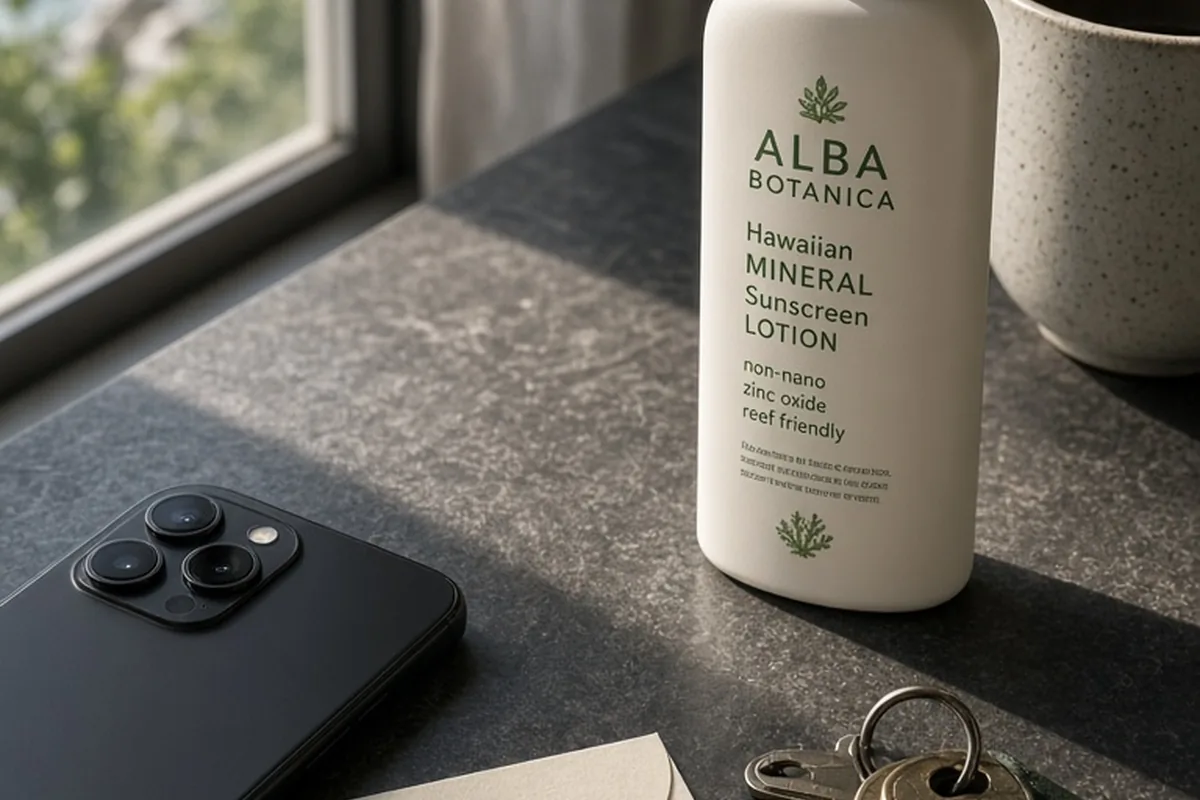
Some Alba Botanica sunscreens are considered reef friendly, but not all of them qualify for sensitive marine environments. Alba Botanica produces both mineral-based formulas powered by non-nano zinc oxide and chemical formulas that utilize synthetic filters. To choose an option compliant with strict marine destination standards, look specifically for their non-nano mineral lotions free from chemical UV absorbers such as octocrylene, homosalate, oxybenzone, and octinoxate.
Navigating sun care labels before heading to the beach can be surprisingly complicated, especially when trying to protect fragile marine habitats while guarding against sunburn. Alba Botanica is widely recognized for its accessible plant-based formulations, yet its sunscreen catalog includes diverse active ingredients that perform very differently in marine environments.
Differentiating Between Alba Botanica Mineral and Chemical Lines
Alba Botanica manufactures a broad portfolio of sun care items, ranging from botanical sprays to thick mineral lotions. Because the brand presents a cohesive eco-conscious aesthetic across its entire catalog, many shoppers assume every bottle shares identical safety characteristics. In reality, the product catalog divides sharply into two functional categories: mineral physical blockers and standard synthetic chemical formulas. Understanding this distinction is the foundation of determining whether a specific Alba product aligns with your personal safety preferences or local destination requirements.
The brand's mineral sunscreens primarily utilize zinc oxide or titanium dioxide to create a physical layer over the skin surface that deflects ultraviolet radiation. In contrast, Alba's conventional sunscreens—such as several varieties in their popular Hawaiian line—rely on chemical filters like avobenzone, homosalate, octisalate, and octocrylene. While Alba formulas consistently exclude oxybenzone and octinoxate to meet baseline legal criteria, products retaining other soluble chemical filters are treated differently by conservationists and certain marine reserves.
When purchasing, you can readily tell the lines apart by reading the front panel and the active ingredient box on the back of the bottle. True mineral options prominently state active ingredients like Zinc Oxide on the Drug Facts panel, whereas traditional formulas will list multiple multisyllabic chemical compounds. If your goal is minimizing chemical dispersion around delicate coral reefs, identifying whether the formula is strictly mineral is your essential starting point.
Understanding the Regulatory Meaning of Reef Safe Labels
The phrase reef safe is currently an unregulated marketing term in the cosmetics industry, which means manufacturers can print it on packaging without meeting a legally standardized testing threshold. The United States Food and Drug Administration does not establish legal criteria for environmental claims on sunscreen bottles. As a result, brands often declare products reef friendly simply because they omit oxybenzone and octinoxate, the two ingredients most widely prohibited by early legislation.
Marine biologists and conservation bodies generally apply a much higher standard when evaluating environmental impact. Independent researchers frequently highlight concerns regarding secondary chemical filters, microplastics, synthetic fragrances, and soluble nanomaterials that may accumulate in enclosed bays or slow-moving waters. Consequently, relying solely on front-of-bottle slogans can lead to unintended non-compliance in strictly protected ecological zones.
A practical approach is treating any reef-safe marketing stamp merely as an invitation to verify the ingredients list yourself. Look for simple, physical active blockers and transparent labeling that explicitly confirms non-nano particle sizes. Being aware of the gap between commercial marketing terms and actual marine protection standards ensures that your purchasing choices reflect your true environmental intentions.
How Destination Laws and Marine Reserves Evaluate Sunscreen Ingredients
Travel destinations with fragile barrier reefs have implemented distinct statutes to curb chemical accumulation in coastal waters. Hawaii enacted pioneering legislation through Act 104, banning the distribution and sale of sunscreens containing oxybenzone and octinoxate. Jurisdictions such as the United States Virgin Islands, Key West, Aruba, Bonaire, and the Republic of Palau have enacted similar or even more stringent restrictions, with several explicitly disallowing chemical absorbers like octocrylene and specific preservatives.
Eco-tourism zones in Mexico, including the popular cenotes, marine parks in Cozumel, and protected reserves throughout the Riviera Maya, routinely require visitors to surrender synthetic chemical sunscreens at checkpoint entrances. These parks typically permit only biodegradable, non-nano physical mineral sunblocks containing zinc oxide or titanium dioxide, as chemical residues form oily slicks on calm inland waters that degrade delicate subterranean ecosystems.
If you pack Alba Botanica for travel to these sensitive locations, standard synthetic lotions and continuous aerosol sprays may be confiscated at park gates or prohibited under regional ordinances. Opting specifically for Alba's fragrance-free, mineral-only formulations avoids logistical complications, ensuring your beach bag complies with both municipal statutes and park-specific conservation rules.
- Hawaii and US Virgin Islands: Mandate the exclusion of oxybenzone and octinoxate, with local recommendations heavily favoring non-nano mineral blockers.
- Palau: Enforces one of the strictest environmental bans, prohibiting oxybenzone, octinoxate, octocrylene, and several parabens and preservatives.
- Mexican Cenotes and Eco-Parks: Prohibit all synthetic chemical UV filters entirely, requiring 100 percent mineral active ingredients that rinse off clean without harming aquatic life.
A Step-by-Step Label Checklist for Alba Botanica Sunscreens
To reliably verify any Alba Botanica bottle before buying, turn the container around and examine the Drug Facts table located on the back panel. The active ingredients box provides an absolute breakdown of what is deflecting or absorbing ultraviolet rays. If you see active ingredients such as Avobenzone, Homosalate, Octisalate, or Octocrylene, the product is a chemical sunscreen that does not meet full mineral-only marine standards.
Next, review the inactive ingredients list located directly beneath the Drug Facts panel. In pure mineral formulas, the only active component should be Zinc Oxide or Titanium Dioxide. When choosing for sensitive environments, confirm that the formula specifies non-nano mineral particles, which are larger in diameter and significantly less likely to be ingested by corals and other marine organisms compared to microscopic nanoparticles.
Finally, inspect the formula for water resistance ratings and synthetic fragrance additives. Formulas designated with 80-minute water resistance utilize plant waxes and emollients that help the protective film adhere to the skin, which reduces the rate at which product washes off into the ocean during swimming. Alba's fragrance-free mineral lotions are frequently preferred because they eliminate unnecessary synthetic aromatic compounds that could act as subtle pollutants in stagnant waters.
Balancing Ocean Safety with Skin Type and Application Preferences
While mineral sunscreens offer clear advantages for marine environments, they present different physical characteristics on human skin compared to sheer chemical formulations. Alba Botanica's mineral sunscreens use high percentages of zinc oxide, which naturally creates a thicker consistency that requires deliberate, section-by-section rubbing to minimize a white cast. For people with deeper skin tones, pure zinc creams can leave a visible chalky residue unless worked into warm skin patiently.
Conversely, mineral formulas offer major benefits for individuals dealing with acne, rosacea, or sensitive skin barriers. Zinc oxide acts as an inert physical barrier that sits on top of the epidermis rather than converting UV rays into heat within the dermal layers, which minimizes pore irritation and allergic flare-ups. If you have oily or breakout-prone skin, Alba's fragrance-free mineral face options provide gentle, broad-spectrum defense without stinging the eyes during heavy perspiration.
If you find thick mineral creams difficult to spread, apply them immediately after moisturizing while your skin is supple, or apply the lotion in thin, layered dots across the limbs rather than squeezing a large dollop directly onto the skin. This simple adjustment ensures an even, protective barrier without excessive dragging or clumping.
Comprehensive Sun Protection Strategies Beyond Sunscreen Bottles
Relying exclusively on topical lotions is rarely the most efficient or environmentally friendly way to guard against sun damage. Even the most water-resistant mineral sunscreens experience some level of wash-off during extended snorkeling sessions or vigorous surfing. Combining smart topical choices with physical barriers dramatically reduces the total volume of skincare products introduced into sensitive coastal waters.
Long-sleeved rash guards, swim shirts, and wide-brimmed hats rated for UPF 50+ ultraviolet protection provide continuous, foolproof coverage that never washes off or requires reapplication. By covering your torso, shoulders, and back with protective textiles, you restrict sunscreen use primarily to the face, neck, hands, and feet. This targeted application significantly cuts down the volume of product entering the water column.
Additionally, coordinating your water activities to avoid peak UV intensity between 10:00 AM and 2:00 PM decreases your reliance on heavy reapplication while lowering your overall risk of sunburn. Embracing shaded rest breaks, wearing polarized UV-blocking sunglasses, and using mineral-based lotions solely on exposed extremities represents the gold standard for responsible, skin-conscious beach recreation.
Frequently asked questions
Are all Alba Botanica sunscreens compliant with Hawaii sunscreen laws?
Yes, Alba Botanica formulates its retail sunscreens without oxybenzone and octinoxate, satisfying baseline Hawaiian state legal distribution requirements. However, travelers seeking optimal coral protection should specifically select their 100 percent mineral zinc oxide lines.
What is the primary difference between Alba Hawaiian sunscreen and Alba Mineral sunscreen?
Alba Hawaiian sunscreens typically utilize chemical UV absorbers such as avobenzone and homosalate to achieve a sheer, quick-absorbing texture. In contrast, Alba Mineral sunscreens use physical zinc oxide or titanium dioxide to reflect rays without absorbing chemicals into the skin.
Can I use Alba Botanica spray sunscreens in marine eco-parks?
Most dedicated marine eco-parks and cenote reserves explicitly prohibit aerosol and chemical spray sunscreens due to airborne overspray and chemical runoff. You should instead bring a non-nano mineral cream in a squeeze tube that is explicitly labeled biodegradable or reef safe.
Your next step
Inspect the Drug Facts panel on your Alba Botanica bottle to verify that non-nano zinc oxide is the sole active UV filter before packing for your next coastal trip.