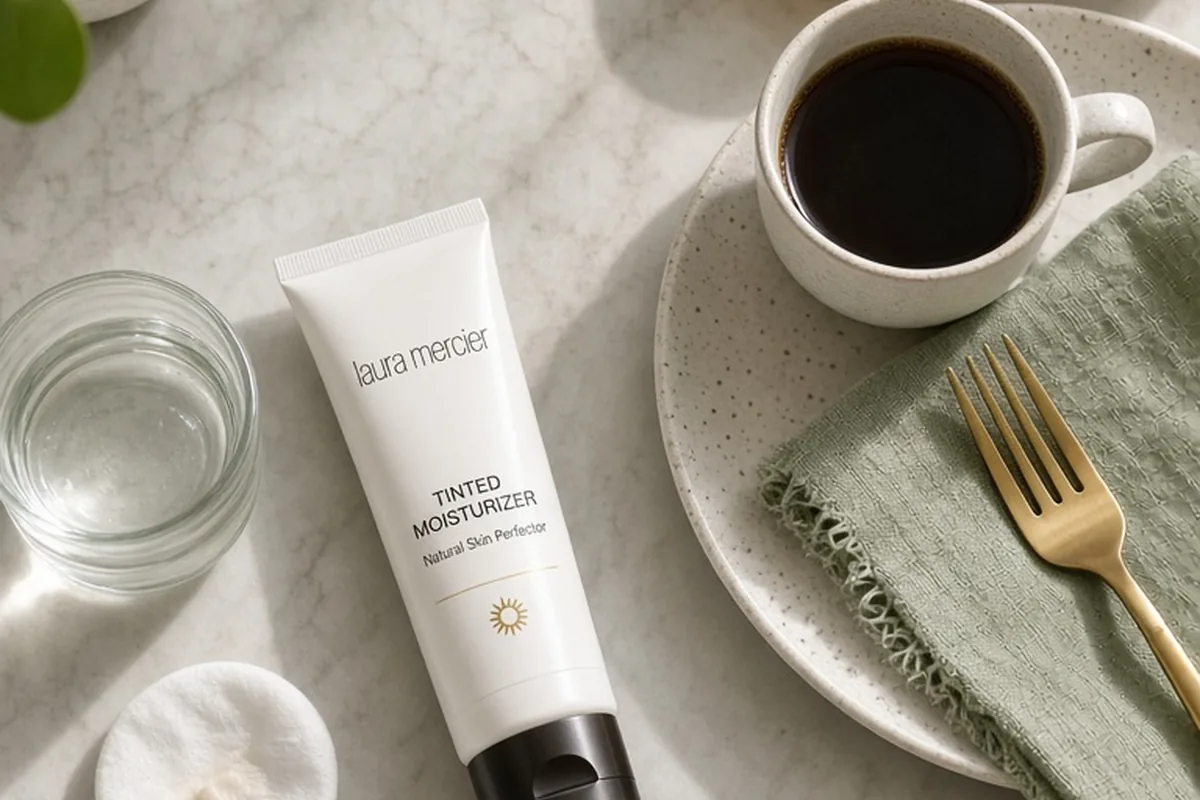
Laura Mercier Tinted Moisturizer lists water as its first ingredient, but its formula relies heavily on silicones such as dimethicone and cyclohexasiloxane. Because of this composition, it behaves functionally as a silicone-dominant emulsion rather than a pure water-based product. For optimal application and wear, pairing it with a silicone-based or hybrid primer will help prevent separation, pilling, or uneven patchiness throughout the day.
Understanding the chemical foundation of your complexion products is one of the most reliable ways to avoid frustrating makeup issues like flaking, pilling, and premature fading. When evaluating iconic products like Laura Mercier Tinted Moisturizer, looking past the first ingredient on the box helps you design a skincare and primer routine that keeps your base fresh and cohesive all day.
Deconstructing the Laura Mercier Ingredient Profile
In the cosmetics industry, ingredient labeling conventions require manufacturers to list components in descending order of predominance. Because water serves as the universal carrier and solvent in almost all liquid foundations and tinted creams, Aqua or Water almost always appears at the very top of the list. However, finding water in the initial spot does not automatically mean a product performs as a water-based cosmetic in daily use. The overall behavior of the formula depends on the structural emulsifiers and film-formers that hold the pigments together on your skin.
A close look at the Laura Mercier Tinted Moisturizer Natural Skin Perfector ingredient deck reveals significant concentrations of Dimethicone, Cyclohexasiloxane, and PEG-10 Dimethicone within the top portion of the formula. These silicone polymers are responsible for the product's signature slip, blending ease, and velvety finish. In cosmetic chemistry terms, the product is an emulsion where silicone molecules encapsulate hydrating agents and pigments. As a result, the product dries down as a flexible, silicone-anchored film rather than absorbing completely into the skin the way an oil-free, water-soluble gel would.
Formula Variations Across the Laura Mercier Range
Laura Mercier offers several iterations of its classic tinted moisturizer, each tailored to distinct skin preferences while maintaining a similar underlying structural base. The Tinted Moisturizer Oil-Free SPF 20 is designed specifically for combination and oily skin types, swapping heavy emollient oils for light, volatile silicones and oil-absorbing powders like silica. Despite the oil-free claim, this variation remains distinctly silicone-based, utilizing dimethicone-derived crosspolymers to smooth the skin surface and control excess shine without drying out the face.
Conversely, the Tinted Moisturizer Light Revealer and classic Natural Skin Perfector versions incorporate nourishing plant extracts—such as kukui seed oil and macadamia seed oil—alongside light-reflecting mineral pearls and silicone binders. While these formulas offer a richer, more luminous finish for dry and mature skin types, their core stability still relies on silicone emulsification. Regardless of which specific bottle you choose from the range, the presence of silicone film-formers means you should approach your skin preparation and primer pairing using the same core compatibility guidelines.
Why Base Compatibility Dictates Makeup Performance
Complexion products often fail or break apart because opposing physical formulations are layered without allowing for cosmetic chemistry constraints. When a silicone-rich emulsion like Laura Mercier Tinted Moisturizer is applied over a high-tack, purely water-based gripping primer, the two layers cannot properly meld. Because silicones are naturally hydrophobic, placing them directly over an unbonded aqueous film creates surface tension, causing the makeup to slide around, cling unevenly to dry areas, or gather into small, rubbery balls known as pilling.
This mechanical incompatibility does not mean that water-based hydrating skincare must be excluded entirely from your morning routine. Water-soluble products like hyaluronic acid serums, thermal waters, and light glycerin essences absorb deeply into the outer layers of the skin, leaving a neutral, dry canvas once absorbed. The primary point of failure occurs when adding a separate, film-forming water-based primer or an overly greasy face oil right beneath your tinted moisturizer. Selecting a compatible primer creates a stable foundation that allows the silicone polymers in the tint to bond smoothly and stay in place.
Optimizing Your Skincare Prep and Primer Selection
Achieving a smooth, enduring finish with Laura Mercier Tinted Moisturizer begins with a methodical skincare layering sequence. Start by applying lightweight, water-based serums to freshly cleansed skin, patting them gently until fully absorbed. Follow with your preferred daytime moisturizer, ideally a balanced lotion or gel-cream that contains a modest amount of dimethicone or fast-absorbing emollients. The most critical step is allowing your skincare to set for at least three to five minutes so that moisture sinks into the skin rather than sitting loosely on the surface.
If you choose to use a makeup primer, select one formulated with dimethicone, cyclopentasiloxane, or hybrid polymer blends in its primary ingredient list. A smoothing or hydrating silicone-based primer creates an ideal surface for the tinted moisturizer, filling in pores and fine lines while offering chemical cohesion. If you prefer a streamlined routine without primer, applying your tinted moisturizer directly over a properly set, broad-spectrum sunscreen works exceptionally well, provided the sunscreen does not leave a greasy, un-emulsified film.
Best Application Methods for a Natural Finish
The application tool you choose affects how the silicone emulsion spreads across the contours of your face. For the sheerest, most natural finish, warming a nickel-sized amount of product between clean fingertips is often the most effective method. The warmth of your hands softens the emollient waxes and silicones, allowing the tint to blend effortlessly into the skin and produce a radiant, skin-like glow with minimal effort.
If you desire greater precision or buildable coverage, a synthetic buffing brush or a damp beauty sponge provides excellent results. A slightly damp sponge absorbs minimal product while pressing the silicone matrix smoothly against the skin, making it particularly useful for preventing product buildup around the nose and mouth. Conversely, a dense, flat-top synthetic brush allows you to buff the tint gently over areas with redness or hyperpigmentation. Avoid natural animal-hair brushes, as their porous fibers absorb the moisturizing oils and cause the silicone polymers to streak.
Troubleshooting Pilling, Separation, and Midday Breakdown
If you notice your tinted moisturizer balling up during application, the most common cause is applying product over an overly thick skincare base before it has had time to dry down. When face creams containing high amounts of plant butters or film-forming polymers have not absorbed, buffing a silicone tint across them creates friction that lifts the underlying layers. To remedy this, reduce the amount of moisturizer you apply in the morning, wait a few minutes before makeup application, or gently blot your T-zone with a clean tissue before applying the tint.
For those who experience midday separation or unwanted shine in the center of the face, strategic powder placement can extend wear without diminishing overall luminosity. Using a soft, fluffy brush to press a micro-milled translucent powder into the forehead, nose, and chin locks down the silicone emulsion where oil production is highest. Throughout the day, use blotting papers rather than continuous powder touch-ups to remove excess oil without disturbing the underlying makeup film.
Frequently asked questions
Can I use a water-based primer with Laura Mercier Tinted Moisturizer?
While some lightweight water-based primers that absorb completely into the skin can work, film-forming or high-tack water-based gripping primers often cause this tinted moisturizer to pill or separate. For the most consistent results, choose a silicone-based or hybrid smoothing primer that matches the dimethicone present in the formula.
Is Laura Mercier Tinted Moisturizer suitable for acne-prone skin?
The Oil-Free formulation is specifically designed for oily and blemish-prone complexions, offering a non-comedogenic base that minimizes excess shine. However, those sensitive to specific botanical oils should check the ingredient deck of the classic Natural Skin Perfector version, which contains plant oils like kukui and macadamia.
How do I know if my sunscreen is compatible with this tinted moisturizer?
Check your sunscreen ingredient list for silicones like dimethicone or cyclopentasiloxane, which blend seamlessly with this product. If you use an all-mineral or water-based sunscreen, allow it to absorb and dry down fully for several minutes before gently pressing the tinted moisturizer on top.
Your next step
Check the ingredient labels on your current daytime primer and moisturizer to ensure they share compatible silicone or hybrid bases with your Laura Mercier Tinted Moisturizer before your next application.