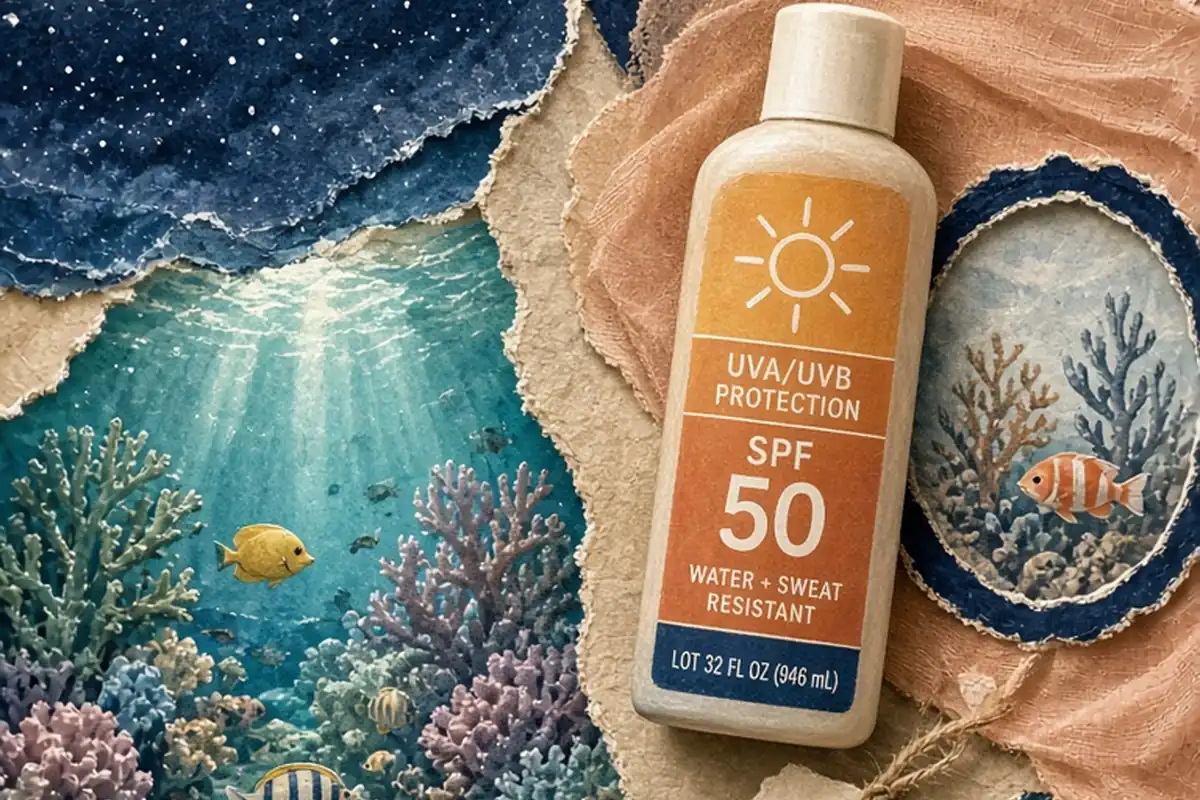
Neutrogena Beach Defense is not considered reef safe. Its formula relies on chemical ultraviolet filters, including avobenzone, homosalate, octisalate, and octocrylene, rather than non-nano mineral active ingredients like zinc oxide. While it provides strong, broad-spectrum sunburn protection for everyday land use, these chemical filters do not comply with environmental guidelines or legal restrictions established in reef-sensitive marine environments such as Hawaii, Key West, and the US Virgin Islands.
Planning a coastal vacation requires balancing dependable sunburn protection with the environmental health of fragile marine ecosystems. Understanding how popular body sunscreens interact with ocean waters helps you make informed choices before packing your beach bag.
The Active Ingredients in Neutrogena Beach Defense
Neutrogena Beach Defense is widely recognized for its high sun protection factor, lightweight texture, and water-resistant finish. To achieve this performance without leaving a chalky white residue, the formulation uses synthetic chemical absorbers. The active ingredients listed on the label typically include avobenzone, homosalate, octisalate, and octocrylene. These organic compounds work by penetrating the upper layers of the skin, absorbing ultraviolet rays, and converting that solar energy into harmless heat before it can damage living tissue.
While this chemical mechanism makes the lotion easy to spread and comfortable for everyday outdoor activities, it also means the active filters dissolve readily in water. When swimmers enter the sea, a portion of these chemical compounds washes off the body and enters the surrounding water column. In coastal areas with high visitor traffic, recurring chemical runoff can accumulate in shallow bays, tidal pools, and nearshore coral reefs, prompting environmental researchers and coastal authorities to evaluate their long-term footprint.
Why Chemical UV Filters Concern Marine Environments
Coral reefs are delicate ecosystems built upon a symbiotic relationship between hard coral polyps and microscopic algae known as zooxanthellae. These algae live inside coral tissues, providing essential nutrients and giving corals their vibrant colors. Research into marine pollution suggests that certain synthetic sunscreen filters, particularly oxybenzone and octinoxate, as well as high concentrations of octocrylene and homosalate, can induce physiological stress in coral organisms. This stress can trigger coral bleaching, where corals expel their algae and become vulnerable to disease and mortality.
Beyond mature coral colonies, dissolved chemical filters have been shown to interfere with the development of coral larvae, sea urchins, fish species, and phytoplankton. Even when a sunscreen avoids oxybenzone, compounds like octocrylene can degrade into secondary byproducts over time and persist in marine sediment. In calm lagoons and popular snorkeling bays with minimal tidal flushing, constant sunscreen wash-off can create localized hotspots of chemical exposure, compounding the stresses already caused by rising water temperatures and coastal development.
Understanding the Regulatory Meaning of Reef Safe
Shoppers often look for a reef-safe seal on sunscreen bottles, assuming it represents an official government certification. In reality, terms like reef safe and ocean friendly are not legally defined or regulated by the United States Food and Drug Administration. This regulatory gap allows cosmetic manufacturers to place environmental claims on product packaging as long as the formula omits one or two specific banned ingredients, even if other questionable chemical filters remain present.
Because marketing labels can be ambiguous, relying on front-of-bottle slogans is rarely sufficient when preparing for an eco-conscious trip. True reef compatibility is determined by the specific active ingredients listed on the mandatory Drug Facts panel on the back of the bottle. Environmental advocacy groups and marine conservation organizations generally reserve their endorsement for sunscreens that use non-nano physical mineral filters exclusively, rather than blended chemical formulations.
Destinations with Active Sunscreen Bans and Restrictions
As scientific scrutiny of coastal pollution has grown, several popular vacation destinations have enacted strict laws restricting the sale, distribution, and use of specific chemical sunscreens. Travelers arriving with non-compliant formulas may face product confiscation at ecological park gates or fines from local conservation authorities. Knowing the local standards of your destination ensures you avoid unexpected delays and help support local preservation policies.
Different regions enforce varying levels of restriction, ranging from bans on specific active ingredients to blanket requirements for all-mineral sun protection. If you are traveling to any of the following destinations, standard chemical lotions like Neutrogena Beach Defense will either be restricted or outright prohibited in coastal waters:
- Hawaii: Prohibits the sale and commercial distribution of sunscreens containing oxybenzone and octinoxate, with individual counties moving toward pure mineral-only standards.
- US Virgin Islands: Mandates the use of non-nano mineral active ingredients, banning all chemical UV filters in territorial waters.
- Palau: Enforces one of the world's strictest reef protection laws, prohibiting ten specific sunscreen chemicals, including oxybenzone, octinoxate, and octocrylene.
- Mexican Eco-Parks: Ecotourism destinations in Quintana Roo, including Xcaret and Cozumel marine reserves, ban chemical sunscreens at park entrances and permit only biodegradable mineral lotions.
- Bonaire and Aruba: Prohibit the import and sale of sunscreens containing oxybenzone and other reef-damaging synthetic filters across their marine sanctuaries.
Mineral Versus Chemical Sunscreens for Swimming
The fundamental difference between reef-safe sunscreens and standard formulas lies in their active mineral composition. Mineral sunscreens rely on zinc oxide, titanium dioxide, or a combination of both. These naturally occurring minerals sit on the surface of the skin and act as a physical shield, reflecting and scattering ultraviolet radiation away from the body. When formulated as non-nano particles—meaning the particles measure larger than 100 nanometers—they cannot be easily absorbed into human pores or ingested by coral polyps and small marine organisms.
Transitioning from a chemical lotion like Neutrogena Beach Defense to a mineral formula involves a few practical trade-offs. Mineral lotions are generally thicker, require extra effort to blend, and may leave a light white cast on deeper skin tones unless you select a tinted variety. However, mineral blockers offer immediate protection upon application, cause fewer skin sensitivities for individuals prone to contact allergies, and remain physically stable on the skin surface while swimming.
How to Screen Sunscreen Labels in Under a Minute
Selecting an ocean-friendly sunscreen does not require an advanced background in chemistry. By following a straightforward label-checking routine, you can quickly determine whether any sunscreen product is suitable for marine use before you reach the checkout counter or pack your travel kit.
To confirm whether a bottle meets recognized environmental guidelines, follow these clear verification steps:
- Check the Active Ingredients panel: Look for Zinc Oxide or Titanium Dioxide as the only active ingredients listed on the Drug Facts table.
- Screen out common chemical filters: Ensure the formula contains no Avobenzone, Homosalate, Octisalate, Octocrylene, Oxybenzone, or Octinoxate.
- Verify particle size claims: Look for explicit non-nano labeling to ensure the mineral particles are large enough to avoid marine bioaccumulation.
- Review water resistance: Select formulas offering 80 minutes of water resistance to minimize the amount of lotion that rinses off into the water during extended swimming.
- Check inactive ingredients: Avoid heavy artificial fragrances, parabens, and phthalates, which can also introduce synthetic contaminants into delicate aquatic habitats.
Practical Sun Protection Strategies for Reef Snorkeling
Topical lotion is only one component of a responsible sun protection strategy. Relying solely on sunscreen requires applying substantial amounts of product to your entire body, increasing both your expenses and the volume of lotion introduced into the marine environment. A more efficient and protective approach combines smart gear choices with targeted topical application.
Wearing certified Ultraviolet Protection Factor swim shirts, rash guards, and swim tights blocks broad-spectrum solar radiation continuously without washing off in the surf. A long-sleeve rash guard covers the shoulders, back, and torso—the areas most exposed to direct sunlight while snorkeling—reducing the total body surface area needing lotion by up to eighty percent. You can then apply a water-resistant mineral sunscreen stick or lotion exclusively to exposed areas like the back of the neck, ears, hands, and lower legs.
Timing your application also significantly reduces environmental wash-off. Applying your mineral sunscreen at least twenty minutes before getting into the ocean gives the lotion base time to bind with your skin oils and form an even barrier. Putting on sunscreen immediately before diving into the surf causes much of the freshly applied cream to rinse directly off into the shoreline water, leaving your skin unprotected and adding unnecessary residue to the sea.
Frequently asked questions
Can I still use Neutrogena Beach Defense if I am not swimming in the ocean?
Yes, Neutrogena Beach Defense remains an effective broad-spectrum option for land-based activities such as gardening, running, or outdoor sports. Because the primary environmental concern relates to chemical runoff entering aquatic ecosystems, using it away from natural waterways presents no direct threat to marine life.
Does Neutrogena offer an alternative sunscreen that is reef safe?
Neutrogena produces pure mineral formulas, including their Sheer Zinc line and Mineral Beach Defense options, which utilize 100 percent zinc oxide. Always verify the active ingredients on the back label to confirm the specific bottle contains only physical mineral blockers rather than a chemical blend.
What should I do if an eco-park prohibits my chemical sunscreen?
Eco-parks that enforce strict sunscreen rules typically provide designated storage for non-compliant lotions at the entrance and offer approved biodegradable mineral samples for purchase. Packing a certified mineral sunscreen and a UPF rash guard in advance prevents the inconvenience of surrendering your personal products at the gate.
How can I tell if a mineral sunscreen is truly non-nano?
Non-nano indicates that the mineral particles are larger than 100 nanometers, preventing them from penetrating coral cells or living tissue. Most reputable mineral brands clearly state non-nano zinc oxide on their packaging, while traditional, thicker white zinc lotions are generally non-nano by standard formulation.
Your next step
Before your next beach trip, check your sunscreen's active ingredient panel for non-nano zinc oxide or titanium dioxide, and pack a UPF 50+ rash guard to ensure reliable, ocean-friendly sun protection.