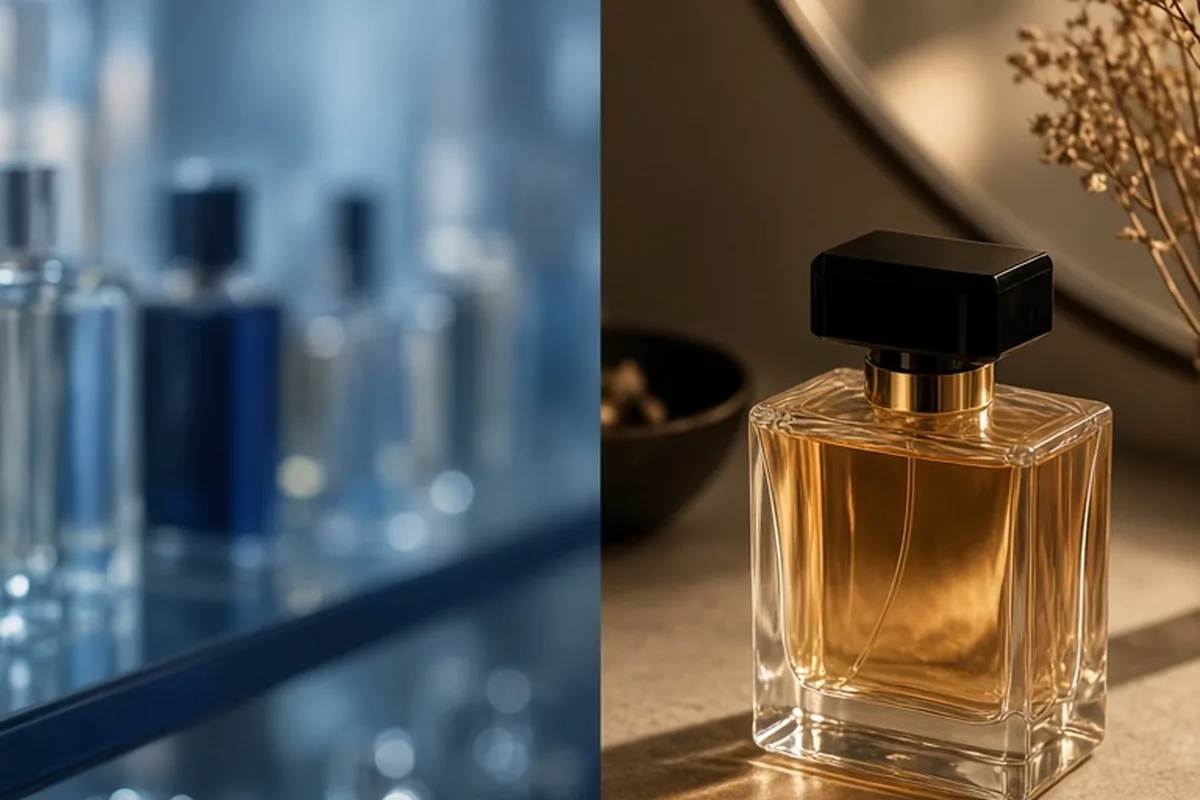
Parfum is formulated for both men and women. The word parfum refers strictly to fragrance concentration—containing the highest ratio of aromatic oils, typically twenty to forty percent—rather than gender. While historic retail marketing often labeled men's scents as colognes and women's as perfumes, modern perfumery crafts rich parfums for everyone, offering deeper longevity and close-to-skin projection regardless of who wears them.
Navigating a fragrance aisle can quickly become confusing when vintage marketing habits collide with technical perfumery terms, leaving many shoppers uncertain about whether a bottle labeled parfum matches their personal style.
The Real Difference Between Concentration and Gender
In classical perfumery, every fragrance is built from a mixture of aromatic compounds, carrier alcohol, and water. The label on the bottle—whether it reads parfum, eau de parfum, eau de toilette, or eau de cologne—specifies the concentration of pure fragrance oils dissolved in that solution. A true parfum, sometimes sold as extrait de parfum, represents the richest tier in this system, containing anywhere from twenty to forty percent oil concentration. Because it holds the lowest proportion of evaporating alcohol, parfum develops slowly, lingering on the skin for eight to twelve hours or longer without requiring reapplication.
Gender designations do not alter these chemical ratios. An extrait formulated with smoky birch, cedarwood, and leather contains the exact same concentration classification as one built on tuberose, vanilla, or iris. When you shop for a scent today, treating the word parfum as a measure of density and duration rather than an indicator of femininity allows you to evaluate products based on how they actually perform on your skin and in your daily environment.
Why English Marketing Created the Cologne versus Perfume Myth
The assumption that perfume belongs solely to women largely stems from mid-twentieth-century American commercial advertising. During this era, fragrance houses wanted to introduce daily grooming scents to men who were hesitant to adopt European luxury rituals. Marketers realized that branding men's products with the lighter, citrus-forward German term cologne felt accessible and utilitarian, while reserving the French word perfume for romantic, ornate women's releases. Over decades of television, magazine, and department store campaigns, this linguistic divide hardened into an artificial cultural rule.
In global fragrance traditions, particularly throughout the Middle East and continental Europe, this rigid division never took hold. Men have historically worn dense, resinous, and floral extraits, while women have regularly used light, refreshing colognes after bathing. Today, high-end design houses and independent artisan perfumers have largely abandoned strict gender partitions. Recognizing that historic marketing was a commercial tactic rather than a biological necessity helps you choose scents based on aromatic appeal, emotional resonance, and quality rather than outdated retail categories.
How Parfum Performs Differently Across the Day
Understanding how parfum behaves helps set realistic expectations for how you will experience it throughout a workday, an evening event, or a date. Lighter concentrations like eau de toilette feature a high percentage of alcohol, which vaporizes rapidly off the skin. This rapid evaporation creates a bright initial burst and a wider cloud of scent around you, known as projection or sillage. However, that rapid burst also means the lighter top notes can dissipate within two to four hours, leaving behind only faint base elements.
Parfum functions almost in reverse. Because the high concentration of natural oils and heavy base compounds evaporates gradually, parfum tends to stay closer to your personal space. It produces an intimate scent bubble that reveals itself when someone stands near you, leans in for an embrace, or sits beside you at dinner. The trade-off is clear: while you trade away the room-filling projection of an alcohol-heavy spray, you gain a richer, more nuanced scent profile that remains consistent through an entire day without sharp, synthetic spikes.
Navigating Scent Profiles Beyond Binary Labels
Traditional department store counters often divide scents into predictable masculine and feminine families—grouping woods, spices, and aromatics on one side, and florals, fruits, and soft powders on the other. In practice, modern fragrance composition is far more fluid. Many of the most celebrated masculine fragrances rely heavily on floral notes like rose, lavender, and neroli to add elegance to dark leather or tobacco bases. Similarly, many beloved feminine scents incorporate dry vetiver, smoky incense, and earthy patchouli to anchor bright fruit notes.
Your unique body chemistry plays a far greater role in how a fragrance smells than any marketing category. Skin temperature, natural moisture levels, and individual lipid production interact with natural fragrance oils in distinct ways. A rich vanilla and cardamom parfum might smell dark, dry, and spicy on one person while smelling soft, creamy, and sweet on another. Selecting a fragrance becomes significantly more rewarding when you test how raw notes develop on your own wrists rather than judging a bottle by the gender implied by its packaging design.
Application Etiquette for Close-Range Confidence and Intimacy
Wearing a concentrated parfum requires a different application technique than misting an everyday body spray or cologne. Because parfum carries high oil content, spraying it excessively can quickly overwhelm both your own senses and the comfort of those sharing enclosed spaces like cars, offices, or quiet restaurants. Olfactory fatigue is a real factor: after twenty minutes, your nose may adjust to your own scent, tricking you into thinking it has vanished even when others around you can detect it clearly.
To wear parfum with quiet confidence, prioritize precision over quantity. Applying one or two controlled sprays to warm pulse points—such as the base of the neck, behind the ears, or on the inner wrists—allows your body heat to gently radiate the fragrance throughout the day. Avoid rubbing your wrists together after spraying, as the friction and heat can break down delicate top notes prematurely. When applied thoughtfully, a parfum acts as an intentional extension of your grooming routine, noticeable during close conversation and genuine connection without demanding attention across an entire room.
How to Test and Select the Right Concentration for Your Needs
Finding the right fragrance concentration depends largely on your lifestyle, budget, and the settings where you spend your time. When testing a parfum in a boutique or store, avoid making an immediate purchasing decision based solely on the initial spray on a paper testing strip. The paper card captures only the opening notes and does not reflect how the oils will blend with your natural skin warmth over time.
Instead, spray one candidate on clean skin on your forearm and go about your normal routine for at least four to six hours. Observe how the scent transitions from its opening accords into its deeper middle and base notes. Consider whether you need an energetic, refreshing spray for post-workout errands, a balanced eau de parfum for daily office wear, or a deep, long-lasting extrait for evening dates and special occasions. Choosing deliberately based on wear-time and comfort prevents buyer remorse and builds a functional fragrance wardrobe that suits your authentic presence.
Illustrative Scenarios
Overcoming Fragrance Label Hesitation
Julian wanted a warm, woodsy scent for evening dates but felt hesitant when a sales associate handed him a bottle labeled pure parfum. Assuming the term meant it was formulated exclusively for women, Julian nearly settled for a weak citrus spray he disliked. After learning that parfum denoted concentration rather than gender, he tested the woody extrait on his wrist during dinner with friends. The warm sandalwood and black pepper notes developed subtly throughout the night, earning genuine compliments on its quiet richness.
Key point: Evaluating a fragrance by its ingredient quality and concentration rather than retail labels helps you discover scents that naturally fit your presence.
Finding Balance on Social Dates
Tanya used to apply several sprays of eau de toilette before meeting people, finding that the scent either overpowered the car ride or disappeared by dessert. When she switched to an amber parfum, she initially worried one spray would not be noticeable. She applied a single drop behind each ear before an evening dinner date. The scent remained subtle, warm, and comforting up close across the table without filling the small dining booth, giving her quiet confidence without olfactory distraction.
Key point: Higher concentration formulas allow for subtle, long-lasting wear that enhances personal proximity without overpowering shared spaces.
Frequently asked questions
Can men wear fragrances labeled as parfum or eau de parfum?
Yes. Men can comfortably wear any fragrance labeled parfum or eau de parfum, as these terms indicate oil concentration rather than femininity. Many top-tier masculine and unisex releases are specifically blended as parfums to provide all-day depth and richer wood, spice, or leather notes.
Does parfum project farther across a room than eau de toilette?
Not necessarily. While parfum contains more concentrated oils, it typically holds less alcohol, which causes it to stay closer to your skin and create an intimate scent bubble. Eau de toilette evaporates faster and often projects a wider initial scent trail, but fades much sooner.
How many sprays of pure parfum should you apply?
One to two sprays are generally sufficient for a pure parfum or extrait. Applying it to warm pulse points such as your neck or wrists allows the dense oils to radiate naturally throughout the day without overwhelming those nearby.
Why is parfum usually more expensive than other fragrance types?
Parfum commands a higher price because it contains a significantly higher percentage of expensive aromatic compounds and natural raw oils relative to carrier alcohol. The higher concentration ensures that a smaller amount provides significantly longer wear on the skin.
Your next step
Visit a local boutique or counter to test one parfum directly on your wrist, letting it develop over four hours on your skin before deciding if its density and longevity match your lifestyle.