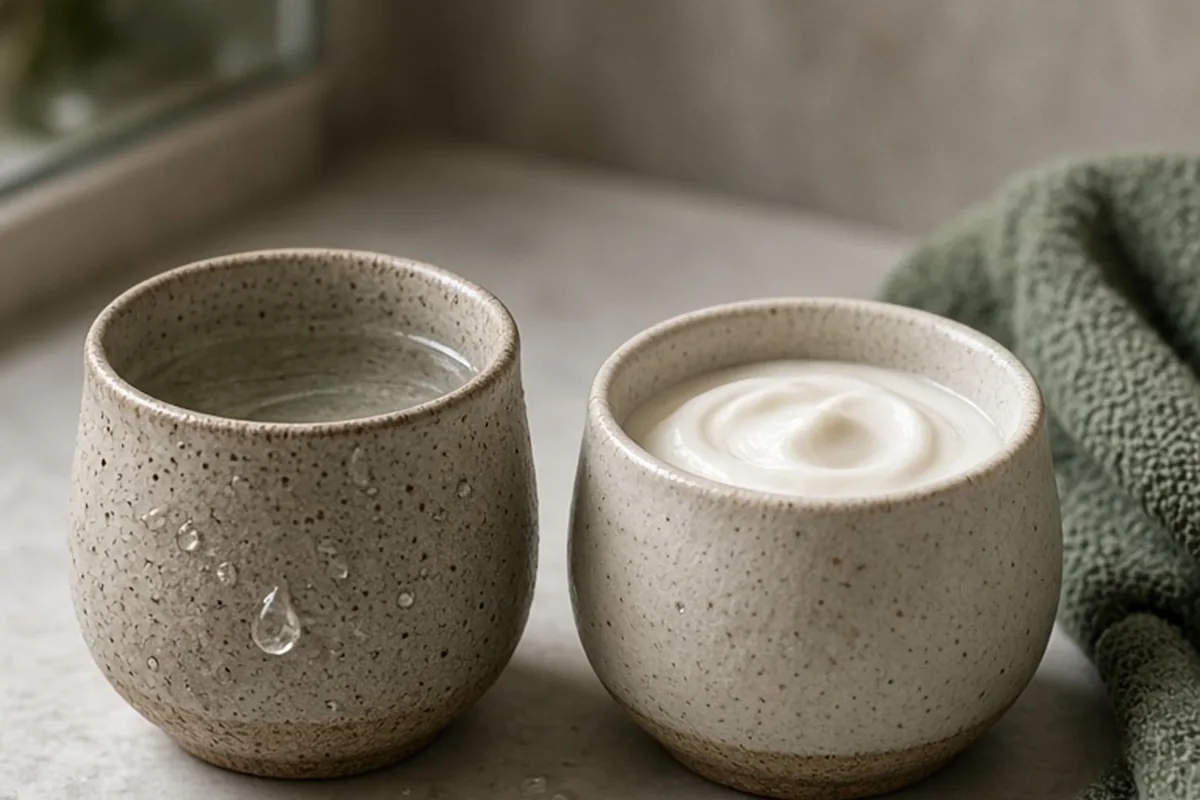
Toner always goes before moisturizer. In standard skincare layering, products are applied from thinnest to thickest consistency. Toner has a watery texture designed to hydrate, balance surface pH, or clear residue immediately after cleansing. Moisturizer contains richer emollients and occlusives that seal in moisture, which would otherwise block lighter toner formulas from reaching the skin.
Navigating the correct sequence for daily skincare can quickly become confusing when bathrooms are stocked with cleansers, toners, serums, oils, and creams. Understanding the exact mechanical role of each formula helps you build a routine that feels comfortable, avoids product pilling, and respects your skin barrier.
The Core Rule of Skincare Layering: Thin to Thick Consistency
The universal guideline for applying skincare products comes down to physical texture and molecular weight. As a general rule, you apply formulations starting from the most fluid, water-based consistencies and finish with the densest, oil-rich creams. Because toner is predominantly liquid, it needs direct contact with freshly washed skin to deliver its humectants or clarifying ingredients effectively.
Moisturizers, by comparison, contain a blend of humectants, emollients, and occlusive agents. Occlusives create a protective hydrophobic film over the surface of the stratum corneum to prevent trans-epidermal water loss. If you apply a moisturizer first, that protective barrier will repel subsequent water-based products. Any toner splashed or patted on top of a moisturizer will simply pool on the surface, dilute your cream, and evaporate into the air without delivering its intended benefits.
Consider an everyday analogy: painting a wooden deck with a protective sealant before applying a penetrating stain. The stain would never sink into the grain because the waterproof sealant repels it entirely. Following the thin-to-thick principle ensures that every layer penetrates, hydrates, and locks into place without competing against the next step.
How Cleansing Sets the Stage for Toner
Cleansing removes makeup, excess sebum, sweat, sunscreen, and environmental grime that accumulate throughout the day or night. However, washing your face with tap water and surfactants can temporarily alter the surface environment of your skin, occasionally leaving it feeling tight or stripped if the cleanser is particularly clarifying.
Applying toner immediately after cleansing serves as the primary bridge between washing and deeper nourishment. When applied to clean skin, a gentle toner reintroduces immediate hydration, sweeps away any remaining trace impurities or hard water minerals, and lowers surface resistance so that following steps glide on smoothly.
To get the most out of this stage, gently pat your face with a clean towel until it is barely damp rather than completely bone-dry. Applying a liquid toner to slightly damp skin allows humectants like glycerin and panthenol to bind residual moisture to the outer skin layers before evaporation sets in.
Different Types of Toners and How They Function
Not all toners perform the same job, and identifying what your specific formula is designed to do can help you manage your expectations and application style. Decades ago, toners were primarily astringent formulas high in denatured alcohol, meant to degrease oily skin. Modern formulations are vastly more diverse and generally fall into three main categories: hydrating, exfoliating, and soothing.
Hydrating toners focus on flooding the surface with water-binding ingredients such as hyaluronic acid, beta-glucan, aloe vera, and botanical extracts. These formulas are typically pressed directly into the skin with clean hands and can even be layered multiple times if your skin feels particularly parched from dry weather or indoor heating.
Exfoliating toners contain mild chemical exfoliants like alpha hydroxy acids (glycolic or lactic acid), beta hydroxy acids (salicylic acid), or polyhydroxy acids. These toners work to loosen dead skin cells and clear congested pores. Because they contain active ingredients, they are usually applied using a cotton pad once daily or several times a week. Regardless of whether your toner hydrates or exfoliates, both varieties belong squarely before your moisturizer.
Where Serums and Treatments Fit in the Routine
If your routine consists only of cleanser, toner, and moisturizer, the order is straightforward. However, many people also include targeted treatment steps, such as concentrated serums, ampoules, or prescription topicals. These intermediate products sit directly between your toner and your moisturizer.
Because serums are typically thicker than water but lighter than a lotion or cream, they follow the toner seamlessly. Applying a liquid toner first creates a receptive, hydrated base that can help treatment serums spread evenly across the face without dragging or requiring excessive rubbing. For instance, applying a hyaluronic acid serum over a damp layer of hydrating toner provides ample water for the molecule to hold onto.
When using active treatments like vitamin C in the morning or retinoids at night, the same ordering framework generally applies: cleanse, apply toner, apply treatment serum, and finish with moisturizer. If your skin is particularly sensitive to an active ingredient, some people choose to buffer the active by applying moisturizer first, but standard hydrating and exfoliating toners should still remain in the pre-moisturizer window.
The Role of Moisturizer as the Final Barrier
Moisturizers do not simply add moisture to the skin; their primary mechanical role is to retain the hydration already present in the tissue and reinforce the skin barrier. A well-formulated moisturizer relies on three key classes of ingredients working together: humectants that draw water in, emollients that smooth rough skin cell edges, and occlusives that physically block moisture from evaporating.
When you apply a moisturizer over toner and serum, you are effectively capping the hydration you just introduced. Without that lipid-rich outer layer, the water provided by your toner would quickly evaporate into dry ambient air, a process known as evaporative water loss that can leave skin feeling tighter than before.
For daytime routines, your moisturizer may be a lightweight gel or lotion, followed by a broad-spectrum sunscreen. In the evening, you might opt for a denser cream containing ceramides, fatty acids, or squalane. In both scenarios, the moisturizer serves as the protective capstone of your topical routine.
Step-by-Step Morning and Evening Application Walkthrough
Establishing a consistent morning and evening rhythm removes any guesswork about what step comes next. While the fundamental order remains cleanser, toner, serum, and moisturizer, your product choices may shift slightly between sunrise and bedtime depending on your skin needs and environmental exposure.
In the morning, your goal is lightweight hydration and antioxidant defense followed by ultraviolet protection. Start by washing with lukewarm water or a gentle foaming cleanser. Pat your face lightly, sweep or press a hydrating or antioxidant toner across your cheeks, forehead, and neck, follow with a light serum if desired, apply your daytime moisturizer, and finish with sunscreen as the final step.
In the evening, your routine centers on thorough cleansing and barrier repair. Begin with a double cleanse if you wore makeup or water-resistant sunscreen. Next, apply your toner—whether a gentle hydrating formula or a mild exfoliating blend. Follow with any targeted night serums or barrier repair treatments, and conclude with a nourishing layer of night cream to seal everything in while you sleep.
Common Application Mistakes and How to Avoid Them
Even when using products in the correct order, small application errors can lead to irritation or reduced effectiveness. One frequent mistake is waiting too long between applying toner and applying moisturizer. If you allow a purely hydrating toner to dry out completely for several minutes in an arid room, it may pull water outward rather than locking it in. Aim to apply your serum or moisturizer while your skin is still visibly dewy from the toner.
Another common issue is over-exfoliation caused by combining an exfoliating acid toner with other potent resurfacing treatments, such as physical scrubs or high-strength retinoids, in the exact same session. If your toner contains active acids, alternate it across different nights or use a basic, soothing toner on the evenings you apply strong actives.
Finally, pay attention to product pilling, which occurs when products ball up into tiny flakes on the skin surface. Pilling usually happens when you apply too much product at once, rub too aggressively, or combine incompatible silicone-heavy creams with water-based toners before the first layer has settled. Gently pressing products into the skin rather than vigorously rubbing usually resolves this problem.
Frequently asked questions
Can I skip toner and just use a moisturizer?
Yes, toner is an optional step in a basic skincare routine. If your cleanser is gentle and your moisturizer provides adequate hydration, you can apply moisturizer directly to damp skin after washing.
How long should I wait between toner and moisturizer?
You do not need to wait long. For hydrating toners, apply your moisturizer while your skin is still slightly damp to lock in moisture, whereas exfoliating acid toners can be given about thirty seconds to settle before moving to the next layer.
Is it ever beneficial to put toner on after moisturizer?
No, applying standard toner after moisturizer is ineffective because the oils and occlusives in the cream prevent the watery toner from absorbing into the skin. If you need a midday hydration boost over makeup or moisturizer, a dedicated fine facial mist is designed for that purpose.
Can I apply more than one layer of toner before my cream?
Yes, layering multiple light coats of a gentle, alcohol-free hydrating toner can help deeply hydrate parched skin before sealing it with moisturizer. However, you should avoid layering exfoliating toners containing glycolic or salicylic acid, as this can cause irritation.
Your next step
Always apply your toner directly after cleansing and before your moisturizer to ensure lightweight hydration absorbs fully and stays locked into your skin barrier.