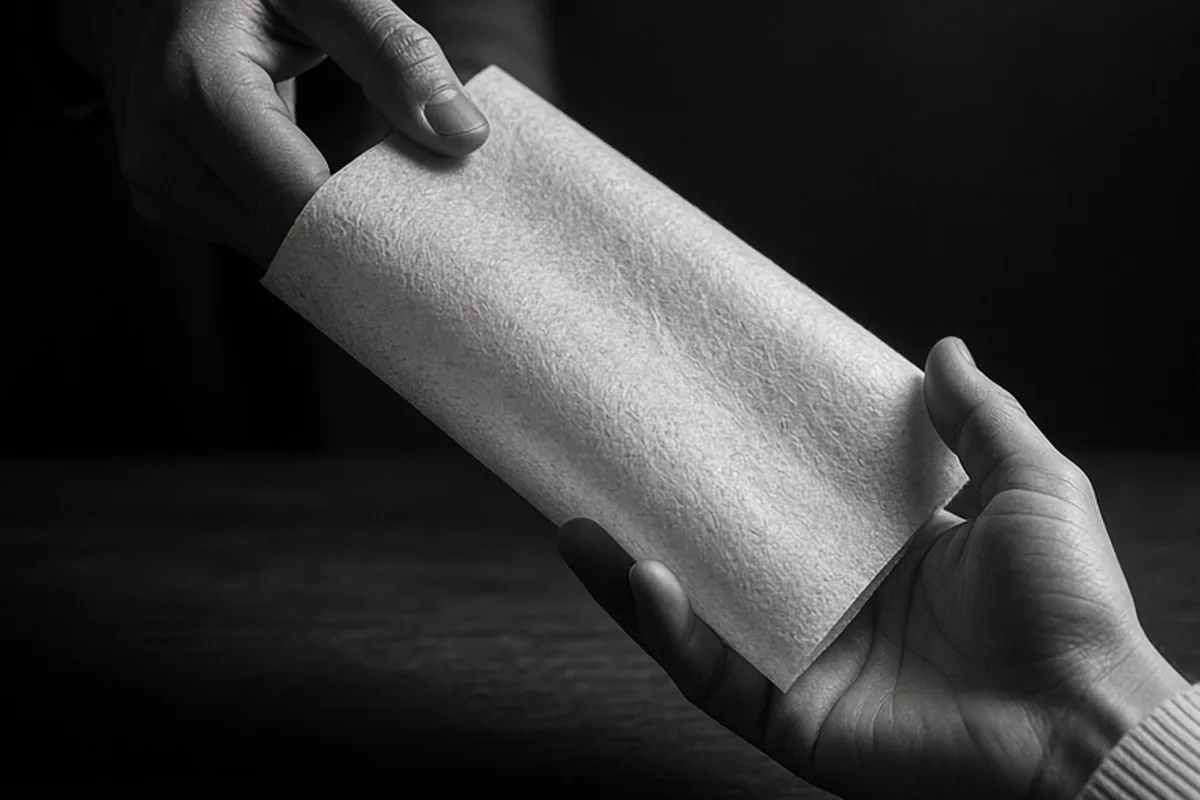
Yes, Tyvek acts as a weather-resistive moisture barrier against liquid water, but it is not a vapor barrier. Manufactured from spunbonded high-density polyethylene, it repels exterior wind-driven rain while remaining vapor-permeable. This specific structure allows indoor humidity and trapped dampness inside wall framing to escape outward, protecting wood sheathing from fungal rot without trapping interior condensation.
Navigating building codes and weatherization jargon can quickly become confusing when planning a siding replacement, home addition, or shed build. Understanding the exact line between liquid water resistance and water vapor diffusion is the key to choosing the right protective layer for any exterior wall.
Liquid Water Versus Water Vapor: Clarifying the Terminology
In residential construction, the term moisture barrier is frequently used as an informal catch-all phrase, which creates dangerous misunderstandings for homeowners and novice builders. Moisture takes two distinct forms within a building envelope: bulk liquid water and airborne water vapor. Liquid water comes from rainfall, melting snow, and exterior splashback running down the exterior siding. Water vapor, on the other hand, consists of microscopic moisture molecules suspended in the air, generated by indoor activities like showering, cooking, and respiration, or pulled through foundations by solar vapor drives.
Tyvek belongs to the technical category known as water-resistive barriers or weather-resistive barriers. Its primary engineering goal is shedding liquid water that penetrates past the primary exterior cladding while preventing outdoor air infiltration. It is deliberately designed not to be a Class I vapor retarder, such as thick polyethylene sheeting or foil facing, which blocks vapor diffusion completely. If you install an impermeable plastic wrap on the exterior of a home in a cold or mixed climate, water vapor that migrates outward from warm living spaces will hit that cold boundary, condense into liquid drops, and rapidly rot the structural wall studs.
How Tyvek Works as an Exterior Protective Layer
DuPont Tyvek HomeWrap is produced by flash-spinning continuous strands of high-density polyethylene fibers that are bonded together with heat and pressure, forming a nonwoven sheet with microscopic pores. These microscopic voids are substantially smaller than a droplet of liquid water. Because surface tension holds water droplets together, liquid rain cannot push through the membrane under normal wind pressures, allowing the material to shed bulk runoff down to the flashing details at the bottom of the wall assembly.
At the same time, individual water vapor molecules are thousands of times smaller than liquid water droplets. The micro-pores in Tyvek are large enough to allow those solitary vapor molecules to move freely through the sheet. This dual behavior turns the material into a one-way defense mechanism under typical conditions: bulk weather remains outside, but moisture generated inside the home or absorbed by damp framing lumber during construction can escape through evaporation before fungal growth can establish itself.
Understanding Perm Ratings and Drying Potential
To evaluate how breathable a moisture barrier is, building scientists examine its permeance rating, measured in perms. A higher perm rating indicates that a material permits water vapor to diffuse through it more readily. Standard residential Tyvek HomeWrap typically carries a perm rating between fifty and sixty perms. For comparison, traditional asphalt-saturated kraft building paper ranges from five to twenty perms depending on wetness, while six-mil polyethylene sheeting measures less than zero point one perm.
Because Tyvek offers a perm rating well above ten, building codes classify it as an open, breathable membrane. This high permeability provides a significant safety buffer for wood assemblies. For example, if a heavy summer storm drives moisture behind fiber-cement siding, an exterior wall wrapped in a high-perm material can dry both inward and outward once the sun warms the exterior surface. Without high drying potential, trapped water stays in prolonged contact with oriented strand board or plywood sheathing, softening the wood adhesives and swelling the panels.
Tyvek Versus Traditional Asphalt Felt Paper
For decades before synthetic housewraps existed, fifteen-pound and thirty-pound asphalt-saturated organic felt paper served as the standard weather-resistive barrier. Felt remains a viable and respected material today, but it functions differently than Tyvek. Asphalt felt has dynamic permeability, meaning its perm rating is relatively low when dry, around five perms, but increases significantly when wet, rising toward sixty perms to allow drying. However, felt is heavy, tears easily under stiff jobsite winds, and degrades more rapidly when exposed to prolonged sunlight during construction delays.
Tyvek provides far higher tensile strength, making it much more resistant to tearing around fasteners during windy conditions. It also acts as an effective air barrier when seams are taped, reducing drafts through gaps in exterior sheathing, a function traditional unsealed felt paper cannot reliably achieve. The trade-off lies in chemical sensitivity and liquid holdout under prolonged immersion. Surfactants, which are chemical compounds found in power-washing detergents, wood tannins from cedar or redwood, and certain stucco additives, can lower the surface tension of water, occasionally allowing moisture to weep through synthetic nonwoven wraps faster than through thick asphalt felt.
Common Installation Errors That Compromise Moisture Protection
A weather-resistive barrier is only as reliable as its shingle-lap drainage plane. The most frequent installation defect occurs when installers reverse-lap the material, placing an upper course of wrap beneath a lower course. Water running down the face of the upper sheet flows directly behind the lower sheet, routing runoff into the wood wall cavity rather than outside the flashing. Sheets must always overlap horizontally by at least six inches, with upper layers overlapping lower layers, and vertical joints overlapping by at least six to twelve inches.
Another widespread failure is using unapproved fasteners or skipping specialty sealing tape. Tyvek requires broad-headed plastic cap nails or cap staples; standard bare metal staples create small puncture tears that pull loose in high winds and leak water. Furthermore, all vertical and horizontal seams should be sealed with specialized polyacrylic seam tape rather than duct tape or masking tape, which degrade within months. Around window rough openings, installers must follow an integrated sill-pan flashing sequence so water finding a path past window frames drains over the wrap rather than pooling on structural framing.
Choosing the Right Product for Your Siding and Climate
While standard HomeWrap works well behind vinyl siding and panel siding where natural air circulation exists, specialized claddings demand dedicated drainage profiles. Dense sidings like stucco, stone veneer, and tightly fastened horizontal wood siding hold moisture against the housewrap without a natural air gap. Under these claddings, water can remain trapped against the building paper by capillary attraction, slowly degrading the structure over several seasons.
For reservoir claddings like brick and stone, builders often select textured wraps like Tyvek StuccoWrap or Tyvek DrainWrap. These variations feature engineered grooves or crinkled surfaces that create a built-in drainage channel of approximately one to two millimeters. That small gap breaks capillary tension, letting gravity pull trapped water straight down to the base weeps. In hot, humid climates where exterior humidity remains near saturation, pairing a textured drainage wrap with a separate interior smart vapor retarder ensures the wall can manage directional vapor shifts throughout summer and winter.
Jobsite UV Exposure and Timing Limits
Even though synthetic wraps are engineered to withstand rough weather on active jobsites, they are not permanent roofing or finished exterior materials. Ultraviolet radiation from direct sunlight gradually breaks down the polyethylene polymer chains, causing the wrap to become brittle, lose its water repellency, and tear easily under light contact. Most manufacturers certify Tyvek HomeWrap for up to one hundred and twenty days of direct UV exposure before it must be covered by finished exterior siding.
Leaving housewrap exposed across an entire season or through an extended winter shutdown voids product warranties and introduces invisible micro-fractures in the membrane. If a construction timeline stalls and the wrap exceeds its rated exposure window, inspect the south- and west-facing elevations closely for fading, chalking, or fraying. When visible weathering or embrittlement has occurred, the damaged sections must be stripped and replaced or covered with a fresh layer before installing cladding.
Frequently asked questions
Can I use Tyvek on the warm interior side of wall insulation as a vapor barrier?
No, you should never install Tyvek as an interior vapor barrier. Because it has a high perm rating between fifty and sixty, it allows warm, humid interior air to diffuse directly into the wall cavity, where that vapor can condense against cold exterior sheathing. Interior vapor retarders require non-permeable membranes such as polyethylene sheeting or smart retarders designed to stop interior moisture movement.
Does Tyvek replace the need for exterior window and door flashing?
Tyvek does not replace window and door flashing. Instead, it must be carefully integrated with self-adhering flashing tapes, sill pans, and drip caps through a layered shingle-lap method. Neglecting dedicated metal or flexible adhesive flashings at window heads and sills is a leading cause of localized wall rot, regardless of what housewrap you use.
What happens if Tyvek gets wet from rain before the siding is installed?
Getting wet from typical rainfall will not ruin Tyvek, as the material is engineered specifically to shed bulk water. As long as it is properly fastened with cap staples and has adequate time to dry out before being permanently sealed behind siding, normal rain showers during construction will not harm its long-term performance.
Can I install Tyvek directly over old tar paper or wood siding?
Installing Tyvek over old, flat wood sheathing or sound asphalt felt is acceptable if the underlying surface is clean, dry, and structurally sound. However, you should never wrap Tyvek over decayed wood, wet boards, or uneven beveled lap siding, because trapped moisture behind the old cladding will be unable to dry efficiently and air pockets will prevent proper siding attachment.
Your next step
Before purchasing or hanging your housewrap, check your local building code and siding specifications to verify whether a flat water-resistive barrier or an integrated drainage wrap is required for your climate zone.