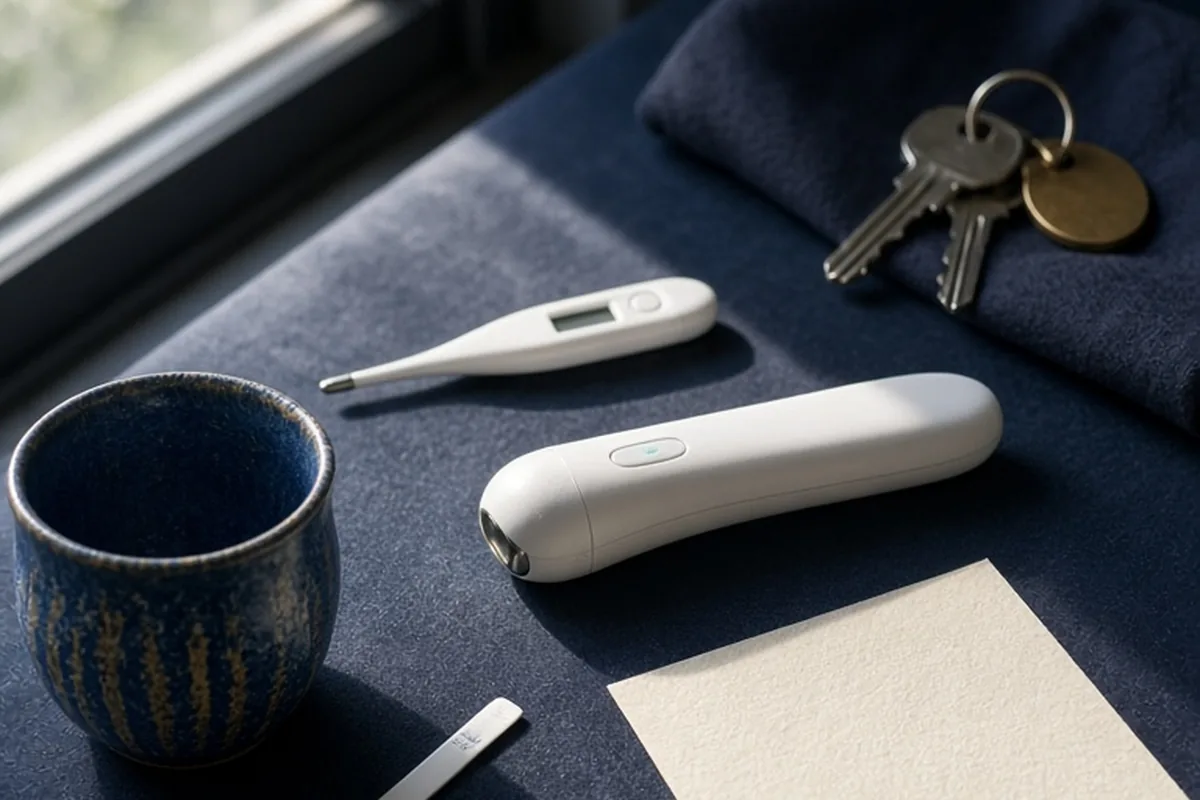
The Kegg fertility monitor tracks hormonal shifts by measuring the electrical impedance of cervical fluid through a two-minute daily vaginal sensor. It offers a convenient, mess-free way to identify the fertile window up to seven days in advance. While it simplifies fluid tracking compared to manual checks, it requires consistent daily timing, carries a high upfront cost, and does not confirm whether ovulation actually occurred.
Navigating fertility tracking often feels like managing a high-stakes science project filled with disposable test strips, basal thermometers, and subjective charting. Kegg enters this space with a distinct hardware approach, focusing on vaginal fluid impedance to detect fertile days earlier in the cycle.
How Kegg Tracks Fertility Through Electrical Impedance
Traditional fertility tracking relies heavily on observing external cervical fluid or catching the mid-cycle luteinizing hormone surge in urine. Kegg approaches the cycle differently by using electrical impedance technology to analyze the electrolyte levels in vaginal mucus. As estrogen rises in the days leading up to ovulation, the composition of cervical fluid shifts, increasing water and electrolyte concentrations. The smooth, silicone-coated sensor measures how easily a tiny electrical current passes through these fluids, translating those resistance levels into numeric readings within its companion mobile application.
Because electrolyte changes begin early in the follicular phase as follicles develop, this method is designed to provide an earlier warning of upcoming fertility than standard urine test strips. Users generally receive readings that form a cyclical trend line, often called a fertile valley, which dips as estrogen peaks and rises again once progesterone takes over post-ovulation. Understanding this biological mechanism helps users realize that Kegg is not searching for a single hormonal trigger, but rather charting a continuous curve of physiological changes inside the vaginal canal.
The Daily Routine and Setup Process
Using Kegg requires establishing a reliable daily habit. The device itself resembles a small, ergonomic teardrop made of medical-grade silicone with a flexible tail for easy insertion and removal. Users perform one reading per day, typically during a consistent two-hour window in the evening or morning, provided there has been no recent sexual intercourse. Before taking the measurement, the app prompts you to insert the bulb of the sensor into the vagina, where it remains for roughly two minutes while it gathers impedance data. It also includes an optional guided pelvic floor exercise feature, allowing users to complete brief Kegel contractions before the test begins.
For example, a user might place the device on their nightstand and take their reading each evening right before going to sleep. Once the reading finishes, the device vibrates gently to signal completion, washes easily with mild soap and warm water, and syncs automatically with the smartphone app via Bluetooth. The app then displays a daily value on a personalized graph. Consistency in timing is vital; taking a reading at midday after heavy exercise or after drinking large amounts of water can create noise in the data, making routine adherence one of the most critical factors in getting clear results.
Comparing Kegg to LH Strips and Basal Body Temperature
Choosing a fertility tracking tool often comes down to understanding what phase of the fertile window each device actually measures. Urine-based luteinizing hormone strips are widely accessible and reliable for identifying the acute twenty-four to thirty-six hour window immediately before egg release. However, because sperm can survive in fertile cervical mucus for up to five days, relying solely on LH strips can cause couples to miss the early portion of the fertile window. Basal body temperature tracking, on the other hand, monitors the thermal shift caused by progesterone, confirming that ovulation has already passed rather than predicting it in advance.
Kegg fits into the gap between these methods by focusing on the opening of the fertile window rather than the grand finale. By detecting fluid changes as estrogen begins its rise, it helps users time intercourse earlier in their cycle. However, Kegg does not replace the confirmation value of temperature tracking. While Kegg shows when your body is preparing for ovulation, it cannot independently verify that an egg was successfully released. Many users find the greatest clarity by pairing Kegg with a basal thermometer or progesterone test to cover both prediction and confirmation.
Practical Limitations and Situations to Consider
Despite its modern design, Kegg is not suitable for every lifestyle or biological scenario. The sensor relies entirely on unobstructed vaginal fluid measurements, which means external substances can alter the readings. Seminal fluid, vaginal lubricants, medications, and active yeast or bacterial infections change local electrolyte balances and can create misleading spikes or dips on the chart. To obtain reliable data, users must wait at least eight hours after intercourse before taking a reading, which requires deliberate planning for couples trying to conceive.
Cycle irregularity is another practical factor to weigh. While the device works across variable cycle lengths by looking for relative trends rather than fixed calendar days, individuals with conditions like polycystic ovary syndrome may experience multiple estrogen surges without ovulation. In these instances, the impedance curve might show multiple valleys, which can be confusing without secondary confirmation. Additionally, Kegg cannot be used during menstruation, meaning users must wait until bleeding has completely stopped before resuming their daily readings.
Cost, App Usability, and Overall Value
A primary consideration for prospective buyers is the financial commitment. Kegg requires a notable upfront investment, typically retailing in the mid-hundreds of dollars, though it does not require an ongoing monthly subscription or consumable test sticks. Over a prolonged tracking journey of six to twelve months, the single hardware purchase can become cost-competitive with high-end digital urine monitors that require expensive recurring cartridge refills.
The software experience is generally clean, offering an intuitive chart, cycle predictions, and community support features. The device itself is rechargeable with a proprietary charging cradle and holds battery life well across multiple cycles. For individuals who dislike the physical mess or ambiguity of manual cervical mucus checks, the hardware provides an objective, clean, and private alternative. However, if budget is the primary constraint, conventional paper LH strips combined with a standard digital basal thermometer offer a far more economical route to achieving similar predictive accuracy.
Who Benefits Most from Using Kegg
Kegg is particularly well-suited for individuals who struggle to interpret manual cervical mucus patterns on toilet paper or fingers, or those who find manual checks uncomfortable and inconsistent. It appeals to organized planners who can commit to a predictable daily routine at the same time each evening and who want a wider heads-up before ovulation than standard urine strips provide. It also offers a welcome alternative for people who find waking up at the exact same minute each morning for basal temperature checks disruptive to their sleep quality.
Conversely, Kegg may not be the best choice for individuals with irregular shift-work schedules, those experiencing frequent vaginal infections, or anyone seeking an inexpensive starting point for fertility charting. Understanding your personal tracking habits, comfort with internal devices, and cycle regularity will determine whether this automated impedance monitor streamlines your conception efforts or adds an unnecessary layer of complexity.
Frequently asked questions
Can Kegg confirm that ovulation definitely happened?
No, Kegg tracks the estrogen-driven changes in cervical fluid to predict when your fertile window opens and peaks. To confirm that an egg was actually released, you would need to track a sustained temperature rise using a basal thermometer or measure post-ovulatory progesterone levels.
Does intercourse or personal lubricant affect the reading accuracy?
Yes, semen, arousal fluid, and lubricants alter the electrolyte balance of the vaginal environment and skew results. You should wait at least eight hours after intercourse and ensure all residue is absent before taking your daily two-minute reading.
Can I use Kegg if I have irregular cycles or PCOS?
Kegg can be used with irregular cycles because it tracks real-time fluid changes rather than relying on standard calendar averages. However, individuals with conditions like PCOS may experience multiple false estrogen surges, which can make interpreting the chart more complex.
How long does a daily Kegg reading take to complete?
The physical measurement takes approximately two minutes once the sensor is inserted. The total daily routine, including washing the device before and after use and syncing data to the app, usually takes under five minutes.
Your next step
Assess your budget, daily schedule, and comfort with internal monitoring to decide if Kegg fits your fertility routine, and consider pairing it with a basal thermometer if you need definitive ovulation confirmation.