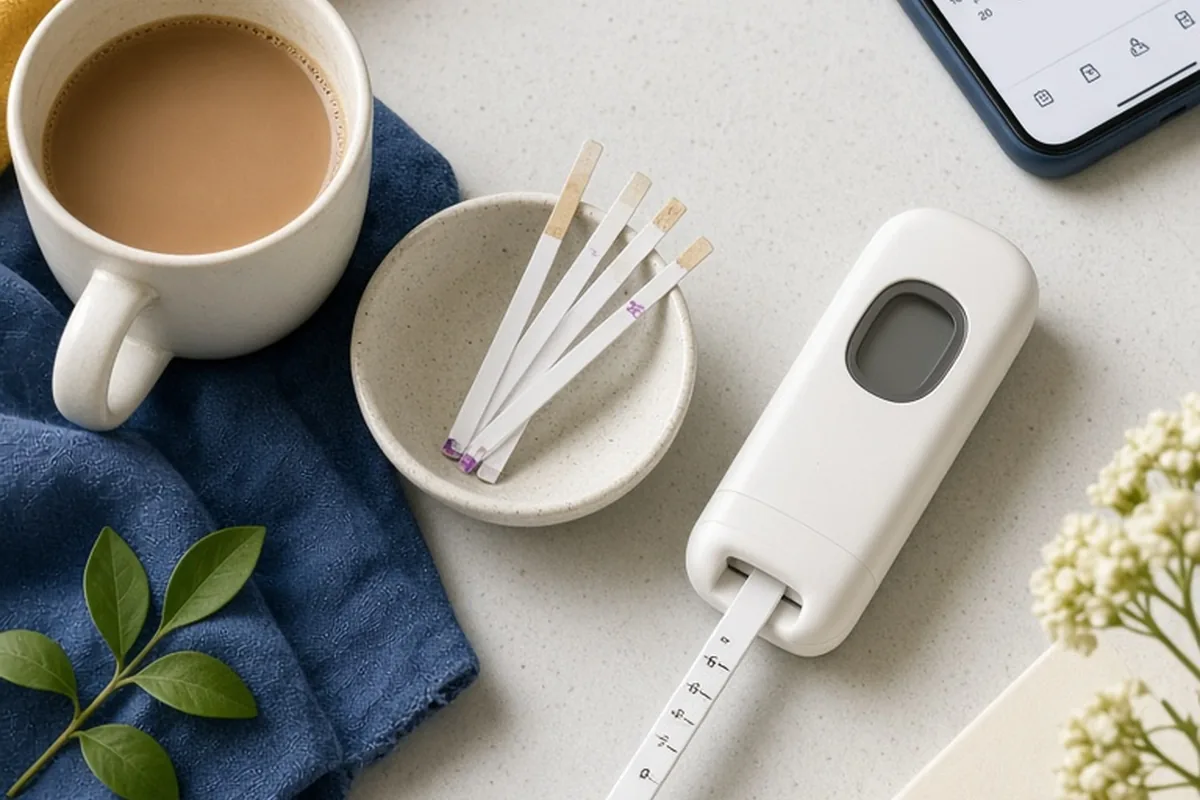
Mira Fertility is an at-home hormone monitor that measures quantitative levels of luteinizing hormone, estrogen, and progesterone metabolites through urine test wands and a digital analyzer. Unlike standard qualitative ovulation strips that give simple binary lines, Mira charts exact numerical values in a paired mobile app. It offers clear cycle visibility for people with irregular patterns, though recurring wand costs and testing routines require a dedicated financial and time commitment.
Navigating ovulation tracking often involves deciphering ambiguous faint lines on paper strips or guessing when fertile windows actually peak. Mira approaches at-home fertility tracking by turning daily urine tests into personalized, numeric hormone curves on your smartphone.
How the Mira System Functions and What It Measures
The Mira Fertility system centers on a small, palm-sized electronic monitor that uses fluorescence-based optical sensors to read single-use test wands. Users collect a fresh urine sample, submerge a specific wand for several seconds, and insert the wand directly into the analyzer. Over the course of roughly twenty minutes, the device reads the chemical reaction on the test strip and transmits exact numeric concentrations of target hormones via Bluetooth to the companion mobile application.
Depending on the test wands you choose, Mira tracks several distinct fertility biomarkers. The primary wands measure luteinizing hormone (LH), which triggers ovulation, and estrogen-3-glucuronide (E3G), which rises in the days leading up to an LH surge to signal the opening of the fertile window. Specialized wands also measure pregnanediol-3-glucuronide (PdG), a urine metabolite of progesterone that rises after ovulation to help confirm that an egg was actually released, as well as follicle-stimulating hormone (FSH) for broader ovarian reserve context.
By converting biochemical reactions into precise numerical data points, such as nanograms or micrograms per milliliter, the system replaces visual line-matching with concrete trendlines. The mobile app automatically adjusts your fertile window predictions based on your baseline levels rather than applying a standardized, one-size-fits-all 28-day calendar model.
Quantitative Tracking Versus Traditional Ovulation Strips
Standard over-the-counter ovulation predictor kits (OPKs) operate as qualitative or threshold-based tests. They are calibrated to show a positive result only when LH crosses an arbitrary concentration, usually between 25 and 40 mIU/mL. For someone whose natural LH surge peaks below that threshold, or for someone with elevated baseline LH who registers constant faint positives, conventional strips can produce confusing or misleading results.
Mira circumvents this limitation by providing quantitative tracking. Instead of asking whether a line is darker than the control mark, the analyzer measures your exact hormone levels day by day. For example, if your baseline LH sits at 4 mIU/mL and jumps to 18 mIU/mL, the app recognizes a distinct relative surge for your unique physiology, even if that concentration would appear negative on a conventional qualitative strip.
Tracking estrogen alongside LH adds another practical advantage. Estrogen typically begins rising three to five days before LH surges, stimulating fertile cervical fluid and indicating the start of the optimal window for intercourse. Qualitative strips rarely measure estrogen, which means they often give only twenty-four to thirty-six hours of advance notice before ovulation occurs.
Daily Testing Workflow, Timing, and Usability
Integrating Mira into your morning routine requires consistency and a bit of patience. Testing generally begins several days after your period ends, following prompts generated by the app algorithm. Most users test with first-morning urine, when hormone concentrations are most stable, though testing later in the day is possible if you maintain a consistent fluid intake to avoid diluting the sample.
The physical process involves collecting urine in a clean cup, dipping the wand for ten to twenty seconds, snapping on the protective cap, and sliding it into the analyzer slot. The analyzer takes approximately twenty-one minutes to process and display the result. While the device operates quietly on a countertop and does not require active supervision, the processing duration means you cannot obtain instant results right before heading out the door.
Travel and busy schedules introduce practical considerations. Because the wands are individually packaged with desiccant and the monitor is rechargeable, packing the kit for trips is straightforward. However, carrying urine collection supplies and waiting for twenty-minute reads while traveling requires deliberate planning compared to low-maintenance methods like wearable temperature sensors.
Performance with Irregular Cycles and Hormone Variations
One of the strongest use cases for quantitative hormone tracking is managing irregular cycles, including those associated with polycystic ovary syndrome (PCOS), post-hormonal birth control transitions, or perimenopause. Individuals with irregular cycles frequently experience multiple LH rises before true ovulation occurs, which can lead to mistimed conception attempts when using standard threshold tests.
Because Mira tracks both estrogen curves and quantitative LH shifts, it helps users distinguish between minor hormonal noise and a genuine ovulatory surge. When paired with PdG wands that track the post-ovulatory progesterone metabolite, users can observe whether hormone levels rise and remain elevated, providing clear reassurance that ovulation took place rather than just an unsuccessful follicular surge.
However, users with significant cycle irregularity should anticipate using more test wands per month than someone with a predictable cycle. Testing across a longer span of weeks increases the total cost of supplies, making it essential to balance the depth of data needed against recurring monthly expenses.
Understanding the True Cost of Wands and Long-Term Value
Evaluating Mira requires looking beyond the initial hardware purchase to the ongoing cost of disposable testing supplies. Starter kits generally include the monitor, a basic supply of combination wands, and accessories. Once the initial wands are consumed, replacement packs represent a continuous investment throughout your trying-to-conceive journey.
Wand boxes typically range in price depending on whether you purchase standard LH wands, combination Max wands (measuring LH and E3G), or Confirm wands (measuring PdG). A standard cycle may require ten to twenty tests depending on cycle length and algorithmic recommendations, meaning monthly testing costs can quickly add up if you test daily or confirm multiple phases of the cycle.
To manage expenses, some users adopt a hybrid strategy: they use inexpensive paper strips during the early follicular phase and switch to Mira wands when qualitative lines start darkening or when cervical mucus changes indicate the fertile window is opening. This approach provides quantitative precision during critical days while minimizing wand consumption.
App Experience, Data Visualization, and Clinical Sharing
The Mira companion app serves as the central dashboard for your fertility data, rendering raw numerical readings into clean line charts that track LH, estrogen, and progesterone over time. The app assigns daily fertility scores and identifies predicted peak fertility windows based on your historical curves rather than static population averages.
For individuals working with fertility specialists, reproductive endocrinologists, or OB-GYNs, the application allows users to export detailed hormone charts as PDF reports. Having documented hormone curves can facilitate productive conversations with medical providers regarding luteal phase length, baseline hormone elevations, or suspected anovulatory cycles.
Data privacy remains a vital consideration for digital health applications. Mira allows users to secure app access and maintains standard data encryption protocols for stored health records. Users can manage their account data directly within the settings, ensuring personal reproductive metrics remain under their control.
Who Benefits Most and Practical Alternatives to Consider
Mira is especially well suited for individuals who want concrete numeric validation of their fertile window, people with irregular cycles who find standard OPKs inconclusive, and anyone seeking at-home progesterone tracking to confirm ovulation. It provides a level of physiological detail that sits comfortably between basic paper strips and clinic-based blood draws.
Conversely, if you have highly regular 28-day cycles and feel confident identifying ovulation through basic test strips or cervical mucus observations, the financial investment and daily 21-minute processing routine may offer diminishing returns. Similarly, individuals who find detailed numerical tracking anxiety-inducing may prefer passive tracking options.
Before investing, consider your tracking goals alongside alternative options:
- Standard paper OPKs: Highly affordable and sufficient for individuals with predictable, clear LH surges.
- Continuous basal body temperature wearables: Excellent for passive ovulation confirmation without daily urine handling.
- Saliva ferning microscopes: Reusable optical devices that provide qualitative estrogen indicators without recurring wand costs.
- Clinical blood panels: The definitive medical standard for comprehensive hormone evaluations ordered directly by a physician.
Frequently asked questions
How long does a Mira test take to process each morning?
Once you insert the dipped test wand into the analyzer, the device takes approximately twenty-one minutes to complete the optical reading and sync results to your phone. The process runs automatically, allowing you to step away while the test completes.
Can Mira confirm that ovulation actually occurred?
Mira can help confirm ovulation when used with PdG (progesterone metabolite) test wands. A sustained rise in PdG levels following an LH surge indicates that a corpus luteum formed and progesterone was released, confirming that an egg was likely ovulated.
Do you need to test every single day of your menstrual cycle?
No, daily testing across the entire cycle is generally unnecessary. The companion app guides you to begin testing several days after your period ends and prompts testing through your peak fertile days and confirmation window, typically requiring ten to twenty tests per cycle.
Will fertility medications affect Mira test results?
Certain medications containing synthetic hormones, such as hCG trigger shots, oral progesterone, or clomiphene, can alter natural hormone levels and influence test wand readings. It is advisable to discuss how your specific fertility treatment protocol interacts with urine metabolite monitoring with your physician.
Your next step
Review your cycle regularity and monthly tracking budget to decide if the numerical precision of quantitative hormone monitoring justifies the recurring cost of test wands.