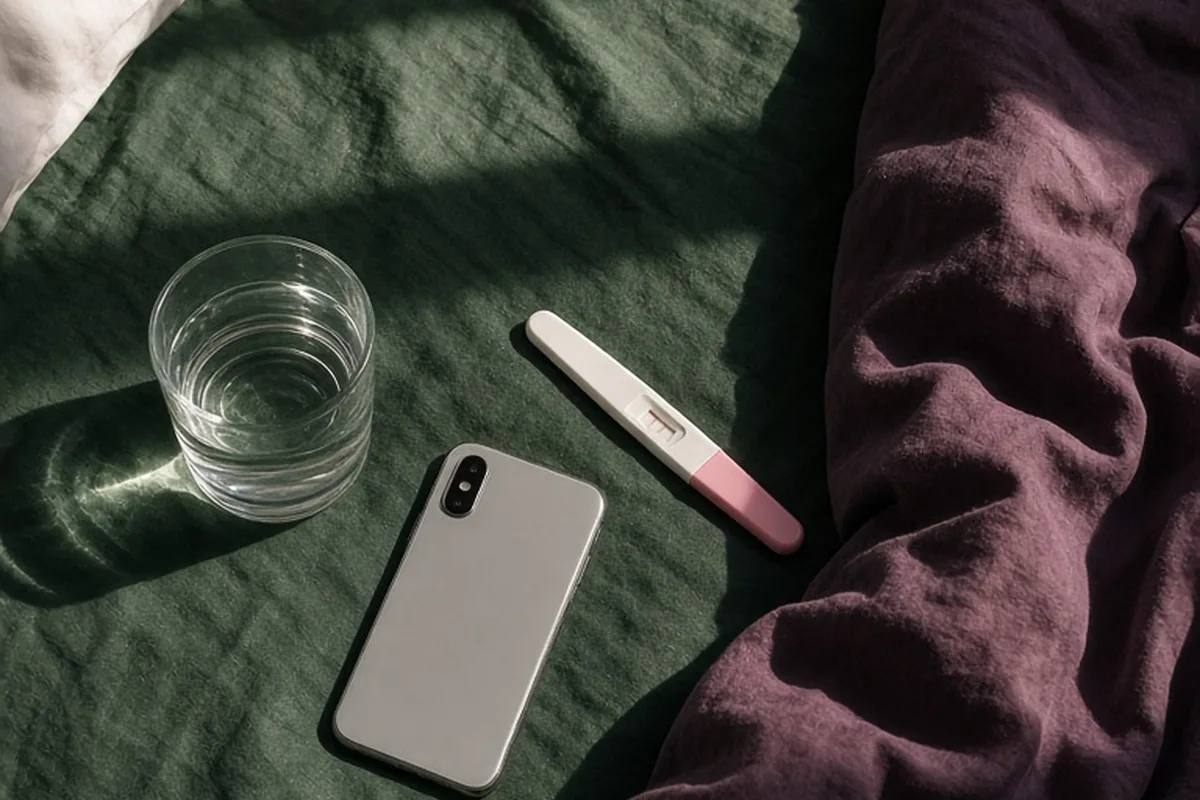
A pregnancy test sensitivity chart shows the lowest concentration of human chorionic gonadotropin (hCG) a test can detect in urine, measured in milli-international units per milliliter (mIU/mL). Ultra-early tests detect hCG as low as 10 mIU/mL, standard tests detect 20 to 25 mIU/mL, and less sensitive options require 50 to 100 mIU/mL. Lower numerical ratings identify pregnancy earlier.
Navigating early pregnancy testing can bring a mix of anticipation and confusion, especially when packaging displays technical hormone measurements alongside marketing promises. Understanding the science behind sensitivity ratings allows you to match your testing schedule to your body's biological timeline, reducing unnecessary stress and preventing misleading early results.
Understanding hCG Thresholds and Sensitivity Ratings
Home pregnancy tests work by detecting human chorionic gonadotropin (hCG), a hormone produced by developing placental cells shortly after an embryo implants in the uterine wall. The sensitivity of a test represents the minimum concentration of this hormone required to trigger a visible reaction on the testing strip. This concentration is measured in milli-international units per milliliter of urine (mIU/mL). The lower the numerical value, the more sensitive the test is, meaning it requires less hormone in your system to produce a positive result.
A test rated at 10 mIU/mL can identify small amounts of hCG circulating in your body days before an expected menstrual period. In contrast, a test rated at 25 mIU/mL or 50 mIU/mL requires significantly more hormone accumulation before the chemical dye reacts. While highly sensitive tests allow for earlier detection, they also require careful interpretation, as testing too early can detect transient biochemical pregnancies or result in faint, ambiguous lines that cause emotional strain.
Understanding this numerical scale helps eliminate the guesswork when browsing store shelves. Rather than relying solely on descriptive phrases like 'early result' or 'rapid response,' checking the manufacturer's specified mIU/mL cutoff in the product insert tells you precisely how much hormone concentration is needed for an accurate reading.
Pregnancy Test Sensitivity Levels by Category
Home pregnancy tests generally fall into three main tiers of sensitivity, each suited for different testing timelines and personal preferences. Choosing the appropriate tier depends entirely on how many days have passed since ovulation and whether you prioritize early detection over definitive, unambiguous results.
Below is a standard sensitivity breakdown illustrating the common thresholds, product types, and ideal timing windows relative to an expected menstrual cycle:
- Ultra-Early Tests (10 mIU/mL): Detects hCG 4 to 6 days before a missed period (roughly 9 to 11 days past ovulation). Common in specialized early dip strips and premium manual stick tests.
- Standard Sensitivity Tests (20 to 25 mIU/mL): Detects hCG 1 to 2 days before a missed period or on the day of the expected period (roughly 12 to 14 days past ovulation). Typical for standard retail manual tests and high-sensitivity digital tests.
- Moderate Sensitivity Tests (40 to 50 mIU/mL): Detects hCG starting on or after the day of the missed period (roughly 14 to 16 days past ovulation). Common in basic digital readout devices and standard clinic screening strips.
- Low Sensitivity Tests (100 mIU/mL): Designed for confirmation several days to a week after a missed period. Rarely used for early home detection but common in certain clinical qualitative panels.
The Biological Timeline of Implantation and Hormone Doubling
To understand why test sensitivity matters, you must consider the biological progression of early pregnancy. Ovulation occurs mid-cycle, followed by fertilization in the fallopian tube. The fertilized egg travels down toward the uterus, dividing into a blastocyst before undergoing implantation. Implantation typically occurs between 6 and 12 days past ovulation (DPO), with 8 to 10 DPO being the most common window. Urine hCG remains completely undetectable until after implantation is complete and the developing placenta begins releasing the hormone into the bloodstream.
Once implantation occurs, serum hCG enters the bloodstream and filters into the urine, starting at minimal baseline levels such as 1 to 2 mIU/mL. In viable early pregnancies, hCG levels typically double approximately every 48 hours. If an embryo implants at 9 DPO with an initial baseline of 2 mIU/mL, the concentration will approximately reach 4 mIU/mL by 11 DPO, 8 mIU/mL by 13 DPO, and 16 mIU/mL by 15 DPO (around the day of the missed period).
This doubling pattern illustrates why taking a 25 mIU/mL test at 10 DPO almost invariably yields a negative result, even if conception was successful. Even an ultra-sensitive 10 mIU/mL test will show negative if implantation occurred on the later end of the normal spectrum, such as day 11 or 12. Patience with biological timing prevents the frustration of false negatives.
Early Detection Strips Compared to Digital Displays
A common point of confusion is the functional difference between manual line tests (such as paper dip strips or plastic cassettes) and digital display tests. Manual tests use antibodies bonded to colored dyes that adhere to hCG molecules as urine wicks across the membrane. Because the human eye can often detect very faint accumulations of dye, a manual test with a 25 mIU/mL rating might display a subtle shadow or faint line at 15 to 20 mIU/mL, offering an early visual clue.
Digital tests, on the other hand, employ internal optical sensors that measure the density of the test line against an internal control. The microchip translates this optical reading into clear text on an LCD screen, such as 'Pregnant' or 'Not Pregnant.' To minimize ambiguous readings or machine errors, digital tests often incorporate conservative internal cutoffs, typically set between 25 and 50 mIU/mL, though some newer early-digital variants operate closer to 10 to 15 mIU/mL.
The primary trade-off between these formats is clarity versus early detection. Manual strips allow you to track progressive darkening over consecutive days and cost significantly less per unit, but they leave room for anxiety over faint lines and optical illusions. Digital tests provide unequivocal, stress-free answers but generally require higher hormone levels and cost substantially more per test.
Urine Concentration and Testing Variables
A test's sensitivity rating only reflects its potential performance under optimal conditions; real-world accuracy depends heavily on urine concentration. The kidneys continuously filter metabolic waste and excess water, diluting the concentration of hCG in the bladder. If you consume large volumes of water or other fluids before testing, your urine hCG level may drop well below the test's detection threshold, causing a false negative on an otherwise sensitive device.
For the most reliable results during early testing, use first-morning urine, which accumulates in the bladder over several hours of sleep and contains the highest concentration of dissolved hormones. If you test later in the day, a fluid hold of three to four hours without excessive hydration is recommended to allow adequate hormone concentration.
Additionally, factors such as improper dip duration, checking the device outside the designated reading window, or testing past the expiration date can interfere with chemical reactions. Always follow manufacturer instructions regarding the exact number of seconds to expose the absorbent tip to urine.
Distinguishing True Faint Lines from Evaporation Marks
When using high-sensitivity manual tests near their detection threshold, results often appear as faint lines that require careful assessment. A true positive line, no matter how pale, will show visible color (typically pink on red-dye tests or distinct light blue on blue-dye tests) across the entire width of the designated test area. It appears within the specific time window stated in the product instructions, usually between three and five minutes.
Evaporation lines and indent lines are common sources of confusion. An indent line is the uncolored physical groove where antibodies are pressed into the membrane, which can catch light and look like a shadow before or during wetting. An evaporation line appears after the urine has completely dried, typically 10 to 30 minutes or hours after testing, leaving a grayish, colorless, or yellowish residue where moisture evaporated from the strip.
To avoid misinterpreting an evaporation mark as a positive result, never read or reconsider a test after the manufacturer's maximum time limit has passed. If a line lacks distinct pigment or only becomes visible long after the test has dried, treat the result as invalid or negative and retest in two days.
How to Build a Cost-Effective Testing Strategy
Early testing can quickly become expensive and emotionally draining if approached without a clear plan. A practical strategy begins with bulk-packaged, ultra-sensitive dip strips (10 to 25 mIU/mL) for preliminary daily tracking starting no earlier than 10 to 12 days past ovulation. These inexpensive strips allow you to check for baseline changes without high financial costs.
Once a faint line appears on a low-cost strip, wait 48 hours to allow natural hormone doubling before testing again. Retesting on alternate days provides clear visual evidence of line progression as hCG builds up in your system. Once a distinct line is established, you can use a digital test on or after the day of your expected period if you want a definitive word confirmation to share with a partner or medical provider.
If you experience irregular cycles or do not track ovulation with basal body temperature or luteinizing hormone strips, testing based on calendar estimates can lead to false negatives. In these situations, waiting until at least 14 to 21 days after your last unprotected intercourse provides the most dependable timeline for accurate results.
Illustrative Scenarios
Navigating Discrepant Results Across Test Brands
Jordan began testing at 10 days past ovulation (DPO) using two different brands simultaneously. An ultra-sensitive 10 mIU/mL red-dye strip showed a faint but distinct pink line in the morning. Eager to confirm the result, Jordan took a digital test rated at 25 mIU/mL that afternoon, which returned a 'Not Pregnant' result, causing immediate confusion and distress. After learning about hormone dilution and differing sensitivity cutoffs, Jordan paused testing until 12 DPO and retested with first-morning urine. Both the manual strip and the digital test returned clear positive results.
Key point: Discrepancies between tests taken on the same day usually reflect differing mIU/mL sensitivity ratings and fluctuations in urine hydration rather than test failure.
Frequently asked questions
Which pregnancy test has the highest sensitivity?
Tests with a rating of 10 mIU/mL offer the highest sensitivity available for home use. These include specialized early-detection manual stick brands and bulk laboratory dip strips, which can detect lower hormone concentrations than standard 25 mIU/mL retail tests.
Can a test be too sensitive and give a false positive?
A pregnancy test will not produce a false positive simply because of high sensitivity, as the chemical antibodies react specifically to hCG. However, highly sensitive tests can detect very early chemical pregnancies that may not progress, which might otherwise have gone unnoticed had testing occurred after a missed period.
Why did my standard test show negative when my early test showed a faint positive?
This common discrepancy occurs because the early test requires only 10 mIU/mL of hormone to trigger a line, while the standard test requires 25 mIU/mL or more. If your current urine hCG level is between 10 and 20 mIU/mL, only the more sensitive test will show a reaction until your hormone levels double over the next 48 hours.
Does drinking extra water affect all pregnancy tests equally?
Excess fluid intake dilutes urine hCG concentration across all test types, but it impacts early testing the most. When hormone levels are already hovering near a test's detection threshold, heavy hydration can easily lower the concentration below the cutoff, resulting in a false negative.
Your next step
Check the mIU/mL sensitivity rating in your test's package insert and wait until at least 12 to 14 days past ovulation using first-morning urine to ensure dependable, clear results.