Prenatal yoga is an adapted form of gentle yoga designed specifically for pregnant bodies. It focuses on functional stretching, safe joint stability, breath awareness, and pelvic comfort while avoiding deep twists, abdominal pressure, and prolonged flat-back lying. Practicing prenatal yoga can help ease common muscle aches, support shifting posture, and encourage relaxation throughout each trimester of pregnancy.
Staying comfortably active during pregnancy often requires adjusting your regular exercise habits to match your changing center of gravity and fluctuating energy levels. Prenatal yoga provides a thoughtful movement practice tailored to these anatomical shifts, giving expectant parents practical tools to manage physical tension, build functional stamina, and cultivate calm without overstressing developing joints.
How Prenatal Yoga Differs from Standard Yoga Classes
A standard flow or vinyasa yoga class frequently includes rapid transitions, closed twists that compress the midsection, intense backbends, and postures performed lying flat on the belly. While suitable for non-pregnant practitioners, these movements can place unnecessary stress on the abdominal wall and pelvic structure during pregnancy. Prenatal yoga reimagines traditional postures by prioritizing joint stability, spinal decompression, and open space for your growing belly.
During pregnancy, your body releases relaxin, a hormone that loosens ligaments and connective tissues to prepare the pelvis for birth. Because relaxin increases joint laxity throughout the entire body, it can be easy to unintentionally overstretch in a regular class. Prenatal yoga counters this by emphasizing muscular engagement over extreme flexibility. Poses use wider stances, supportive props, and shorter holding times to keep your joints stable and protected rather than overextended.
Trimester Modifications for Comfort and Balance
Your movement needs will naturally shift as your pregnancy progresses, making adaptable practice essential. In the first trimester, external physical changes are subtle, but fatigue, nausea, and hormonal adjustments can be intense. The priority during this early phase is gentle grounding, steady breathing, and avoiding overheating. Moving at a moderate pace helps maintain energy without adding physical exhaustion.
As you enter the second trimester, your belly expands and your center of gravity moves forward, which frequently increases curvature in the lower back. During this phase, you will want to widen your base of support in standing postures to maintain steady balance. Avoid lying flat on your stomach, and begin modifying or replacing poses that require lying flat on your back for extended periods to maintain optimal circulation.
By the third trimester, physical space and mobility are noticeably restricted, and pressure on the pelvis and diaphragm increases. The focus shifts toward releasing tension in the hips, easing lower back strain, and practicing resting positions. Movements become slower and more supported, utilizing bolsters, chairs, or wall support to reduce effort while maintaining comfortable circulation.
Practical Poses for Common Pregnancy Discomforts
Gentle, targeted movements can provide noticeable relief for common aches such as tight hips, sore lower backs, and stiff shoulders. A supported Cat-Cow posture on hands and knees is particularly effective for encouraging spinal mobility and easing lumbar pressure. By gently arching and rounding the spine within a comfortable, pain-free range, you allow the weight of the belly to hang freely away from the spine, offering immediate relief.
Wide-legged Child Pose, supported with a bolster or firm folded blankets between the thighs, gives the hips and lower back a resting stretch without compressing the abdomen. This position allows the torso to remain elevated while encouraging the pelvic floor and lower back muscles to soften. If your knees are sensitive, placing an additional folded blanket under them helps distribute weight comfortably.
A modified side-angle pose or wide-stance warrior posture using a sturdy chair or wall for balance can strengthen the legs and glutes without straining your balance. Keeping your feet placed wider than hip-width apart creates room for your pelvis to remain level, preventing sharp pulling across the front of the hips or the pubic bone.
Breathwork and Pelvic Floor Awareness
Breathing practices in prenatal yoga center on diaphragmatic breathing, often described as 360-degree ribcage expansion. As the uterus expands upward, the diaphragm has less room to descend, which can lead to shallow chest breathing. Practicing slow, intentional inhalations that expand the sides and back of the ribs helps optimize oxygen intake, calm the autonomic nervous system, and reduce tension in the neck and shoulders.
Pelvic floor work in prenatal yoga balances strength with conscious release. While popular advice often focuses solely on tightening or contracting the pelvic floor, learning how to fully soften and lengthen these muscles is equally important for comfort and birth preparation. Guided breath cues help you notice when you are unintentionally clenching pelvic or jaw muscles, teaching you to release that tension on each prolonged exhalation.
Poses to Avoid and Key Safety Boundaries
Maintaining safety in prenatal yoga requires knowing which movements to modify or avoid entirely. Closed twists, where the torso turns toward a bent knee, should be swapped for open twists, where the torso turns away from the leg to keep the belly uncompressed. Inversions, full backbends, and fast-paced jumping transitions should be set aside in favor of grounded, stable footwork.
You should also avoid hot yoga environments, as elevated ambient heat can raise core body temperature to levels that are unsafe during pregnancy. Listen closely to your internal cues during every session. If you experience dizziness, shortness of breath, sudden joint sharp pain, or abdominal cramping, ease out of the pose immediately, rest in a comfortable seated or side-lying position, and consult your healthcare provider.
Setting Up a Safe Practice at Home
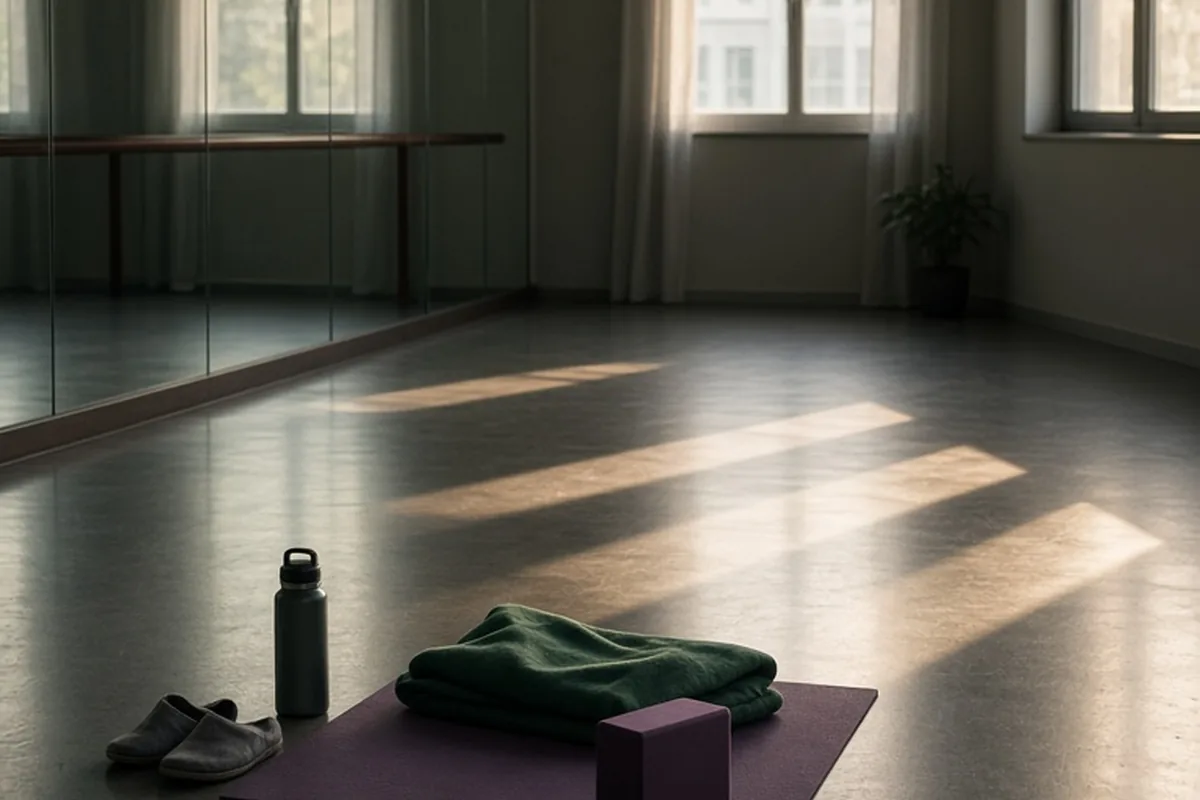
Creating a home prenatal yoga space does not require specialized equipment, but having the right support items makes poses significantly safer and more comfortable. A reliable non-slip mat provides traction for widened stances. Two dense yoga blocks help bring the floor closer to your hands in standing forward folds, reducing the urge to round or strain the lower back.
Household items can easily double as functional yoga props. A firm sofa cushion or rolled sleeping bag can replace a studio bolster, and a sturdy belt or long scarf works well in place of a yoga strap. When practicing at home, keep a sturdy dining chair nearby to hold onto for balance during standing poses, and always ensure your practice area is free of tripping hazards.
Balancing Class Options, Formats, and Costs
Expectant parents can choose between specialized in-person prenatal classes, live virtual sessions, and pre-recorded video routines. In-person classes offer the benefit of real-time posture adjustments from an instructor trained in prenatal adaptations, as well as a chance to connect with other expectant parents in your local community. However, in-person studio memberships or class packs can be an added recurring expense during a season of significant financial preparation.
Pre-recorded online classes and community center programs offer budget-friendly flexibility, allowing you to practice for fifteen or twenty minutes whenever your daily energy allows. If you choose self-guided or recorded classes, verify that the instructor holds dedicated prenatal certifications, and prioritize slower, instructional videos over fast flows so you can set up props and maintain safe alignment without rushing.
Frequently asked questions
When is the best time during pregnancy to start prenatal yoga?
You can generally begin prenatal yoga during any trimester once your healthcare provider has cleared you for moderate physical activity. Many people start in the early second trimester when initial morning sickness and fatigue begin to improve.
Can I practice prenatal yoga if I have never done yoga before?
Yes, prenatal yoga is accessible to beginners because it focuses on gentle movement, stability, and comfort rather than advanced poses. Let your instructor know that you are new to yoga so they can provide extra guidance on prop placement.
Why is lying flat on my back discouraged after mid-pregnancy?
Lying flat on your back in the second and third trimesters allows the weight of the uterus to press against the inferior vena cava, a major vein that returns blood to your heart. This pressure can cause lightheadedness or reduced circulation, which is why side-lying or elevated resting postures are recommended instead.
How often should I practice prenatal yoga each week?
Practicing two to three times a week for twenty to forty minutes is a sustainable routine for most expectant parents. Even a short ten-minute daily session of gentle stretching and breathwork can help relieve physical stiffness and promote relaxation.
Your next step
Discuss your exercise plans with your prenatal care provider to ensure movement clearance, then try a beginner-friendly prenatal class or set up a quiet home space with supportive cushions and blocks to begin practicing at your own pace.