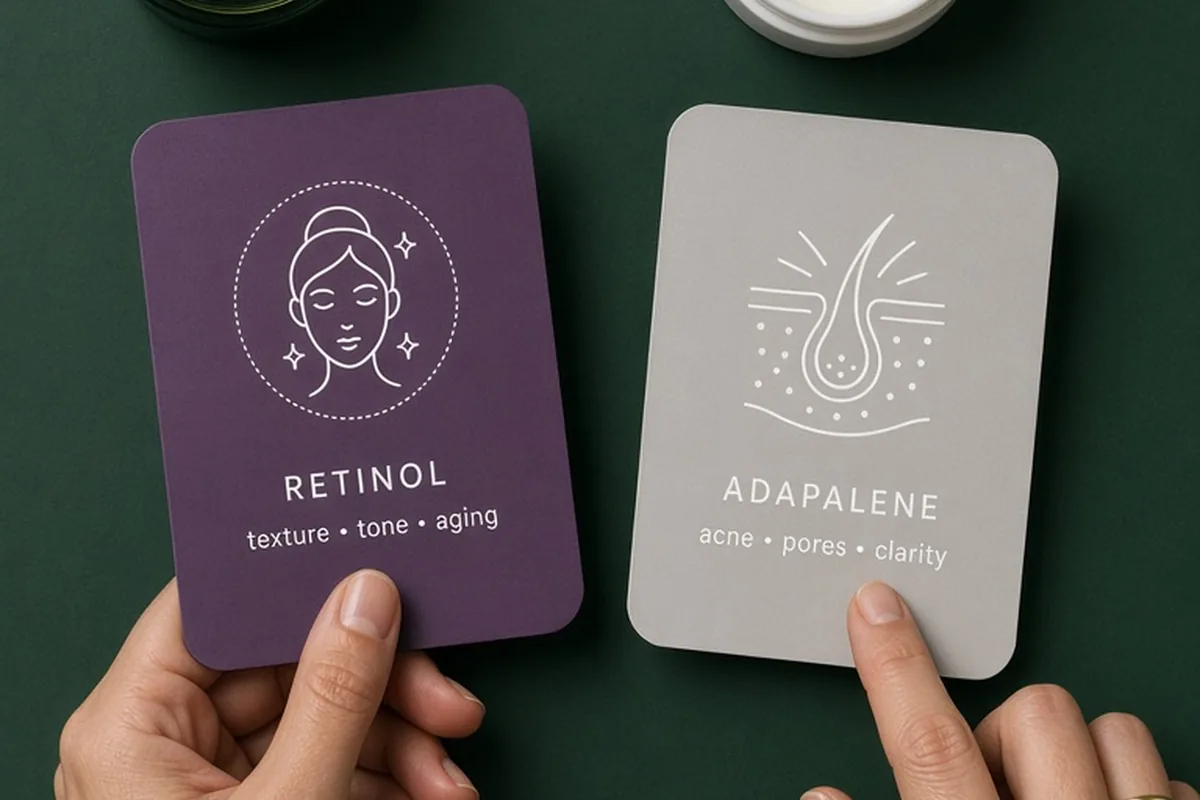
Retinol and adapalene are both vitamin A derivatives that boost cellular turnover, but they serve different primary goals. Adapalene is a targeted, synthetic retinoid designed primarily to treat acne, clear clogged pores, and reduce inflammation. Retinol is a gentler, multi-step cosmetic retinoid best suited for improving skin texture, fine lines, and overall tone. Choosing between them depends on whether your priority is active breakout control or gentle anti-aging support.
Navigating the retinoid aisle often feels overwhelming because cosmetic labels and clinical formulas use overlapping terms like renewal, clarity, and resurfacing. Understanding the biological mechanisms, tolerability profiles, and practical applications of retinol versus adapalene helps you build an effective routine that respects your skin barrier.
Molecular Mechanisms and How Each Retinoid Operates
Retinol and adapalene belong to the broader retinoid family, yet their biochemical pathways inside skin cells are fundamentally distinct. Retinol is a naturally occurring form of vitamin A found in cosmetic formulations. Because human skin cells cannot utilize pure retinol immediately, the molecule must undergo a two-step enzymatic conversion once absorbed. Skin enzymes first convert retinol into retinaldehyde, which is then converted into all-trans retinoic acid. This biological conversion process acts as a built-in buffering system, diluting the immediate potency of the ingredient while making it gentler and more gradual in its action.
Adapalene, by contrast, is a third-generation synthetic retinoid originally developed specifically for dermatological use in treating acne vulgaris. Unlike retinol, adapalene does not require metabolic conversion to become active. Instead, it selectively binds to specific nuclear retinoic acid receptors within the skin, predominantly RAR-beta and RAR-gamma. This receptor selectivity allows adapalene to target follicular epithelial cells directly, regulating keratinocyte differentiation and preventing pore blockages with minimal wasted activity on unaffected cellular pathways.
These structural differences directly influence how quickly each ingredient produces visible effects and how each formula behaves on the shelf. Retinol molecules are notoriously sensitive to degradation from air, ultraviolet light, and heat, requiring specialized packaging like opaque airless pumps to maintain efficacy. Adapalene features a much more chemically stable naphthoic acid backbone, which remains stable in ambient light and does not break down as rapidly when exposed to oxygen or paired with other active skincare ingredients.
Primary Target Concerns: Acne Clearance vs Anti-Aging Support
The most critical factor in deciding between retinol and adapalene is clarifying your primary skin objective. Adapalene is widely recognized for its clinical efficacy in managing acne, blackheads, whiteheads, and microcomedones. By normalizing the way dead skin cells shed inside the hair follicle, adapalene stops clogged pores before they evolve into visible blemishes. It also exhibits notable anti-inflammatory properties that help calm red, tender papules and pustules. For someone experiencing chronic jawline congestion, hormonal breakouts, or stubborn comedonal acne, adapalene provides direct, targeted intervention.
Retinol excels as a broader, multi-functional cosmetic ingredient tailored for overall skin rejuvenation, subtle texture refinement, and early signs of photoaging. As retinoic acid accumulates in the skin from retinol conversion, it stimulates dermal fibroblasts to synthesize new collagen and glycosaminoglycans, which support skin elasticity and reduce the depth of fine lines. Additionally, retinol helps disperse irregular melanin clusters, gradually fading post-inflammatory dark spots and mild sun spots to create a more uniform complexion over time.
While adapalene also encourages cellular turnover that can yield long-term anti-aging benefits, cosmetic retinol formulations are typically engineered with comprehensive aging concerns in mind. Over-the-counter retinol products frequently blend the active ingredient with nourishing hydrators, peptides, and barrier-replenishing lipids, making them well-suited for mature, dry, or sun-damaged skin that does not struggle with persistent inflammatory acne.
Tolerability, Irritation Risks, and the Retinization Process
Introducing any retinoid can trigger a temporary adjustment phase known as retinization, characterized by dryness, flaking, redness, and transient stinging. However, the intensity and nature of this adjustment often vary between retinol and adapalene. Because adapalene is direct-acting and highly potent at the follicular level, it often produces noticeable dryness and localized flaking around delicate areas such as the corners of the nose, mouth, and lower chin during the first two to six weeks of use.
Retinol typically features a more gradual onset of irritation due to its required enzymatic conversion. However, because retinol exists in widely varying concentrations across the cosmetic market—ranging from 0.1 percent to 1.0 percent—users can still experience significant barrier disruption if they start with an excessively strong formula or an unbuffered vehicle. Mild retinol serums formulated at low percentages (such as 0.2 percent encapsulated retinol) usually carry a lower risk of acute irritation than a standard 0.1 percent adapalene gel, making retinol more approachable for those with reactive or naturally sensitive skin.
Managing the retinization phase requires a disciplined approach to barrier maintenance. If the skin barrier becomes compromised, both ingredients can lead to persistent dermatitis rather than healthy turnover. Using the sandwich technique—applying a light layer of moisturizer before and after the retinoid—significantly mitigates irritation without rendering the active ingredient ineffective.
Formulations, Textures, and Product Stability
The physical vehicle carrying your active retinoid plays a substantial role in your daily experience and overall skin compatibility. Over-the-counter adapalene is most commonly formulated as a lightweight, oil-free 0.1 percent aqueous gel or light lotion. This clear, fast-absorbing texture is designed specifically for individuals with normal, combination, or oily skin who want to avoid heavy emollients that might exacerbate pore congestion. The gel format dries quickly to a matte finish, integrating cleanly under nighttime moisturizers.
In contrast, retinol is available in an extensive variety of textures, from water-based serums and dry facial oils to rich, comforting creams. This broad formulation spectrum allows you to choose a product that matches your unique skin type and lifestyle preferences. For instance, someone with dry, mature skin can select an emollient retinol night cream infused with squalane, ceramides, and hyaluronic acid to deliver hydration simultaneously, whereas someone with normal skin might opt for a lightweight fluid.
Another key practical distinction lies in chemical stability. Adapalene's molecular resilience allows it to withstand exposure to ingredients that typically degrade cosmetic retinol. Notably, adapalene can be paired safely in the same routine or complementary regimen with benzoyl peroxide, an antibacterial agent commonly used for inflammatory acne. Retinol, by comparison, can be quickly deactivated or rendered unstable if mixed indiscriminately with strong oxidizers, demanding greater care in product layering.
Step-by-Step Decision Framework: Which Should You Choose?
To make a confident choice between retinol and adapalene, evaluate your primary dermatological priorities, current skin condition, and tolerance for potential adjustment symptoms. Consider the following practical guidelines to align your choice with your personal goals:
Evaluate your primary skin goal first: If your main struggle involves persistent blackheads, closed comedones, active pustules, or oily congestion, adapalene is the clinically focused tool built to address those specific challenges. If your focus centers on softening fine expression lines, improving overall skin radiance, and evening out general texture without managing inflammatory breakouts, cosmetic retinol offers a balanced and customizable path.
Next, factor in your skin sensitivity and barrier resilience: Individuals with easily flushed, highly reactive, or naturally dry skin usually tolerate a low-strength, encapsulated retinol cream better than a direct adapalene gel. Conversely, individuals with resilient, oily, or resilient combination skin often adapt smoothly to adapalene and appreciate its non-greasy, fast-absorbing finish.
Finally, assess your routine complexity: If you prefer a streamlined, single-product evening regimen, a comprehensive retinol cream combining anti-aging actives, antioxidants, and moisturizers offers convenience. If you are building a targeted, acne-focused regimen that incorporates specialized cleansers and standalone moisturizers, a dedicated adapalene gel provides precise active delivery.
Safe Introduction and Routine Integration Guidelines
Regardless of whether you choose retinol or adapalene, introducing the ingredient gradually is essential to prevent unnecessary peeling, burning, and moisture barrier damage. Begin by applying a pea-sized amount to clean, completely dry skin just two evenings per week for the first two weeks, spacing the applications several days apart. Avoid applying either product directly to the eyelids, the immediate under-eye area, the creases of the nostrils, or the lip vermilion border, where the stratum corneum is exceptionally thin.
If your skin shows no signs of excessive tightness, redness, or peeling after two weeks, you can increase frequency to every other night for another two to three weeks before considering nightly use. During this introductory phase, suspend the use of other strong chemical exfoliants, including glycolic acid, salicylic acid, and potent L-ascorbic acid serums, to minimize cumulative irritation.
Daily photoprotection is a non-negotiable requirement when using any retinoid. Both retinol and adapalene accelerate cell turnover, exposing fresh skin cells that are more susceptible to ultraviolet damage. Apply a broad-spectrum sunscreen with an SPF of 30 or higher every morning, regardless of the weather or whether you plan to spend most of your day indoors near windows.
Illustrative Scenarios
Choosing Between Congestion Relief and Texture Support
A twenty-eight-year-old with combination skin experienced frequent closed comedones along the forehead and chin, while also noticing the emergence of early expression lines around the eyes. After initially trying a rich retinol night cream, the heavy base exacerbated their pore congestion without resolving the small bumps. Switching to an oil-free 0.1 percent adapalene gel applied twice weekly over a light hydrating lotion cleared the follicular congestion over twelve weeks. Once their skin fully acclimated, the regular cellular turnover also visibly smoothed their overall forehead texture.
Key point: Selecting a retinoid based on vehicle texture and primary underlying pathology—such as clogged follicles versus general dryness—produces better tolerability and clearer results than choosing based on broad marketing terms.
Frequently asked questions
Can I use retinol and adapalene together in the same skincare routine?
No, you should not combine retinol and adapalene in the same routine or layer them together. Using both simultaneous retinoids increases the risk of severe barrier damage, peeling, and dermatitis without providing additional benefits. Choose the single option that best matches your primary skin priority.
How long does it take to see visible results from adapalene versus retinol?
Adapalene typically begins showing noticeable improvements in acne reduction and pore clarity within eight to twelve weeks of consistent use. Retinol generally requires twelve to twenty-four weeks of regular application to reveal visible improvements in fine lines, skin firmness, and overall tone.
Does adapalene help with anti-aging as well as acne?
Yes, adapalene stimulates cellular turnover and binds to retinoic acid receptors, which provides secondary long-term benefits for skin texture and collagen preservation. However, it is primarily formulated and tested for acne management, whereas cosmetic retinol products are intentionally formulated with supporting ingredients for comprehensive anti-aging.
What should I do if my skin starts peeling or burning after applying either product?
If you experience burning, redness, or peeling, temporarily stop using the retinoid for several days and focus entirely on gentle cleansing and barrier-repair moisturizers containing ceramides. Once your skin feels completely calm, reintroduce the product at a lower frequency and apply a layer of moisturizer beforehand to buffer the active.
Your next step
Assess whether your main goal is clearing congested acne or refining overall tone and fine lines, then introduce a single pea-sized amount of your chosen retinoid twice weekly over a supportive moisturizer alongside daily broad-spectrum sunscreen.