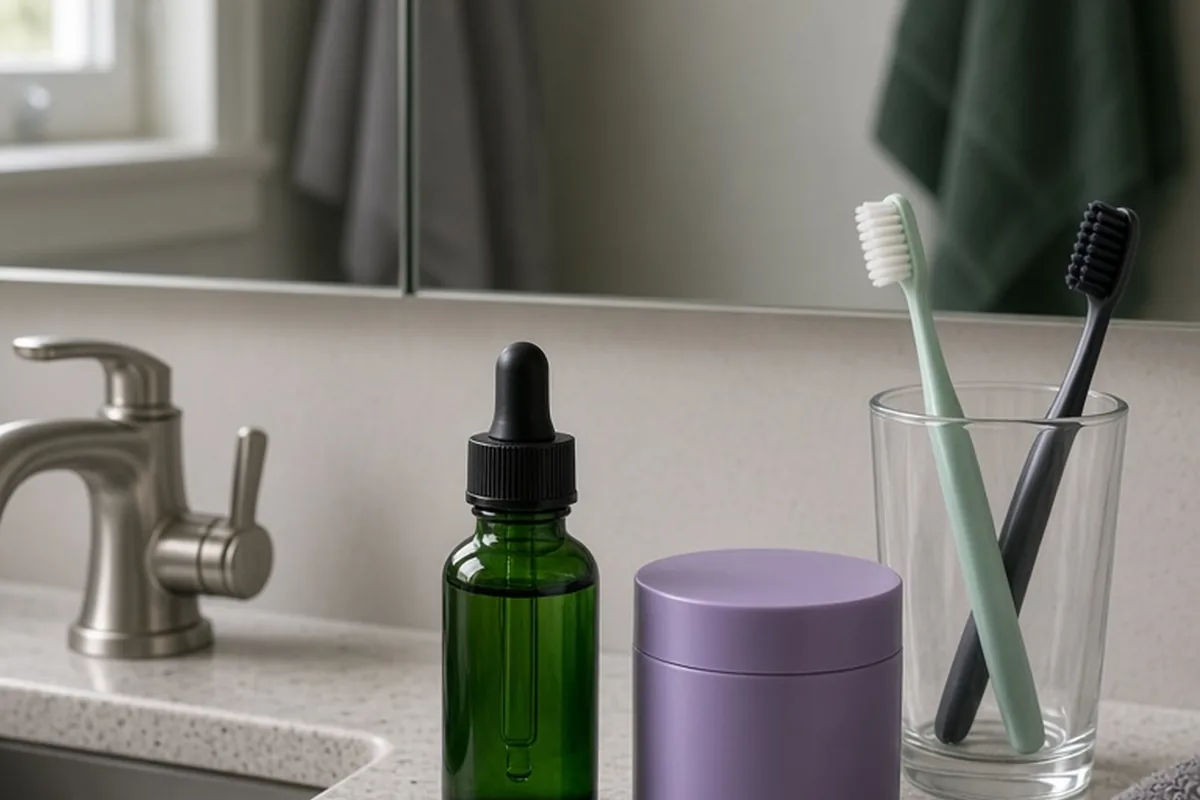
You should almost always apply serum before moisturizer. Serums have smaller molecules and lighter, fluid textures designed to penetrate deeply into the skin, while moisturizers contain heavier emollients and occlusives that form a protective barrier on the surface. If you put moisturizer on first, its rich barrier prevents the active ingredients in your serum from penetrating, rendering the serum far less effective.
Navigating a daily skincare routine can quickly become confusing when you are staring at multiple bottles and jars on your bathroom counter. Understanding the underlying logic of product textures helps you build a routine that feels comfortable, prevents product waste, and supports healthy skin.
The Viscosity Rule: Why Texture Dictates Layering Order
In cosmetic formulation, the universal guideline for layering products is to move from the thinnest consistency to the thickest consistency. Watery liquids, toners, and light serums have small molecular sizes and low viscosity, which enables them to spread easily and absorb rapidly into the upper layers of the skin. Heavier creams, lotions, and balms contain structural lipids, waxes, and plant butters that are formulated to sit higher on the surface to reinforce your natural moisture barrier.
To visualize why this order matters, consider what happens when you pour water over an oily surface. The water beads up and rolls off rather than soaking in. Applying a lightweight serum over a thick cream creates that exact barrier problem: the humectants and restorative ingredients in the serum cannot break through the lipid film left behind by the cream. Starting with your lightest, most fluid formula ensures that each product reaches its target layer without physical interference.
How Serums Function and Why Direct Contact Matters
Serums are formulated as targeted delivery vehicles. Unlike standard creams, which spend a significant portion of their volume on stabilizing thickeners and surface-softening agents, serums typically feature a high concentration of specific ingredients suspended in water, aloe, or light glycols. Whether your formula focuses on humectants like glycerin, brighteners like azelaic acid, or antioxidants like vitamin C, it relies on unhindered contact with clean skin to disperse evenly.
When applied directly to a freshly cleansed face, a serum can bind moisture or deliver its active components directly to the stratum corneum without having to navigate residual oils or heavy waxes. For instance, a hyaluronic acid serum draws ambient water toward itself and binds it to skin cells. If that serum sits on top of a dense barrier cream instead, it will simply dry out on the surface or evaporate into the room, leaving your skin feeling tight or chalky rather than supple.
The Protective Seal of a Quality Moisturizer
While serums are exceptional at delivering hydration and active support, they lack the structural components required to keep moisture from escaping throughout the day. This is where moisturizers fulfill their primary function. A balanced facial moisturizer combines humectants with emollients, which smooth rough cellular edges, and occlusives, which physically block transepidermal water loss by forming a flexible hydrophobic seal.
Applying your moisturizer immediately after your serum locks the hydration into the skin. Think of your serum as adding water to a dry sponge and your moisturizer as sealing that damp sponge inside an airtight container. If you skip the moisturizer, the water content introduced by your serum can easily evaporate into dry indoor air. By finishing with a cream or lotion, you protect both your skin and the investment you made in your targeted treatments.
The Strategic Exception: When Moisturizer Comes First
While thin-to-thick is the general standard, there is one major practical exception: buffering potent, potentially irritating active ingredients. If you are introducing a strong prescription retinoid, high-strength retinol, or potent exfoliating acids, applying them directly onto bare, clean skin can sometimes trigger redness, peeling, or significant stinging, particularly for individuals with reactive skin or a compromised barrier.
In this scenario, dermatological advice often suggests using the sandwich method or applying a light layer of basic, bland moisturizer before your active treatment. The moisturizer creates a mild physical buffer that slows the rate of penetration, distributing the active ingredient more gradually across the skin. The trade-off is a slight reduction in overall potency, but for anyone struggling with sensitivity, this adjustment can make the difference between sustained tolerance and a damaged skin barrier.
Absorption and Timing: How Long to Wait Between Steps
A common point of confusion is whether you must wait several minutes for a serum to completely dry before applying moisturizer. For the vast majority of hydrating and soothing formulas, you do not need to wait at all. In fact, applying your moisturizer while your skin is still slightly dewy or tacky from a hydrating serum like hyaluronic acid or panthenol actually helps lock in that surface moisture before it can evaporate.
The primary reason to pause for sixty to ninety seconds is when dealing with formulas that have distinct pH requirements or textures prone to pilling. For example, unstable forms of vitamin C, such as pure L-ascorbic acid, or direct chemical exfoliants work best when given a brief moment to settle. Additionally, if your serum contains film-forming agents or thick gums, letting it absorb for a minute prevents the friction of spreading your cream from rolling the products into unsightly white flakes.
Adjusting Your Application Order for Day Versus Night
Your daytime and nighttime skincare goals are fundamentally different, and your layering routine should reflect those shifts. Morning routines focus primarily on environmental defense and daytime comfort. A typical morning sequence moves from a gentle cleanse to a lightweight antioxidant serum, followed by a light daytime lotion, and concludes with a broad-spectrum sunscreen. In this setup, sunscreen must always remain the final step, sitting over your moisturizer to ensure an unbroken protective film.
Evening routines, by contrast, focus on recovery, cellular renewal, and replenishment. At night, you can comfortably layer richer treatments without worrying about greasy shine or interfering with makeup. After cleansing, you might apply a peptide or repair serum, followed by a richer restorative night cream containing ceramides or fatty acids. If your skin is very dry, you can even add a few drops of facial oil as a final occlusive step after your night cream.
Where Facial Oils Fit into the Layering Sequence
Confusion frequently arises when a product is labeled as an oil-based serum. Despite having the word serum on the front label, pure botanical oils, squalane, and rosehip blends do not follow the standard water-based serum rules. Chemically, oils are occlusives and emollients, not water-soluble delivery agents. Because oil repels water, applying a facial oil before a water-based moisturizer will prevent the moisturizing cream from penetrating properly.
To avoid this issue, check the ingredient list of your product. If water or aloe is listed as the very first ingredient, treat it as a true serum and apply it before your moisturizer. If the product consists entirely of plant oils, esters, or squalane, apply it after your moisturizer or mix one to two drops directly into your cream in the palm of your hand. Treating oils as your final sealant preserves the benefits of every layer beneath them.
Frequently asked questions
Can I skip moisturizer if my serum already feels very hydrating?
If you have very oily skin or live in a humid climate, a hydrating serum might provide enough comfort on its own during the day. However, most serums lack occlusive ingredients, meaning the hydration they provide can evaporate quickly without a moisturizer to seal it in. Testing a light gel moisturizer over your serum is usually the best way to balance hydration with moisture retention.
What should I do if my moisturizer pills when applied over my serum?
Pilling usually happens when you use too much product or layer incompatible bases, such as a heavy silicone cream over a thick, water-based serum with xanthan gum. To fix this, reduce the amount of serum you apply to three or four drops, gently pat it into your skin instead of rubbing, and allow it thirty seconds to settle before smoothing your moisturizer on top.
Where does eye cream fit into the serum and moisturizer order?
Eye cream generally follows the same thin-to-thick guideline. If your eye cream is lighter and more fluid than your regular facial moisturizer, apply it immediately after your serum and before your facial cream. If your eye product is a very thick balm, you can comfortably apply it as the final step around the orbital bone.
Can I mix my serum directly into my moisturizer to save time?
While blending them in your palm is convenient, it can dilute the active concentration of the serum and alter the preservative balance of both formulas. For basic hydrating serums like plain hyaluronic acid, mixing rarely causes problems, but targeted actives like vitamin C or retinoids are far more effective when applied directly to the skin as separate layers.
Your next step
Inspect your skincare bottles tonight to identify which formulas are water-based and which are oil-based, then practice applying your lightest serum directly after cleansing, followed by your moisturizer while your skin is still fresh and receptive.