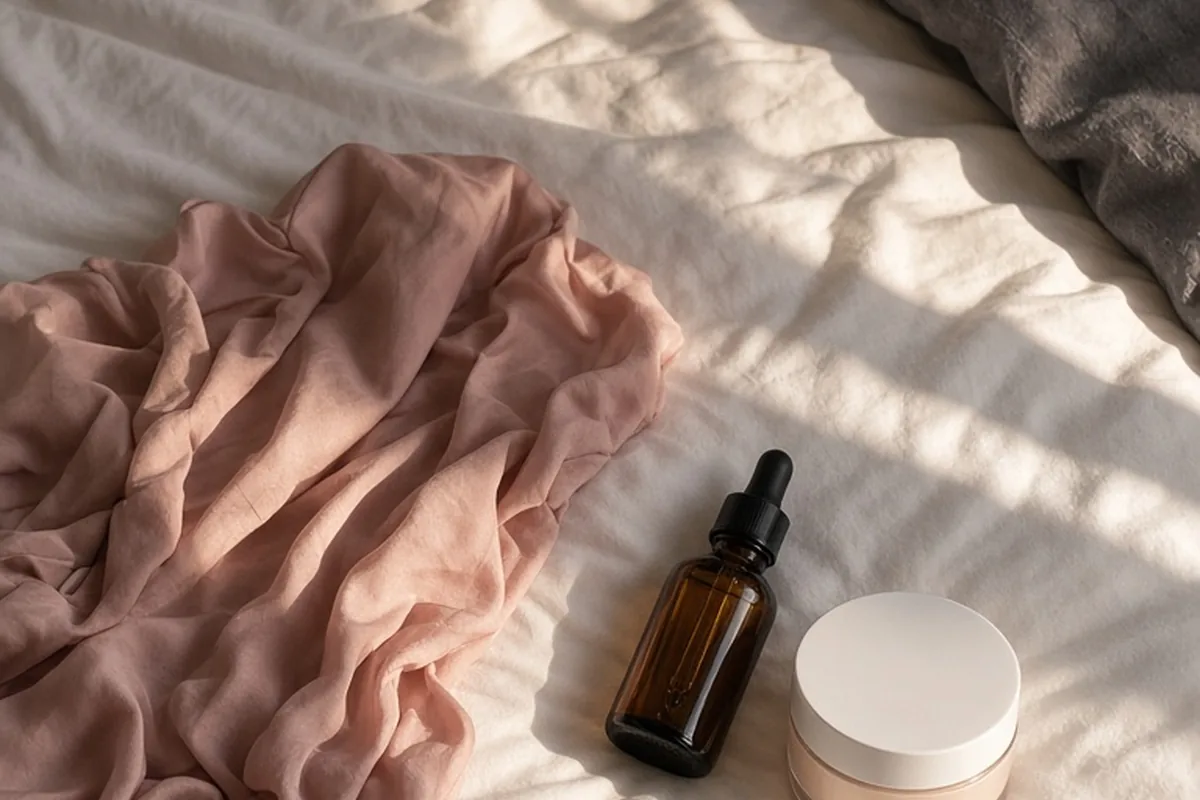
Yes, you should almost always apply moisturizer after your serum at night. Serums deliver concentrated active ingredients or lightweight hydration deep into the skin, while moisturizers contain emollients and occlusives that seal those ingredients in and prevent overnight moisture loss. Skipping moisturizer can cause water-based serums to evaporate quickly, leaving your skin dehydrated by morning.
Evening skincare can sometimes feel like an overwhelming sequence of bottles, droppers, and jars, leaving many people unsure if every step is truly necessary. Understanding how serums and moisturizers complement each other allows you to customize an evening routine that protects your skin barrier without wasting product.
How Serums and Moisturizers Work Together Overnight
The primary reason to follow a serum with a moisturizer lies in their molecular formulation and intended functions. Serums are formulated with smaller molecular structures designed to penetrate past the outermost surface of the skin. They typically carry high concentrations of active ingredients, such as peptides, niacinamide, or hyaluronic acid, suspended in a water or light fluid base. Because their main purpose is delivery rather than surface protection, serums lack the heavy structural lipids needed to shield your skin from the external environment.
Moisturizers, by contrast, possess larger molecules and a blend of humectants, emollients, and occlusive agents like ceramides, squalane, or shea butter. When you place a moisturizer over your serum, you create a physical barrier on the skin surface. This barrier holds the serum in place, minimizes rapid evaporation, and smooths the outer stratum corneum. Without this sealing step, humectant serums that draw water into the skin can actually pull moisture upward where it quickly evaporates into dry room air, a process known as reverse hydration.
Think of your serum as the targeted treatment that feeds your skin and your moisturizer as the protective blanket that locks everything inside. Skipping the blanket leaves the treatment exposed and vulnerable to moisture loss, which reduces the overall efficiency of your evening skincare investment.
Why Nighttime Skin Needs an Occlusive Layer
Your skin undergoes significant physiological shifts while you sleep. During the night, skin cell renewal accelerates, but the skin barrier also becomes naturally more permeable. This increased permeability allows treatments to absorb effectively, but it simultaneously increases transepidermal water loss, meaning your skin loses internal hydration to the ambient environment at a much higher rate during sleep than during the day.
Environmental factors in your bedroom can compound this natural water loss. Running central heating in the winter or air conditioning during the summer pulls humidity from the air, creating a dry microclimate that steadily siphons moisture away from unprotected skin. Applying a nourishing night moisturizer creates an artificial barrier that slows transepidermal water loss, giving your skin the stable, hydrated environment it requires for natural nighttime repair.
For individuals with dry or mature skin, this protective seal is indispensable. Even those with combination or oily complexions experience elevated water loss at night, which can paradoxically trigger excess sebum production if the surface skin becomes parched overnight.
Matching Your Night Layering to Your Active Ingredients
The specific serum you use at night dictates how and when you apply your moisturizer. When using hydrating serums containing glycerin, beta-glucan, or hyaluronic acid, your moisturizer should go on almost immediately while your skin is still slightly damp. This traps the moisture on the surface before it has a chance to evaporate, maximizing the plumpness and softness of your skin by morning.
Potent active ingredients, such as retinoids or exfoliating alpha hydroxy acids, require a more deliberate approach. Applying a rich moisturizer after a retinoid helps counteract the dryness, peeling, and mild irritation that often accompany cellular turnover. For sensitive skin, you can utilize the buffer technique, which involves applying a light layer of moisturizer first, followed by your retinol serum, and finishing with another layer of moisturizer to cushion the skin against irritation.
When working with exfoliating acid serums containing glycolic or lactic acid, following up with a soothing, barrier-supportive moisturizer containing ceramides or panthenol helps calm potential redness. Avoid layering heavy, pure petrolatum balms directly over strong exfoliating acids, as trapping potent chemical exfoliants too tightly against the skin can amplify irritation.
When You Might Adjust Your Nighttime Moisturizer
While skipping moisturizer entirely is rarely advisable, there are scenarios where modifying the type or texture of your moisturizer makes practical sense. If you live in a tropical, humid climate or have very oily, acne-prone skin, a heavy night cream can feel suffocating and potentially contribute to clogged pores when layered over an already rich serum. In these circumstances, swapping a dense cream for a lightweight oil-free gel moisturizer or an emulsion provides the necessary sealing effect without excessive heaviness.
Another adjustment occurs when your serum itself is formulated as an oil-based treatment. Facial oils consist of larger lipid molecules that act primarily as emollients and light occlusives. If your night serum is a pure botanical oil, applying a water-based moisturizer over top will not penetrate well. In that specific case, you would reverse the usual order by applying your water-based moisturizer first and sealing it with a few drops of your facial oil serum as the final step.
Balancing your routine requires listening to how your skin feels in the morning. If you wake up with a tight, dull complexion, your moisturizer is likely too light for the serum beneath it. If you wake up with an uncomfortable greasy film or sudden congestion, your evening moisturizer may be overly occlusive for your skin type.
Step-by-Step Night Application Technique and Wait Times
To get the most out of your nighttime skincare, follow a structured sequence that respects how formulas absorb. Begin with a thorough cleanse to remove daytime impurities, sunscreen, and makeup, then pat your skin gently with a clean towel until it is barely damp. If you use a toner or essence, apply it first to prepare the skin surface for deeper absorption.
Dispense two to four drops of your serum into your palms or fingertips and press it gently across your face and neck rather than rubbing aggressively. Allow the serum roughly thirty to sixty seconds to settle into the skin. You do not need to wait until your face is completely bone-dry unless you are using a strong prescription retinoid that requires dry skin application to minimize stinging.
Take a nickel-sized amount of moisturizer, warm it between your fingers, and smooth it over your face, neck, and upper chest using upward, sweeping strokes. Applying moisturizer while your serum is freshly absorbed locks in active ingredients without wiping them away. Be sure to avoid pulling at the delicate skin around your eyes, where a dedicated eye cream or a gentle tap of your regular moisturizer can provide hydration.
Common Night Layering Mistakes and How to Avoid Them
A frequent issue people encounter when layering serums and creams at night is product pilling, where formulas ball up into tiny flakes instead of sinking in. Pilling usually occurs when there is an incompatibility between bases, such as applying a high-silicone moisturizer over a water-dense serum without giving the serum a moment to absorb, or simply using too much total product.
Another common mistake is applying products in the wrong order of viscosity. As a universal rule, apply skincare from the thinnest consistency to the thickest. A thin, watery serum applied over a thick cream cannot break through the lipid barrier to deliver its active ingredients, resulting in wasted product and potential skin congestion.
Finally, be cautious about overloading your evening routine with multiple competing active serums before your moisturizer. Layering an exfoliating serum, a brightening serum, and a retinoid together before moisturizing can compromise your skin barrier, leading to irritation, stinging, and breakouts. Stick to one targeted treatment serum per night, followed by a dependable, nourishing moisturizer.
Frequently asked questions
How long should I wait between applying serum and moisturizer at night?
For most hydrating and peptide serums, waiting thirty to sixty seconds is plenty of time before applying your moisturizer. If you are applying active treatments like retinol or exfoliating acids, waiting two to three minutes allows the active ingredients to absorb fully without being diluted by your cream.
Can I use an oil serum instead of a moisturizer at night?
A facial oil can lock in moisture because it acts as an emollient, but it does not supply the water-binding humectants found in traditional moisturizers. If your skin is dry or dehydrated, using a moisturizer before your oil or choosing a moisturizer that already contains balanced lipids will deliver better overall hydration.
Will applying moisturizer over serum cause breakouts on oily skin?
Moisturizer will not cause breakouts as long as you choose a non-comedogenic, lightweight formula suited to your skin type. Skipping moisturizer on oily skin can actually backfire by causing dehydration, which prompts your sebaceous glands to produce more oil overnight.
Your next step
Tonight, apply your treatment serum after cleansing, wait about one minute, and finish with a layer of barrier-supporting moisturizer to keep your skin hydrated and protected until morning.