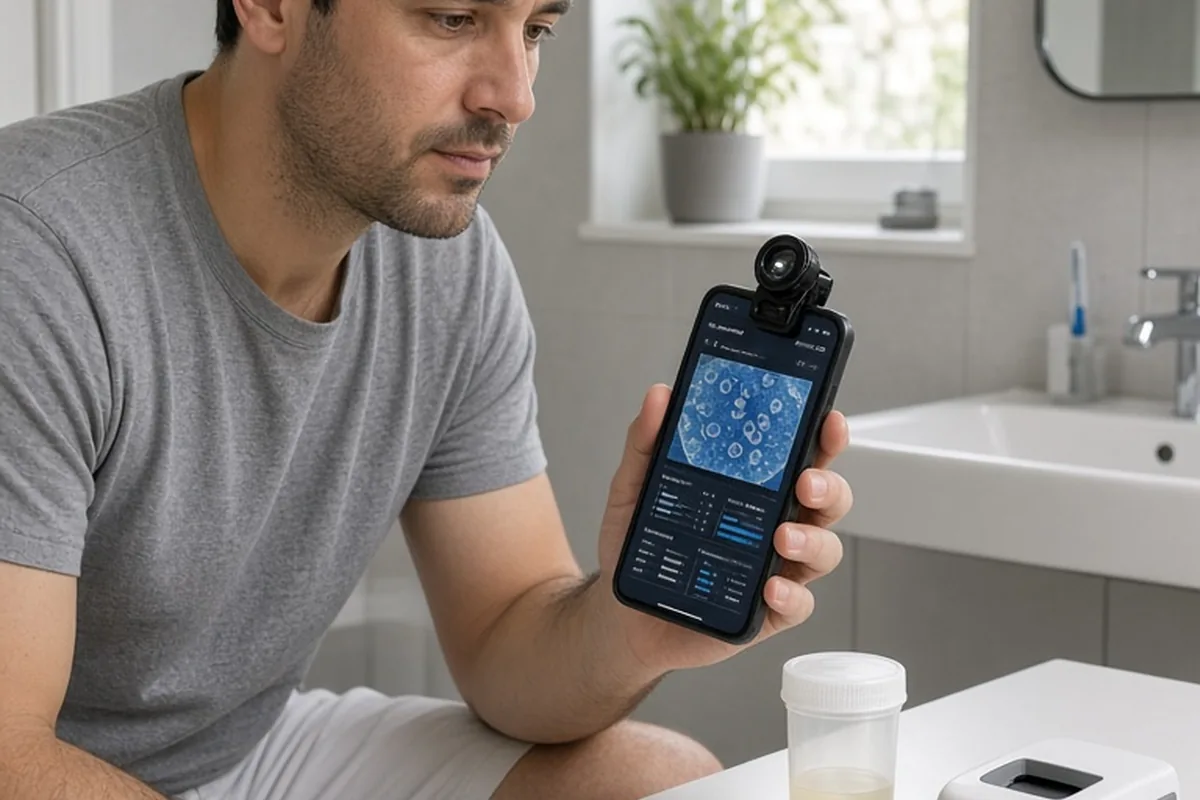
An at-home sperm count test typically costs between thirty and two hundred and fifty dollars, depending on the testing technology. Basic lateral-flow strip kits that check a single concentration benchmark run thirty to sixty dollars. Smartphone-connected optical analyzers generally cost seventy to one hundred and thirty dollars, while comprehensive mail-in kits that include full laboratory processing and shipping range from one hundred and fifty to two hundred and fifty dollars.
Evaluating reproductive health in a private setting has become an accessible preliminary step for individuals and couples planning a family. Understanding the price structure and capability of each testing tier helps buyers balance out-of-pocket expenses against the depth of biological information they actually need.
Pricing Tiers for Over-the-Counter and Direct-to-Consumer Kits
The market for home semen analysis falls into three distinct price tiers, with the retail cost reflecting the underlying diagnostic mechanism. At the entry level, lateral-flow test strips retail between thirty and sixty dollars. These kits function similarly to home pregnancy tests, providing a visual line indicator when sperm concentration meets or exceeds a pre-established threshold, usually fifteen or twenty million sperm per milliliter. Because these rely on chemical detection rather than optical imaging, manufacturing costs remain modest, making them the most economical option for an initial baseline screening.
Mid-tier kits typically sell for seventy to one hundred and thirty dollars and incorporate dedicated optical hardware. These systems pair a collection cup and slide with an optical clip-on lens that attaches to a smartphone camera. Proprietary mobile software analyzes the video feed to estimate both concentration and motility in real time. At the premium end, mail-in laboratory kits cost between one hundred and fifty and two hundred and fifty dollars. Customers collect a sample at home, mix it with an included preservative solution, and ship it overnight to an accredited diagnostic laboratory that conducts automated or technician-assisted evaluations.
- Rapid visual strip tests: thirty to sixty dollars for one to two tests.
- Smartphone-enabled digital analyzers: seventy to one hundred and thirty dollars for a starter kit.
- Mail-in laboratory kits: one hundred and fifty to two hundred and fifty dollars per collection cycle.
What Different Price Points Measure and Their Biological Limits
The retail price of an at-home kit correlates directly with the breadth of biological parameters it examines. Standard clinical guidelines evaluate several primary markers: total volume, sperm concentration, progressive motility, and morphology. Budget-friendly strip tests measure only concentration, which represents the total quantity of sperm cells in a given volume of fluid. While concentration is an essential data point, it provides no insight into whether the sperm are moving effectively or shaped normally, which can create a false sense of certainty if the result reads positive despite motility challenges.
Investing in mid-tier or mail-in options provides a more comprehensive overview of sample quality. Smartphone-based platforms assess total motile sperm concentration, which combines count and forward movement into a single metric. Mail-in services go further by reporting semen volume, pH levels, total sperm count, progressive motility, and often normal morphology percentages. However, all home-collected tests face a physical limitation regarding transit time and temperature fluctuations. Even with advanced stabilization buffers, sperm motility degrades over hours of postal transport, meaning mail-in results reflect a standardized estimate rather than a live-microscopy observation performed within minutes of collection.
- Basic strip tests report only concentration above or below a fixed benchmark.
- Digital smartphone readers report concentration and general motility percentages.
- Mail-in diagnostic services report concentration, motility, total count, volume, and morphology.
Recurring Expenses, Multi-Packs, and Hidden Ownership Costs
Budgeting for male fertility screening requires accounting for potential repeat testing. Semen parameters fluctuate naturally due to transient illnesses, physical fatigue, environmental heat exposure, or changes in sleep and stress. Because spermatogenesis takes approximately sixty-four to seventy-four days, doctors rarely base an evaluation on a single sample. Purchasing a standalone single-test kit for forty dollars might seem economical initially, but buying multiple individual kits over several months quickly inflates your overall expenditure.
Many digital analyzer brands sell starter kits that include two testing cassettes, with refill packs priced between thirty and fifty dollars for additional slides. When selecting a platform, check whether the accompanying mobile application requires a recurring subscription to store historical trends or generate exportable PDF reports for a doctor. For mail-in kits, verify that the purchase price covers prepaid priority shipping both ways, as unexpected courier fees can add twenty to forty dollars to an otherwise all-inclusive service.
Comparing Home Testing Expenses to In-Clinic Semen Analysis
A formal semen analysis conducted in an andrology clinic or hospital setting generally carries an out-of-pocket price tag between two hundred and one thousand dollars when uninsured. If health insurance covers diagnostic infertility testing, patient responsibility may drop to a specialist copay between twenty and seventy-five dollars. For consumers facing high deductibles or those without reproductive health coverage, direct-to-consumer home kits offer significant upfront savings, providing preliminary data at a fraction of a private laboratory bill.
The trade-off lies in diagnostic authority and clinical utility. An in-clinic assessment involves direct evaluation by certified laboratory technicians who examine the sample under high-magnification microscopes immediately following liquefaction. They also evaluate secondary markers like round cell presence, white blood cell contamination, and fructose levels that no consumer test checks. If a home test indicates an abnormal metric, the individual almost always must pay for a subsequent clinical evaluation to confirm the finding, effectively doubling their total testing expense.
Using Health Savings Accounts, Flexible Spending Accounts, and Insurance
While standard commercial health insurance policies rarely reimburse direct-to-consumer sperm testing kits purchased at retail stores or online pharmacies, tax-advantaged health accounts frequently cover them. Many major digital and mail-in kit manufacturers configure their online payment processing systems to accept Health Savings Account and Flexible Spending Account debit cards directly at checkout. Because these products serve a diagnostic family planning purpose, they generally qualify as eligible medical expenses under federal guidelines.
Before completing a purchase, confirm whether your specific account administrator requires an itemized receipt or a physician letter of medical necessity. Retaining documentation that details the diagnostic purpose of the kit prevents unexpected tax audits or denied expense claims later in the year. If your employer provides a dedicated family-building or reproductive health stipend, check its vendor guidelines, as some programs partner with specific direct-to-consumer male fertility brands to offer full reimbursement.
Sample Collection Protocols That Protect Your Financial Investment
At-home fertility tests are sensitive diagnostic tools, and improper collection techniques can easily invalidate an expensive test cassette. The most common error involves incorrect abstinence timing. Clinicians and test manufacturers consistently recommend an abstinence window of two to five days prior to collection. Abstaining for less than forty-eight hours can artificially lower sperm volume and concentration, while waiting longer than seven days often leads to sluggish motility and higher rates of cell degradation, both producing misleading results that waste a purchased test.
Environmental handling during collection also impacts accuracy. Semen samples must fully liquefy, a natural enzymatic process that takes fifteen to thirty minutes at stable room temperature, before you introduce the fluid into a testing well or digital slide. Adding the sample too early can clog the microscopic channels on a testing cartridge, resulting in an error code and requiring the purchase of a replacement accessory. Additionally, using standard personal lubricants, saliva, or conventional condoms will introduce spermicidal chemicals or physical barriers that compromise sample viability.
Choosing the Right Kit Tier for Your Family Planning Timeline
Selecting the most cost-effective kit depends on where you stand in your conception timeline. Couples who have just begun trying to conceive and simply desire quick reassurance may find that a fifty-dollar basic strip test or a seventy-dollar entry-level digital analyzer provides sufficient peace of mind without a large financial commitment. These tools serve as an approachable entry point, answering the fundamental question of whether viable sperm cells are present in typical quantities.
Conversely, if a couple has been actively trying to conceive without success for six to twelve months, purchasing entry-level threshold strips is often an inefficient use of resources. In that scenario, investing two hundred dollars in a comprehensive mail-in test provides the detailed motility and volume metrics necessary to have a productive discussion with a reproductive endocrinologist or urologist. Aligning the cost of the test with the urgency and complexity of your clinical situation ensures you spend money on data that directly informs your next steps.
Illustrative Scenarios
Balancing Privacy with Comprehensive Diagnostic Value
A thirty-two-year-old partner, Jordan, wanted an affordable preliminary fertility check after four months of attempting conception. Reluctant to book an expensive clinical visit immediately, Jordan evaluated a forty-dollar threshold strip and a one hundred and eighty dollar mail-in laboratory kit. Recognizing that threshold strips only show whether count exceeds a single benchmark without measuring swimming ability, Jordan opted for the mail-in kit to obtain a detailed overview of concentration, motility, and volume in private. The resulting report revealed normal sperm volume and concentration but reduced forward motility. Rather than spending additional money on multiple OTC threshold kits, Jordan brought the digital report to a primary care doctor, who used the finding to authorize a formal urological consultation.
Key point: Selecting a more detailed diagnostic tier upfront can cost less in the long term by avoiding redundant screening tests and accelerating access to targeted clinical guidance.
Frequently asked questions
Can health insurance reimburse the cost of an at-home sperm test?
Standard health insurance rarely reimburses over-the-counter sperm test kits directly without prior clinical authorization. However, most brands qualify for reimbursement through Health Savings Accounts or Flexible Spending Accounts using pre-tax funds. Keep your detailed purchase receipt and product summary in case your plan administrator requests documentation.
Why is there such a large price difference between home sperm testing kits?
Price differences stem from the underlying technology and diagnostic scope of each device. Inexpensive tests use simple lateral-flow chemical strips to identify a single concentration threshold, whereas mid-range kits rely on smartphone optical hardware to analyze movement. High-end kits include certified laboratory processing, preservation solutions, and overnight courier transport.
Does a normal at-home sperm count result confirm male fertility?
A normal home test indicates that your sample meets standard concentration or motility benchmarks, but it cannot definitively confirm overall fertility. Conception involves complex biological factors including sperm morphology, DNA fragmentation, and reproductive tract health that home devices cannot evaluate. If pregnancy does not occur after regular attempts, consult a physician regardless of your home test score.
How many tests should I budget for when checking my baseline?
Budgeting for two separate tests spaced roughly two to four weeks apart provides a much clearer picture of your baseline. Because semen parameters naturally fluctuate based on recent illness, stress, and lifestyle factors, a single test represents only an isolated snapshot. Many manufacturers offer discounted two-test starter bundles specifically to accommodate this clinical reality.
Your next step
Review your family planning timeline and available health spending funds, then order a two-test kit tier that captures both concentration and motility to establish a reliable baseline.