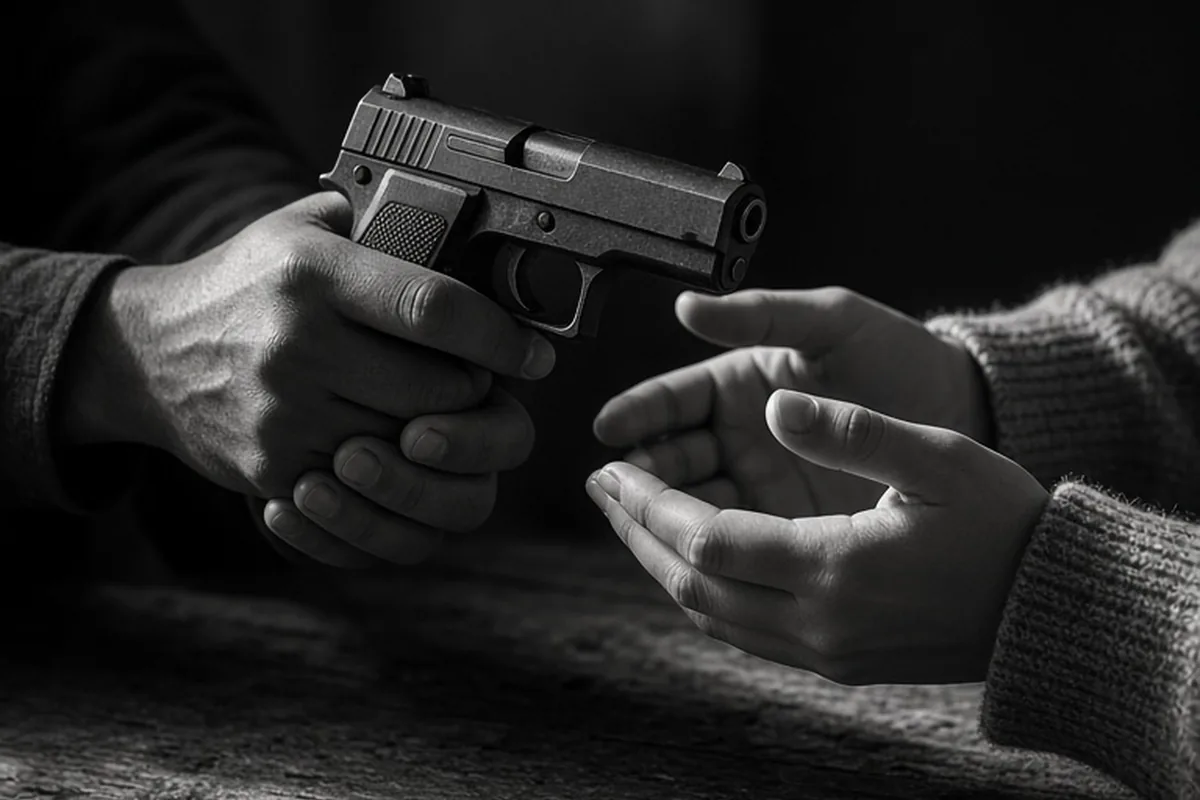
The best handgun for any woman depends on hand geometry, grip strength, carry preferences, and recoil tolerance rather than gendered marketing. Highly capable, widely vetted choices include compact and micro-compact semi-automatics chambered in 9mm or .380 ACP, such as the Sig Sauer P365, Smith & Wesson Shield Plus, Walther PDP F-Series, and Glock 43X or 19. Individual comfort, control, and consistent operation remain the deciding factors.
Navigating firearm selection often means filtering out outdated assumptions, particularly retail advice that automatically directs female shooters toward tiny, harsh-recoiling pocket pistols. Choosing a defensive firearm is an objective biomechanical decision based on leverage, ergonomics, and personal comfort.
Prioritizing Biomechanics Over Gender-Targeted Marketing
For decades, the firearm industry attempted to reach female buyers by simply producing existing pocket pistols in bright pastel colors or marketing ultra-lightweight snub-nosed revolvers as simple solutions. In practice, this marketing often creates a frustrating experience. Ultra-light, short-barreled handguns lack the physical mass needed to absorb recoil, resulting in a snappy, painful shooting experience that discourages regular target practice and hinders basic skill development.
A successful selection process focuses entirely on hand size, finger reach, and wrist leverage rather than cosmetic appeal. A firearm must allow the shooter to wrap their fingers firmly around the frame with the web of the hand positioned high beneath the rear beavertail. If the grip is too wide, the index finger struggles to reach the trigger face without turning the entire wrist, degrading both shot placement and recoil management. Conversely, a grip that is too thin or short leaves fingers dangling, reducing the surface contact necessary to stabilize the gun during rapid strings of fire.
Evaluating a potential firearm requires assessing how naturally the controls align with your anatomical baseline. Rather than accepting a pre-selected model off the shelf, verify whether you can comfortably reach the magazine release, hold the frame flat in your palm, and maintain a firm two-handed purchase without shifting your stance.
- Trigger reach: Your trigger finger should contact the trigger face naturally with the middle of the first pad while maintaining an aligned wrist.
- Grip circumference: Fingers should wrap around the front strap with firm contact without your fingertips digging uncomfortably into your palm.
- Control access: The magazine release, slide catch, and any optional manual safeties must be operable without breaking your primary grip entirely.
Evaluating Calibers: 9mm Luger Versus .380 ACP
Caliber selection is a direct compromise between defensive energy and comfortable recoil recovery. For defensive purposes, 9mm Luger is the modern standard used across civilian, military, and law enforcement sectors. It delivers proven terminal ballistics and wide ammunition availability at an accessible price point, which keeps ongoing training costs manageable. In a balanced, compact polymer or steel frame, standard-pressure 9mm recoil is mild enough for most shooters to manage effectively once proper grip fundamentals are applied.
However, hand strength, joint stiffness, or underlying wrist conditions can make managing 9mm recoil or cycling a stiff slide difficult. In these circumstances, .380 ACP serves as a capable and practical alternative. Because .380 ACP operates at lower chamber pressures, modern locked-breech designs chambered in this caliber produce substantially softer recoil impulses and allow manufacturers to use lighter recoil springs, making slide operation noticeably easier.
The trade-off lies in ballistic margins and ammunition expenses. While high-quality defensive hollow points in .380 ACP meet standard defensive thresholds, the round generates less velocity than 9mm. Additionally, .380 ACP practice ammunition is frequently more expensive per box, which can subtly influence how often you head to the range to maintain proficiency.
Understanding Frame Dimensions: Micro-Compacts, Compacts, and Full-Size
Handgun dimensions dictate both how easily a gun is concealed beneath everyday clothing and how comfortable it feels during repeated shooting. Micro-compact handguns have surged in popularity because they measure less than an inch across the slide and hold ten to fifteen rounds in slim magazines. These models disappear easily under fitted shirts or light fabrics, but their minimal weight means felt recoil transfers directly into the hands, demanding dedicated practice to shoot accurately at speed.
Mid-size or compact handguns, exemplified by models like the Glock 19 or Smith & Wesson M&P 2.0 Compact, represent an ideal balance for many shooters. Their slightly longer grips permit a full three-finger hold without extensions, and their added slide mass noticeably cushions muzzle flip. Many individuals find that a compact pistol serves dual duty as both a manageable home-defense tool and an everyday carry piece when paired with a sturdy belt and dedicated holster.
Full-size handguns feature long sight radiuses, generous capacities, and considerable frame weight that makes firing defensive rounds smooth and easily controlled. While carrying a full-size gun concealed requires substantial wardrobe adjustments and specialized holsters, keeping one in a secure bedside quick-access safe provides an exceptionally forgiving shooting platform when fine motor skills are compromised under stress.
Action Types and Ergonomic Trigger Mechanisms
Modern handguns generally fall into striker-fired or hammer-fired configurations, each offering distinct mechanical operational characteristics. Striker-fired pistols dominate modern personal defense because they feature a consistent trigger weight from the first round fired to the last, eliminating the transition between different pull weights. They contain internal drop safeties that ensure the gun will not fire unless the trigger is intentionally pulled to the rear.
Hammer-fired options, specifically traditional double-action/single-action (DA/SA) systems, start with a longer, heavier trigger stroke on the initial shot, followed by short, light single-action pulls for subsequent rounds. Some carriers prefer the added peace of mind provided by a heavier first pull or the tactile feedback of holding a thumb over the hammer while reholstering. However, mastering the transition between the heavy first pull and light follow-up shots requires deliberate training discipline.
Trigger reach and weight also vary significantly across models. Purpose-designed firearms, like the Walther PDP F-Series, specifically engineered the trigger housing and reach distance to suit smaller hands, reducing the physical reach required to break a clean shot. Testing triggers at the gun counter by dry firing with permission provides immediate clarity on whether your finger leverage is sufficient.
Overcoming Slide Manipulation Challenges
A common barrier for new gun owners, regardless of stature, is the mechanical resistance involved in racking the slide back to chamber a round or clear an obstruction. Many people instinctively rely on thumb-and-forefinger pinch grip strength while pulling backward with their non-dominant hand, a method that puts unnecessary strain on small finger muscles and often fails against stiff factory springs.
Adopting a whole-hand overhand grip dramatically increases mechanical leverage. By placing the palm of the support hand over the top rear serrations with four fingers curled over the slide, you engage the larger muscles of the chest, back, and shoulders. Pushing the lower frame forward with your dominant firing hand while simultaneously pressing backward with your support hand generates clean, rapid slide travel without raw hand strength.
For those with chronic hand fatigue, arthritis, or reduced grip tension, selecting a firearm built specifically with lightened slide resistance makes an immense difference. Models such as the Smith & Wesson Shield EZ series utilize internal hammer designs that allow for exceptionally soft recoil springs, enabling almost effortless manual cycling without sacrificing mechanical reliability.
Concealed Carry Realities and Wardrobe Integration
Carrying a defensive tool safely requires integrating it into your daily attire without compromising trigger security. Traditional inside-the-waistband (IWB) carry relies heavily on thick, structured leather or nylon gun belts that support the holster's weight across the hips. Because women's clothing styles often feature lighter fabrics, lower rises, or lack belt loops altogether, conventional holster setups can be uncomfortable or impractical without adjustments.
Modern modular holster chassis systems have revolutionized concealed carry by detaching the holster mount from the pants entirely. These systems secure around the waist beneath clothing, allowing the firearm to remain stable whether wearing dresses, athletic wear, or business attire. Regardless of the system chosen, the holster shell must be formed from rigid molded kydex or equivalent durable material that completely encases the trigger guard to eliminate snag risks.
Off-body carry in specialized concealed-carry purses is often considered by new owners as a simple workaround, but it introduces distinct operational challenges. A purse can be dropped, left unattended, or snatched during an encounter, immediately separating you from your defensive tool. Drawing from a zipped compartment under adrenaline also takes significantly longer than drawing from the waistband. If off-body carry is utilized, the bag must feature an isolated, rigid holster pocket dedicated exclusively to the firearm.
Structured Range Testing Before Making a Purchase
Handling a firearm dry in a retail store only reveals part of the equation; live fire is essential to understanding how the gun behaves during recoil. Most commercial indoor firing ranges offer rental programs where customers can try multiple handguns for an hourly fee. Taking advantage of this service prevents buyer's remorse by allowing direct comparisons under identical range conditions.
Structure your rental session deliberately by selecting two or three distinct profiles: for instance, a slim micro-compact in 9mm, an ergonomic compact 9mm, and a light-racking .380 ACP. Shoot twenty to thirty rounds through each model at modest distances, focusing on how easily you can realign the sights after each shot, whether the grip texturing pinches your skin, and how securely the magazine latches in place.
Pay close attention to whether the firearm instills confidence or apprehension. If a particular model leaves your hand tingling, forces you to adjust your grip after every shot, or causes you to anticipate recoil, cross it off your list. The right handgun should feel controllable, stable, and intuitive throughout a full box of ammunition.
Illustrative Scenarios
Overcoming Recoil Aversion After Misleading Advice
Rachel visited a local gun store seeking her first home defense handgun. The sales clerk immediately recommended a two-inch snub-nosed .38 Special revolver, claiming its simplicity made it ideal for female beginners. At the range, Rachel found the heavy twelve-pound trigger pull threw off her aim, and the violent snap of the lightweight frame bruised her palm, causing her to dread shooting. Frustrated, she booked a private lesson with a certified range instructor who had her test a compact 9mm striker-fired pistol with an ergonomic grip. The added frame weight absorbed the muzzle flip, while the lighter, crisp trigger let her hit the target consistently.
Key point: Physical mass cushions recoil; selecting an overly light firearm out of presumed convenience often makes competent shooting harder rather than easier.
Navigating Hand Fatigue with Purpose-Built Features
Diane wanted an everyday carry firearm but struggled with joint stiffness in her hands, making standard slide manipulation difficult on her partner's compact pistol. She initially believed she was simply not strong enough to handle a semi-automatic weapon safely. During a range rental day, she tested a dedicated easy-to-rack .380 ACP handgun utilizing a locked-breech mechanism. By combining the pistol's lighter spring design with a proper push-pull manipulation technique, Diane was able to clear malfunctions and chamber rounds independently with minimal physical strain.
Key point: Mechanical leverage and specialized platform engineering solve slide manipulation challenges far more effectively than relying on brute hand strength.
Frequently asked questions
Are revolvers better than semi-automatics for female beginners?
Revolvers offer mechanical simplicity without slide manipulation, but lightweight models have heavy double-action trigger pulls and sharp recoil. Modern semi-automatics provide softer shooting, lighter trigger presses, and higher ammunition capacity, making them preferable for many beginners.
Can someone with small hands shoot a compact or full-size handgun effectively?
Yes, because modern polymer pistols frequently feature interchangeable backstraps and slim grip contours that shorten the trigger reach. A shooter's ability to reach controls comfortably matters far more than the overall external length or height of the frame.
Is an external manual safety necessary for safe everyday carry?
A manual safety is an optional personal choice that demands regular practice to disengage reliably under stress. Striker-fired pistols without external manual levers remain entirely safe when carried inside a rigid kydex holster that fully covers and protects the trigger guard.
What is the most practical first step when shopping for a handgun?
Visit an indoor range that offers firearm rentals and book basic range time or an introductory session with an instructor. Testing multiple frame sizes and calibers in live fire provides definitive feedback on what fits your individual hand mechanics.
Your next step
Schedule a session at an indoor rental range to shoot a compact 9mm alongside an easy-racking .380 ACP before buying, ensuring you choose a platform based on your personal control, comfort, and shooting accuracy.