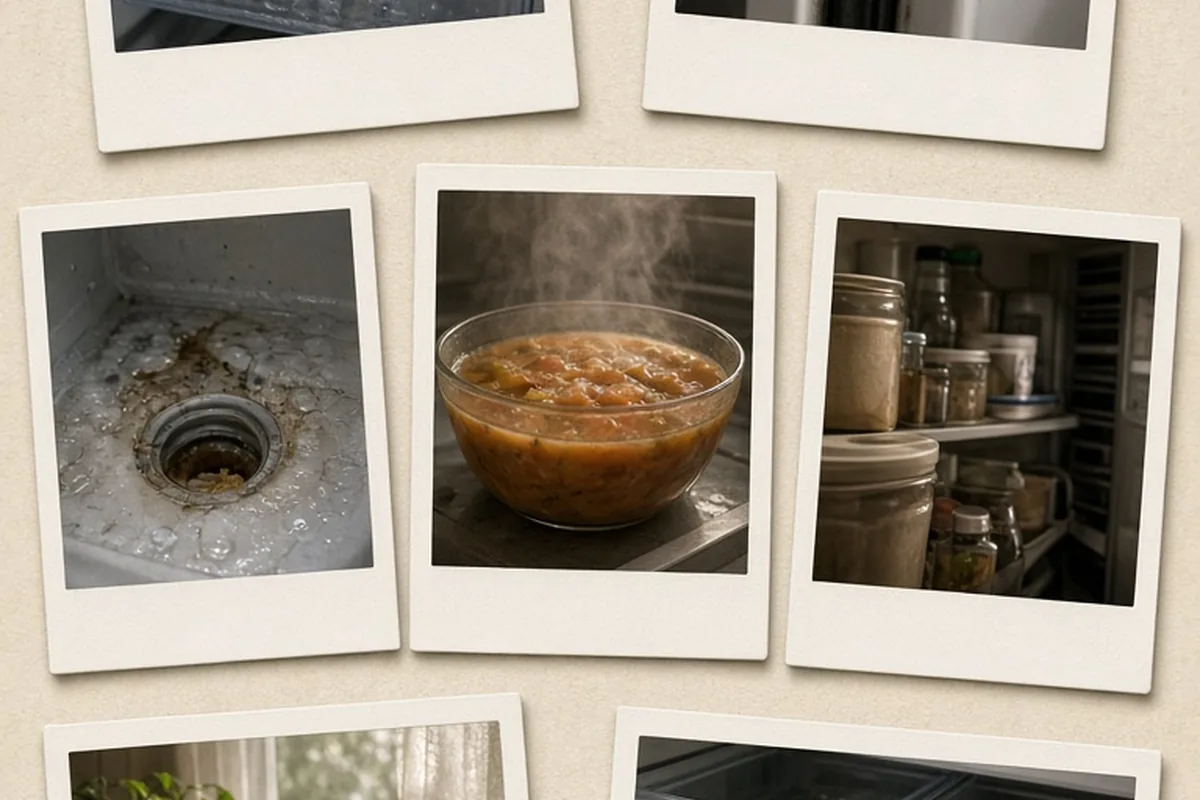
Moisture in a refrigerator usually occurs when warm, humid air enters and condenses against cold interior surfaces. Common culprits include damaged or dirty door gaskets, blocked defrost drain tubes, storing warm or uncovered food, crowded shelves obstructing air circulation, and incorrect temperature settings. Addressing worn seals, clearing drain lines, and managing how food is stored typically resolves the issue.
Opening your refrigerator to find droplets across the back wall, soggy vegetable drawers, or puddles beneath crisper bins is a common household nuisance. While minor condensation can briefly appear during hot weather, ongoing dampness accelerates spoilage and encourages mold growth.
Damaged or Dirty Door Gaskets Allowing Humid Air In
The flexible rubber gasket lining your refrigerator door creates an airtight barrier that keeps chilled air inside and warm, humid room air outside. Over time, these seals can accumulate sticky food spills, develop microscopic tears, or lose their elasticity from repeated opening and closing. When a gasket fails to seal flush against the metal frame, warm ambient air continuously seeps into the interior. As that humid air contacts the cold interior walls and shelves, the water vapor quickly reaches its dew point and condenses into visible moisture droplets.
To determine whether a failing gasket is the root cause, you can perform a simple dollar bill test. Insert a clean paper bill halfway across the door seal, close the door completely, and gently pull. If the bill slides out with little to no resistance, the magnetic seal is weak or misaligned at that spot. You can often restore a dirty seal by washing it thoroughly with warm water, mild dish soap, and a soft cloth to remove grime that prevents a tight fit. If the rubber is brittle, warped, or cracked, replacing the gasket is usually the most cost-effective and permanent solution.
Blocked or Frozen Defrost Drain Lines
Every modern frost-free refrigerator undergoes automated defrost cycles throughout the day to prevent ice from accumulating on the cooling coils. During this process, a small heating element melts accumulated frost, and the resulting water flows into a narrow drain channel located along the back interior wall. From there, the water travels down a tube into an external drain pan beneath the appliance, where ambient heat from the compressor evaporates it naturally.
When this drain channel becomes clogged with food crumbs, dust, mineral deposits, or ice plugs, the meltwater has nowhere to go. It backs up into the refrigerator cabinet, typically pooling under the lowest storage bins or running down the rear wall. You can resolve a clogged drain by clearing the opening with a flexible nylon tube or pipe cleaner, followed by flushing the line with a mixture of warm water and baking soda using a turkey baster. Avoid using rigid metal wires, which can easily puncture the soft plastic drain tubing inside the wall.
Storing Warm, Hot, or Uncovered Food Items
The foods and beverages you place inside the appliance have a direct impact on its internal humidity levels. Placing steaming leftovers, warm soups, or uncovered liquids directly onto refrigerator shelves introduces substantial amounts of moisture into a closed ecosystem. The heat from the food rapidly evaporates liquid into the air, and because the cold interior surfaces are significantly cooler than the warm vapor, moisture condenses against nearby plastic containers, glass shelves, and interior walls.
To minimize this vapor transfer, always allow cooked meals to cool down toward room temperature before placing them in the refrigerator, while keeping food safety guidelines in mind by never leaving perishables out for more than two hours. Additionally, store all leftovers, cut fruits, and prepared ingredients in airtight glass or plastic containers with secure lids. Covering open beverage pitchers, marinades, and sauces ensures that moisture remains contained rather than evaporating into the general refrigerator cavity.
Overcrowded Shelves and Obstructed Air Vents
Refrigerators rely on continuous, balanced airflow to maintain uniform temperatures and manage humidity. Cold air enters the compartment through dedicated supply vents, circulates around your groceries, and exits through return louvers. When shelves are overloaded with bulk packages, oversized boxes, or tight rows of jars pushed directly against the walls and vents, that natural air circulation becomes choked off.
When air cannot move freely, stagnant pockets of air develop throughout the compartment. Some zones become overly cold while others stay relatively warm, creating localized temperature differences that trigger rapid condensation. To maintain optimal airflow, leave at least an inch of space between food containers and the interior walls, and take care never to block the main air vents located at the top and back of the cabinet. A well-organized refrigerator with moderate spacing allows the cooling system to distribute dry air evenly and pull moisture toward the evaporator coils.
Incorrect Temperature Settings and Sensor Inconsistencies
The internal temperature of your refrigerator plays a vital role in moisture management. If the thermostat is set too warm, above forty degrees Fahrenheit, the appliance will struggle to remove moisture from the air effectively, leaving the interior clammy and humid. Conversely, if the temperature is set too cold, near the freezing point, the appliance may generate excessive frost on the internal cooling components, which then melts rapidly during defrost cycles and overwhelms the drainage system.
The ideal target temperature for a standard residential refrigerator is between thirty-seven and forty degrees Fahrenheit, or roughly three to four degrees Celsius. Because built-in dial dials numbered one through five rarely indicate actual degrees, it is helpful to place a standalone appliance thermometer on the middle shelf for twenty-four hours to measure the actual temperature. If the appliance consistently fluctuates despite adjusting the control dial, a failing thermostat sensor or damaged temperature control board may require professional repair.
High Room Humidity and Frequent Door Openings
The external environment of your kitchen significantly influences how much moisture enters the appliance. During summer months or in regions with high relative humidity, every single door opening replaces the cold, dry air inside with a fresh surge of muggy room air. Cooking on an unvented stovetop, boiling water, and running dishwashers close to the refrigerator further raise ambient humidity levels in the immediate area.
Habits like lingering with the door open while deciding what to eat or failing to close the door completely amplify moisture accumulation. Making a habit of quickly retrieving what you need and closing the door promptly reduces air exchange. Additionally, check that your refrigerator is slightly tilted backward by adjusting the leveling legs at the base. A subtle backward lean ensures that the door swings closed on its own under gravity rather than lingering ajar if someone accidentally fails to push it completely shut.
Misconfigured Crisper Drawer Humidity Controls
Fresh produce continuously transpires, releasing moisture into the surrounding air even after being harvested. Leafy greens, herbs, and crisp vegetables emit high levels of water vapor, which can quickly saturate crisper drawers and turn into puddles of water if the drawer settings are misaligned. Most modern refrigerators feature adjustable humidity slides on produce drawers that regulate the size of airflow openings.
Setting a crisper drawer to high humidity closes the small vent, trapping natural moisture inside to keep leafy greens and herbs crisp. However, if you store ethylene-producing or moisture-sensitive produce, such as apples, pears, or citrus, in a closed-vent drawer, excess moisture and gases accumulate, leading to rapid rotting and pooling water. Use the low-humidity setting with open vents for fruits and hardy vegetables to allow excess vapor to escape into the main air stream, and consider lining drawer bottoms with paper towels to absorb residual condensation.
Frequently asked questions
Is it normal to see water droplets on the back wall of a refrigerator?
Yes, small droplets on the interior back wall are common in modern refrigerators with concealed cooling plates. As the cooling cycle runs, moisture collects on the cold back wall and drains out through the bottom channel, though persistent standing water indicates a problem.
Can excess moisture inside the fridge make food spoil faster?
Excess moisture significantly accelerates food spoilage by creating an ideal breeding ground for mold, mildew, and bacteria. Damp conditions cause vegetables to turn slimy, bread to develop surface mold, and soft fruits to degrade days earlier than expected.
How do I know if my refrigerator drain tube is frozen or clogged?
If you notice a steady puddle of water collecting beneath your lowest crisper drawers or ice forming on the floor of the compartment, the defrost drain is likely blocked. Inspect the small drain funnel at the lower back wall to see if standing water or visible ice is trapped there.
What is the easiest way to absorb existing moisture inside a refrigerator?
Placing an open box of baking soda or a small container of activated charcoal on a central shelf helps absorb residual odors and minor airborne humidity. However, you should still address the mechanical root cause, such as a damaged door seal or clogged drain, for long-term dry conditions.
Your next step
Test your door gaskets with a dollar bill and verify that your internal temperature stays steadily between thirty-seven and forty degrees Fahrenheit to keep your refrigerator dry.