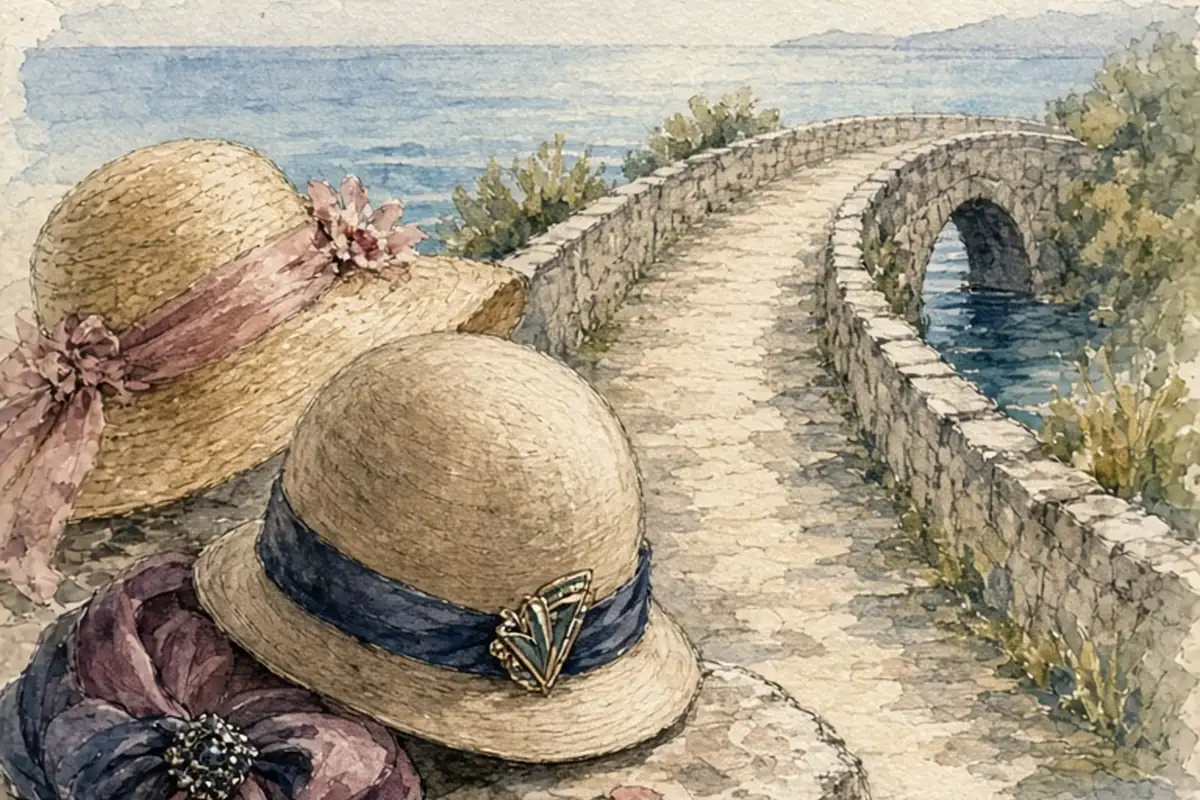
In the 1920s, women primarily wore the close-fitting cloche hat, designed to hug the skull over short bobbed hairstyles. Other popular styles included wide-brimmed picture hats for garden parties, draped turbans, structured toques, berets, and elaborately beaded headdresses for formal evenings. Milliners used felt, straw, velvet, ribbons, and Art Deco brooches to create sleek, aerodynamic silhouettes that defined the era.
Headwear in the 1920s was not merely a decorative accessory; it was an indispensable component of public dress that reflected changing social roles, modern aesthetics, and dramatic shifts in women's fashion.
The Reign of the Cloche Hat: Shape, Fit, and Cultural Shift
The defining headwear of the 1920s was undoubtedly the cloche hat, taking its name from the French word for bell. Introduced by Parisian milliners such as Caroline Reboux, the cloche featured a deep, rounded crown that hugged the contours of the skull and terminated in a narrow, downward-sloping brim. This shape created a sleek, helmet-like profile that completely transformed the female silhouette. Because it sat low over the forehead, often just above the eyebrows, the cloche emphasized the jawline, neck, and cheekbones while coordinating seamlessly with the tubular, drop-waist dresses popular throughout the decade.
Wearing a cloche required a distinct posture and physical presence. Because the low brim shielded the eyes, women frequently tilted their chins upward when walking, navigating sidewalks, or conversing in public, a posture that quickly became associated with the confident, modern persona of the era. While the cloche offered an uncluttered, aerodynamic appearance that suited the fast-paced urban lifestyle of the Roaring Twenties, its snug fit left little room for voluminous hairstyles. Women who adopted the hat had to accept its strict structural limits, which demanded short haircuts and precise sizing to prevent uncomfortable pressure on the forehead.
Daytime and Warm-Weather Alternatives: Straw Brims, Toques, and Berets
Although the close-fitting felt cloche was ubiquitous for everyday city life, seasonal and social occasions called for alternative silhouettes. During spring and summer, women turned to wide-brimmed picture hats, sometimes called garden hats or cartwheel hats. Crafted from lightweight materials such as woven Milan straw, horsehair braid, or sheer organdy, these wide brims shielded the face from the sun at outdoor garden parties, teas, and seaside promenades. These hats maintained low crowns to accommodate contemporary hairstyles but allowed for softer, romantic textures that balanced summer frocks.
For athletic activities, travel, and motoring, women chose practical, brimless designs like the toque or the French beret. The toque sat snugly against the head with a firm, pillbox-like or draped structure, offering wind resistance and stability during open-air car rides. The beret, popularized by sporting icons and bohemian artists, introduced an asymmetric, relaxed attitude to casual daytime tailoring. The main trade-off with wider summer hats was their vulnerability to coastal breezes, requiring discreet internal combs or chin ribbons, whereas toques and berets traded sun protection for effortless, all-weather security.
Dramatic Evening Headwear: Turbans, Bandeaux, and Beaded Caps
Evening fashion in the 1920s embraced exoticism, theatricality, and the geometric lines of the Art Deco movement. For dinners, theater outings, and dance clubs, daytime felt hats gave way to draped turbans made from opulent silk lamé, crushed velvet, and brocade. These turbans were often gathered in the center with a jeweled brooch, a paste ornament, or a dramatic aigrette of egret or ostrich feathers, channeling inspiration from North African and Middle Eastern costume popularized by the Ballets Russes and major archaeological discoveries of the decade.
For energetic social dancing, women favored lightweight headbands and Juliet skullcaps that remained secure through fast jazz steps. Bandeaux were worn horizontally across the middle of the forehead or wrapped around the hairline, embellished with glass seed beads, sequins, rhinestones, or metallic fringe. These evening pieces provided intense visual sparkle in low-lit ballrooms and speakeasies. However, they were purely ornamental and offered no protection against inclement weather, requiring women to wear protective silk or velvet hooded cloaks when traveling between evening venues.
Materials, Trimmings, and Millinery Craftsmanship
The construction of 1920s hats relied on advanced millinery techniques that emphasized clean lines over the heavy, piled-on ornament of the preceding Victorian and Edwardian eras. Winter hats were blocked from high-grade wool felt, fur felt, or beaver felt, which held rigid shapes while remaining soft to the touch. Summer models utilized finely woven Panama straw, woven sisal, or horsehair crinoline. Milliners sculpted these foundations over wooden hat blocks, steaming and molding the material to produce seamless crowns that conformed closely to human head measurements.
Trimmings in the 1920s were deliberately restrained and structural rather than chaotic. Instead of expansive nests of artificial fruit and large birds, milliners applied geometric grosgrain ribbon cockades, polished Bakelite or celluloid buckles, enameled Art Deco clips, and clipped feather quills placed at sharp angles. The placement of a single ribbon knot or angular fold was calculated to balance the wearer's facial features. This minimalist approach highlighted the craftsmanship of the base material itself, though it also meant that any imperfection in stitching or fabric quality was immediately visible.
How Short Hairstyles Revolutionized Hat Design and Fit
The radical popularization of short hair was inextricably linked to 1920s hat design. In earlier decades, women required broad, hollow crowns and long metal hatpins to anchor their hats atop massive pompadours and pinned chignons. When the bob, the shingle cut, and the ultra-short Eton crop became standard fashion statements, millinery had to adapt instantly. The new hats sat directly against the scalp, using the natural shape of the cranium and the friction of cropped hair to stay anchored without damaging pins.
This architectural revolution created practical challenges for women who were hesitant to cut their hair. Those with long hair had to carefully pin their tresses into flat, horizontal coils at the nape of the neck or create faux-bob configurations to fit underneath a true cloche. Many milliners offered transitional designs with slightly roomier crowns, but the overall market heavily favored cropped hair. The intimate fit of the cloche effectively pressured many women toward the barber's chair, making a trip to the milliner and a visit to the hair salon complementary rituals of modern grooming.
Decoding Visual Signals: Ribbon Messages and Millinery Details
During the height of the cloche craze, popular culture attributed specific meanings to the ribbons and ornaments adorning a woman's hat. According to period folklore, an arrow-like ribbon indicated that a woman was single but interested in courtship, a firm knot suggested marriage or serious commitment, and an elaborate bow signaled that she was single and happily unattached. While these interpretations were largely playful social conventions rather than rigid laws, they reflected how closely people observed millinery details in crowded public spaces.
Beyond romantic signals, the precise angle at which a hat was worn communicated personal style and social awareness. A cloche pulled straight down over the eyes suggested sleek, modern severity, while an asymmetrical fold or an upturned brim over one eye conveyed an approachable, flirtatious sensibility. Milliners customized these subtle structural adjustments for individual clients, ensuring that the hat flattered specific bone structures while allowing wearers to project their chosen public persona.
Sourcing and Styling 1920s Hats for Modern Vintage Enthusiasts
For modern collectors, reenactors, and vintage fashion enthusiasts, incorporating 1920s hats into a contemporary wardrobe requires careful attention to sizing, materials, and proportions. Authentic antique hats from the decade are fragile; century-old wool felt can become brittle, and antique straw often cracks under pressure. Furthermore, average head sizes in the 1920s were slightly smaller than modern averages, meaning original pieces frequently fit tight or sit too high on modern heads. Sourcing well-made historical reproductions or blocking custom wool blanks offers a durable, wearable alternative.
When styling 1920s headwear today, balance is essential to prevent the outfit from looking like a generic costume. A wool cloche pairs naturally with structured overcoats, tailored trench coats, and minimalist knitwear, echoing the clean lines of 1920s daywear. If you have long or thick hair, opt for flexible knitted cloches, draped velvet turbans, or wider-crowned toques that accommodate hair volume without distorting the hat's intended shape. Selecting quality materials like genuine wool felt and silk ribbons ensures the look feels sophisticated and timeless.
Illustrative Scenarios
Historical Event Wardrobe Dilemma
Claire was preparing for a 1920s-themed charity gala and bought an antique wool cloche online. When it arrived, she discovered that her thick, shoulder-length hair prevented the rigid, narrow crown from fitting over her head. Frustrated by the tight squeeze and distorted profile, Claire initially considered forcing her hair into a bulky bun underneath. Realizing this ruined the sleek silhouette and caused a headache, she pivoted to a period-accurate, hand-draped silk velvet turban with an Art Deco brooch. The draped fabric easily accommodated her pinned hair while staying faithful to late-1920s evening fashion.
Key point: Choosing a historical hat style that matches your actual hair volume and event context delivers better comfort and authenticity than forcing a rigid shape.
Restoring an Antique Finding for Daily Wear
Mark wanted to style an authentic 1928 summer straw hat for a vintage exhibition. He found an original piece at an estate sale, but the straw was dehydrated and the inner sweatband was deteriorating. Instead of wearing it immediately and risking irreversible tears, Mark consulted a professional milliner to gently re-hydrate the straw fibers over steam and install a modern grosgrain ribbon inside to protect the antique weave from skin oils. By treating the original piece with preservation care, he maintained its historical integrity for display.
Key point: Original antique headwear requires careful restoration and structural support before it can be safely worn or displayed.
Frequently asked questions
Did all women in the 1920s wear cloche hats?
While the cloche was the most popular and iconic daytime style, women also wore wide-brimmed picture hats, toques, berets, and draped turbans. The choice depended on the season, the formality of the event, and personal hairstyle preferences.
How did 1920s hats stay on without long hatpins?
Because 1920s hats were designed to fit the skull closely over cropped hair, they relied on exact head measurements and friction to stay in place. The deep crown hugged the back of the head, eliminating the need for the dangerous, long hatpins used in earlier decades.
What hat materials were most common during the 1920s?
Winter and autumn hats were primarily made from pressed wool felt, fur felt, and plush velvet. Warm-weather styles were woven from Milan straw, panama straw, crinoline, and sheer fabrics like silk organdy.
Your next step
To authentically capture or wear 1920s millinery, measure your head circumference accurately and choose a hat style, such as a structured cloche for short hair or a draped turban for longer hair, that complements your facial shape and hair volume.