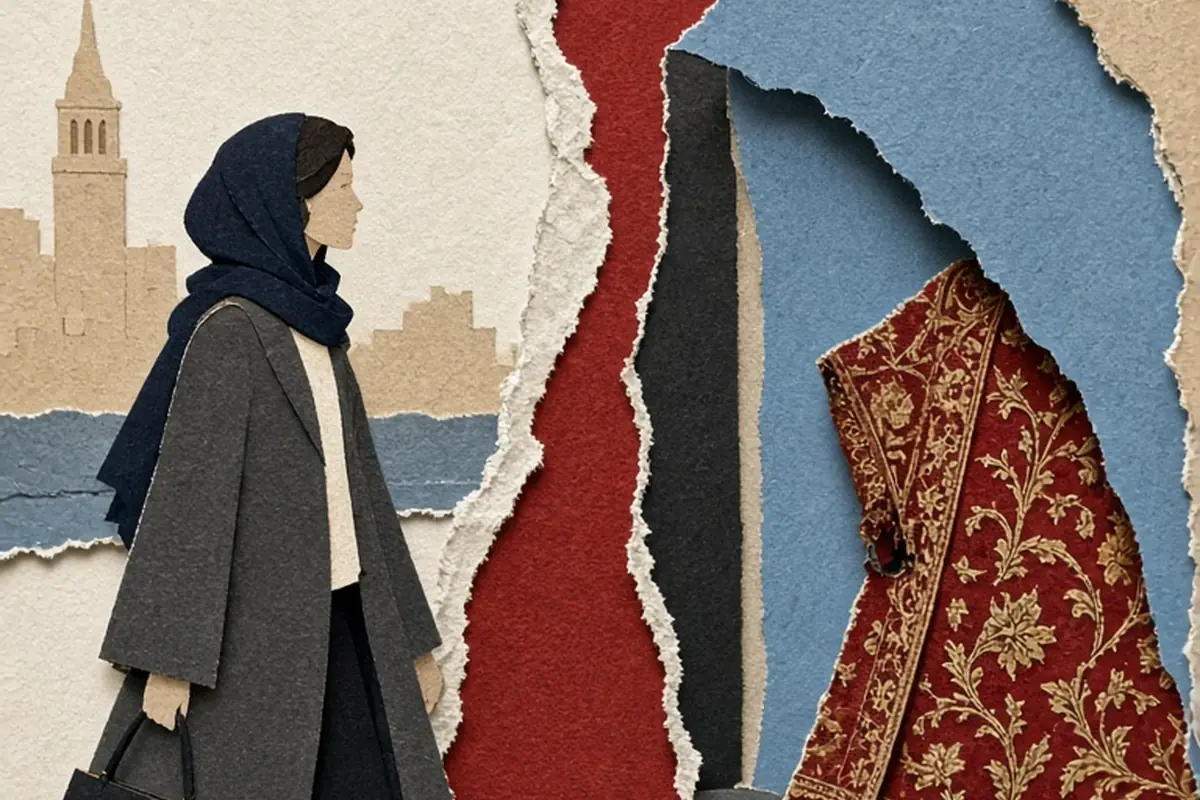
What Persian women wear depends heavily on context, location, and personal preference. In public within Iran, women navigate legal dress codes using stylish outerwear like loose manteaus and headscarves, often pushed back to reveal styled hair. In private gatherings, celebrations, and across the diaspora, Persian women wear contemporary international fashion, elegant evening gowns, and tailored designer clothing, frequently complemented by bold jewelry, polished makeup, and distinctive cultural accents.
Understanding Persian fashion requires looking beyond a single monolithic image. The wardrobe of a Persian woman reflects a dynamic dialogue between ancient textile traditions, contemporary global trends, artistic self-expression, and the distinct boundaries between public spaces and private life.
Everyday Urban Street Style and Modest Layering
In urban centers across Iran, such as Tehran, Isfahan, and Shiraz, daily public fashion is characterized by creative layering and modern aesthetics. Under state regulations, women are required to cover their hair and body contours in public, but urban street style has turned these mandates into a sophisticated art form. Rather than wearing uniform or drab garments, many women select chic, structured outerwear known as manteaus. These coats range from tailored, knee-length linen jackets to oversized bohemian dusters, asymmetrical trench coats, and vibrant cardigans. Beneath these coats, everyday outfits frequently feature high-waisted jeans, tailored trousers, graphic t-shirts, or stylish blouses that match global contemporary fashion trends.
Head coverings are equally versatile and styled with intentional flair. Instead of tightly pinned wraps, many urban women wear lightweight silk, cotton, or chiffon scarves known as roosari or longer shawls draped casually over the back of the crown. This styling allows front bangs, dyed hair, and voluminous blowouts to frame the face. Footwear choices reflect a seamless blend of comfort and cosmopolitan trendiness, spanning crisp designer white sneakers, loafers, leather ankle boots, and high-end platform heels. The result is an intentional, expressive streetwear culture that navigates social boundaries while celebrating personal style and modern design.
Private Gatherings and the Elegance of Mehmooni
To truly understand what Persian women wear, one must look inside the private sphere. Iranian social life centers around lavish home gatherings known as mehmooni, as well as formal dinner parties and family celebrations. The moment a woman steps inside a private home and removes her outerwear, her attire shifts dramatically toward upscale international fashion, vibrant colors, and meticulous tailoring. Persian women take immense pride in hospitality and personal presentation, often selecting outfits that rival high-end cocktail attire or runway-ready partywear.
During these gatherings, it is common to see women wearing contemporary designer dresses, silk jumpsuits, tailored backless tops, pencil skirts, and sophisticated matching sets. Grooming is treated with significant care: manicured nails, professional blowouts, luminous skin, and refined makeup applications emphasizing the eyes are standard elements of evening preparation. For major milestones like weddings, engagements, and Nowruz (Persian New Year) celebrations, evening wear becomes even more opulent, featuring floor-length evening gowns with intricate beadwork, metallic accents, and fine gold or diamond jewelry. This distinct duality between public modesty and private luxury is one of the most defining aspects of Persian fashion culture.
Traditional and Regional Heritage Clothing
Beyond contemporary urban fashion, Iran encompasses a rich tapestry of ethnic groups, each with its own traditional dress developed over centuries. These folkloric garments are rarely worn for daily errands in modern cities, but they remain vibrant symbols of cultural pride during rural life, regional festivals, and ethnic weddings. Traditional Persian clothing is celebrated for its vivid color palettes, hand-loomed textiles, multi-layered silhouettes, and intricate embroidery that reflects regional geography and artisan heritage.
In northern Iran, Gilaki and Mazandarani women wear distinctive pleated skirts with horizontal colorful ribbon bands, paired with embroidered vests and layered head scarves. In the western mountains, Kurdish women are renowned for their majestic silk or velvet gowns worn over billowing trousers, adorned with metallic coin belts and draped chiffon sashes. Bakhtiari, Qashqai, and Lori nomadic traditions feature voluminous, tiered skirts that sway gracefully during movement, paired with velvet waistcoats. In the southeast, Baluchi women wear exquisite tunics characterized by Suzanduzi, a world-famous form of needlework featuring dense geometric patterns. Each regional outfit tells a detailed story of ethnic identity, craft excellence, and connection to the land.
Diaspora Style and Cultural Fusion
In global diaspora communities across cities like Los Angeles (often referred to as Tehrangeles), London, Toronto, and Paris, Persian women express their identity through an effortless blend of Western contemporary fashion and subtle cultural markers. Free from public dress codes, diaspora fashion leans heavily into modern metropolitan tailoring, luxury streetwear, high-fashion silhouettes, and polished casualwear. Persian women in these communities frequently favor sharp blazers, structured monochrome ensembles, statement denim, and curated designer accessories.
Cultural connection is often expressed through meaningful accent pieces rather than full traditional garments. It is common for Persian women to incorporate Iranian calligraphy jewelry, custom gold pendants bearing the Farvahar or Persian poetry, and pieces featuring raw turquoise stone (Firoozeh), which holds deep historical value in Iranian lapidary arts. Modern Persian designers worldwide also create capsule collections that blend Persian motifs, miniature painting prints, and architectural tile patterns with minimalist Western cuts, creating a distinctive fashion vocabulary that honors heritage while living firmly in the present.
Accessories, Jewelry, and Beauty Aesthetics
Accessories and grooming play an indispensable role in complete Persian styling. Historically, gold jewelry has served as both an aesthetic centerpiece and a traditional form of financial security and family gifting. Persian women frequently wear solid yellow or white gold chains, ornate bangles, intricate earrings, and rings featuring precious or semi-precious stones. Turquoise from the historic mines of Neyshabur is especially cherished, set in delicate silver or modern gold settings to contrast against neutral or dark garments.
Handbags, sunglasses, and footwear are carefully curated to elevate even the simplest everyday outfits. Oversized luxury sunglasses, designer leather crossbody bags, and high-quality leather footwear are common staples in both Tehran and diaspora fashion hubs. Fragrance is another essential element of daily presentation, with a strong cultural preference for complex scents that combine rich floral notes like rose and jasmine with deep bases of amber, oud, saffron, and sandalwood. This thorough attention to detail ensures that accessories are not treated as afterthoughts, but as foundational pillars of personal presence.
Practical Guidelines for Visitors and Event Guests
Travelers visiting Iran or guests invited to their first Persian cultural event often wonder what standards of dress are expected. For travelers going to Iran, understanding the baseline public legal requirements helps avoid discomfort. Female visitors are expected to wear loose, long-sleeved outerwear that covers the hips, opaque trousers or long skirts, and a lightweight scarf covering the hair upon arrival. Packing lightweight linen dusters, open-front cardigans, breathable ankle-length pants, and versatile cotton shawls ensures compliance while maintaining comfort in warm weather.
For guests attending a Persian dinner party, wedding, or celebration in a private setting either inside Iran or abroad, the expectations differ completely. Casual dress is rarely appropriate for evening events; instead, err on the side of smart, elegant dressing. Men typically wear well-fitted suits or collared shirts with tailored trousers, while women wear cocktail dresses, elegant jumpsuits, or dressy separates with tasteful jewelry. When entering a Persian home, it is customary to observe whether the host prefers guests to remove their outdoor shoes, often replaced by indoor slippers or stylish indoor heels brought specifically for the occasion.
Illustrative Scenarios
Attending a First Formal Mehmooni
Mark was invited to an evening dinner party hosted by his Iranian-American colleague's family. Unsure of the cultural expectations, he initially considered wearing casual jeans and a simple polo shirt, assuming home gatherings were strictly informal. Concerned about making a poor impression, he checked in with his host beforehand and learned that home hospitality in Persian culture is treated with high social importance. He decided on a crisp navy button-down, tailored trousers, and polished dress shoes. When he arrived, he found the hosts and other guests dressed in evening wear, tailored blazers, and elegant dresses, perfectly matching his refined choice.
Key point: Private Persian social events value presentation and hospitality; choosing polished, smart-casual or formal attire demonstrates respect for the hosts and the occasion.
Packing for Travel in Urban Iran
Elena was preparing for a two-week cultural tour of Iran and felt overwhelmed by how to pack appropriately without sacrificing personal style or comfort. She initially thought she needed to purchase heavy, all-black coverings. After consulting recent travel resources, she instead packed loose-fitting linen trench coats, wide-leg lightweight cotton pants, and colorful silk-blend scarves that could easily drape over her shoulders and head. This practical approach allowed her to respect local dress codes effortlessly while staying cool during midday sightseeing across warm heritage sites.
Key point: Navigating modest dress requirements is easiest with breathable, modern layers and lightweight scarves that blend practical comfort with local norms.
Frequently asked questions
Do all Persian women wear a black chador?
No. While the chador is worn by more conservative or religious women and required in certain religious shrines, the majority of urban Persian women wear modern outerwear such as manteaus, coats, and headscarves in diverse styles and colors.
What is a manteau in Persian fashion?
A manteau is an overcoat or tunic worn by women in Iran to fulfill public modesty guidelines. It comes in countless variations, from tailored business blazers and trench coats to loose, artistic linen dusters.
How do Persian women dress for weddings?
Persian weddings are glamorous, high-fashion occasions. Women typically wear elaborate evening gowns, designer cocktail dresses, fine jewelry, and professional hair and makeup styling, particularly in private banquet halls.
Is traditional ethnic Persian dress worn on normal days?
Traditional ethnic costumes, such as Kurdish, Gilaki, or Qashqai garments, are primarily worn in rural areas, during regional festivals, or at cultural ceremonies rather than for everyday urban errands.
Your next step
When choosing an outfit for a Persian cultural event or trip, focus on neat tailoring, context-appropriate layers, and polished accessories to reflect both personal comfort and mutual respect.