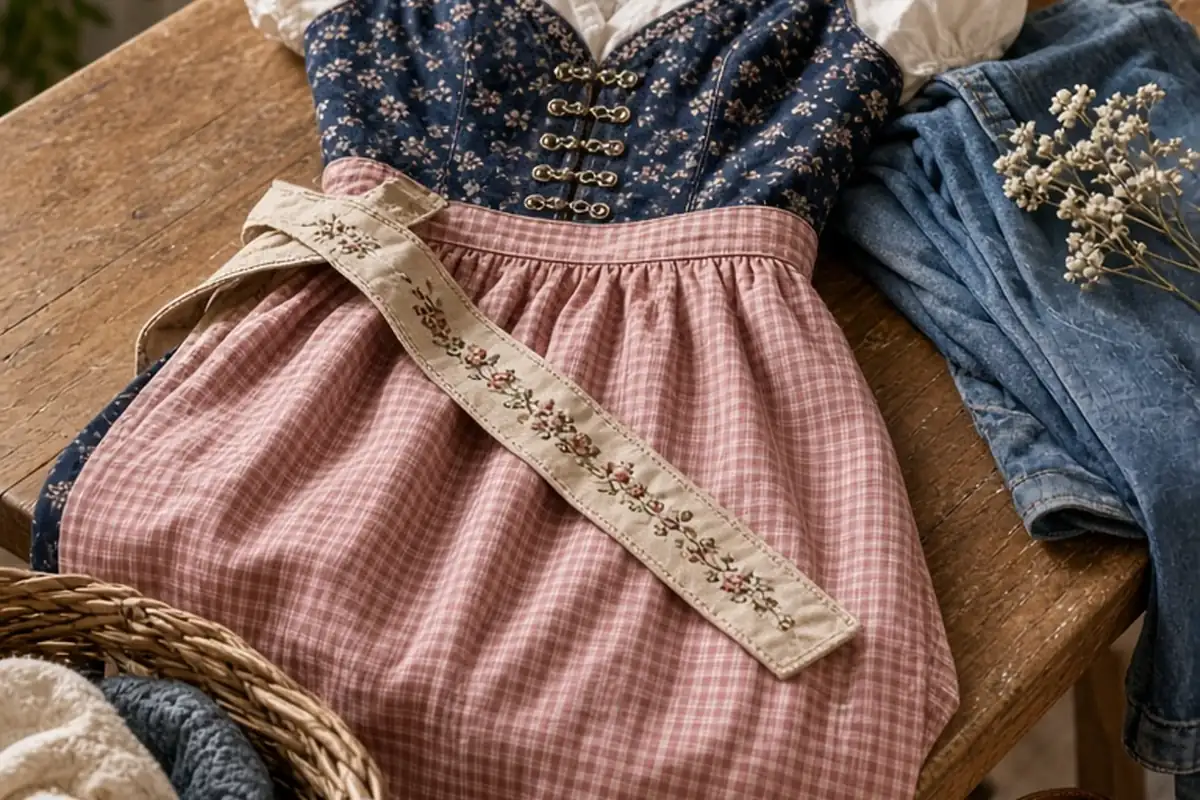
For Oktoberfest, women traditionally wear a Dirndl—a Bavarian folk dress consisting of a tailored bodice, a white or lace blouse underneath, a skirt reaching at least to the knee, and an apron tied at the waist. Modern festivalgoers also wear tailored women's Lederhosen or smart casual outfits with rustic touches, paired with comfortable, closed-toe footwear suitable for long hours of walking and standing.
Attending an Oktoberfest celebration requires balancing Bavarian heritage, personal comfort, and the practical demands of crowded beer halls and outdoor festival grounds.
The Core Components of a Traditional Dirndl
The classic Dirndl remains the most widely worn outfit for women at Oktoberfest celebrations in Munich and around the world. Unlike a standard dress, a Dirndl is a structured ensemble made up of separate pieces that work together to create a distinctive silhouette. The foundation begins with the dress itself, which includes a structured bodice that cinches at the natural waist and a gathered skirt. Beneath the bodice, women wear a cropped Trachten blouse designed specifically to end just below the bust line, preventing extra fabric from bunching under the snug waistline.
Fabric selection and construction quality play a significant role in how comfortable you feel throughout a full day of festivities. Authentic Dirndls are typically crafted from breathable natural fibers such as cotton, linen, wool, or silk blends rather than thin, synthetic party-store materials. The skirt length is a key cultural detail: traditional skirts fall either to the mid-calf (midi length, typically around sixty to seventy centimeters) or to the ankle (maxi length). While mini-length Dirndls exist in modern fashion catalogs, authentic regional style avoids skirts that sit well above the knee, both for aesthetic balance and practical comfort when sitting on wooden beer benches.
Understanding the Dirndl Apron Bow Placement
The apron is an essential part of the Dirndl, tied securely over the skirt at the narrowest part of the waistline. In Bavarian tradition, the placement of the knot or bow (known as the Schleife) conveys personal relationship status, turning the accessory into a subtle social signal within the festive atmosphere of the beer tents. While visitors are not strictly judged by this custom, understanding the code helps you wear the outfit with intentionality and avoid unexpected banter from locals.
Tying the bow on your left side traditionally indicates that you are single, while tying it on your right side signals that you are married, engaged, or in a committed partnership. A bow tied directly in the center front historically denoted virginity or an undisclosed status, though today it often reflects a wearer who prefers to keep their status private. A bow tied squarely in the center back is reserved for widowed women, waitresses working the festival tables, or children. Taking a moment to tie a neat, crisp bow at the proper side ensures your apron stays in place while honoring a long-standing regional tradition.
- Tied on the left side: Single or unattached
- Tied on the right side: In a committed relationship or married
- Tied in the front center: Undisclosed or traditional
- Tied in the back center: Widowed, waitress, or child
Selecting the Right Blouse and Foundation Garments
The blouse worn beneath a Dirndl bodice determines much of the outfit's neckline and overall mood. Traditional styles often feature high-neck lace collars, delicate puffed cap sleeves, or structured sweetheart necklines made from crisp white cotton. Modern designs have embraced sheer lace sleeves, off-the-shoulder cuts, and rich black or cream tones that complement darker bodice fabrics. Because the blouse ends directly beneath the bust, it relies on an elasticized hem to stay smoothly tucked beneath the bodice without shifting as you move.
Choosing supportive foundation garments is equally critical for a secure and comfortable fit. A dedicated Dirndl bra or a sturdy balconette bra works best, as these styles feature wide-set straps and horizontal cups designed to support the bust without peeking out from the neckline of the bodice. Because festival days involve hours of active socializing, singing, and walking, prioritize underwear that provides all-day support without pinching your ribs or digging into your shoulders.
Women's Lederhosen and Modern Trachten Styles
While dresses are the most recognizable garment, Lederhosen tailored specifically for women have become a widely accepted, highly popular choice at modern Oktoberfest events. These leather shorts are cut to flatter feminine proportions, featuring softer suede or calfskin leather, decorative staghorn buttons, and detailed regional embroidery along the bib and thighs. Women's Lederhosen offer exceptional ease of movement, making them an appealing option for anyone who prefers pants over skirts.
Styling female Lederhosen involves pairing the leather shorts with a complementary top. Many women choose a fitted gingham or checkered button-down shirt rolled up at the sleeves, while others opt for an embroidered rustic linen blouse or even an off-the-shoulder Trachten top. The key to pulling off this look is balancing the sturdy, rugged texture of the leather with tailored, feminine accents, such as delicate silver jewelry or a fitted vest, creating a cohesive and festive outfit.
Footwear Strategies for Cobblestones and Beer Tents
Footwear can make or break an Oktoberfest experience, as festival grounds feature uneven cobblestones, crowded walkways, and beer tent floors that can become slick over the course of the day. High stilettos, open-toed sandals, and flimsy flip-flops should be avoided entirely due to safety concerns, spilled liquids, and the sheer amount of standing required. Sturdy, closed-toe shoes with reliable traction are the gold standard for navigating the grounds comfortably.
Traditionalists often pair their outfits with Trachten ankle boots, classic leather lace-ups, or low-heeled alpine shoes accompanied by folded Trachten socks or wool leg warmers. In recent years, clean, minimalist white sneakers or low-profile leather sneakers have become completely acceptable in Munich, especially among younger festivalgoers who prioritize endurance. If you choose new shoes, break them in thoroughly before the event to prevent blisters from cutting your celebration short.
Layering for Unpredictable Autumn Weather
Oktoberfest takes place between late September and early October, a time of year when Bavarian weather can swing rapidly from warm afternoon sunshine to chilly, rainy evenings. While the interior of a packed beer tent can feel quite warm and lively, the walk to and from the venue often exposes you to sharp drops in temperature. Planning practical, stylish outer layers allows you to stay comfortable without concealing your carefully planned outfit.
Traditional outerwear includes cropped boiled-wool jackets known as Jankers, knit Trachten cardigans with horn buttons, and soft wool shawls draped across the shoulders. If you do not own regional outerwear, a tailored denim jacket, a classic trench coat, or a neutral wool cardigan provides effective warmth without clashing with the traditional aesthetic. For colder days, sheer or opaque matte tights worn under your Dirndl skirt offer invisible insulation against damp autumn breezes.
Casual Alternatives and What to Avoid
If you do not plan to invest in traditional Trachten clothing, you can still participate comfortably by assembling a smart, casual outfit that respects the spirit of the event. A simple combination of dark-wash jeans, a fitted plaid or floral blouse, and comfortable leather boots lets you blend into the festive environment naturally. Adding small Bavarian-inspired accessories, such as an edelweiss pendant, a rustic leather crossbody bag, or a felt alpine hat, brings a touch of festivity to an everyday wardrobe.
The main mistake to avoid is wearing cheap, shiny, nylon costume dresses that mimic Bavarian attire in an exaggerated or revealing manner. In Munich and traditional local venues, these synthetic costumes are easily recognized as party novelties and are generally viewed as disrespectful to local heritage. If given the choice between a flimsy Halloween-style costume and a well-fitted pair of jeans with a nice sweater, everyday clothing is always the more stylish and culturally respectful option.
Illustrative Scenarios
First-Time Festival Planning
Rachel was preparing for her first trip to Munich for Oktoberfest with her partner. Overwhelmed by online costume shops, she initially considered buying an inexpensive, shiny polyester dirndl with a very short skirt to save money. However, after researching traditional customs, she worried about feeling self-conscious in the family-friendly daytime tents. She decided to invest in a mid-length cotton dirndl rented from a local Bavarian shop and paired it with supportive white leather sneakers. The breathable fabric kept her cool in the crowded tent, and the classic cut allowed her to feel confident and appropriately dressed in every venue.
Key point: Opting for authentic, modest cuts and breathable fabrics provides both cultural confidence and physical comfort during long event days.
Navigating Style and Practicality
Claire attended an outdoor autumn beer festival with friends who all planned to wear high-heeled boots and decorative sandals with their outfits. Remembering that the event involved walking across gravel paths and standing on rustic wooden benches, Claire chose tailored women's suede lederhosen paired with broken-in ankle boots and a knit cardigan. While her friends struggled with sore feet and cold evening winds, Claire remained comfortable all night, easily moving between outdoor food stands and indoor music halls.
Key point: Prioritizing sturdy footwear and versatile layers prevents physical discomfort from cutting a social celebration short.
Frequently asked questions
Can I wear regular everyday clothes to Oktoberfest?
Yes, everyday casual clothes like dark jeans, a comfortable shirt, and flat shoes are entirely acceptable. Many attendees wear regular clothing rather than traditional Trachten, especially at local community festivals.
What length should a Dirndl skirt be?
A traditional Dirndl skirt should reach at least to the knee, with midi lengths of twenty-four to twenty-eight inches (sixty to seventy centimeters) being the most popular standard. Skirts that sit high above the knee are considered costume wear rather than authentic Bavarian fashion.
Are women allowed to wear Lederhosen?
Yes, tailored women's Lederhosen are widely accepted and increasingly popular at both Munich's Oktoberfest and international events. They provide a practical, stylish alternative to dresses when paired with a rustic blouse or fitted shirt.
What kind of purse should I bring to Oktoberfest?
A small, sturdy crossbody bag that zips securely is the best choice for festival grounds. Large backpacks and oversized totes are frequently restricted or banned by security checkpoints at major beer festivals.
Your next step
Choose an outfit that balances authentic Bavarian styling with durable, broken-in footwear and weather-appropriate layers so you can celebrate comfortably all day long.