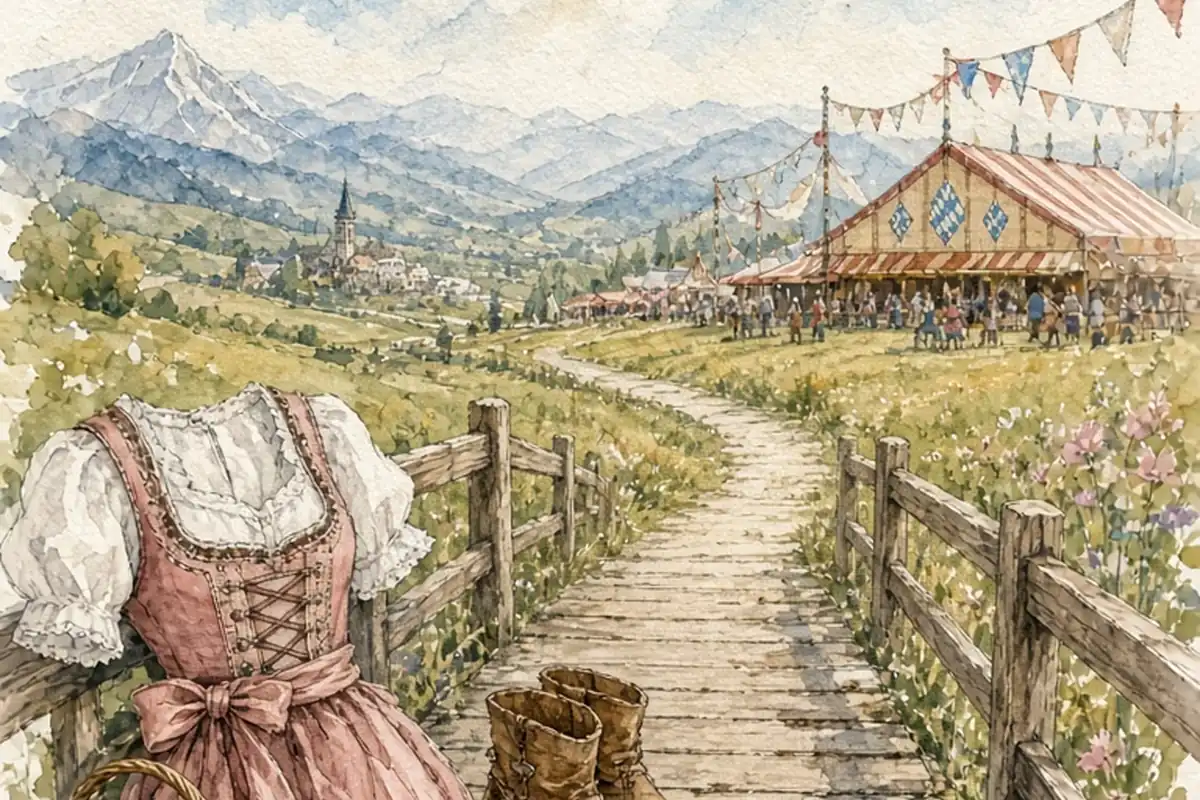
Most women wear a traditional Bavarian dirndl to Oktoberfest, which consists of a fitted bodice, a blouse, a full skirt, and a tied apron. Women also wear tailored female lederhosen or casual alpine-inspired clothing such as dark denim paired with a checkered folk blouse. Footwear prioritizes comfort, featuring supportive low-heeled leather boots, classic Mary Janes, or clean sneakers.
Stepping onto the festival grounds involves a vibrant mix of historic Bavarian heritage, festive beer tents, and long hours of walking, standing on benches, and socializing. Choosing the right outfit balances cultural respect, personal style, and physical comfort so you can fully enjoy the celebration without wardrobe distractions.
The Essential Components of a Traditional Dirndl
The dirndl remains the classic choice for women attending Oktoberfest in Munich as well as regional celebrations worldwide. An authentic dirndl is a coordinated three-piece ensemble composed of a structured bodice attached to a pleated or gathered skirt, a cropped blouse worn underneath, and a contrasting fabric apron tied at the waist. The bodice is tailored to fit snugly against the torso, fastening with front buttons, a zipper, or decorative metal hooks laced with ribbon or silver chains. High-quality dirndls are typically made from durable natural fibers like cotton, linen, silk, or wool blends, which breathe well in warm, crowded tents while holding their crisp tailored shape throughout the day.
Blouses worn beneath the bodice come in various cuts and fabrics, ranging from high-necked lace and delicate sweetheart collars to classic off-the-shoulder or square-neck designs. Modern dirndl skirts generally fall into two traditional lengths: the midi length, which hits just below the knee around twenty-six to twenty-eight inches, and the full maxi length, which extends toward the ankle. Extremely short mini-skirts falling high above the knee are generally viewed as novelty costume wear rather than authentic festival attire. A well-fitted midi skirt provides comfortable mobility for stepping over beer benches while keeping the look timeless and culturally grounded.
Decoding the Dirndl Apron Bow Placement
One of the most famous cultural details of dirndl styling is how the apron ribbon is tied around the waist. Traditionally, the placement of the knot serves as a subtle social signal regarding the wearer's relationship status, making it a frequent topic of conversation among festivalgoers. Tying the bow on the left side traditionally indicates that the wearer is single and unattached. Placing the bow on the right side signals that the wearer is married, engaged, or in a committed relationship.
While these placements are well-known customs, other positions carry specific meanings as well. A bow tied directly in the center front traditionally symbolized virginity or privacy regarding one's personal life, though today it is often chosen simply for balanced aesthetics. A bow tied in the center back is worn by widows, waitresses working the festival tents, or young children. Understanding these traditional distinctions helps you style your apron intentionally, though festival attendees generally view the placement as a lighthearted custom rather than a rigid rule.
Choosing the Right Footwear for Long Days
Footwear can determine whether your festival experience is effortless or painful. Oktoberfest celebrations involve miles of walking across gravel paths, climbing onto wooden benches, and standing for hours on sticky or wet tent floors. Traditional options include low-heeled suede or smooth leather ankle boots, rustic Trachten shoes with side lacing, or classic flat Mary Janes with textured rubber soles. These shoes complement the rustic alpine aesthetic while offering the necessary arch support and traction for crowded environments.
In modern festival culture, wearing clean, minimalist leather sneakers with a dirndl has become widely accepted and popular among locals and visitors alike. If you choose sneakers, stick to neutral white, cream, or earth tones with low profiles so they blend harmoniously with your outfit. Avoid open-toed sandals, delicate high heels, or thin fabric flats. Stiletto heels frequently get stuck in wooden floorboard gaps, while open footwear leaves your feet vulnerable to spilled drinks, broken glass, and accidental steps from nearby dancers.
Female Lederhosen and Modern Alpine Alternatives
While dirndls are the most common feminine attire, female lederhosen have grown into a stylish, popular, and practical alternative. Tailored specifically for women's proportions, these leather shorts or cropped knickers are crafted from soft buckskin, goat suede, or cowhide, often detailed with intricate floral or alpine embroidery around the bib, pockets, and thighs. Female lederhosen offer exceptional freedom of movement, warmth during cooler autumn evenings, and built-in protection against spills, making them an appealing option for active festivalgoers.
Styling female lederhosen is straightforward and versatile. Pair them with a fitted gingham or checkered button-down shirt, a feminine lace blouse, or a structured Trachten vest. If you prefer not to purchase leather wear, you can create a casual alpine look using everyday wardrobe staples. Dark, well-fitted jeans or corduroy trousers paired with a rustic peasant top, an embroidered cardigan, and sturdy leather boots capture the festive spirit without requiring specialized heritage garments.
Weather Layering, Outerwear, and Practical Accessories
Bavarian autumn weather can fluctuate dramatically, shifting from warm afternoon sunshine to chilly, damp evening rain. Because standard dirndls leave the arms and shoulders exposed, bringing functional outerwear is essential. A traditional boiled-wool jacket (Janker), a cropped cable-knit Trachten cardigan, or an alpine wool shawl fits neatly over the bodice without flattening the apron bow or distorting the silhouette. Denim or leather jackets also work well for a contemporary fusion look.
Accessories should balance charm with venue regulations. Munich festival tents enforce strict bag size limits, generally prohibiting backpacks and bags larger than three liters in volume. A small leather crossbody bag or an authentic Trachten purse with an edelweiss emblem is ideal for securing your identification, phone, payment cards, and lip balm. Finish the look with classic Trachten jewelry, such as a velvet choker with an alpine pendant, subtle silver acorn earrings, or braided hair adorned with fresh or fabric flowers.
Undergarments, Sizing, and Pre-Festival Preparation
Achieving a polished dirndl look depends significantly on what you wear beneath the dress. Traditional Bavarian bodices are cut to emphasize the décolletage, making a specialized balcony or push-up dirndl bra a worthwhile investment. These bras feature wide-set straps and half-cups designed to remain hidden beneath low-cut blouses while providing upward lift and structured support. If you choose a high-necked lace blouse, a standard supportive T-shirt bra with smooth seams is sufficient.
When purchasing or renting a dirndl, pay close attention to sizing charts rather than standard street sizes. Traditional bodices are designed to fit very snugly across the ribcage and bust with little to no stretch; you should feel firm support similar to a gentle corset, yet still be able to breathe and sit comfortably. Trying on your entire ensemble—including your bra, blouse, petticoat, socks, and broken-in shoes—several days before the event ensures you can make minor ribbon adjustments or tailor loose seams without rushing.
Illustrative Scenarios
Navigating Dress Codes and Footwear Comfort
Claire was preparing for her first trip to Munich with friends and felt torn between buying high-heeled alpine pumps to match an ornate silk dirndl or wearing casual running shoes. She worried that sneakers would look disrespectful or ruin the festive aesthetic, but she also knew she could not stand for eight hours in heels. Instead of choosing painful heels or overly athletic neon runners, she selected a knee-length cotton dirndl and paired it with supportive, low-profile white leather tennis shoes and low wool socks. She felt confident, styled appropriately, and danced comfortably all evening without foot pain.
Key point: Footwear should balance personal endurance with clean aesthetics; understated, supportive shoes allow you to fully enjoy long festival days without sacrificing your outfit's charm.
Choosing Authentic Fit Over Fast-Fashion Novelty
Jordan needed an outfit for a major regional autumn festival and initially considered an inexpensive, shiny polyester costume dress from an online party retailer. After reading about traditional Bavarian garments, she realized the thin costume material might tear easily and feel uncomfortably hot inside crowded beer tents. Jordan decided to rent a well-constructed cotton-linen midi dirndl with an embroidered blouse from a local heritage outfitter. The breathable fabric kept her cool, the structured bodice fit securely, and she felt naturally aligned with the event's authentic atmosphere.
Key point: Prioritizing breathable natural fabrics and traditional midi lengths over synthetic party costumes ensures comfort, durability, and a genuine cultural connection.
Frequently asked questions
Can I wear regular everyday clothes to Oktoberfest?
Yes, wearing everyday clothing is completely acceptable and common, especially among international tourists. If you opt for regular clothes, choose neat casual pieces such as dark denim, a button-down shirt, a knit sweater, and comfortable closed-toe boots.
How long should an authentic dirndl skirt be?
An authentic dirndl skirt traditionally reaches at least to the knee or mid-calf, measuring roughly twenty-six inches or longer. Skirts that sit high above the knee are generally considered theatrical costume wear rather than authentic Bavarian Trachten.
What kind of purse should I bring into the festival tents?
Bring a small crossbody bag that holds only your absolute essentials, such as your phone, wallet, and hotel key. Major Oktoberfest grounds enforce strict security limits, typically turning away backpacks and any bags exceeding three liters in volume.
Do I need to wear a petticoat under my dirndl?
Petticoats are optional and depend on personal taste. While a light underskirt adds charming volume and keeps the skirt fabric structured, many modern women skip it for a lighter, more streamlined feel in warm tents.
Your next step
Assess your festival itinerary today, select comfortable broken-in footwear, and choose a breathable, well-fitted dirndl or tailored lederhosen that suits your personal style.