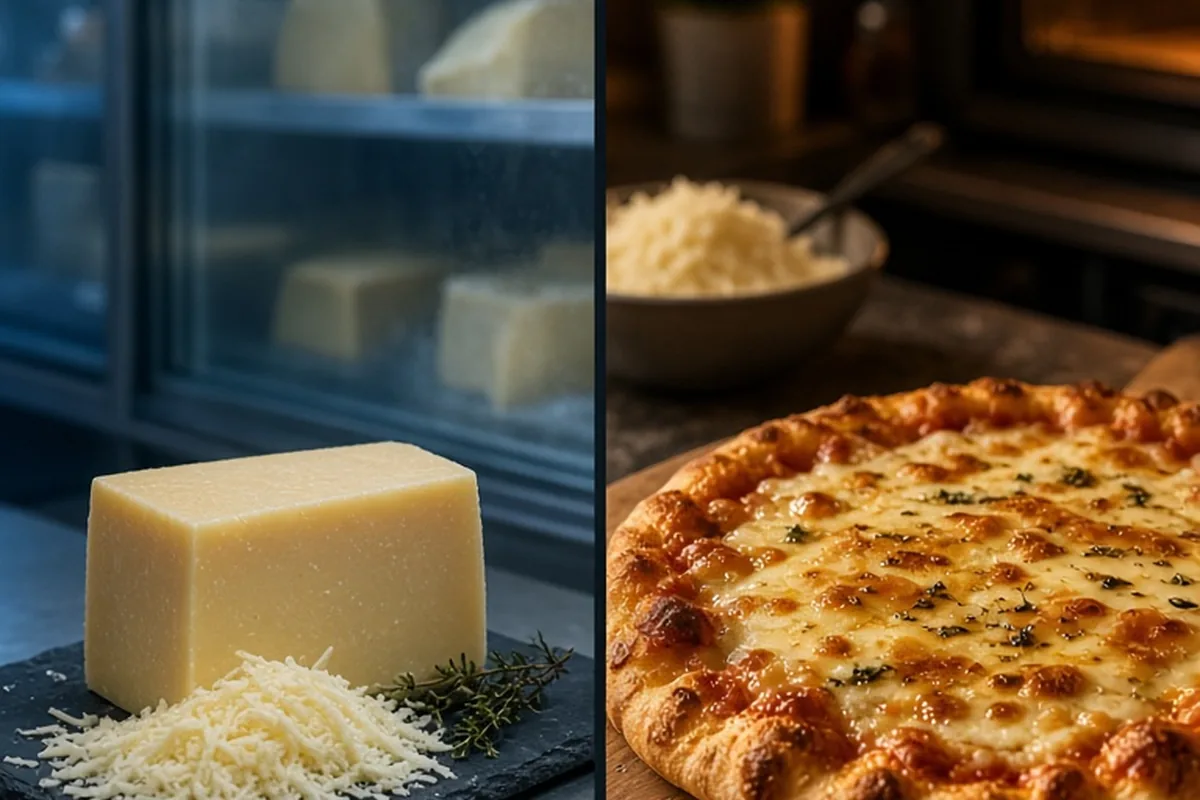
Low moisture cheese refers to cheese that has undergone intentional aging, drying, or pressing to reduce its overall water content, typically dropping the moisture level below fifty percent. This process concentrates fats and proteins, yielding a firmer texture, extended refrigerated shelf life, and superior melting qualities that brown evenly without releasing excess water into baked dishes or pizza crusts.
When navigating the dairy aisle or preparing a recipe, cheese labels often display terms that describe texture, aging, and hydration. Understanding what low moisture cheese means empowers you to select the right product for your culinary goals, ensuring your cooked dishes achieve the exact texture, stretch, and flavor profile you desire.
The Science and Definition of Low Moisture Cheese
In commercial and artisanal cheese production, moisture content serves as a foundational classification metric. Fresh cheeses, such as fresh mozzarella balls packed in water or tubs of ricotta, typically contain between fifty-two and sixty percent water by weight. In contrast, low moisture cheeses have been deliberately formulated or aged to bring their total water content down, usually between forty-five and fifty-two percent for semi-hard styles, and even lower for hard, aged varieties like Parmesan or aged cheddar.
This reduction in water fundamentally alters the structural matrix of the cheese. As liquid whey is removed, the protein network—composed primarily of casein molecules—and milk fats become far denser and more compact. The lower water activity slows down bacterial degradation, which significantly extends the cheese's usable lifespan while altering its physical texture from soft and pillowy to firm, dense, and readily sliceable.
How Cheese Makers Reduce Moisture Content
The journey from liquid milk to a low moisture cheese involves precise adjustments during the curd separation and curing stages. After rennet or starter cultures coagulate the milk into solid curds and liquid whey, cheesemakers cut the curds into smaller pieces. Smaller curd cuts increase the surface area, allowing substantially more liquid whey to expel quickly during the cooking and stirring phases.
Following curd separation, cheesemakers apply mechanical pressing, heating, or extended salting to draw out additional moisture. In the case of low-moisture mozzarella, the curds are heated, stretched, and then dried or cured in cool air rather than being submerged in water baths for packaging. For harder aged cheeses, weeks or months of controlled ambient aging evaporate moisture naturally through the cheese rind, concentrating the solids and intensifying the natural savory notes.
Comparing Low Moisture and High Moisture Cheeses
To appreciate the functional utility of low moisture cheese, it is helpful to contrast it with high-moisture alternatives. High-moisture cheeses, such as fresh buffalo mozzarella, burrata, and fresh goat cheese, are designed for direct consumption with minimal heat. They boast a milky, delicate taste and a tender, yielding mouthfeel, but their abundant water content poses challenges in high-heat cooking environments.
When heated to high temperatures, high-moisture cheeses release their trapped liquid whey onto the cooking surface. On a pizza or inside a calzone, this causes soggy dough, separated fats, and a soupy presentation. Low moisture cheese, by comparison, maintains structural integrity under intense heat, melting smoothly into a unified layer without pooling liquid, making it the preferred choice for commercial pizzerias and home bakers alike.
Melting Behavior, Stretching, and Browning in the Kitchen
The culinary fame of low moisture cheese rests largely on its reliable melting performance. Because the casein protein structure is intact and not diluted by excessive water, the cheese melts uniformly when exposed to heat. The proteins loosen just enough to allow the concentrated milk fats to flow smoothly, producing the signature elastic stretch that home cooks and chefs prize in baked Italian-American dishes.
Furthermore, the reduced water content promotes the Maillard reaction and caramelization along the surface. In a hot oven, surface water does not need to steam away before browning can occur; instead, the concentrated proteins and milk sugars brown readily, creating appealing golden-brown spots and a rich, toasted dairy flavor. This makes low moisture cheese indispensable for dishes requiring a crisp, bubbling gratin or a well-toasted pizza top.
Common Types of Low Moisture Cheese and Everyday Uses
While low-moisture part-skim and whole-milk mozzarella are the most recognizable examples, numerous other cheese varieties fit into low moisture categories. Provolone, Monterey Jack, Gouda, medium and sharp cheddars, and Swiss all fall on the lower end of the moisture spectrum compared to fresh curds. Each brings a specific melting profile and salinity level suited to varied recipes.
Low moisture mozzarella is standard for standard sheet-pan pizzas, baked ziti, lasagna, and stuffed garlic bread. Firmer low moisture cheeses like cheddar, Fontina, or Gruyère excel in grilled cheese sandwiches, macaroni and cheese sauces, and vegetable casseroles, where they provide both body and rich flavor without destabilizing emulsion balances.
- Low-moisture mozzarella: Ideal for high-heat pizza baking, calzones, and layered pasta casseroles.
- Aged cheddar and Colby: Well-suited for burgers, toasted sandwiches, and smooth cheese sauces.
- Provolone and Fontina: Excellent melting cheeses that provide balanced stretch and subtle sharpness in paninis and melts.
- Aged hard cheeses like Parmesan and Pecorino: Used as dry grating cheeses that add concentrated umami without contributing liquid.
Culinary Trade-offs and Limitations to Consider
Despite its versatility, low moisture cheese is not universally suitable for every culinary context. The very qualities that make it ideal for baking—density, salt content, and concentrated fats—can make it taste heavy or overly rubbery when eaten raw and unheated. Serving a cold block of low-moisture part-skim mozzarella in a fresh Caprese salad alongside garden tomatoes and basil, for example, results in a chewy, muted experience compared to the delicate tenderness of fresh mozzarella.
Additionally, pre-shredded packaged low moisture cheeses often contain anti-caking agents such as potato starch, cornstarch, or powdered cellulose. While these additives keep shreds from clumping in the bag, they can inhibit seamless melting and leave a slightly powdery or greasy finish in delicate sauces. Buying blocks and grating them at home avoids these additives, preserving the pure melting performance of the dairy.
Storage Guidelines and Shelf Life Management
A practical benefit of low moisture cheese is its resilience in the home refrigerator. Because low water content limits the rapid growth of spoilage microorganisms, unopened vacuum-sealed blocks can safely remain refrigerated for several months. Once opened, tightly wrapped blocks typically stay fresh for three to four weeks when stored at temperatures below forty degrees Fahrenheit.
To prevent premature mold growth or surface drying, wrap the cheese in parchment or wax paper before placing it inside a loose zip-top plastic bag or storage container. This method allows the cheese to breathe without absorbing unwanted odors or drying into a hard crust. If you grate excess low moisture cheese, it freezes well for up to three months without experiencing the significant textural breakdown common to high-moisture dairy.
Illustrative Scenarios
Pizza Night Cheese Comparison
A home cook tested two pizzas in a 500-degree oven to evaluate cheese performance. The first pizza used fresh mozzarella sliced directly from a water-packed container, while the second used freshly shredded low-moisture whole-milk mozzarella. The first pizza developed a pooled layer of liquid in the center that softened the crust, whereas the second pizza browned evenly with a cohesive, stretchy melt and a crisp base.
Key point: Low moisture cheese provides superior results for high-heat baking because the absence of excess liquid prevents crust sogginess and encourages uniform browning.
Frequently asked questions
Is low moisture mozzarella healthier than regular fresh mozzarella?
Nutritional profiles vary based on milk fat levels, but low moisture cheese is more concentrated overall. It contains higher levels of protein and calcium per ounce, but it also carries slightly more sodium and calories than fresh water-packed mozzarella.
Can you substitute fresh mozzarella for low moisture mozzarella in recipes?
You can substitute them, but adjustments are necessary to manage moisture. If using fresh mozzarella in baked dishes like pizza or lasagna, slice and drain it thoroughly on paper towels beforehand to prevent excess liquid from pooling.
Why does low moisture cheese shred more easily than fresh cheese?
The reduced water content creates a dense, firm protein matrix that holds its shape under pressure. This firmness allows kitchen graters and food processors to cut clean, separate strands without smashing the cheese into a soft paste.
Your next step
Check your recipe requirements before shopping, and choose block low-moisture cheese grated at home whenever your dish demands uniform melting, superior stretch, and crisp browning.