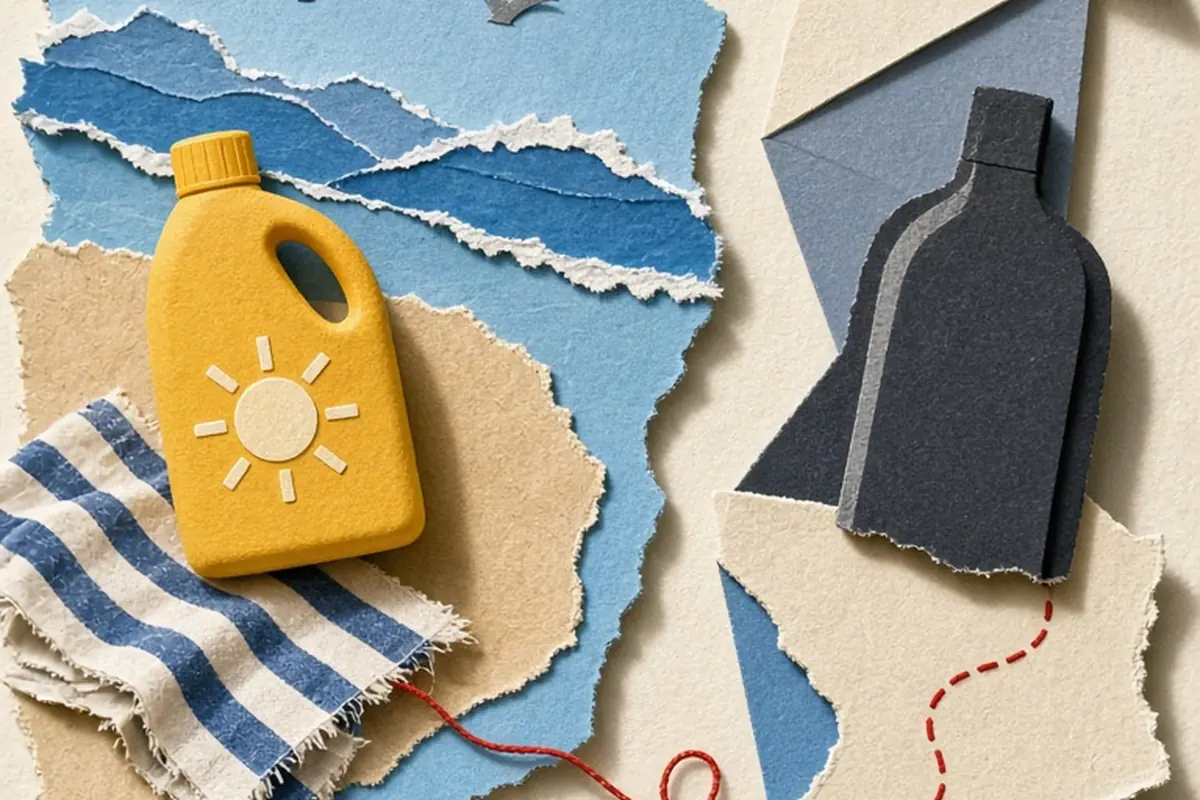
NO-AD sunscreen was discontinued after its parent manufacturing company experienced financial restructuring and shifting retail distribution in the late 2010s. Known for avoiding costly advertising campaigns to keep prices low, the brand quietly vanished from major drugstore and supermarket shelves when production ceased. Today, authentic NO-AD bottles are no longer manufactured, prompting former fans to seek out comparable high-volume, budget-friendly broad-spectrum alternatives.
For decades, the bright yellow, oversized jugs of NO-AD sunscreen were an unmistakable fixture in family beach bags, community pool lockers, and summer camp supply bins. Its sudden absence from store shelves left many longtime users wondering where their go-to budget lotion went and what caused its quiet disappearance.
The Timeline Behind the Disappearance of NO-AD Sunscreen
NO-AD, short for 'Not Advertised,' was founded in the early 1960s with an unconventional and highly effective business strategy. Rather than spending millions of dollars on television commercials, magazine spreads, and celebrity endorsements, the company poured its resources strictly into manufacturing large quantities of dependable sunscreen. By eliminating marketing budgets entirely, NO-AD was able to sell sixteen-ounce and thirty-two-ounce bottles at prices that significantly undercut major competitors. For over fifty years, this minimalist approach secured the brand a dedicated following among budget-conscious families, outdoor workers, and aquatic facilities across North America.
The brand operated for much of its history under Florida-based Prime Enterprises Inc. However, the late 2010s brought mounting operational headwinds. Rising ingredient costs, tightening regulatory expectations for sun-care manufacturing facilities, and intense shelf-space competition from multinational corporate conglomerates placed significant financial strain on the business. By late 2017 and throughout 2018, corporate restructuring and supply chain disruptions led to declining production volumes. Retail partners gradually cleared out existing stock, and when fresh supply failed to materialize, shelf space was reassigned to competing labels.
By 2019, production had effectively ceased, and the trademark assets transitioned through corporate bankruptcy and acquisition proceedings. Because NO-AD had never maintained a traditional advertising apparatus, public relations department, or active consumer-facing marketing team, there was no formal farewell campaign or widespread public announcement. The products simply disappeared from pharmacy and supermarket aisles, leaving consumers puzzled when the familiar yellow bottles were replaced exclusively by smaller, higher-priced alternatives.
Why the Brand Maintained Such a Loyal Following
The devotion NO-AD inspired among consumers was rooted in genuine practical value. Traditional sunscreens are frequently packaged in four-ounce to eight-ounce squeeze bottles designed for individual or short-term use. For large households, summer camp counselors, or outdoor laborers, buying small containers at premium prices created a noticeable financial barrier to adequate daily sun protection. NO-AD eliminated this friction by offering enormous, pump-dispenser bottles that made frequent, generous application financially sustainable all season long.
Importantly, the low price tag did not come at the expense of baseline efficacy. In independent consumer laboratory evaluations and blind safety tests conducted over several decades, NO-AD lotions consistently matched or exceeded their labeled Sun Protection Factor (SPF) ratings. Their water-resistant sport and general-use formulas provided reliable broad-spectrum defense against both ultraviolet A and ultraviolet B rays. The formula was straightforward, devoid of unnecessary luxury fragrances or gimmicky additives, and delivered the exact functional protection consumers needed without extra fluff.
The Dangers of Using Vintage or Hoarded Bottles Today
Following the brand's disappearance, some dedicated fans turned to online auction sites, secondary marketplaces, or their own garage storage bins to track down remaining inventory. While the desire to hold onto a trusted product is understandable, using vintage sunscreen poses serious dermatological risks. Sunscreens are regulated as over-the-counter drugs, and their active protective ingredients have a defined chemical shelf life, generally lasting up to three years from the date of manufacture under optimal room-temperature storage conditions.
Because authentic NO-AD sunscreen has not rolled off production lines in years, any unopened or partially used bottle encountered today is past its expiration threshold. Over time, chemical UV filters like avobenzone, homosalate, and octisalate degrade and lose their capacity to absorb harmful radiation. Furthermore, the emulsion stabilizing the lotion breaks down, causing ingredients to separate into watery layers and gritty residue. Applying expired sunscreen gives a false sense of security while leaving your skin vulnerable to severe sunburns, long-term cellular damage, and contact dermatitis from spoiled stabilizers and degraded preservatives.
Key Qualities to Look for in a Modern Sunscreen Replacement
Replacing a beloved staple requires identifying the specific functional attributes that made NO-AD work so well for your routine. The most critical factor is ensuring broad-spectrum protection, which shields the skin from UVA rays responsible for premature aging and deep cellular damage, as well as UVB rays responsible for surface burns. Dermatologists and skin health organizations consistently advise selecting a broad-spectrum formula with an SPF rating of at least 30 for everyday outdoor exposure.
Beyond UV protection ratings, evaluate the physical format and durability of the lotion. If your household engages in water sports, swimming, or outdoor exercise, verify that the replacement product is rated for up to eighty minutes of water and sweat resistance. To replicate the convenience of NO-AD, prioritize products sold in large pump bottles that facilitate quick, mess-free dispensing before outdoor activities, and check that the formula absorbs smoothly without leaving a heavy, greasy film or a chalky white cast on the skin.
When comparing alternatives, keep these practical specifications in mind:
- Broad-spectrum coverage with an SPF rating of 30 to 50
- Water resistance certification for up to 80 minutes of swimming or sweating
- Cost-effective bulk sizing of 16 ounces to 32 ounces with a pump dispenser
- A lightweight lotion base that rubs in easily without strong synthetic perfumes
- Clear expiration dates stamped visibly on the bottom or crimp of the bottle
The Best Budget-Friendly Bulk Sunscreen Alternatives
While NO-AD itself is no longer available, several manufacturers produce high-volume, economical sunscreens that serve as direct functional replacements. The closest modern equivalents are major private-label store brands, such as Walmart's Equate Sport Lotion, Target's Up & Up Sport Sunscreen, and Kirkland Signature Sunscreen. These store brands follow the same core philosophy as NO-AD: they leverage existing retail supply chains and minimal promotional spending to deliver broad-spectrum, water-resistant formulas in economical sixteen-ounce or thirty-two-ounce pump jugs at a very low cost per ounce.
If you prefer national brand-name options, brands like Banana Boat Sport Ultra and Coppertone Sport regularly offer bulk multi-packs and oversized family pump sizes through wholesale clubs and big-box retailers during peak spring and summer seasons. For households with sensitive skin or those who prefer mineral-based barriers, bulk offerings from brands like Blue Lizard Australian Sunscreen or Alba Botanica Hawaiian Sunscreen provide gentle, fragrance-free protection in larger sizes, though generally at a slightly higher cost per ounce than conventional store brands.
How Sunscreen Formulations Have Shifted in Recent Years
The sun-care landscape has transformed considerably since NO-AD left retail shelves, driven by newer environmental regulations and refined consumer preferences. A major development is the widespread elimination of certain chemical UV filters—specifically oxybenzone and octinoxate—from mainstream body lotions. Various coastal jurisdictions and marine preserves have restricted these specific filters due to research surrounding potential impacts on coral reefs and aquatic wildlife. Consequently, the vast majority of modern bulk sunscreens use alternative active filters like avobenzone, octisalate, and octocrylene to maintain broad-spectrum defense.
Formulation technology has also advanced to provide significantly better cosmetic elegance. Older budget sunscreens were frequently associated with a thick, sticky after-feel and a distinct chemical scent that lingered on skin and clothing. Modern budget lotions incorporate dry-touch polymers and skin-conditioning agents such as glycerin and vitamin E, allowing them to absorb more rapidly and feel lighter during active wear. While letting go of a nostalgic brand can be frustrating, today's affordable body sunscreens often deliver superior comfort and cleaner ingredient profiles.
Frequently asked questions
Why was NO-AD sunscreen called NO-AD?
The brand name stood for 'Not Advertised.' The company saved money by skipping television commercials, print ads, and celebrity endorsements, passing those savings directly to shoppers through large, low-cost bottles.
Can I still buy real NO-AD sunscreen anywhere online?
No, authentic NO-AD sunscreen is no longer manufactured or distributed by authorized retailers. Any bottles found on secondary auction sites are expired legacy stock that is no longer safe or effective to use.
What is the closest current alternative to NO-AD SPF 45 lotion?
Store-brand broad-spectrum sport lotions, such as Equate Sport SPF 50 or Target Up & Up Sport SPF 50 in sixteen-ounce or thirty-two-ounce pump jugs, offer the closest match in terms of volume, water resistance, and price per ounce.
Your next step
Inspect your current sun-care stock, throw away any expired bottles remaining from previous seasons, and choose a fresh sixteen-ounce or thirty-two-ounce broad-spectrum SPF 30 or 50 store-brand lotion to ensure safe, economical sun protection for your household.