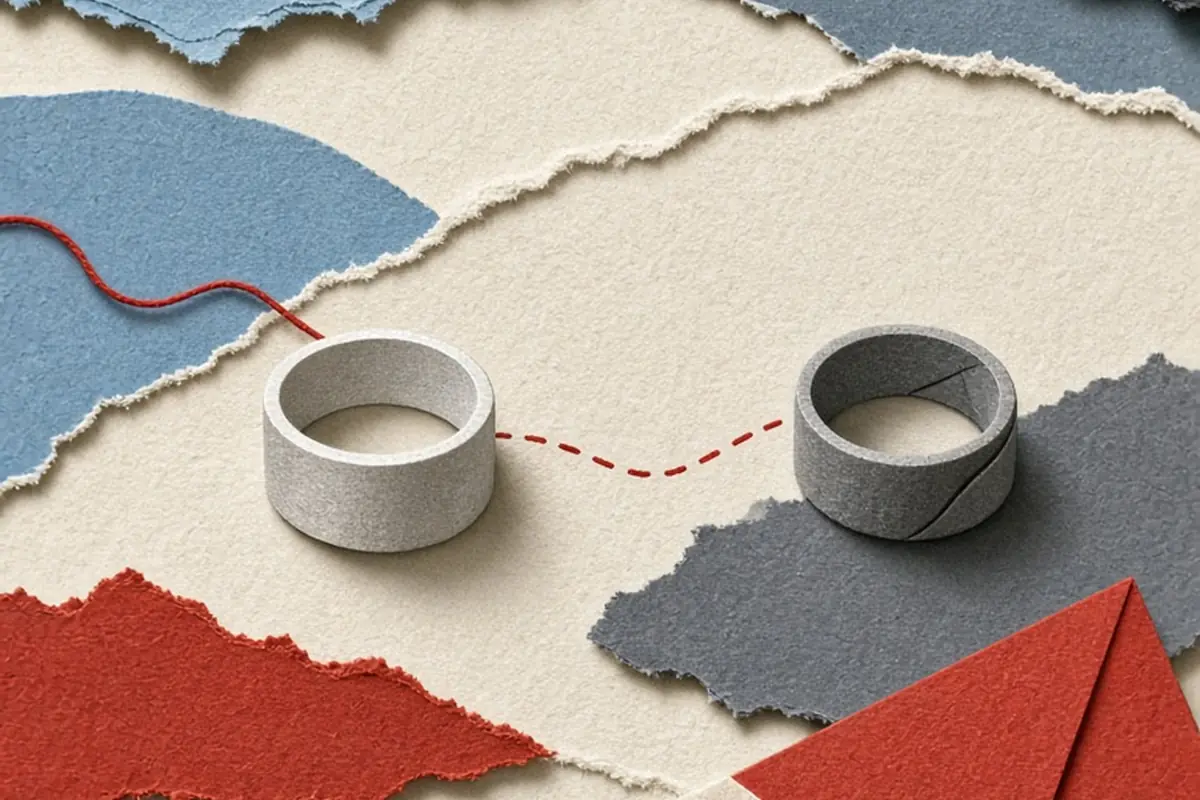
A women's size 8 ring is identical in measurement to a men's size 8 ring. The standard US ring sizing system is completely unisex. A size 8 measures approximately 18.1 millimeters in inside diameter and 57.2 millimeters in inside circumference regardless of whether it is marketed toward women or men. However, differences in band width and interior curvature can alter how the ring actually feels on your finger.
Shopping for jewelry across traditional gender divisions can cause unnecessary confusion, especially when navigating retail displays and online charts that categorize rings by gender.
Understanding the Standard Unisex Sizing System
In the United States and Canada, jewelry sizing follows a standardized numeric scale based on strict millimeter measurements. A size 8 ring corresponds to an inside diameter of 18.1 millimeters (0.714 inches) and an inside circumference of approximately 57.2 millimeters (2.25 inches). Because these numbers correspond directly to physical geometry, there is no separate mathematical formula for women's sizing versus men's sizing. A size 8 wedding band crafted for a man has the exact same inner hole diameter as a size 8 fashion ring crafted for a woman.
The distinction between men's and women's rings in stores exists purely because of retail merchandising, traditional design aesthetics, and average population hand sizes. The average women's ring finger falls between sizes 6 and 7, while the average men's ring finger typically ranges from size 9 to 10. Consequently, a size 8 sits on the larger side of traditional women's display cases and on the smaller side of men's display cases, leading many buyers to mistakenly assume that two different scales are in use.
When purchasing any ring, focusing on the actual millimeter dimensions rather than gender marketing ensures you get an accurate fit. Whether you are buying a delicate solitaire or a rugged signet ring, the foundational circumference remains unchanged across all collections using the standard North American scale.
How Band Width Changes the Physical Fit
While the internal measurement of a size 8 remains constant, the width of the ring band drastically alters how it feels on your hand. Women's rings traditionally feature narrower bands, often measuring between 1.5 millimeters and 3 millimeters in width. In contrast, men's rings commonly range from 6 millimeters to 8 millimeters or wider. A wider band covers a greater surface area of skin, creating more friction and resistance when moving over your knuckle and sitting against your finger.
Because wide bands displace more tissue, a wide-band ring in your standard size will often feel uncomfortably tight. If you normally wear a slim 2-millimeter size 8 band, an 8-millimeter wide size 8 band will likely feel a half-size too small. To compensate for this mechanical difference, jewelers generally recommend ordering a half size larger (size 8.5) or even a full size larger for bands that exceed 8 millimeters in width.
Before finalizing a purchase, always evaluate the width of the ring you plan to buy. Testing a wide sizer ring at a local jewelry counter provides immediate clarity on whether you need to size up from your baseline measurement.
Standard Fit Versus Comfort Fit Profiles
Another crucial factor in how a size 8 ring fits is the profile of the ring's interior surface. Rings are primarily manufactured with either a standard fit or a comfort fit inner wall. A standard fit ring features a completely flat interior surface that rests flush against the skin from edge to edge. This design is common in traditional women's jewelry and lightweight bands, providing a precise, snug fit across the entire contact surface.
Comfort fit rings, which represent the majority of modern men's bands, have a slightly domed, convex interior surface. This curvature means the center of the ring's interior makes firm contact with the finger while the outer edges taper slightly away from the skin. The rounded design reduces friction against the knuckle, allowing the band to glide on and off with significantly less resistance.
Because comfort fit bands slide easily over the knuckle, they can sometimes feel slightly looser than a standard fit ring of the exact same size. If you are selecting a narrow comfort fit ring, you might consider going down a quarter size, whereas with a wide comfort fit band, the domed interior often balances out the natural tightness of the wider profile.
Navigating Retail Displays and Stock Availability
Although the measurements are identical, shopping for a size 8 ring in physical stores can present practical inventory hurdles depending on which section of the store you browse. Brick-and-mortar jewelers generally stock showcase sample rings in middle-of-the-bell-curve sizes. Women's showcases typically hold stock samples in size 6 or 7, while men's cases are commonly stocked in size 10.
If a person with size 8 fingers browses the men's collection, the in-store sample will likely slip off or feel excessively loose. Conversely, browsing the women's showcase may mean trying on samples that are too small to fit past the first knuckle. This dynamic frequently leads shoppers to think their size does not exist in their preferred design, when in reality it simply needs to be ordered from the manufacturer or resized by an in-house jeweler.
When shopping in person, ask the associate to bring out professional sizing gauges rather than relying on how stock showcase pieces feel. Any standard design can usually be ordered in a size 8 without custom engineering fees, provided the metal allows for routine fabrication.
International Size Conversions for a Size 8
If you are ordering a ring from an international jeweler or an artisan overseas, you will need to translate the US size 8 into alternative global sizing conventions. Different regions utilize letter-based scales or direct millimeter circumference standards rather than arbitrary numeric scales.
Understanding these conversions prevents costly return shipping and international exchange delays when purchasing unique or bespoke rings online.
The primary global equivalents for a US size 8 include the following standards:
- United Kingdom, Australia, and South Africa: Size P 1/2 to Size Q (letter-based system)
- European Union and ISO Standard: Size 57 or 58 (direct inner circumference in millimeters)
- Japan, China, and Southeast Asia: Size 16 (Asian numeric scale)
- Inside Diameter: Exactly 18.1 millimeters (0.714 inches)
- Inside Circumference: Exactly 57.2 millimeters (2.25 inches)
Step-by-Step Guide to Accurate Finger Measurement
Fingers fluctuate in size throughout the day due to temperature, hydration, physical activity, and ambient humidity. Measuring your finger accurately requires taking readings under stable, room-temperature conditions, ideally toward the end of the day when your hands have reached their natural baseline size. Cold temperatures cause blood vessels to constrict, resulting in an artificially small measurement, while heat and intense exercise cause fingers to swell temporarily.
To achieve a reliable measurement at home, avoid using flimsy string or paper strips, as these materials stretch and bend, routinely leading to inaccurate estimates that are one or two sizes too large. Instead, purchase an inexpensive plastic ring sizer belt or a set of metal sizing rings online. These tools replicate the rigid structure of an actual band and give you a realistic preview of how a ring will slide over your knuckle.
Pay careful attention to the relationship between your knuckle and the base of your finger. If your knuckle is significantly larger than the base, you must choose a size that slides firmly over the joint without painful forcing, even if it feels slightly loose once settled at the base. Adding small silicone sizing adjusters or internal sizing beads can stabilize a ring that fits over a large knuckle.
Resizing Limitations Across Common Jewelry Metals
Knowing your precise size before buying is especially critical when selecting rings made from modern contemporary metals. Traditional precious metals like gold, platinum, and sterling silver can easily be resized by a bench jeweler. A jeweler can cut the band, add or remove metal, and solder the seam seamlessly, allowing a size 8 to be adjusted up or down should your finger change over time.
In contrast, alternative metals frequently used in men's and modern unisex rings cannot be resized using traditional bench techniques. Metals such as tungsten carbide, titanium, cobalt chrome, stainless steel, and ceramic are exceptionally hard or brittle. Jewelers cannot solder or stretch these materials without causing them to crack or shatter. If you buy a size 8 tungsten band that turns out to be too tight due to its width, you will have to exchange the entire ring rather than resizing it.
Always confirm the exchange policy and warranty terms when buying rings made from alternative metals. Reputable jewelers often provide lifetime size-replacement programs specifically to accommodate the unalterable nature of these modern materials.
Frequently asked questions
Is a women's size 8 ring the same diameter as a men's size 8 ring?
Yes, both have an internal diameter of approximately 18.1 millimeters and an inside circumference of 57.2 millimeters. The US ring sizing standard is identical for all genders.
Why does an 8mm wide men's band feel tighter than a thin women's band in the same size?
Wide bands cover more skin surface area, which creates greater friction and displaces more tissue. Because of this added resistance, jewelers typically recommend sizing up a half size for bands wider than 6 millimeters.
Can a woman wear a ring from the men's department?
A woman can comfortably wear any ring from the men's department as long as the size matches her finger. Comfort fit styling and band width are the main factors to keep in mind when choosing a specific design.
What is a US size 8 ring in UK sizing?
A US size 8 translates roughly to a size P 1/2 or Q in the United Kingdom and Australian letter-based sizing system. Both correspond to an inner circumference of around 57.2 millimeters.
Your next step
Determine the exact band width and interior profile you want, then use a rigid sizing gauge to verify your fit before choosing between precious and non-resizable metals.