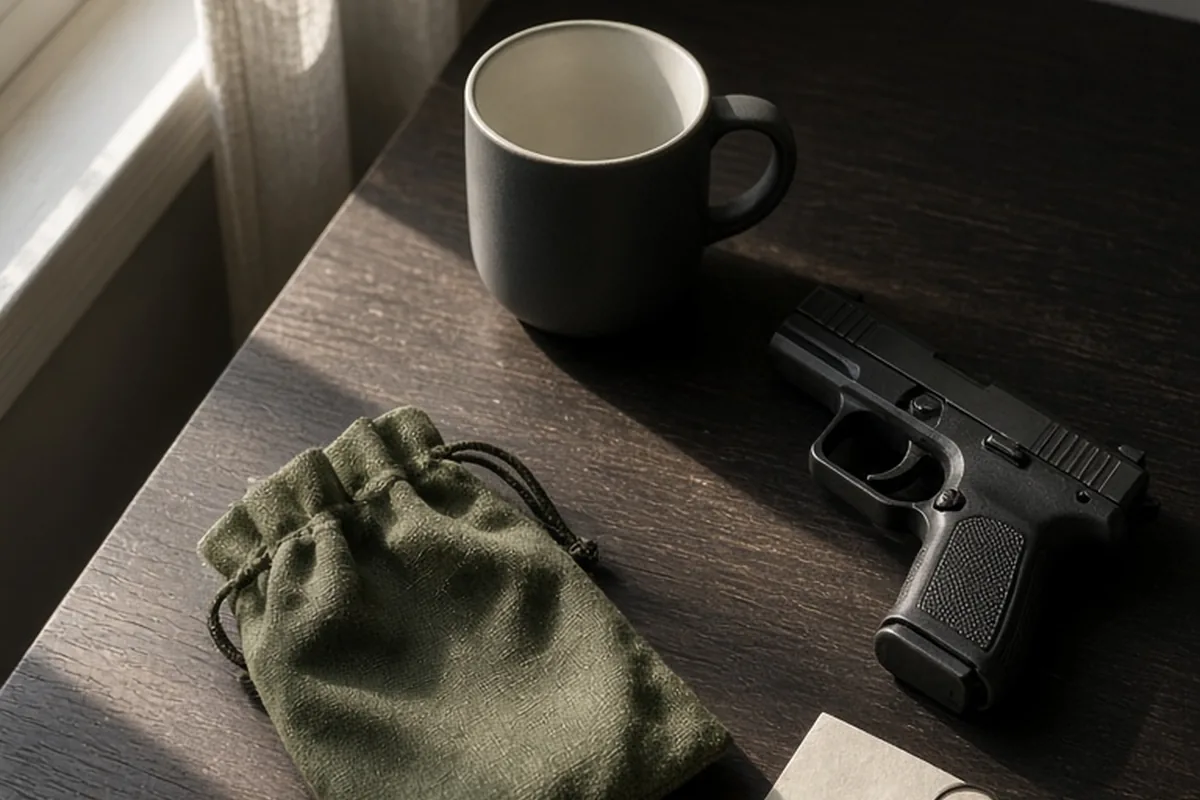
There is no single best handgun for women because ergonomic fit depends on hand size, finger reach, grip strength, and intended use. The best option is a reliable 9mm or .380 ACP semi-automatic or revolver that allows a firm two-handed grip, easy slide manipulation, comfortable trigger reach, and manageable recoil during live fire. Hands-on testing at a rental range remains the most reliable selection method.
Selecting a handgun often comes with misguided assumptions, such as steering female shooters toward ultra-small snub-nosed revolvers or novelty-colored frames. In reality, firearm selection is entirely mechanical and anatomical. Finding a platform that offers manageable recoil, intuitive controls, and a secure grip requires evaluating individual hand geometry, physical strength, and practical context rather than marketing labels.
Ergonomics and Hand Geometry Over Marketing Labels
Handgun fit is fundamentally about how a specific frame interfaces with the anatomy of the shooter. The distance from the web of the hand between the thumb and index finger to the center of the trigger pad is critical. If a grip is too wide or deep, the shooter must rotate their wrist inward to reach the trigger, compromising their ability to absorb recoil straight back through the forearm. Conversely, a grip that is excessively narrow can shift during rapid fire, making consistent control difficult.
Many buyers encounter sales advice recommending ultra-compact, ultra-lightweight designs based solely on physical stature. While small firearms are easier to conceal in varied wardrobes, lighter frames deliver significantly more felt recoil to the shooter's hands and wrists. Evaluating a firearm begins with a natural two-handed master grip where the firearm aligns naturally with the radius bone of the dominant arm, rather than choosing an item based on compact dimensions alone.
Caliber Selection and Recoil Characteristics
The choice of caliber dictates both defensive effectiveness and the physical experience of shooting. For modern defensive handguns, 9mm Luger is the industry standard because modern hollow-point ammunition provides reliable expansion and penetration while maintaining a high round capacity. However, 9mm can produce a sharp, brisk recoil in subcompact platforms that some shooters find uncomfortable during extended training sessions.
For individuals seeking reduced recoil without sacrificing shootability, .380 ACP serves as a capable alternative, especially in modern locked-breech semi-automatics that absorb energy smoothly. Ultra-light calibers like .22 LR offer negligible recoil and are outstanding for building marksmanship fundamentals, but rimfire ammunition exhibits higher failure rates than centerfire cartridges, making it a compromise for dedicated defensive use. The ideal balance is the most potent caliber the user can shoot accurately, rapidly, and comfortably across a full training session.
Frame Size and the Concealment Trade-Off
Firearms generally fall into full-size, compact, subcompact, and micro-compact categories. Full-size and compact models, such as standard service pistols, offer longer sight radiuses, larger gripping surfaces, and heavier slide assemblies. The added weight works directly against the explosive force of the cartridge, resulting in softer recoil and faster sight realignment. For home defense or dedicated range use, larger frames almost universally provide a better learning curve.
Micro-compact and subcompact handguns solve the physical challenge of on-body concealment beneath diverse clothing styles, including tailored or lightweight fabrics. The trade-off is reduced grip real estate, where the pinky finger may hang off the base of the magazine, and a snappier recoil impulse. Shooters considering concealed carry must weigh whether the ease of carrying a tiny frame outweighs the increased training required to control it reliably.
Slide Manipulation and Racking Mechanics
One of the most frequent friction points for newer shooters, regardless of gender, is cycling the slide of a semi-automatic handgun. Traditional recoil springs must be stiff enough to handle standard defensive pressures, requiring significant grip and arm strength. When an individual struggles to rack the slide using the pinch-and-pull method with their fingers, they may falsely conclude that semi-automatics are impractical for them.
Technique often resolves this challenge: using an overhand grasp across the top of the slide while pushing forward with the dominant hand recruits chest and shoulder muscles rather than relying solely on hand strength. Additionally, manufacturers now produce models featuring assisted cocking mechanisms, reduced-effort recoil springs, and prominent slide serrations or cocking wings designed specifically to reduce the physical effort needed to chamber a round or clear a malfunction.
Trigger Actions, Safety Systems, and Sight Systems
A handgun's trigger mechanism influences both safety and practical accuracy. Striker-fired designs provide a consistent, moderate trigger pull weight for every shot, which helps establish predictable trigger control. Double-action revolvers or traditional double-action/single-action hammer-fired pistols offer a longer, heavier first pull that acts as a deliberate mechanical barrier to firing, followed by lighter subsequent pulls, but mastering two distinct pull weights demands dedicated practice.
Manual external safeties are a common point of discussion. While a manual safety provides peace of mind for some users during administrative handling or off-body storage, it introduces an extra physical step under stress that must be disengaged via ingrained muscle memory. Passive internal safeties—such as trigger blades, firing pin blocks, and grip safeties—prevent the gun from discharging unless the trigger is deliberately pressed to the rear. Users must decide whether an active manual switch supports or complicates their operational habits.
Exploring Modern Platform Adaptations
Recent design innovations have focused heavily on modularity and accessible ergonomics. Several modern pistols incorporate interchangeable backstraps and grip panels that allow users to customize the circumference and angle of the handle to match their hand size. Some purpose-built platforms also reduce the distance from the backstrap to the trigger specifically for individuals with shorter fingers, ensuring clean, straight-back trigger presses.
Optic-ready slide cuts are another major advancement. Mounting an electronic red dot optic eliminates the need to align traditional front and rear iron sights in three focal planes simultaneously. The shooter simply looks at the target with both eyes open and superimposes the illuminated dot, which dramatically simplifies target acquisition, especially for shooters managing eye fatigue or differing visual acuities.
Illustrative Scenarios
Moving Beyond Well-Intended Recommendations
Elena decided to purchase a handgun for personal protection after moving into an apartment on her own. A family member recommended a lightweight .38 Special snub-nosed revolver, assuming its simplicity would make it ideal. At the firing range, Elena found the long, heavy trigger pull strained her finger, and the violent snap of the lightweight frame caused her to anticipate recoil, pulling shots off target. Frustrated, she consulted an instructor who had her test a compact 9mm semi-automatic with an adjustable grip. The modern pistol provided a full three-finger purchase, a clean trigger break, and softer recoil, immediately improving her confidence and accuracy.
Key point: Personal comfort and mechanical ergonomics matter more than simplified recommendations that overlook recoil control.
Aligning Carry Methods with Daily Realities
Tanya wanted a firearm for daily concealed carry but struggled with the bulk of a standard compact pistol while wearing business casual attire. Her first inclination was to carry the pistol inside a dedicated compartment in her purse, but she felt uncomfortable with the lack of immediate physical retention in public spaces. Instead of abandoning on-body carry, she visited a specialized retailer to try a slim micro-compact 9mm paired with a modular kydex holster system designed for high-waisted garments. The tailored setup allowed secure, discreet concealment without requiring a shift to off-body storage.
Key point: Selecting the right platform requires evaluating how the firearm will actually be worn and managed in regular daily routines.
Frequently asked questions
Is a small revolver better for a beginner than a semi-automatic pistol?
Not necessarily. While revolvers are mechanically straightforward with no slide to manipulate, small lightweight revolvers have heavy double-action triggers and produce sharp recoil. Many beginners find a compact semi-automatic easier to shoot accurately and comfortably.
What is the best caliber for someone with lower hand strength?
A modern locked-breech .380 ACP semi-automatic often provides an excellent balance of manageable recoil and easy slide manipulation. If 9mm feels too snappy in a compact frame, .380 ACP offers softer operation while maintaining adequate defensive capability.
How can I tell if a handgun grip is the right size for my hands?
When holding the firearm in a firing grip, the barrel should line up naturally with your forearm, your trigger finger should easily reach the center of the trigger shoe without shifting your grip, and your non-dominant hand should have ample room to contact the bare grip surface.
Should I choose a handgun with a manual safety switch?
This depends on personal preference and training habits. A manual safety adds a mechanical barrier against accidental discharge, but it requires regular practice to disengage instinctively under stress. Modern striker-fired pistols rely on internal drop safeties that function reliably without manual switches.
Your next step
Visit a local commercial shooting range that offers firearms rentals to test three distinct platform sizes—a compact 9mm, a micro-compact 9mm, and an easy-to-rack .380 ACP—under the guidance of a certified instructor before making a purchase.