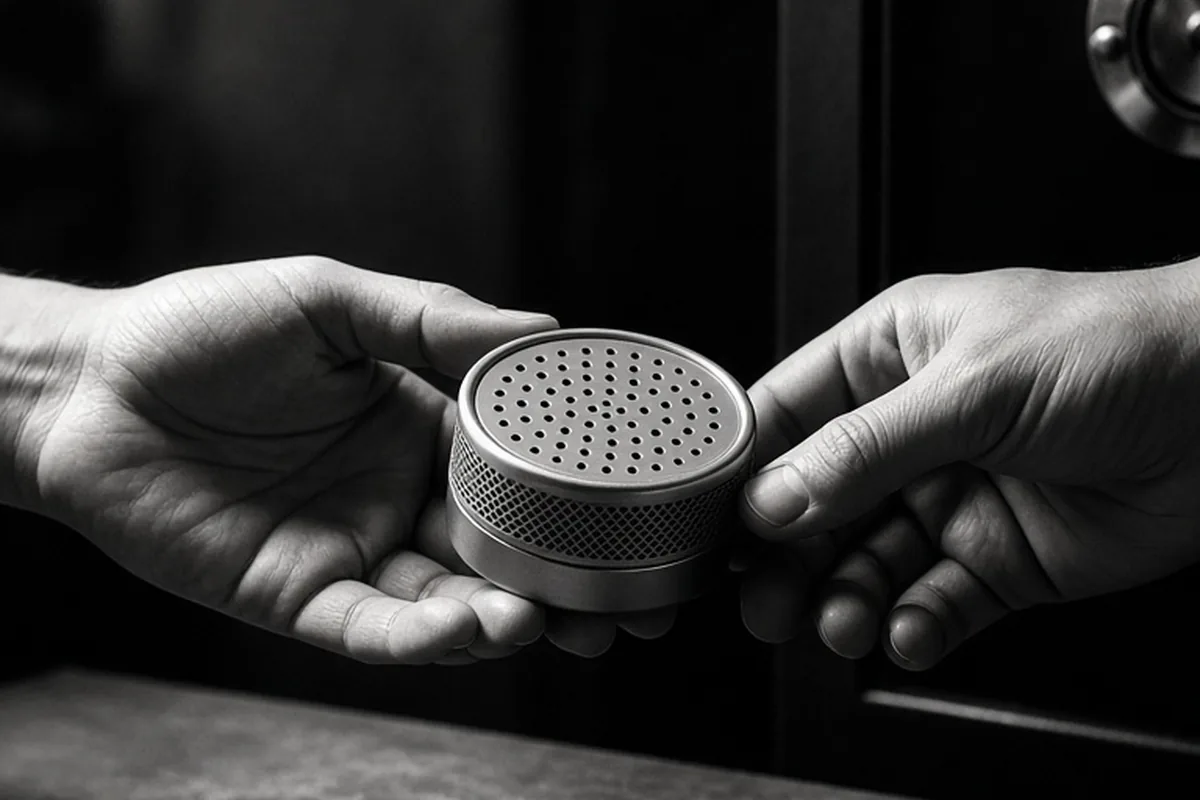
Rechargeable silica gel canisters and electric heating dehumidifier rods are the most effective moisture absorbers for safes. Silica gel packs excel in non-powered, airtight gun or document safes by quietly adsorbing ambient humidity. For larger safes with electrical access, continuous heating rods prevent condensation by slightly raising internal air temperatures. Selecting the right option depends on safe capacity, access to power outlets, and maintenance routines.
Storing valuable documents, heirloom jewelry, or firearms inside a heavy locking safe provides vital physical security against theft and external disasters. However, an unmanaged enclosed microclimate creates a hidden risk of trapped humidity that causes metal corrosion, mildew on important papers, and degradation of organic materials. Choosing an appropriate dehumidifying method stabilizes interior relative humidity within the ideal 35 to 50 percent range to preserve stored valuables indefinitely.
Comparing Silica Gel Desiccants and Electric Heating Rods
Moisture control inside a safe generally relies on one of two distinct mechanisms: adsorption using chemical desiccants or temperature elevation using low-wattage heating rods. Silica gel canisters contain porous silicon dioxide beads that pull water vapor directly out of the trapped air, holding moisture within microscopic pores without changing physical state. These units operate entirely without wires, making them suitable for standalone cabinets, small document boxes, and locations without nearby electrical outlets. Because silica gel acts as a physical sponge, it eventually reaches maximum saturation and requires routine thermal reactivation in a standard kitchen oven or via an integrated electrical heating element.
Electric heating rods, frequently called dehumidifier bars, take a preventative approach by continuously radiating a mild warmth throughout the safe cabinet. By keeping the internal air temperature slightly higher than the external room temperature, these rods eliminate condensation points and lower the relative humidity naturally through continuous air convection. While heating rods require an internal power outlet or a drilled cord port through the safe wall, they offer completely maintenance-free operation for years once installed. The main limitation is that heating rods do not physically pull water molecules from the enclosure; rather, they alter thermal dynamics to prevent vapor from condensing onto cool metal surfaces. If a safe is completely airtight, excessive heat without ventilation can occasionally create hot spots, making desiccant packs a more versatile alternative for compact fire safes.
Determining Safe Volume and Desiccant Capacity Requirements
Choosing an undersized desiccant unit leads to rapid saturation and leaves expensive equipment vulnerable to ambient humidity swings. Desiccant capacity is typically measured in grams of silica gel per cubic foot of interior safe volume. As a practical baseline, standard steel security cabinets require approximately 30 to 40 grams of active silica gel for every cubic foot of internal space under normal household environmental conditions. If a residential safe measures 30 inches wide, 20 inches deep, and 60 inches tall, its interior volume equals roughly 20.8 cubic feet, necessitating at least 600 to 800 grams of silica desiccant to provide multi-month moisture suppression between recharge cycles.
Environmental factors outside the safe also dramatically adjust your capacity requirements. Safes placed in unconditioned garages, damp basements, or coastal regions experience continuous moisture penetration whenever the door opens, necessitating a doubling of recommended desiccant volumes or pairing desiccants with secondary controls. High-frequency access also introduces fresh, humid air that exhausts passive silica canisters much faster than anticipated. When calculating capacity, err on the side of excess volume; utilizing a larger canister will never over-dry the air to destructive levels, but it significantly lengthens the interval between necessary maintenance sessions.
Managing the Hidden Humidity Traps in Fireproof Safes
Many owners are surprised to find heavy rust and blooming mildew inside newly purchased fire-rated safes, assuming high fire ratings correlate with dry interior conditions. In reality, fire-resistant safes rely on specialized gypsum board, composite concrete, or vermiculite insulation layers sandwiched between double steel walls. These fireproofing compounds contain chemically bound moisture that converts to cooling steam during a catastrophic fire to protect interior contents. Over standard operating conditions, this insulation slowly outgasses ambient moisture into the sealed interior compartment, creating a perpetually humid environment that can easily exceed 70 percent relative humidity if left unmanaged.
Because fire safes feature heavy perimeter gaskets designed to expand and seal against heat and smoke, moisture generated inside cannot escape naturally through passive air seams. Storing firearms, raw steel tools, or unsealed paper directly against the interior carpeting of an untreated fire safe often results in rapid surface oxidation within weeks. Managing a fire-rated safe requires active desiccant canisters with higher-than-average volume ratings alongside strict maintenance protocols. Owners should avoid placing paper documents directly in contact with bottom surfaces, opting instead for elevated wire shelving and dedicated moisture absorbers positioned adjacent to air channels to absorb insulation outgassing continuously.
Recharging and Maintaining Desiccants Without Damaging Valuables
Passive silica gel containers must be reactivated on a predictable schedule to maintain their drying efficacy. High-quality canisters feature color-changing indicator beads visible through a transparent sight window, shifting typically from orange to dark green, or from blue to pale pink, when saturation reaches capacity. Mini plug-in desiccant units house internal heating coils that allow recharging simply by folding out a built-in plug and connecting the unit to a standard wall socket in a well-ventilated room for 10 to 14 hours. The heat drives off trapped moisture vapor directly into the open room, resetting the beads back to their active color state without requiring oven heating.
For bare aluminum or steel canisters containing loose silica beads, reactivation involves baking the container in an oven set between 225 and 250 degrees Fahrenheit for approximately two to three hours. It is critical never to exceed 300 degrees Fahrenheit, as extreme heat permanently degrades the microporous crystalline structure of the silica and destroys color-indicating chemical salts. Furthermore, desiccant units must be allowed to cool completely to room temperature before being returned to the safe. Placing a hot metal canister back into an enclosed safe creates immediate localized thermal currents and condensation on adjacent cool steel objects, temporarily worsening the exact problem the desiccant is intended to solve.
Evaluating Alternative Desiccant Materials and Chemical Risks
While silica gel remains the primary recommendation for consumer safes, several other moisture-absorbing materials exist in the commercial market, each carrying unique chemical characteristics and distinct trade-offs. Molecular sieves, composed of synthetic aluminosilicate mineral structures, absorb water vapor aggressively even at low relative humidity levels and high ambient temperatures. They provide superior protection for ultra-sensitive optical equipment or laboratory samples but demand significantly higher baking temperatures exceeding 500 degrees Fahrenheit to regenerate, making residential maintenance challenging.
Conversely, chemical desiccants based on calcium chloride—commonly sold in hanging bags or tubs for household closets and crawlspaces—pose severe risks inside valuable storage safes. Calcium chloride works via deliquescence, pulling moisture out of the air until the salt dissolves into a caustic liquid brine pool within the collector tray. If a safe door is bumped, or if the container overflows, this highly corrosive chloride brine can spill across steel shelves, initiating catastrophic, irreversible chemical rusting on firearm barrels, knife blades, and precious metal bullion. For this reason, loose calcium chloride and liquid-accumulating salt traps should never be utilized inside safes containing metallic valuables.
Strategic Placement and Airflow Optimization Inside Safes
The physical position of a moisture absorber inside a safe directly affects its real-world performance due to natural convective air movement. Cold, humid air naturally sinks toward the lowest point of the safe floor, while warmer, drier air rises toward the top shelves. For passive silica gel canisters, placing the unit on the lower floor or bottom shelf ensures it interacts directly with the densest, most moisture-laden air. If a safe features solid horizontal wooden shelves that block airflow, multiple smaller desiccant units distributed across separate shelf tiers will protect individual compartments far more effectively than one large unit resting in isolation on the bottom.
For electric dehumidifier rods, installation along the bottom perimeter wall is universally recommended. As the rod warms the surrounding air, the heated air rises toward the ceiling, displacing cooler air down along the opposing wall and establishing a continuous vertical circular convection current. To maximize this convective drying loop, avoid stacking boxed ammunition, bulky binders, or leather cases tightly against the heating rod. Maintaining a minimum clearance of two to three inches around the absorber allows ambient air currents to circulate freely without transferring direct conductive heat to sensitive heat-reactive documents or antique wooden gun stocks.
Monitoring Climate Conditions Using Digital Hygrometers
Relying solely on visual inspection of desiccant beads or assuming a heating rod is operating correctly leaves internal climate management vulnerable to unexpected failure. Installing a compact digital hygrometer inside the safe provides accurate, real-time measurements of relative humidity and temperature. Modern wireless hygrometers with smartphone connectivity allow owners to check humidity trends through Bluetooth or Wi-Fi without opening the safe door, alerting the user immediately if humidity creeps above acceptable baseline thresholds.
Maintaining a balanced relative humidity between 35 and 50 percent is ideal for most mixed-use residential safes. If humidity drops consistently below 30 percent, organic components such as leather holsters, natural wood stocks, paper deeds, and antique book bindings can dry out, become brittle, and crack over extended durations. Conversely, sustained relative humidity levels exceeding 55 percent foster rapid iron oxidation, promote lead and brass tarnish, and accelerate mold spore germination on fabric linings. A calibrated digital hygrometer takes the guesswork out of desiccant maintenance, providing verifiable proof that your moisture management strategy is performing as intended.
Frequently asked questions
Can I use standard disposable closet moisture absorbers like DampRid in my safe?
No, calcium chloride products like DampRid dissolve into a liquid chemical brine that is extremely corrosive to metal. If the container tips over or leaks inside an enclosed safe, the resulting salt solution will severely corrode firearms, knives, and metallic valuables.
What is the ideal humidity level to maintain inside a residential safe?
The target relative humidity inside a safe should remain between 35 and 50 percent. This range prevents rust and mold growth without over-drying organic materials like leather, antique paper, and fine wood gun stocks.
How often do silica gel desiccant canisters need to be recharged?
Depending on ambient room humidity and safe door usage, silica canisters typically require reactivation every 30 to 90 days. Checking the color-changing indicator window monthly ensures the desiccant is renewed before saturation occurs.
Do electric dehumidifier heating rods pose a fire hazard to paper documents?
Quality heating rods operate at low surface temperatures between 120 and 140 degrees Fahrenheit, which is well below the combustion threshold of paper. However, you should still maintain a couple of inches of clearance to prevent long-term heat exposure to sensitive items.
Your next step
Measure the internal cubic footage of your safe today and install a rechargeable silica gel canister paired with a compact digital hygrometer to monitor relative humidity accurately.