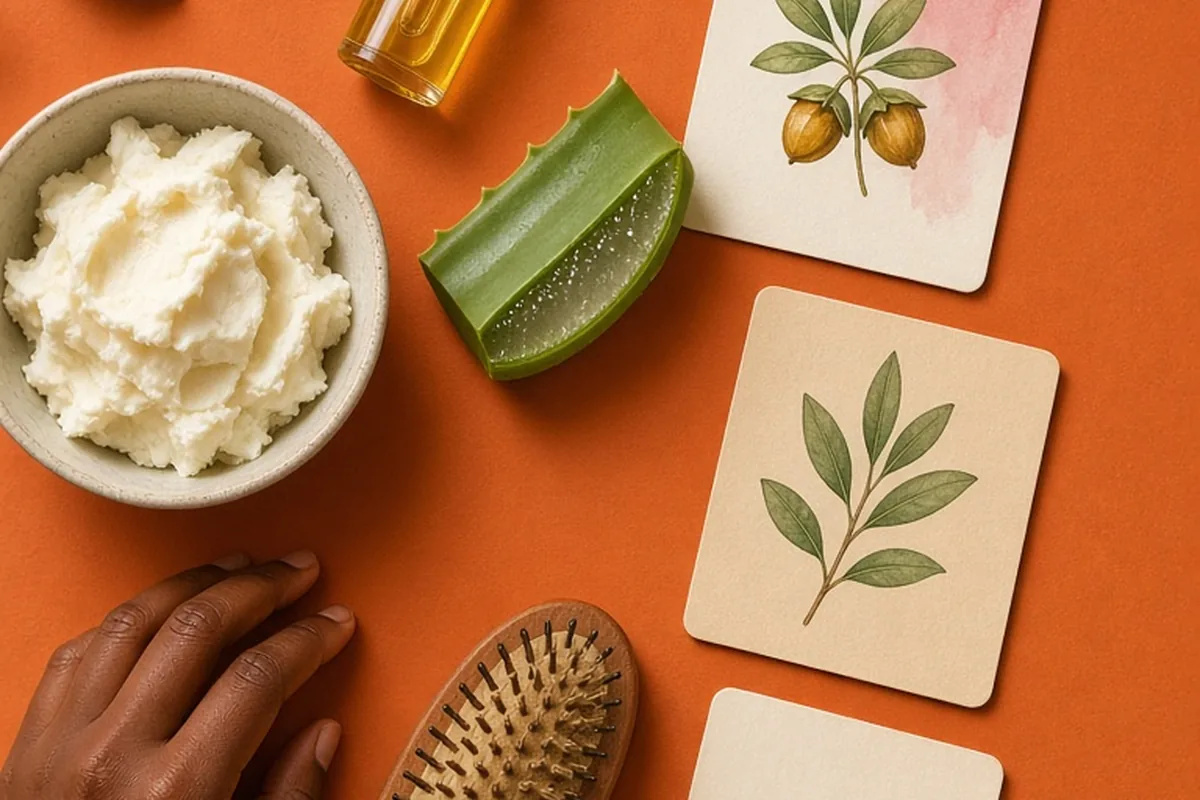
The best moisturizer for Black hair is a water-based leave-in cream or liquid lotion featuring humectants like aloe vera, glycerin, or panthenol, paired with natural emollients. Because afro-textured hair naturally loses moisture quickly due to tight bends and coils, effective moisturizers must deliver actual water into the hair shaft before sealing it with oils or butters based on your specific porosity level.
Finding an effective everyday moisturizer often feels frustrating when products leave strands either greasy on the surface or brittle within hours. Afro-textured hair requires a deliberate balance of water-based replenishment and protective sealing to stay pliable, soft, and resistant to breakage.
Water-Based Hydration Versus Oil-Based Sealants
The most critical distinction when choosing a moisturizer for Black hair is the difference between true hydrators and sealants. True moisture comes only from water. A high-quality hair moisturizer will always list water, aqua, or aloe vera leaf juice as its primary first ingredient. These water-based formulas penetrate the outer cuticle layer to replenish the cortex of the hair fiber, restoring flexibility and elasticity.
In contrast, pure plant oils and heavy butters like castor oil, jojoba oil, and raw shea butter contain zero water content. While these ingredients are essential for hair health, their primary function is emollient lubrication and sealing. Applying a heavy oil directly to bone-dry hair does not moisturize the strand; instead, it coats the exterior, effectively locking out ambient moisture and causing hair to become increasingly brittle over time. To achieve lasting hydration, an effective routine always layers water-based moisturizing products first before applying an oil or butter to seal the cuticle.
- Hydrating products list water, aloe vera, or floral hydrosols as the primary ingredient.
- Sealing products consist primarily of pure carrier oils, butters, or silicone blends designed to trap existing moisture.
Selecting Moisturizers Based on Hair Porosity
Hair porosity describes how easily your hair cuticles open, absorb liquid, and retain that moisture. Understanding whether your hair has low, medium, or high porosity is far more important for selecting a daily moisturizer than curl pattern alone. Low porosity hair features tightly bound, overlapping cuticle scales that resist moisture absorption, meaning heavy creams and dense butters simply accumulate on the surface as white residue rather than sinking into the strand.
For low porosity hair, lightweight liquid leave-in sprays and milk moisturizers containing humectants like glycerin, honey, or agave nectar work best, particularly when applied with warm water or light steam to gently lift the cuticle layer. Conversely, high porosity hair has raised, damaged, or naturally open cuticles that absorb water instantly but lose it just as quickly through evaporation. High porosity strands benefit from richer, thicker moisturizing creams with heavier lipid bases and occasional plant-derived hydrolyzed proteins to help patch microscopic gaps in the cuticle barrier.
- Low porosity hair requires lightweight liquid lotions, humectants, and warm application to encourage absorption without buildup.
- High porosity hair needs rich, butter-based creams and fortifying proteins to plug cuticle gaps and slow down moisture loss.
Key Ingredients to Seek and Ingredients to Limit
When reading product labels, look for ingredients that actively attract and retain ambient humidity while smoothing the fiber. Top-performing humectants include vegetable glycerin, aloe vera juice, panthenol (provitamin B5), and sodium hyaluronate. In addition, look for fatty alcohols such as cetyl, stearyl, and cetearyl alcohol. Unlike drying simple alcohols, fatty alcohols are plant-derived emollients that deliver slip, facilitate detangling, and soften coarse textures.
Conversely, pay attention to ingredients that may hinder long-term moisture balance when used without proper cleansing routines. Drying short-chain alcohols, often listed as SD alcohol 40, denatured alcohol, or isopropyl alcohol, accelerate evaporation and strip the hair fiber of natural lipids. While mineral oil and petroleum jelly can create strong physical barriers against moisture loss, they can also cause rapid buildup that blocks subsequent hydration unless washed out thoroughly with clarifying cleansers.
- Beneficial components include water, aloe vera, glycerin, panthenol, cetearyl alcohol, and cold-pressed plant oils.
- Components to monitor carefully include drying short-chain alcohols and heavy petrolatum when used without regular clarifying washes.
Application Methods: Mastering the LOC and LCO Techniques
Applying a moisturizer correctly is just as impactful as the product formula itself. The two most established layering frameworks for Black hair care are the LOC method (Liquid, Oil, Cream) and the LCO method (Liquid, Cream, Oil). Both routines begin with a water-based liquid or leave-in conditioner to saturate the hair shaft with hydration, followed by specific sequences of emollient layers to prevent evaporation over multiple days.
Choosing between LOC and LCO depends on your hair density and porosity. The LOC method applies a light carrier oil over the water-based liquid to trap hydration inside the cortex before finishing with a rich styling cream to smooth the cuticle down. The LCO method applies the water-based cream directly over the liquid leave-in before applying a final oil layer on the very outside. Many people with low or medium porosity hair find that the LCO order allows the moisturizing cream to penetrate more deeply before the final sealing oil forms a protective top barrier.
- Liquid stage: Spray water or apply a water-based leave-in conditioner thoroughly across parted sections.
- Cream stage: Distribute a moisturizing milk or styling butter from ends upward toward the mid-lengths.
- Oil stage: Smooth a light carrier oil over each section to seal cuticles and enhance natural shine.
Hydration Adjustments for Relaxed, Color-Treated, and Protective Styles
Different hair states require tailored moisturizing strategies to avoid mechanical damage or product overload. Chemically relaxed or bleached hair has higher porosity and reduced structural tensile strength due to altered disulfide bonds. These strands require moisturizing lotions containing ceramides, amino acids, and gentle emollients that restore suppleness without weighing down the hair or causing limpness.
When wearing protective styles such as box braids, passion twists, or cornrows, heavy creams and thick butters should be avoided along the scalp and base of the braids, as they trap lint and create stubborn buildup that is difficult to wash out. Instead, rely on water-based moisturizing sprays formulated with aloe vera, rosewater, and light antimicrobial oils like tea tree or rosemary. Lightly misting the lengths of the extensions and natural hair daily keeps braided hair supple and prevents breakage during takedown.
Preventing Chronic Dryness and Product Buildup
A common issue is experiencing chronic dryness despite applying moisturizers every single day. In many cases, this paradox is caused by accumulated layers of heavy oils, butters, and stylers that form a waterproof film over the cuticle. When this barrier builds up, freshly applied moisturizing liquids cannot reach the hair shaft, running off the surface while the inner cortex remains parched.
To break this cycle, incorporate a sulfate-free clarifying shampoo or gentle chelating wash once or twice a month to reset the hair fiber and remove silicone or butter residue. Additionally, maintain a clear distinction between scalp care and strand hydration. The scalp produces natural sebum and generally does not need heavy moisturizing creams rubbed directly into the skin, which can clog follicles. Direct your daily moisturizing products primarily to the mid-shaft and ends, which are the oldest and most vulnerable sections of your hair.
Illustrative Scenarios
Adjusting Daily Products for Low Porosity Strands
An illustrative composite case involves a woman with tight Type 4 coily hair who struggled with constant flaking and dry, crunching ends despite applying pure shea butter and thick castor oil daily. After testing her hair porosity, she realized her cuticles were low porosity and tightly closed, meaning heavy butters sat on top of the strand without delivering moisture. She adjusted her routine by switching to a warm, aloe-based liquid leave-in followed by a lightweight moisturizing lotion and a few drops of jojoba oil.
Key point: Thick butters and pure oils alone cannot hydrate hair without an underlying water source; matching product weight to hair porosity prevents buildup and allows true moisture absorption.
Frequently asked questions
How often should Black hair be moisturized?
Most natural afro-textured hair thrives when moisturized every two to three days, though tighter coil patterns or dry environments may require light daily misting. Pay attention to how your hair feels to touch; if strands feel stiff, dull, or tangled, it is time to reapply a water-based moisturizer.
Is coconut oil a good moisturizer for Black hair?
Coconut oil is a sealant and lubricating agent rather than a hydrator because it contains no water. While it can penetrate the outer hair shaft to help reduce protein loss, it must be paired with or applied after a water-based product to deliver real hydration.
Can I apply moisturizer to dry Black hair, or should it always be damp?
Moisturizers can be applied to dry hair if the product formula is primarily water-based, but damp application generally yields better results. Lightly spritzing your hair with warm water before working in a cream helps open the cuticles and ensures more even product distribution.
Your next step
Inspect your current hair moisturizer's ingredient list today to confirm that water or aloe vera is the first listed ingredient, and apply it to damp hair before sealing with your preferred oil.