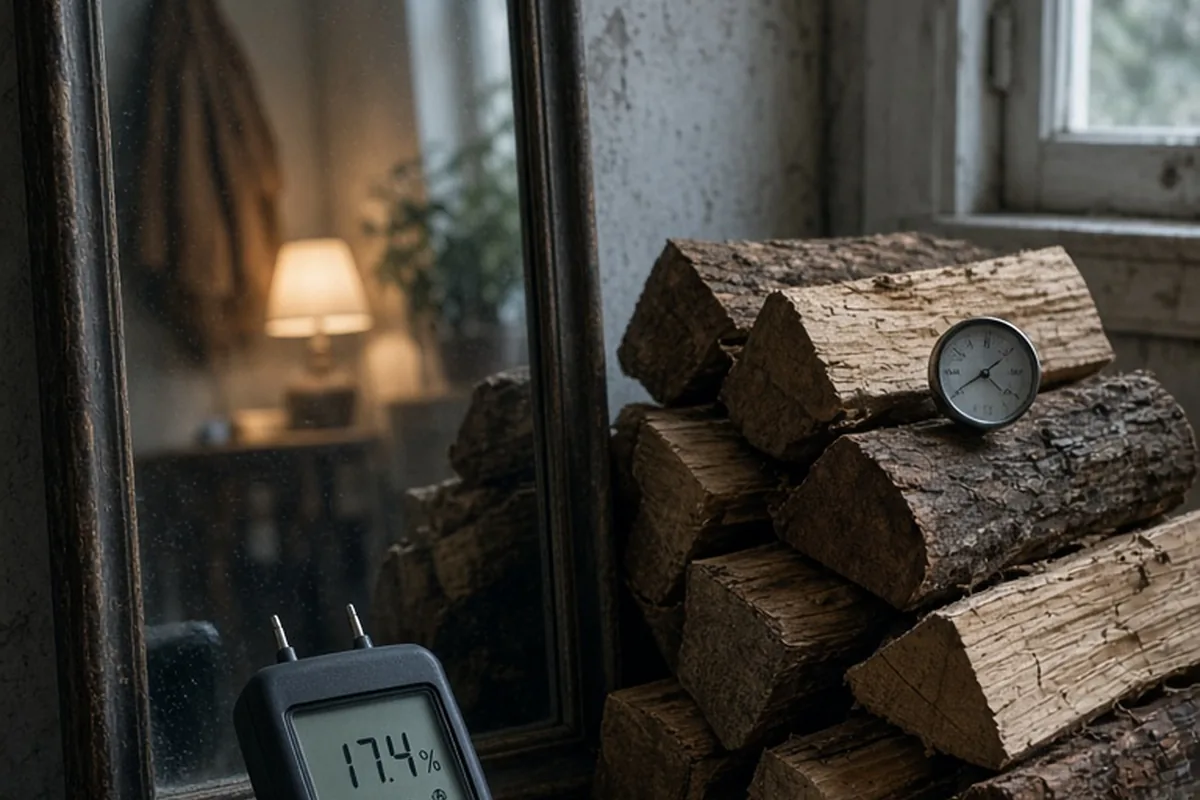
Ideal firewood moisture content should be between 15% and 20%. Wood in this range ignites easily, produces steady heat, and generates minimal smoke. Burning wood with moisture above 20% forces your fire to waste energy evaporating water, leading to excessive soot and dangerous creosote buildup. Conversely, wood under 10% burns too quickly to provide sustained warmth.
Preparing firewood for a wood stove, fireplace, or outdoor fire pit is fundamentally a matter of moisture management. While many people focus entirely on tree species, the dryness of the log dictates your fire's heat output, safety profile, and overall fuel efficiency far more than the type of bark on the outside.
Understanding the 15% to 20% Target Moisture Range
Freshly felled trees contain significant amounts of water, often accounting for 45% to 60% of their total green weight. When you attempt to ignite unseasoned wood, the fire must expend tremendous thermal energy just to boil off and vaporize that internal liquid before the wood fibers can cleanly combust. This drops the combustion temperature within the firebox, releasing unburned volatile gases as thick, acrid smoke instead of converting them into usable warmth. Reaching an internal moisture level between 15% and 20% allows the wood to achieve secondary combustion temperatures quickly, delivering high heat yield and nearly invisible chimney exhaust.
While lower moisture is generally better than high moisture, wood that falls below 10% moisture presents distinct operational challenges. Overly dry wood, such as lumber scraps or logs kept in a heated garage for several years, burns intensely and rapidly. This flash burn can release heat faster than your stove can absorb it, potentially overheating stovepipes and demanding frequent reloading. Sticking to the 15% to 20% window provides the optimal balance between easy ignition, long burn cycles, and balanced thermal output.
How to Measure Firewood Moisture with a Pin Meter
A digital pin-type moisture meter offers the most dependable way to verify your firewood is ready to burn. Testing the exterior surface of a log will yield deceptive numbers because wind and sun dry the outer bark and outer rings long before internal moisture escapes. To get an accurate reading, take a representative log from the middle of your stack, split it open with an axe or maul to expose the center, and press the meter pins firmly into the newly exposed interior grain parallel to the wood fibers.
Temperature also influences moisture meter accuracy. If you bring a freezing log inside and test it immediately, ice crystals can skew the electrical resistance readings and show an artificially low moisture level. For the most reliable evaluation, bring two or three split test pieces into a warm room, allow them to reach room temperature over several hours, and then perform your split-and-probe test. Checking multiple logs from different locations within your woodpile gives you a trustworthy overview of the entire stack's seasoning progress.
Physical and Sensory Indicators of Seasoned Firewood
When a moisture meter is unavailable, you can evaluate firewood using visual, auditory, and tactile clues. Fully seasoned wood loses a significant portion of its green weight, making dried logs feel noticeably lighter in hand than freshly cut logs of identical dimensions. The ends of properly dried logs typically exhibit radial cracks or checks radiating outward from the heartwood, and the exposed wood fibers often fade from a vibrant, pale color to a weathered gray or muted tan.
Sound provides another reliable diagnostic test. Striking two pieces of well-seasoned wood together produces a resonant, hollow clacking sound, comparable to a wooden baseball bat connecting with a ball or two bowling pins colliding. In contrast, knocking two green or waterlogged pieces together yields a dull, heavy thud because the dense water inside dampens acoustic vibration. You can also inspect the bark; on seasoned logs, shrinkage often causes the bark to loosen or detach with gentle hand pressure, whereas fresh bark adheres tightly to the cambium layer.
The Safety and Maintenance Risks of Burning Wet Firewood
Burning firewood with a moisture level above 20% introduces serious maintenance hazards and safety liabilities into your home heating system. When wet wood smolders at low temperatures, the unburned hydrocarbons and moisture vapor condense along the cooler inner walls of the chimney flue. This condensation solidifies into creosote, a highly flammable tar-like residue that accumulates over time. If a subsequent hot fire sparks within the flue, heavy creosote deposits can ignite, resulting in a dangerous chimney fire that threatens surrounding structural framing.
Beyond safety concerns, damp firewood severely degrades indoor and outdoor air quality. Low-temperature fires emit elevated levels of fine particulate matter, carbon monoxide, and irritating volatile organic compounds into the local atmosphere. In modern airtight wood stoves, burning wet fuel also coats the ceramic door glass with dark, baked-on soot, requiring abrasive cleaning and obscuring the fire view. Consistently burning seasoned fuel keeps your chimney cleaner, prolongs the life of catalytic combustors, and reduces the frequency of mandatory chimney sweeps.
Stacking Techniques That Accelerate the Drying Process
Seasoning firewood is essentially an evaporative process that requires continuous airflow, solar exposure, and protection from ground moisture. Stacking split logs directly on damp soil or lawn allows bottom layers to absorb ground moisture and encourages fungal rot. Elevating the base of your pile at least four to six inches off the ground using pallets, pressure-treated runners, or concrete blocks ensures ambient air circulates freely beneath the stack.
Log orientation within the stack directly impacts drying velocity. Arrange split logs in single-row ranks with cut faces exposed to prevailing winds and full sunlight whenever possible. While tightly cross-hatched stacks save yard space, single rows dry significantly faster because breeze passes through the gaps between logs. When covering your woodpile, protect only the top 12 inches with a tarp or metal sheeting, leaving the sides open. Wrapping an entire stack in plastic or tarps traps evaporating moisture inside, turning your woodpile into an unintended greenhouse that breeds mold rather than drying the wood.
Drying Timelines for Hardwood Versus Softwood
Wood species density dictates how long a log takes to drop from fresh-cut moisture levels down to the 20% threshold. Low-density softwoods such as pine, fir, and spruce have porous cell structures that release trapped water rapidly. When split into medium sizes and stacked in good sunlight, most softwoods can reach burn-ready moisture levels in six to nine months. This makes softwoods popular for shoulder-season burning and kindling preparation.
Dense hardwoods like oak, hickory, hard maple, and beech feature compact cellular structures that retain moisture tenaciously. Red and white oak, for instance, frequently require a full 18 to 24 months of outdoor seasoning before internal moisture dips below 20%. Attempting to burn oak after only eight or nine months usually leads to smoldering frustration. Planning your firewood acquisition two seasons in advance guarantees that slow-drying hardwoods have sufficient time to cure naturally.
Troubleshooting Firewood Stored in Humid or Rainy Climates
Maintaining seasoned firewood in regions with prolonged autumn rains or high coastal humidity requires strategic handling. While cured heartwood does not instantly absorb atmospheric moisture, extended rain exposure can rehydrate the outer sapwood layers, pushing the surface moisture above acceptable limits. If your seasoned wood stack has absorbed surface rain, transferring a two-day supply into a covered porch or near the hearth 48 hours before burning allows surface water to evaporate in dry indoor air.
Avoid bringing massive quantities of unseasoned green wood inside living spaces or enclosed basements for storage. Damp wood releases gallons of water vapor into the living environment as it dries, which can elevate indoor relative humidity, promote dust mites, and encourage mildew growth on interior drywall. Keep the bulk of your wood supply outdoors under open-sided shelter until individual logs have completed their seasoning cycle and are ready for prompt consumption.
Frequently asked questions
Can firewood ever become too dry to burn safely?
Yes, firewood that drops below 10% moisture burns exceptionally fast and produces intense, rapid heat spikes. While not as dangerous as creosote-causing wet wood, ultra-dry wood can overheat firebox components and deplete your fuel supply quickly. It is best mixed with wood in the 15% to 20% range to regulate combustion.
How long does it take for split firewood to reach 20% moisture?
Drying duration depends on wood density, split size, and environmental conditions. Softwoods typically season in six to nine months under optimal sun and wind conditions. Dense hardwoods like oak and hickory usually require 12 to 24 months of proper outdoor stacking to reach sub-20% moisture.
Does firewood dry faster when split into smaller pieces?
Yes, splitting logs increases the exposed surface area and breaks the impermeable outer bark barrier that naturally traps sap. Smaller pieces allow moisture to evaporate from the internal grain substantially faster than leaving wood in whole rounds.
Will covering my woodpile completely with a tarp make it dry faster?
No, wrapping a woodpile entirely in a tarp seals in moisture and restricts necessary airflow, leading to mold and rot. To season wood effectively, cover only the top surface to shed rain and leave all four sides completely open to the wind.
Your next step
Test your current woodpile with a calibrated pin meter by splitting a center log open today, and arrange your stacks in open, elevated single rows to maintain the ideal 15% to 20% moisture level.