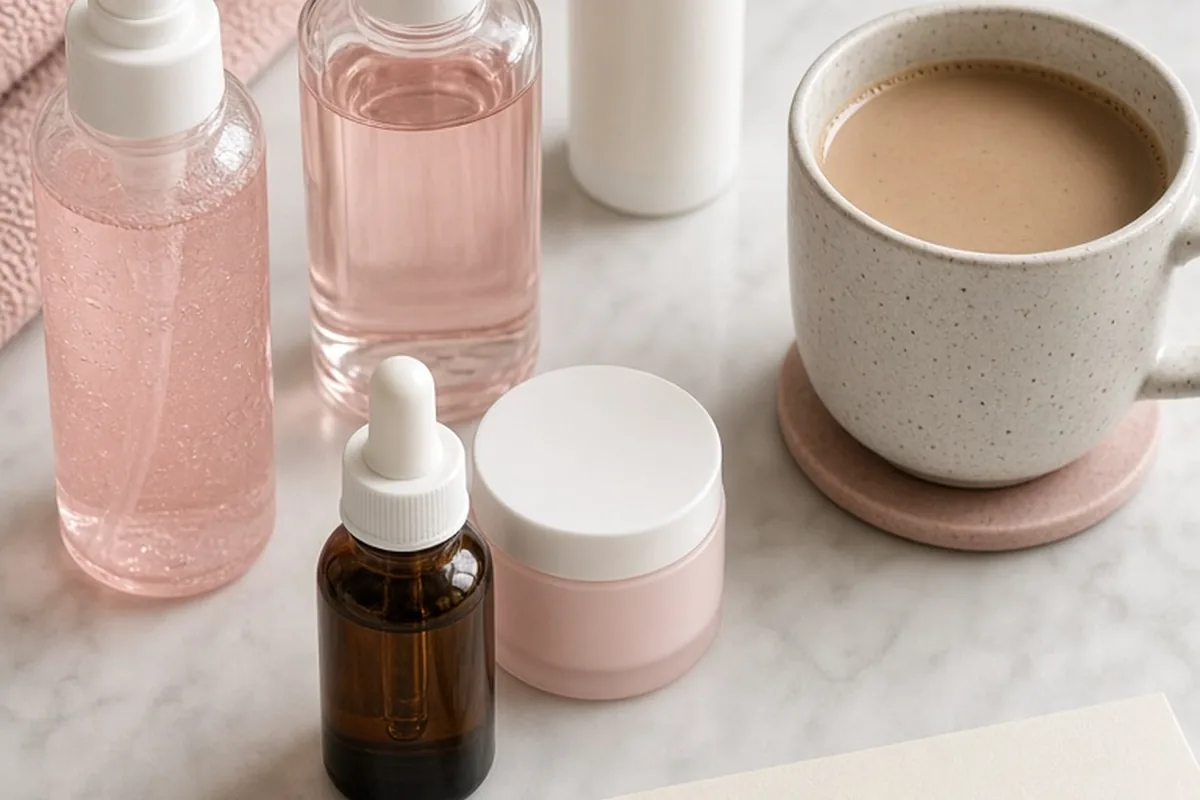
Apply skincare products from the thinnest consistency to the thickest consistency. In the morning, clean your face, apply watery toners and antioxidant serums, smooth on moisturizer, and finish with sunscreen. In the evening, cleanse thoroughly, apply treatment actives or targeted serums, and seal everything with a nourishing moisturizer or facial oil.
Getting your skincare sequence right ensures that every active ingredient reaches the skin surface without being blocked by heavier creams or oils. While a multi-step routine can seem overwhelming, following a few straightforward principles makes it easy to organize your daily regimen for maximum comfort and skin health.
The Core Principle of Layering from Thinnest to Thickest
The fundamental rule of skincare application is simple: always layer your products starting with the lightest, most watery consistency and finishing with the densest, most occlusive formula. Skincare products are formulated with varying ratios of water, humectants, emollients, and occlusives. Water-based liquids are designed to penetrate rapidly into the upper layers of the skin, delivering hydration and water-soluble active ingredients directly to the surface cells. If you reverse this order and place a dense cream or oil on first, its lipid content creates a physical barrier that prevents lighter liquids from absorbing properly.
Think of your skincare routine in terms of molecular structure and formulation density. Watery toners, clarifying essences, and lightweight serums carry smaller vehicle bases that spread evenly and absorb within seconds. In contrast, rich lotions, balms, and pure facial oils contain larger lipid molecules intended to sit on the stratum corneum to reinforce the skin barrier and prevent transepidermal water loss. By working from light to heavy, you ensure that every product performs its designated function without interference.
For example, applying a watery hyaluronic acid serum directly onto clean skin allows the humectant molecules to draw moisture into the epidermal layers. Following that serum with a ceramide-rich moisturizer traps that hydration underneath a protective lipid blanket. However, this layering logic is flexible based on the total number of products you use. You do not need an elaborate seven-step routine to see results; simply applying a gentle wash, a single serum, a moisturizer, and sunscreen in the proper order delivers complete care.
The Step-by-Step Daytime Skincare Routine
Your morning routine should focus on defense, hydration, and protection against environmental stressors such as ultraviolet radiation, airborne pollutants, and temperature changes. The standard daytime sequence begins with a gentle cleanse, followed by optional watery toners, targeted daytime treatment serums (such as vitamin C), eye cream, daily moisturizer, and finally, broad-spectrum sunscreen. Every step in this sequence supports skin resilience throughout the hours you spend outdoors or at work.
Start by washing your face with lukewarm water or a mild, non-stripping cleanser to remove overnight sebum and residue from evening treatments. If you use a balancing toner or hydrating essence, pat it on immediately while your skin is still fresh. Next, apply your daytime active serum. Vitamin C and other antioxidant blends work best when applied close to the skin surface in the morning, where they can help neutralize free radicals generated by daily sun exposure and urban pollution. Follow with a pea-sized amount of eye cream if you use one, gently tapping it around the orbital bone before smoothing on your everyday moisturizer.
The final and most crucial step of every daytime routine is broad-spectrum sunscreen with an SPF of 30 or higher. Sunscreen must always be the last skincare product you apply before makeup. Sunscreens work by forming an even, unbroken protective film across the face and neck. Applying moisturizers, serums, or facial oils over your sunscreen disrupts this defensive film, diluting its coverage and leaving your skin vulnerable to UV damage.
The Step-by-Step Evening Skincare Routine
While daytime skincare focuses on protection, your nighttime routine is dedicated to thorough cleansing, active repair, and barrier nourishment. During sleep, your skin experiences increased cell turnover and elevated water loss, making the evening the ideal time to apply restorative actives and richer moisturizing formulas. The proper evening sequence consists of a double cleanse, balancing toner, targeted treatments (such as retinoids or exfoliating acids), hydrating serums, and a supportive night moisturizer or facial oil.
A thorough evening routine starts with a double cleanse if you wear makeup or waterproof sunscreen. First, massage an oil-based cleansing balm or micellar water onto dry skin to dissolve cosmetic pigments and excess sebum. Follow with a gentle water-based cleanser to lift away remaining impurities without compromising the skin moisture barrier. Once your skin is clean and patted dry, apply your targeted active treatments. Whether you are using a retinol serum, an alpha hydroxy acid liquid, or a prescription treatment, applying it early in the evening sequence ensures direct contact with the skin surface for optimal performance.
After your active treatment has settled, layer any soothing or hydrating serums you prefer, such as panthenol, peptides, or centella asiatica. Finish your routine with a generous layer of night cream. Night moisturizers generally feature richer concentrations of emollients and ceramides than day lotions, helping to repair the skin barrier overnight. If your skin is particularly dry, you can pat two to three drops of a botanical face oil, such as squalane or jojoba oil, directly over your moisturizer as the final step to lock in moisture.
How to Safely Layer Active Ingredients and Treatments
Layering powerful active ingredients requires careful attention to skin tolerance to prevent redness, flaking, or a compromised moisture barrier. Potent actives—including retinoids, glycolic acid, salicylic acid, and pure L-ascorbic acid—each demand specific conditions to work comfortably on the skin. Stacking too many strong actives in a single routine can easily overwhelm your barrier and cause irritation that sets back your skin goals.
To minimize irritation when using potent actives like retinol, you can use the sandwich method. This technique involves applying a thin layer of basic moisturizer first, letting it dry for two minutes, applying your retinol, and then sealing it with a second layer of moisturizer. This buffers the intensity of the retinoid without eliminating its long-term benefits, making it an excellent option for sensitive skin or those new to retinoids. When using exfoliating acids (AHAs and BHAs) and retinoids, it is generally best to alternate them on separate evenings rather than layering them on top of each other in the same session.
Gentle, supporting actives like niacinamide, hyaluronic acid, and peptides can be safely combined with almost all other ingredients. For instance, applying a soothing niacinamide serum before your retinol can help strengthen the skin barrier and reduce the likelihood of peeling. Pay attention to how your skin responds over several days; if you notice stinging when applying gentle moisturizers, pause all strong actives and stick to a basic routine of cleanser and moisturizer until your barrier recovers.
Timing and Skin Moisture Between Application Steps
Knowing whether to wait between steps or apply products immediately to damp skin depends on the type of product you are using. For basic hydrating products containing humectants like glycerin or hyaluronic acid, applying them onto slightly damp skin immediately after cleansing or misting is ideal. Humectants work by holding onto water molecules; when applied to damp skin, they pull that available moisture directly into the outer layers of the skin, resulting in a plump, comfortable finish.
Conversely, potent exfoliating acids and retinoids are best applied to completely dry skin. When skin is damp, its permeability increases, which can cause potent actives to absorb too rapidly into deeper layers, significantly increasing the likelihood of stinging, irritation, and flaking. After washing your face in the evening, pat your skin dry with a clean towel and wait one to two minutes before applying strong retinoids or direct chemical exfoliants.
For general skincare steps like moving from a serum to a moisturizer, extended wait times are rarely necessary. Waiting thirty to sixty seconds allows the serum to absorb until it feels slightly tacky rather than wet, which prevents formulas from sliding around. The only step that benefits from a dedicated pause is daytime sunscreen; give your moisturizer two minutes to settle before applying sunscreen, and let your sunscreen set for three to five minutes before applying makeup.
Customizing the Sequence for Different Skin Types
While the general rule of thinnest to thickest applies across all routines, tailoring the number and type of layers to your specific skin profile yields the best daily results. Oily and acne-prone skin types often thrive on a minimalist sequence with lightweight textures. A gentle gel cleanser, followed by a light salicylic acid or niacinamide serum and an oil-free gel moisturizer, provides adequate hydration without clogging pores. In the morning, oily skin can frequently skip separate moisturizers altogether and rely on a hydrating, oil-free fluid sunscreen as the final step.
Dry, dehydrated, and mature skin types benefit from a multi-layered approach that replenishes both water and lipid content. A routine for dry skin might include a creamy hydrating cleanser, a milky essence, a humectant serum, a rich peptide cream containing shea butter or ceramides, and a finishing facial oil at night. Layering multiple humectants beneath rich emollients ensures that moisture is both delivered and physically sealed against evaporation.
Sensitive or reactive skin profiles require a streamlined approach focused on calming ingredients and minimal friction. Layering too many separate bottles increases the likelihood of an adverse reaction to preservatives or botanical extracts. A simple sequence of a non-foaming cleanser, a fragrance-free barrier repair cream containing colloidal oatmeal or ceramides, and a mineral sunscreen provides reliable protection while keeping skin calm.
Common Layering Mistakes and How to Avoid Them
One of the most frequent frustrations in skincare is product pilling, where formulas ball up into small flakes on the surface of the skin instead of absorbing. Pilling usually happens when incompatible formulations are layered together—specifically, applying heavy silicone-based products over water-based formulas that have not fully dried, or rubbing products too vigorously rather than gently pressing them in. To prevent pilling, give each layer a moment to absorb and pat lightweight gels into the skin instead of aggressively rubbing them.
Another common error is applying facial oils too early in the routine. Because oils are occlusive lipids that repel water, applying a botanical oil before your water-based serum or hydrating moisturizer forms an impenetrable film that prevents subsequent water-soluble ingredients from reaching the skin. Pure facial oils should always be applied as the very last step of your nighttime routine or blended directly with your moisturizer.
Finally, many people fall into the trap of over-complicating their routine with unnecessary steps. Using multiple toners, three different serums, and heavy balms simultaneously can overload the skin, causing congestion and barrier fatigue. Focus on purposeful layering: identify your primary skin goal, choose one or two targeted treatments, and let consistent, correct sequencing do the work over time.
Frequently asked questions
How long should I wait between applying skincare products?
For basic toners, serums, and moisturizers, you only need to wait 30 to 60 seconds until the previous layer feels absorbed and tacky. However, wait until your skin is fully dry before applying strong retinoids, and allow your morning sunscreen to set for 3 to 5 minutes before putting on makeup.
Can I use vitamin C and retinol in the same routine?
While both are highly effective, it is generally best to split them between your morning and evening routines. Use your vitamin C serum in the morning to provide antioxidant protection against daily environmental exposure, and save your retinol for the evening when skin repair naturally takes place.
Should facial oil be applied before or after moisturizer?
Facial oil should always be applied after your moisturizer or mixed directly into it. Because oils are occlusive, applying them before water-based moisturizers creates a barrier that prevents hydrating ingredients from penetrating the skin.
Do I need to wash my face with cleanser both morning and night?
Most people benefit from a thorough evening cleanse to remove sunscreen, makeup, and daily pollutants. In the morning, a gentle cleanser works well for oily skin, while those with dry or sensitive skin can often simply rinse with lukewarm water before continuing their routine.
Your next step
Organize your current skincare products on your counter from the thinnest watery texture to the thickest cream, and practice a basic three-to-four step sequence consistently for two weeks before introducing any new active treatments.