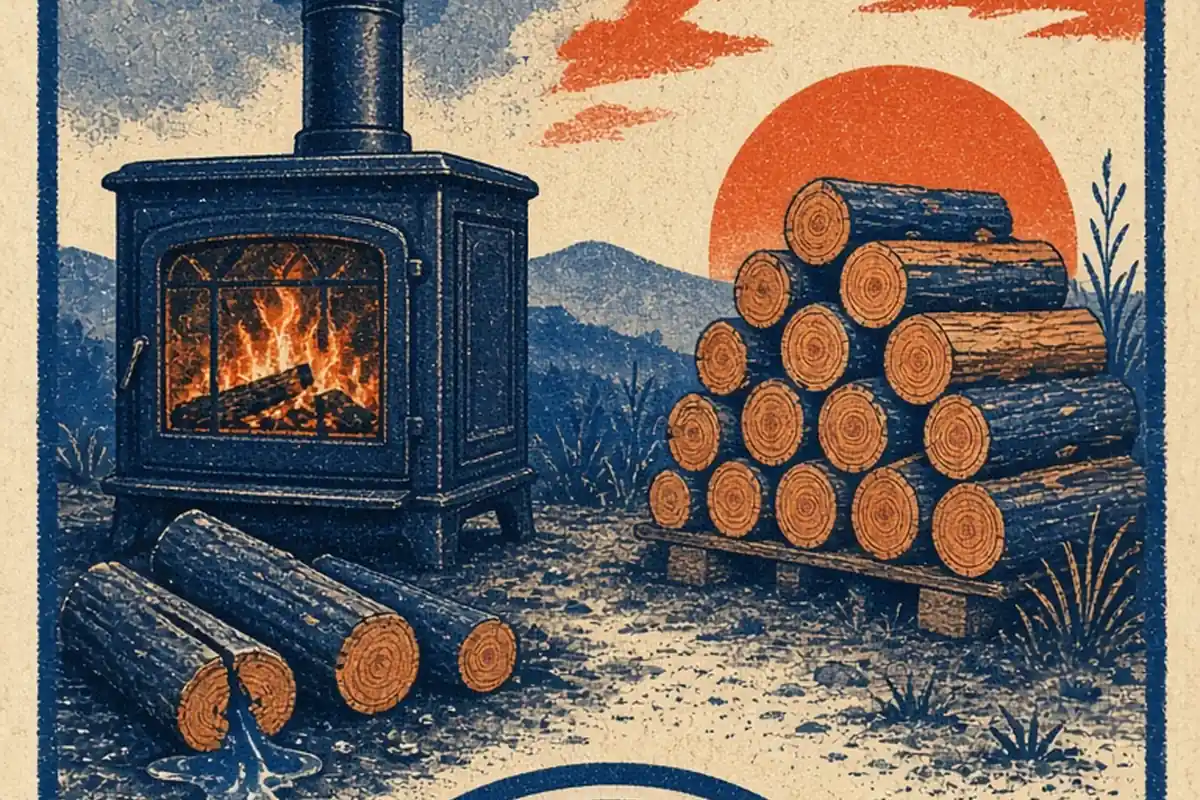
The ideal moisture content for firewood is between 15% and 20%. Wood with moisture above 20% produces excessive smoke, creates hazardous chimney creosote buildup, and wastes thermal energy evaporating water instead of heating your living space. Wood dried below 10% burns too rapidly, leading to uncontrollable heat and frequent reloading. Keeping seasoned firewood within the 15% to 20% range ensures maximum heat efficiency, clean combustion, and safer stove operation.
Stepping up to a wood stove or fireplace expecting steady, cozy warmth only to be met with hissing logs, stubborn smoke, and a blackened glass door is a common frustration for homeowners. The heating performance of any cord of wood comes down to how much water remains trapped inside its cellular structure before you strike a match.
The Sweet Spot: Why 15 to 20 Percent Moisture Works Best
Wood combustion occurs in distinct stages: water evaporation, gasification of volatile compounds, and the burning of remaining charcoal. When logs sit in the optimal range of 15% to 20% moisture, the minimal residual moisture flashes off quickly, allowing the firebox temperature to rise rapidly. At these elevated temperatures, the combustible gases released from the wood ignite fully rather than escaping up the flue as thick smoke. This complete combustion extracts the maximum possible British Thermal Units (BTUs) from every log, yielding bright flames and a durable, glowing coal bed.
Operating within this target zone also delivers practical lifestyle benefits, including fewer trips to the woodpile and easier draft management. A fire fed with properly seasoned wood ignites reliably with minimal kindling, holds a steady temperature over several hours, and produces light, pale exhaust instead of acrid gray fumes. Trying to achieve zero percent moisture is both practically impossible under ambient atmospheric conditions and functionally undesirable, as wood naturally equalizes with surrounding humidity. Striving for 15% to 20% moisture provides the ideal balance between effortless ignition and sustained, manageable burn times.
The Risks and Inefficiencies of Burning Unseasoned Green Wood
Freshly harvested green wood often contains a moisture content between 45% and 60% or higher, meaning that roughly half the weight of a fresh log consists of water. When wet wood is placed in a fire, an enormous amount of heat energy is consumed simply boiling that trapped water into steam. Because heat is diverted away from the combustion zone to drive evaporation, the firebox rarely achieves the high internal temperatures required to burn off organic gases, causing the fire to smolder, hiss, and struggle for air.
Beyond poor heat output, burning wood with moisture levels above 20% creates a significant maintenance and safety hazard inside your venting system. The unburned volatile gases cool as they travel upward through the chimney, condensing along the flue walls as flammable creosote. Over time, creosote builds up from a powdery soot into a glassy, highly combustible tar glaze that dramatically raises the risk of chimney fires. Furthermore, unseasoned wood causes excessive indoor particulate pollution and quickly coats stove glass with dark, stubborn soot that requires frequent chemical scrubbing.
Can Firewood Be Too Dry? Limits and Burn Rate Issues
While wet wood is the most common heating problem, wood can occasionally become excessively dry if stored in heated indoor spaces, arid desert climates, or over-processed in high-temperature commercial kilns. When firewood moisture drops below 10% to 12%, its combustion dynamics change dramatically. Ultra-dry logs ignite almost instantaneously and release their volatile gases in a rapid, uncontrolled surge, creating intense initial heat spikes that can exceed the safe operating limits of standard stoves and fireplace inserts.
This rapid burn rate creates several practical drawbacks for home heating. Highly desensitized, super-dry wood burns down to ash quickly without forming the dense, sustained charcoal base needed to keep a room warm through the night, forcing you to reload the firebox far more often. In modern airtight wood stoves, burning extremely dry timber can also lead to over-firing, which risks warping steel baffles, degrading catalytic combustors, and cracking cast-iron components. While excessively dry wood remains far safer than wet wood in terms of creosote formation, keeping logs closer to the 15% to 18% mark provides much better flame control and steady heat distribution.
How to Measure Moisture Accurately Using a Digital Pin Meter
A handheld digital pin-type moisture meter is the most reliable tool for evaluating your firewood supply before burning. To get an accurate reading, never test the weathered exterior bark or the outer end-grain of a log, as exposure to wind and sunshine can dry the surface while the interior remains saturated. Instead, take a representative piece from the middle of your stack, split it cleanly down the center with an axe or maul to expose fresh internal wood fibers, and immediately press the meter pins firmly into the center of that freshly exposed face, orienting the pins parallel to the grain.
Taking multiple readings across several logs provides a realistic picture of the entire stack. For instance, if you split three different logs and measure moisture levels of 16%, 18%, and 19%, that batch is ready for immediate heating use. If those same split faces register 24% or higher, the batch needs several more months of seasoning regardless of how dry the outside feels. Keep in mind that temperature can influence digital meter readings; testing frozen wood in deep winter may yield artificially low percentages, so bringing sample splits indoors to warm to room temperature before testing ensures complete accuracy.
Sensory and Manual Checks for Firewood Readiness
If you do not have a digital moisture meter on hand, several physical indicators can help you gauge whether wood has reached a seasoned state. Well-seasoned logs typically display noticeable radial cracks, often called checks, radiating outward across the cut ends as the fibers contract during drying. The bark also tends to loosen or detach easily from the underlying cambium layer, and the bright, fresh color of green wood fades to a muted gray, light brown, or weathered straw tone.
Weight and sound provide further practical clues. Seasoned firewood feels surprisingly light in the hands compared to freshly cut logs of identical dimensions because hundreds of pounds of water have evaporated from the stack. Striking two seasoned pieces together produces a clear, resonant ringing or sharp clacking sound similar to bowling pins colliding, whereas wet logs produce a dull, muffled thud due to internal moisture deadening the vibration. While these manual observations are helpful for quick assessments, they are qualitative estimates and should ideally be confirmed with a meter when precise performance is needed.
Seasoning Timelines Across Softwood and Hardwood Species
The time required for firewood to dry down to the target 15% to 20% moisture level varies significantly depending on the wood species, density, and local weather patterns. Low-density softwoods such as white pine, Douglas fir, and spruce possess an open cellular structure that sheds moisture rapidly, often seasoning to sub-20% levels within six to eight months of warm, breezy weather. Medium-density hardwoods like birch, ash, and cherry generally require nine to twelve months under good conditions to lose their internal sap and water.
High-density hardwoods, most notably red oak, white oak, and hickory, have tight grain patterns and high initial moisture volumes that make drying a much slower process. Dense oak logs frequently require a full eighteen to twenty-four months of proper outdoor seasoning before their internal core drops below 20%. Planning your firewood procurement at least one to two years ahead of time prevents the frustration of being left with dense, damp wood when winter temperatures arrive.
Stacking and Storage Strategies to Reach Target Moisture Fast
How you stack and protect your firewood determines how fast it sheds moisture and whether it stays dry through seasonal rain and snow. Always elevate the bottom layer of logs at least four to six inches off bare ground using wooden pallets, pressure-treated timbers, or metal racks. Elevating the stack stops soil dampness from wicking up into the timber and prevents the lowest tiers from rotting. Orient your rows in single lines running perpendicular to prevailing seasonal winds so air flows freely through the gaps between logs.
Sunlight and continuous airflow are the primary drivers of moisture evaporation, which makes proper covering critical. Cover only the top of the stack with a durable tarp, metal roofing panels, or specialized canvas covers, leaving the sides and ends entirely exposed to the wind. Tightly wrapping a woodpile from top to bottom with plastic or tarps traps evaporating moisture underneath, creating a humid greenhouse environment that encourages mold growth and stalls the drying process. Once the wood reaches 15% to 20% moisture, keep the top sheltered from heavy rain and bring several days worth of wood indoors to warm up prior to burning.
Frequently asked questions
How long does split firewood take to dry down to 20%?
Most split firewood takes between six months and two full years to reach 20% moisture, depending on the tree species and local climate. Softer woods like pine and birch often cure in six to twelve months, whereas dense hardwoods like oak require up to two years of consistent outdoor airflow.
Can I safely burn firewood that registers at 22% moisture?
While wood at 22% moisture will catch fire, it will burn noticeably cooler, produce more soot, and hiss as water boils away. It is best to mix slightly damp pieces with thoroughly seasoned logs below 18% or let them season for another month or two of dry weather.
Why does my wood meter read dry on the bark but wet when split?
The outside bark and end-grain dry out rapidly due to direct exposure to sun and wind, while the interior cells stay saturated for months. You must split the log immediately before testing and insert the meter pins into the fresh center grain to find the true moisture level.
Does kiln-dried firewood have a different moisture target than air-dried wood?
Kiln-dried firewood typically aims for the lower end of the same ideal spectrum, usually settling between 12% and 18% moisture. The industrial heating process rapidly bakes out moisture and kills pests, but the wood will eventually equalize with ambient outdoor humidity if stored outside.
Your next step
Test a freshly split log from the center of your woodpile with a digital pin meter today to verify that your supply sits between 15% and 20% before loading your stove.