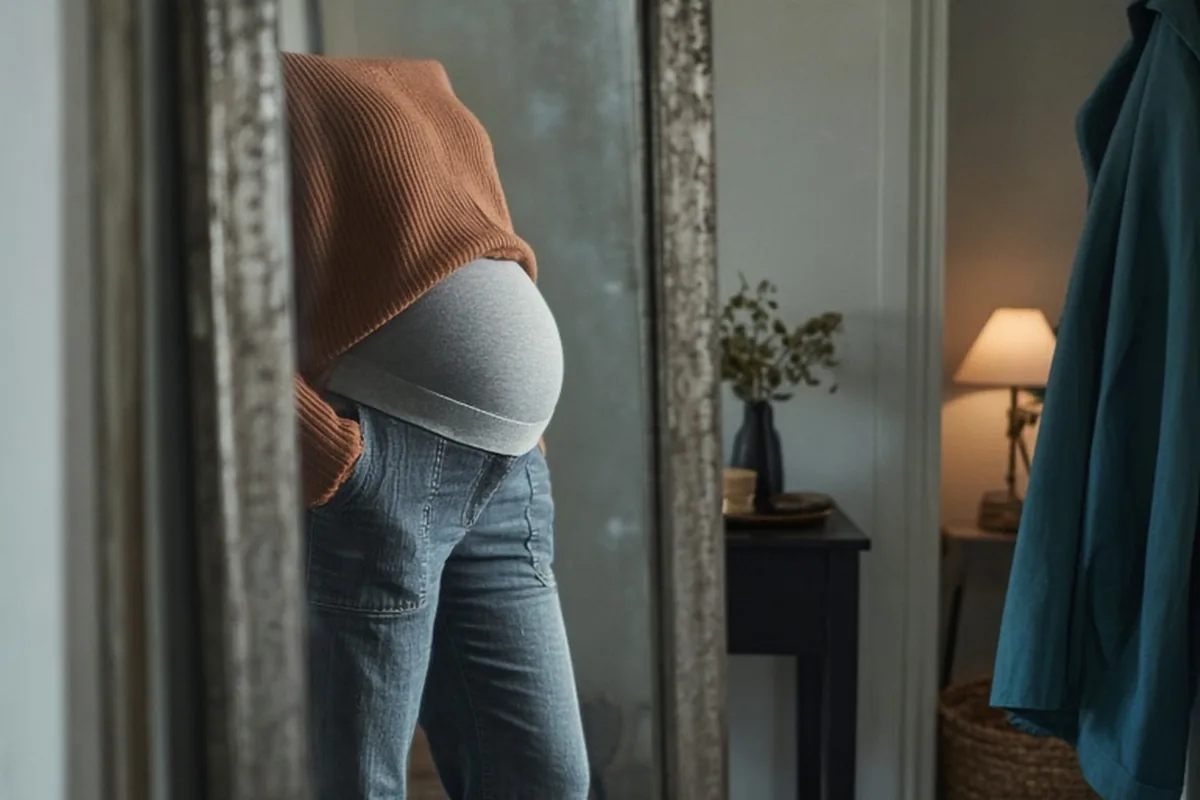
As a general rule, buy maternity pants in your pre-pregnancy size. Maternity clothing brands design their garments with extra space in the belly, hips, and thighs to accommodate expected physical changes while maintaining your standard proportion in the legs and inseam. If you carry multiples, gain weight quickly in early trimesters, or prefer a looser fit across your hips, sizing up one standard size provides extra comfort.
Transitioning into maternity clothing often brings confusion because regular sizing rules seem to stop applying once your waistline expands. Understanding how maternity cuts accommodate growth can help you build a reliable, comfortable wardrobe without unnecessary guesswork or endless returns.
The Pre-Pregnancy Sizing Principle and How It Works
Maternity apparel designers construct pants using standard sizing baselines, meaning standard numeric sizes like 4 through 16 or letter sizes from XS through XXL remain the starting point for your search. The foundational pattern pieces that determine hip bone width, inseam length, and thigh circumference match conventional fashion measurements. Specialized elements, such as elastic side panels, stretchy belly bands, and gathered front seams, provide the extra room required for an expanding abdomen without altering the garment's overall skeletal structure.
While this pre-pregnancy baseline serves as the primary industry framework, individual bodies experience distinct changes that may alter how a standard size fits. Some people notice that their pelvic structure widens and tissue softens around the hips and thighs early in pregnancy, long before the baby bump fully emerges. For instance, an individual who wore a snug, rigid size 6 in non-stretch work trousers may find that a size 8 maternity pant offers necessary relief across the upper thighs, even if their abdominal growth is still subtle. Recognizing that maternity sizing assumes standard proportional shifts helps you decide whether your usual size or a step up will feel best.
Choosing the Right Waistband Construction for Comfort
The waistband style of maternity pants plays a major role in determining how a specific size feels throughout the day. Over-the-belly panels feature a tall, seamless, knit fabric sleeve designed to pull completely over the bump, ending just below the bra line. This style distributes fabric tension evenly across the midsection, helping the pants stay in place without exerting concentrated pressure on any single point, which makes it very accommodating if you are between standard sizes.
Under-the-belly waistbands, by contrast, sit below your bump with a contoured, low-rise front and a wide, soft elastic band that rests across the upper pelvis. These pants feel more like traditional low-rise styles, but they require a precise fit through the hips to prevent them from sliding downward as you walk. A third option, side-panel or inset-elastic styling, uses small elastic wedges inside the front pockets to maintain the appearance of traditional tailored trousers. While side-panel pants offer a polished look for formal or professional environments, they provide less vertical stretch, meaning an accurate hip and thigh measurement is critical to avoid constriction.
Key Body Measurements to Take Beyond Your Waistline
Conventional sizing charts rely heavily on natural waist circumference, but pregnancy renders this measurement impractical for selecting trousers. When shopping for maternity pants, your low hip, upper thigh, and inseam measurements are the most reliable indicators of your proper size. Use a soft, flexible measuring tape and wrap it around the fullest point of your hips and buttocks while standing upright with your feet close together. Keep the tape parallel to the floor, ensuring it rests snugly against your body without pressing into the skin.
Checking your upper thigh circumference is equally valuable, especially when evaluating structured fabrics like twill, corduroy, or rigid denim. Mild fluid retention can increase thigh measurements by an inch or more, turning a close-fitting cut into a tight garment when seated. If your hip measurement aligns with a size medium but your thigh circumference sits at the upper boundary of that range, choosing a large can prevent seam friction. Additionally, measure your inseam from the crotch seam to the floor or ankle bone, noting that cropped or ankle lengths often accommodate later footwear adjustments better than long hems.
Circumstances Where Sizing Up Is the Smarter Move
While sticking with your pre-pregnancy size works in most situations, several clear factors make sizing up one full size the more sensible choice. Carrying multiples generally leads to earlier abdominal expansion and broader weight distribution, placing greater tension on waistband seams and hip fabric. Similarly, individuals who experience noticeable fluid shifts or rapid weight gain throughout the lower body in the first two trimesters often find immediate comfort in a larger size.
Fabric composition is another critical factor when deciding whether to size up. Pants made with high cotton content and less than three percent spandex offer minimal stretch, which can create uncomfortable pressure points when sitting or bending. However, avoid sizing up excessively during early pregnancy simply to prepare for future growth; garments that are too large in the seat and crotch will sag, bunch at the knees, and slide down continuously. A practical strategy is to purchase your true pre-pregnancy size in flexible knit leggings and reserve sizing up for structured pants where ease of movement is paramount.
Navigating Sizing Changes Across the Trimesters and Postpartum
Your clothing needs shift as your pregnancy advances, and understanding these distinct stages helps you avoid investing in garments that only fit for a short window. During the first trimester, bodily changes are often driven by fluctuating digestion and bloating rather than significant fetal growth. Full over-the-belly panels may feel loose and slide down during this phase. Instead, transitional options like side-panel trousers or regular pants paired with a flexible button extender in your standard size offer practical comfort without unnecessary fabric bulk.
As you move through the second and third trimesters, the bump projects forward and upward, shifting your center of gravity and placing steady downward pressure on lower bands. Full-panel maternity pants in your true size provide the most reliable support during these months because the elastic panel anchors the trousers securely against your torso. These same full-panel pants remain useful during the fourth trimester, as the postpartum body requires weeks of gentle, non-restrictive support while the uterus contracts and recovery continues.
How to Test the Fit of Maternity Pants at Home
Evaluating the fit of maternity pants requires active movement rather than simply standing still in front of a mirror. When trying on a new pair at home, wear them for ten to fifteen minutes while performing everyday actions: sit upright in a firm chair, recline on a couch, walk up a set of stairs, and bend at the knees. A well-fitting pair will stay securely anchored at your hips without sliding down your rear, while the waistband should lie flat against your midsection without rolling, pinching, or digging into your lower abdomen.
Observe the alignment of the crotch seam and thigh fabric during these movements. If the crotch seam sags several inches below your pelvic line after walking a short distance, the pants are either too large in the hips or the belly band lacks sufficient elastic tension to support the fabric weight. If the front pockets flare open, horizontal stress lines pull across the hips, or the fabric cuts into your groin when seated, the garment is too small. Testing pieces thoroughly in a home environment before removing tags ensures you keep only items that provide all-day comfort.
Frequently asked questions
Should I size up if my measurements place me between two maternity sizes?
Sizing up is generally the more comfortable choice when you fall between standard sizes on a brand sizing chart. Pregnancy brings continuous physical shifts and natural fluid fluctuations, so a slightly roomier fit in the hips and thighs ensures the pants remain wearable for a longer duration.
Do maternity leggings follow the exact same sizing as maternity jeans?
Maternity leggings use the same pre-pregnancy size guidelines as jeans, but their high elasticity provides significantly more sizing forgiveness. While structured denim requires precise hip and thigh measurements to prevent tightness, knit leggings stretch easily across multiple body contours in your standard baseline size.
When during pregnancy should I start wearing maternity pants?
Most individuals begin wearing maternity pants between twelve and twenty weeks, though timing varies based on personal comfort, body shape, and previous pregnancies. If your regular waistbands cause pinching, leave red marks, or require unbuttoning by midday, it is practical to transition into maternity cuts regardless of your trimester.
Will maternity pants in my pre-pregnancy size last through my entire third trimester?
Many high-stretch maternity pants purchased in your pre-pregnancy size will fit comfortably through your entire pregnancy because the belly panel expands alongside your bump. However, if you experience significant lower-body fluid retention or carry multiples, you may prefer a size larger in rigid styles for the final weeks.
Your next step
Measure the fullest point of your hips with a soft tape, compare that number directly against the brand pre-pregnancy size chart, and select one versatile over-the-belly style to test for comfort through a full day of movement.