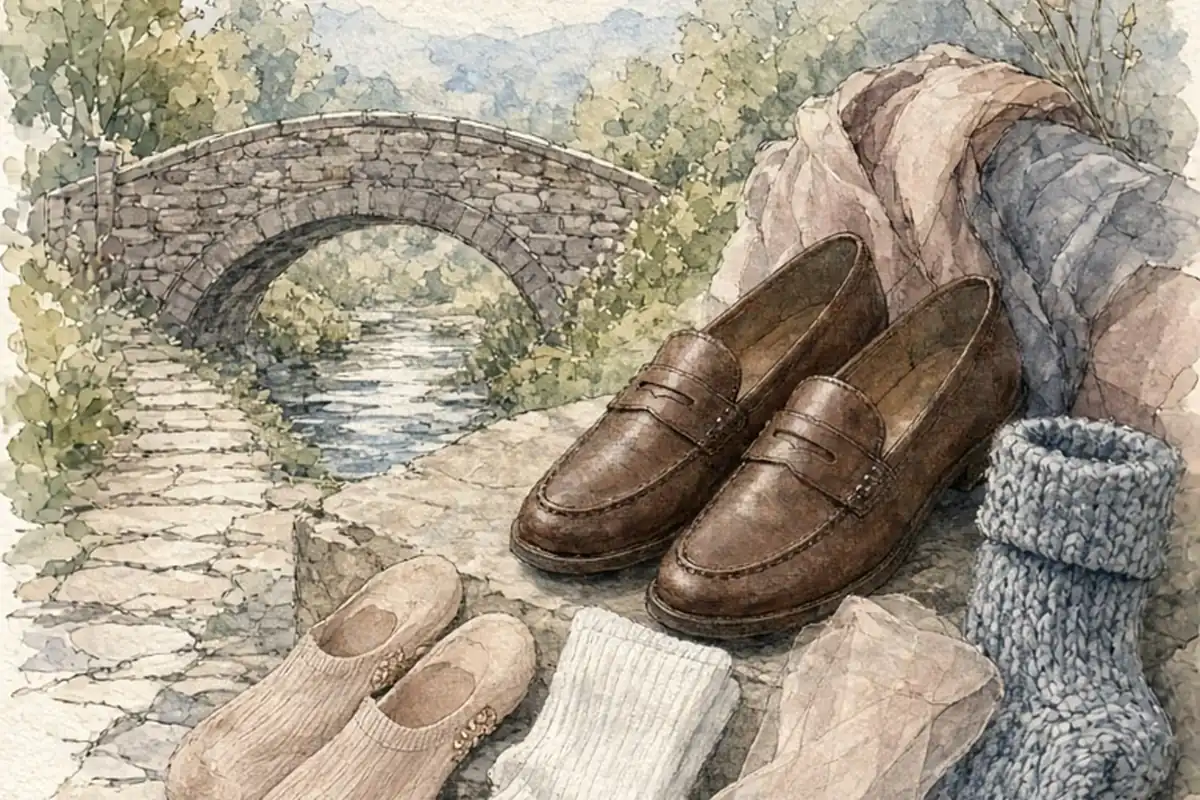
Women can wear several sock styles with loafers depending on the aesthetic and climate. For a clean, bare-ankle look, choose low-cut no-show socks with silicone heel grips. For a classic collegiate or casual vibe, select ribbed crew socks or lightweight white cotton socks. In professional settings, sheer trouser socks or fine-knit wool offer sleek coverage without adding uncomfortable bulk.
Loafers are among the most adaptable shoes in modern wardrobes, moving effortlessly between structured workwear, weekend denim, and transitional tailoring. However, pairing them with the wrong sock often leads to frustrating heel slip, painful blisters, or awkward visual breaks at the ankle. Understanding how sock weight, height, and fabric interact with different loafer silhouettes ensures your outfits remain both comfortable and visually balanced.
Selecting No-Show Socks for an Invisible Silhouette
No-show socks are the standard choice when you want the streamlined look of bare ankles while maintaining a hygienic barrier inside leather footwear. Wearing loafers completely barefoot exposes the shoe lining to sweat, which degrades the leather over time, causes unpleasant odor, and creates friction that quickly leads to chafing. A quality no-show sock absorbs moisture and shields vulnerable zones like the back of the heel and the tops of the toes.
The primary challenge with no-show socks is finding a cut that stays hidden beneath the loafer vamp without sliding under your arch as you walk. Look for pairs engineered with deep-cut sides, a low toe box, and wide silicone grip strips at the heel counter. Cotton-blend liners provide breathability in warm weather, while seamless toe closures prevent pressure points across narrow toe boxes. If your loafers have a particularly high tongue or deep penny strap, you have slightly more leeway with coverage, but classic driving moccasins and Venetian loafers require ultra-low profiles.
Styling Classic White and Ribbed Crew Socks for Everyday Outfits
Visible socks have shifted from a purely functional necessity into an intentional styling element. Pairing white or off-white ribbed crew socks with loafers creates a relaxed, collegiate aesthetic that balances casual garments with structured footwear. This combination works exceptionally well with modern lug-sole loafers, chunky platform silhouettes, and traditional penny loafers, grounding the visual weight of the shoe against everyday staples.
To execute this look successfully, pay close attention to sock texture and cuff height. Flat-knit athletic tube socks can appear overly sporty or bulky, whereas a fine-to-medium ribbed cotton knit adds sophisticated texture. Position the sock so it sits smoothly just above the ankle bone or gathers in slight, natural folds below the calf. Pair this arrangement with straight-leg jeans cropped just above the hem, pleated midi skirts, or tailored Bermuda shorts to let the contrast between the leather shoe and light sock stand out.
Choosing Sheer and Trouser Socks for Professional Environments
In corporate, legal, or formal office environments, bare ankles or chunky cotton socks may feel either too casual or impractical for air-conditioned spaces. Sheer nylon socks, mesh hosiery, and fine-gauge modal trouser socks provide an elegant layer that bridges the gap between your footwear and tailored trousers. These materials slip easily into narrow, dressier loafers such as horsebit, pointed-toe, or almond-toe styles without altering the shoe's internal fit.
When styling sheer socks, choose between a seamless monochromatic look and subtle surface interest. A solid black sheer sock paired with black patent or calfskin loafers creates an unbroken line that visually elongates the leg beneath cropped slacks. Alternatively, micro-dot, houndstooth, or subtle geometric weaves add refined personality without clashing with standard suiting patterns. Ensure the top band of the trouser sock rests high enough beneath your pant leg so the elastic hem remains concealed when sitting.
Layering Wool, Cashmere, and Heavy Knits in Cold Weather
Transitioning loafers into autumn and winter requires socks that provide thermal insulation while complementing cold-weather textures like wool coats, corduroy, and heavy knits. Fine-gauge merino wool and lightweight cashmere blends are ideal because they generate substantial warmth without excess bulk. Heathered neutrals such as charcoal, oat, camel, and deep olive pair naturally with rich burgundy, chocolate brown, and black leather.
The trade-off when wearing heavier knit socks is their effect on shoe volume. Thick wool socks can compress your toes and stretch soft leather out of shape if your loafers fit snugly. Reserve substantial cable-knit or marled wool socks for heavier lug-sole loafers or shoes that have already relaxed through regular wear. For slimmer, structured shoes, stick to smooth, worsted-wool dress socks that slide easily over the insole.
Matching Sock Proportions to Loafer Silhouette and Hemlines
The success of any sock-and-loafer combination depends heavily on the relationship between the shoe's visual weight and the bottom hem of your clothing. Chunky, thick-soled loafers naturally balance wider pant legs and thicker socks, while delicate, thin-soled loafers pair best with minimal, fine-gauge hosiery or bare-ankle liners. Mismatching these proportions often makes an outfit appear bottom-heavy or unintentionally disjointed.
Consider where your hemline falls relative to your ankle. Wide-leg or full-length trousers typically drape over the loafer vamp, meaning the sock is only visible when walking or seated; in this scenario, thin trouser socks or low-profile liners prevent fabric bunching at the instep. Conversely, cropped trousers, ankle-length denim, and skirts expose the entire transition zone, making the sock's texture, color, and height an active component of your overall outfit.
Managing Comfort, Friction, and Leather Break-In
New leather loafers are notorious for causing friction along the heel counter, Achilles tendon, and outer pinky toes before they mold to your feet. The right sock acts as a protective shield during this break-in period. If you are softening a stiff pair of shoes, skip thin no-shows and opt for a smooth, mid-weight cotton or modal crew sock with reinforced heel and toe construction to absorb rubbing.
Socks also serve as a practical tool for fine-tuning the fit of your footwear. Because genuine leather expands slightly with wear, a pair of loafers that fit perfectly on day one might begin to slip at the heel after several months. Switching from an ultra-thin liner to a slightly denser, cushioned-sole sock can eliminate heel slippage and restore a secure, comfortable step without requiring adhesive heel pads.
Color Coordination and Intentional Pattern Choices
Choosing sock colors can follow three reliable approaches: tonal blending, contrast anchoring, or playful accents. Tonal blending involves matching your sock directly to your trousers or your shoes, creating a continuous line that works well in formal or minimalist wardrobes. For example, pairing navy socks with navy slacks and dark brown loafers creates a unified, sophisticated appearance.
Contrast anchoring uses a clean neutral, such as crisp white or warm ecru, to create a deliberate visual break between dark denim and dark loafers. If you choose to incorporate bold colors or novelty patterns, ensure at least one tone within the sock echoes an element elsewhere in your outfit, such as your knitwear, scarf, or jacket. This subtle connection prevents the socks from looking accidental while adding personal character to a timeless shoe.
Illustrative Scenarios
Transitioning Stiff Loafers to Office Wear
Rachel bought a structured pair of black leather horsebit loafers for her office job but experienced severe heel rubbing whenever she tried wearing them with thin, silicone-grip no-show liners. Assuming the loafers were simply too small, she considered returning them. Instead, she switched to a pair of fine-gauge ribbed modal trouser socks in charcoal. The smoother fabric reduced surface friction against the stiff heel counter while filling out the minor volume gap around her instep, allowing her to walk comfortably all day without blisters.
Key point: Selecting a sock with adequate fabric height and low friction can resolve shoe-rubbing issues during the initial break-in period far better than ultra-low liners.
Balancing Proportions with Cropped Denim
Taylor wanted to style chunky platform loafers with high-waisted cropped jeans for weekend outings but felt her bare ankles looked disconnected and disproportionate against the heavy shoe soles. She initially tried athletic quarter-crew socks, which bunched awkwardly around the jean hem and added too much bulk. She replaced them with lightweight, off-white cotton socks with a flat rib knit, pulled straight to sit two inches above the ankle bone. The refined texture cleanly bridged the gap between denim and footwear.
Key point: Matching sock weight and texture to the specific silhouette of both the shoe and trouser hem creates a balanced, intentional proportion.
Frequently asked questions
Can you wear black socks with brown or oxblood loafers?
Yes, black socks can work with deep brown or oxblood loafers if the rest of your outfit incorporates dark neutral tones. For a softer and more traditional transition, consider charcoal, espresso, or heathered navy socks instead.
How do you stop no-show socks from sliding down in leather loafers?
Select no-show socks featuring a wide silicone grip at the heel and a structured, elasticized arch band. Ensuring your loafers fit properly across the instep also prevents the internal foot movement that drags liners downward.
Are white socks with black loafers fashionable?
Yes, pairing clean white or off-white ribbed socks with black loafers is a popular, classic styling choice. To keep the look modern and polished, choose fine-gauge or ribbed textures rather than bulky athletic gym socks.
What socks are best for preventing blisters in brand-new loafers?
Mid-weight cotton or bamboo socks with seamless toe seams and reinforced heels offer the best protection for new shoes. Avoid sheer nylon or ultra-thin liners until the leather upper and heel counter have softened naturally.
Your next step
Take stock of your current loafer collection and choose one pair of low-profile silicone liners for bare-ankle styling alongside a set of fine-ribbed cotton crew socks to easily cover both casual and structured everyday outfits.