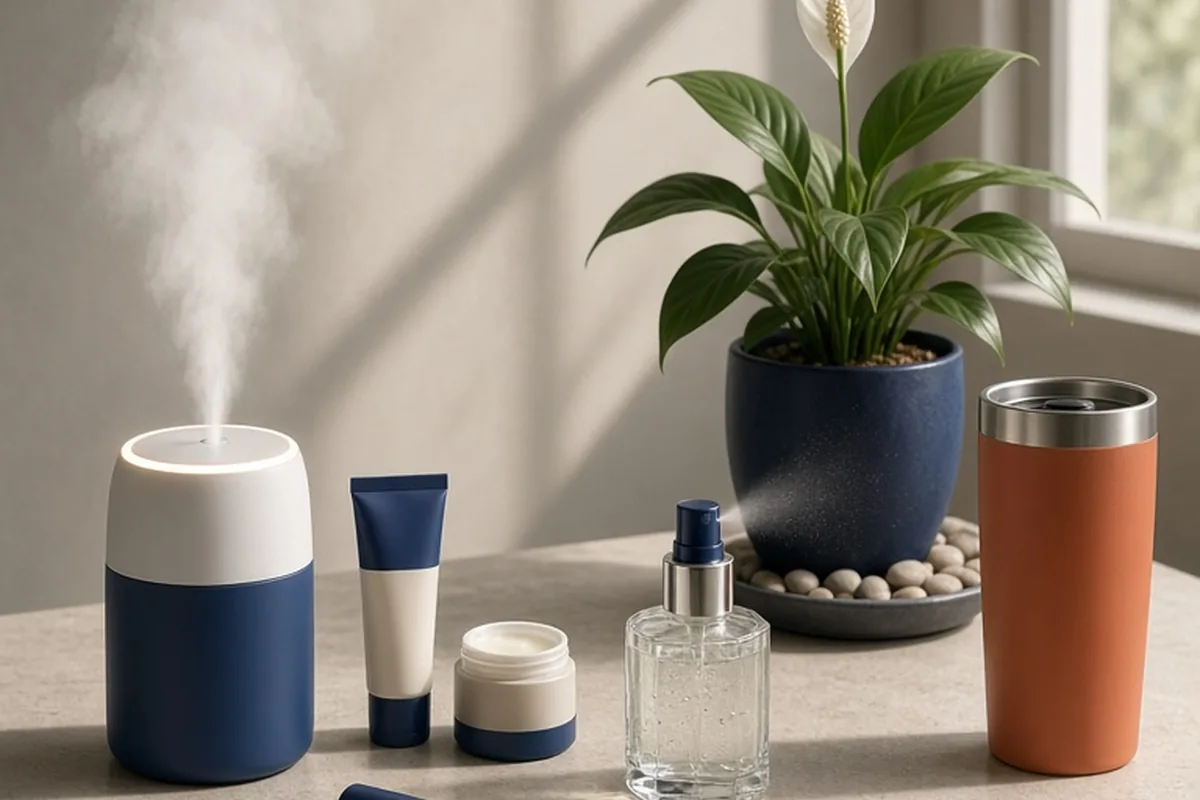
To moisturize your personal space and skin while working, keep a compact USB ultrasonic humidifier, a non-greasy hand cream with ceramides, an occlusive lip balm, and a hydrating facial mist on your desk. Pairing these topical barriers with a high-transpiration desk plant, such as a peace lily or spider plant, and an insulated water tumbler provides continuous ambient and personal hydration throughout the workday.
Spending eight or more hours a day seated at a workstation exposes your skin to continuous environmental stressors, including aggressive air conditioning, forced central heating, and stagnant indoor air. Over time, these conditions pull moisture directly from your skin barrier, leading to tight cheeks, flaky cuticles, chapped lips, and dry eyes. Creating a dedicated hydration station directly on your desk allows you to counteract moisture loss in real time without disrupting your workflow.
Compact Ultrasonic Desk Humidifiers and Safe Placement
A personal ultrasonic cool-mist humidifier is one of the most effective mechanical tools you can place on a workstation to combat low ambient humidity. Standard office buildings often operate at relative humidity levels below thirty percent, which accelerates moisture evaporation from your skin and respiratory tract. A compact humidifier creates a concentrated microclimate of vaporized water around your immediate seating area, helping your skin retain its natural hydration without requiring you to alter the building's central thermostat.
When selecting a desk humidifier, opt for a model powered via USB or a compact wall plug that features an automatic shut-off mechanism when the reservoir empties. Ultrasonic models are ideal for work environments because they vibrate a small metal diaphragm at high frequencies to create a silent, fine mist. Place the device at least eighteen to twenty-four inches away from your computer tower, monitors, and paper documents, angling the mist nozzle upward and toward your personal breathing zone rather than directly at electronic surfaces.
While personal humidifiers are exceptionally helpful, they require diligent maintenance to remain sanitary. Stagnant water sitting in small reservoirs can quickly foster bacterial growth and mold spores, which are then aerosolized into your workspace. Empty the reservoir at the end of every workday, refill it with fresh filtered or distilled water each morning to minimize mineral dust buildup, and rinse the tank with a diluted white vinegar solution once a week.
Fast-Absorbing Barrier Hand Creams and Cuticle Salves
Frequent hand washing, paper handling, and continuous friction against keyboards strip the natural sebum from your hands faster than almost any other part of your body. Keeping a dedicated hand moisturizer within arm's reach ensures that you can reapply protection immediately after washing or sanitizing your hands. The key to a successful desk hand cream lies in choosing a formulation that absorbs rapidly while still depositing a resilient moisture barrier.
Look for products that balance humectants, such as glycerin and hyaluronic acid, with light emollients and barrier-supporting ingredients like squalane, ceramides, and shea butter. Avoid heavy, petrolatum-based ointments during the middle of the workday, as these can leave a greasy residue on keyboard keycaps, mouse grips, and trackpads. Instead, choose lightweight lotions or dry-touch barrier creams that sink into the stratum corneum within sixty seconds.
For targeted treatment of ragged cuticles and peeling nail borders, keep a small rollerball or brush-pen applicator filled with jojoba or sweet almond oil next to your pen holder. Applying a quick swipe to each nail bed once or twice an afternoon softens hardened skin and prevents painful hangnails caused by dry indoor air. Store pump-top bottles rather than screw-cap jars on your desk to allow for quick, hygienic dispensing between typing tasks.
- Select pump-action bottles to dispense lotion quickly without contaminating the container with dirty fingertips.
- Prioritize ingredients like glycerin, ceramides, and squalane for rapid absorption without slippery residue.
- Keep a mess-free cuticle oil pen beside your mouse pad for precise mid-afternoon cuticle nourishment.
Hydrating Facial Mists and Proper Application Technique
Facial mists offer immediate, refreshing relief when tight, parched skin begins to distract you from your work. However, the formulation of the mist and the way you apply it determine whether it actually moisturizes your face or inadvertently dries it out further. Pure water mists or basic thermal sprays can provide temporary cooling, but as the water evaporates in a dry office environment, it can pull native moisture away from the surface of your skin in a process known as trans-epidermal water loss.
To prevent evaporative drying, select a facial mist that contains film-forming humectants and soothing botanical extracts, such as aloe vera, rosewater, panthenol (vitamin B5), or low-molecular-weight hyaluronic acid. These ingredients bind water molecules to the outer skin layer rather than letting them disperse into the surrounding dry air. Hold the bottle eight to ten inches away from your face, close your eyes, and disperse two to three fine pumps evenly across your complexion.
If you work in a bare-faced setting, you can follow the mist by gently pressing a drop of squalane oil or a light gel moisturizer into your skin to lock in the hydration. If you wear makeup at the office, look for bi-phase mists containing a tiny fraction of dispersed botanical oil that naturally settles into a protective shield over cosmetics without disturbing your foundation or powder.
Transpiring Desk Plants and Humidity Pebble Trays
Indoor plants are a natural, aesthetically pleasing way to increase ambient moisture levels through a biological process known as transpiration. Plants absorb water through their root systems and release roughly ninety-seven percent of that moisture back into the surrounding air through pores on the undersides of their leaves. Placing one or two moisture-loving plants on your desk creates a gentle, continuous source of passive humidity.
Certain houseplant varieties transpire at higher rates and adapt particularly well to typical office lighting conditions. Spider plants, Boston ferns, peace lilies, and pothos vines are excellent choices that tolerate fluorescent or indirect window light while steadily releasing moisture. Their foliage also adds visual warmth to corporate environments and offers a grounding focal point during screen breaks.
To amplify the humidity contribution of your desk greenery, set the plant container on top of a shallow pebble tray filled with water. Ensure the bottom of the pot rests on the stones above the waterline so the roots do not sit in standing water and rot. As the water in the tray naturally evaporates around the foliage, it creates a localized pocket of higher humidity right next to your workstation.
- Choose high-transpiration, low-light plants like Boston ferns, peace lilies, or spider plants for easy desk maintenance.
- Use a shallow tray filled with river stones and water beneath the pot to create a passive evaporation zone.
- Avoid overwatering plant soil, which can attract fungus gnats to your immediate workspace.
Protective Lip Treatments and Barrier Balms
The skin on your lips is exceptionally thin, lacks sebaceous oil glands, and possesses almost no natural barrier to prevent moisture loss under continuous airflow. When forced-air heating or ventilation blows across your desk, lips are often the first area to crack, flake, and feel uncomfortably parched. Keeping an occlusive, restorative lip treatment at your desk prevents you from habitually licking your lips, which only accelerates chapping due to digestive enzymes present in saliva.
Look for lip balms and treatments formulated with dense occlusives and nourishing emollients, including beeswax, candelilla wax, lanolin, shea butter, and ceramides. These ingredients form a protective physical barrier that locks in baseline moisture and shields delicate tissue from dry drafts. If your desk sits near a bright window, choose a daytime lip balm that incorporates broad-spectrum SPF thirty to guard against UV-induced dryness and premature collagen breakdown.
Packaging format is an important practical consideration for desk hygiene. While potted lip balms are popular, dipping unwashed fingers into a jar while handling shared office supplies or computer peripherals introduces bacteria directly into the product. Instead, choose twist-up stick balms, squeeze tubes with slanted silicone applicators, or hygienic pump bottles that allow application without manual finger contact.
Visual Hydration Reminders and Insulated Straw Tumblers
While topical creams and ambient humidifiers manage external moisture loss, internal hydration provides the necessary foundation for cellular function and skin elasticity. When immersed in complex projects, it is easy to forget to drink fluids for several hours at a time, leading to mild systemic dehydration that shows up on your skin and reduces cognitive focus. Setting an inviting, dedicated hydration vessel on your desk turns fluid intake into an automatic, frictionless habit.
An insulated stainless steel tumbler with a built-in straw lid is one of the most effective desk accessories for increasing daily fluid consumption. Drinking through a straw requires less conscious effort and physical movement than unscrewing a wide-mouth cap, making you far more likely to take frequent sips throughout meetings and typing sessions. Double-walled vacuum insulation also prevents exterior sweating, keeping condensation rings off important papers and electronic equipment.
If plain water feels unappealing over an eight-hour stretch, keep a small glass carafe or infuser bottle filled with water and slices of cucumber, lemon, or mint leaves. Alternatively, keep caffeine-free herbal tea bags, such as chamomile or peppermint, in a desk organizer. While moderate coffee consumption does not severely dehydrate the body, pairing every cup of caffeinated coffee with an equal volume of water ensures steady fluid balance across the workday.
- Use a double-wall insulated tumbler with a straw to prevent condensation drips while making sipping effortless.
- Keep herbal tea bags or fresh fruit slices nearby to make continuous hydration more enjoyable.
- Place your water container within your primary line of sight so it acts as a passive visual prompt.
Organizing and Maintaining a Functional Desk Moisture Station
A cluttered workspace can increase cognitive stress and lead to accidental spills around valuable electronics. To ensure your desk hydration items support your comfort without overtaking your professional tools, establish a clean, organized layout. Group your topical items together on a small ceramic, bamboo, or acrylic desk tray placed on the non-dominant side of your workspace.
Keeping hand creams, lip treatments, and mists corralled on a dedicated tray prevents them from rolling behind monitors or cluttering keyboard space. It also protects your desk surface from accidental product drips or oil rings. Position any water-based appliances, such as your mini humidifier and pebble trays, at a safe elevation or distance from extension cords, power strips, and computer towers.
Establish a brief end-of-week cleaning ritual to keep your moisturizing station sanitary and effective. Wipe down the exterior of lotion bottles and mist dispensers with a sanitizing wipe to remove dust and fingerprint oils. Empty and descale your humidifier so that it is completely dry over the weekend, preventing mildew formation before Monday morning. This simple maintenance routine ensures your personal hydration station remains clean, appealing, and ready to protect your skin.
Illustrative Scenarios
Optimizing a Workstation Setup for Dry Office Air
Jordan worked in a corporate office with aggressive overhead ventilation that caused tight facial skin, peeling cuticles, and chapped lips by early afternoon. Initially, placing a large desktop humidifier directly next to a laptop caused screen fogging and damp paperwork. Jordan adjusted the setup by moving a compact USB cool-mist diffuser two feet behind the monitor, setting a small spider plant on a pebble tray on the credenza, and keeping a fast-absorbing ceramide hand lotion and squeeze-tube lip balm in a small tray beside the keyboard.
Key point: Distributing hydration tools across your desk and directing mist away from electronics provides localized skin relief without creating condensation hazards on work equipment.
Frequently asked questions
Can using a facial mist at my desk actually make my skin drier?
Yes, if the mist contains only plain water and no humectants or emollients, it can evaporate quickly in dry air and pull surface moisture with it. To prevent this, choose mists containing ingredients like glycerin or hyaluronic acid, and gently press a light moisturizer over top if you are not wearing makeup.
What is the best desk plant for naturally increasing office humidity?
Boston ferns, spider plants, and peace lilies are among the best desk plants for transpiration because they release significant moisture into the air and tolerate typical office light. Pairing them with a shallow pebble tray filled with water enhances localized evaporation around your desk.
How often should I clean a small desk humidifier?
You should empty and refill your desk humidifier with fresh water daily to prevent stagnant bacterial growth. Perform a deeper rinse with diluted white vinegar once a week to dissolve mineral deposits and keep the ultrasonic mechanism functioning properly.
Will drinking more water replace the need for desk hand creams and balms?
Drinking water supports your body's overall hydration, but it cannot fully counteract the physical stripping of surface oils caused by hand washing, friction, and dry drafts. Combining internal fluid intake with topical barrier creams and lip balms provides comprehensive protection.
Your next step
Assess your current workspace today, select a fast-absorbing hand cream and a compact USB humidifier, and position them safely on a dedicated tray away from your electronics for immediate workday comfort.