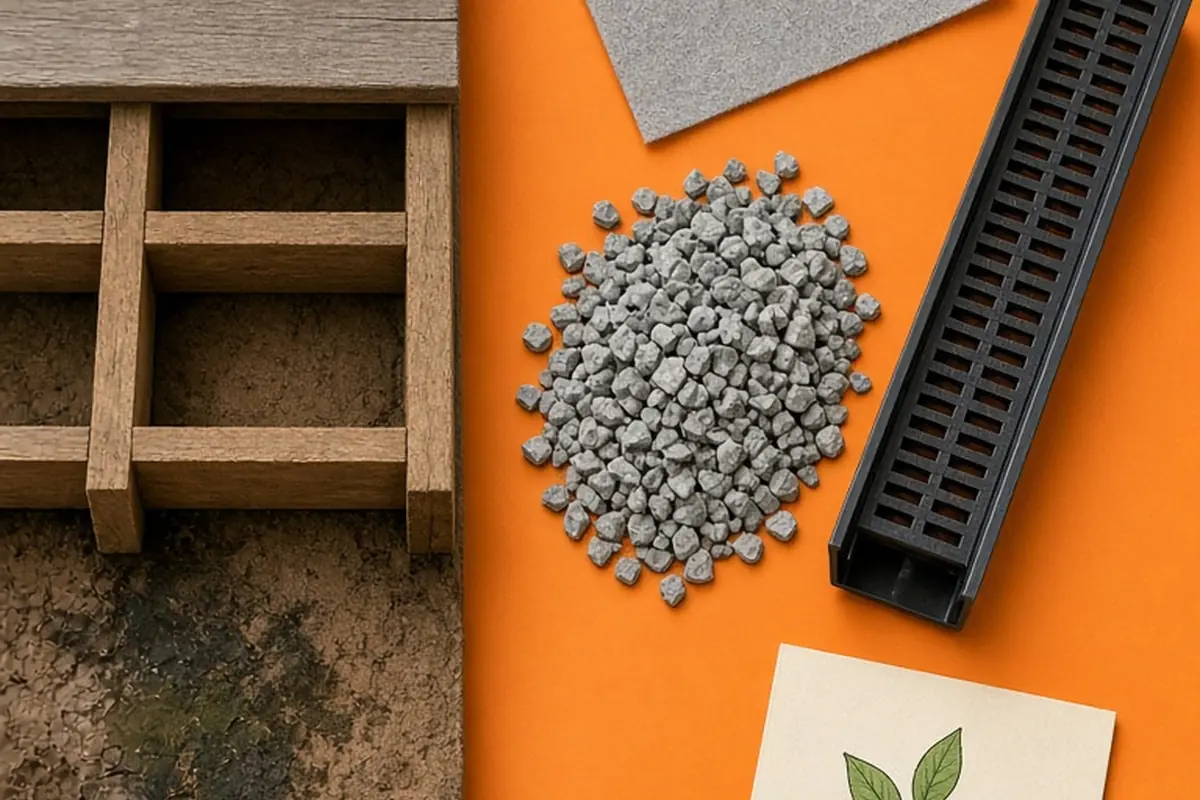
To control moisture under a deck, install commercial-grade non-woven geotextile landscape fabric over a sloped dirt base, topped with two to four inches of washed crushed gravel. For elevated decks requiring dry space underneath, pair joist-mounted drainage troughs and gutters with this stone base. This combination stops weed growth, facilitates rapid runoff, prevents standing water puddles, and protects wooden framing from mold, rot, and ground dampness.
Unchecked dampness beneath an outdoor platform can quickly rot framing lumber, attract subterranean pests, and produce lingering musty odors around your living space. Selecting the proper underlayment and drainage materials prevents standing moisture from compromising your deck's structural longevity.
Heavy-Duty Geotextile Fabric and Crushed Stone Ground Cover
The standard and most reliable method for treating the ground beneath a residential deck involves laying heavy-duty, non-woven geotextile landscape fabric and covering it with a layer of washed, angular crushed gravel. Geotextile fabric acts as a permeable barrier that suppresses weed growth and keeps stone from sinking into the subsoil while still allowing surface water to percolate downward naturally. Unlike impermeable plastic sheeting, non-woven polypropylene geotextile fabric breathes, preventing surface pooling and allowing ground vapor to equalize rather than condensing against the underside of deck joists.
On top of the fabric, apply a uniform two- to four-inch layer of washed crushed stone, such as number fifty-seven gravel, crushed granite, or clean river rock. Angular crushed stone locks together to create a stable, mud-free walking or maintenance surface while leaving ample void space for water to drain freely away from the structure. For example, a homeowner building a ground-level deck over damp soil can clear surface vegetation, smooth the soil grade, roll out overlapping fabric sheets secured with landscape staples, and spread angular gravel to eliminate mud splash against low-hanging joists. A key trade-off is that gravel adds manual labor and weight during installation, and rounded decorative stones can roll easily if the under-deck area is sloped steeply.
Under-Joist Drainage Troughs and Ceiling Systems for Elevated Decks
When an elevated or second-story deck leaves usable patio space below, ground cover alone is insufficient to manage rainwater dripping through deck board gaps. Under-deck drainage systems solve this by installing channeled troughs made of heavy-gauge polyethylene, EPDM rubber, or corrugated vinyl directly between or beneath the support joists. These troughs catch water as it falls through the deck boards, funneling it along a gentle downward slope into an exterior gutter and downspout assembly mounted along the perimeter rim joist.
There are two primary styles of trough systems: over-joist membranes that are draped before the decking boards are installed, and under-joist panel systems that can be retrofitted onto existing structures. Over-joist systems provide superior protection because they completely shield the top surfaces of the wooden joists from water exposure, significantly reducing the risk of wood rot. For instance, installing an EPDM funnel system during new construction creates a fully dry, functional outdoor room underneath that can safely house patio furniture or outdoor entertainment components. The main limitation is that retrofitting an over-joist system requires removing all existing deck boards, while under-joist systems leave framing exposed to moisture running through the joints before it reaches the lower ceiling pan.
Perforated French Drains and Swales for High Water Tables
In yards characterized by heavy clay soil, natural hillside runoff, or high water tables, surface gravel and fabric may not move water fast enough to keep the under-deck area dry. In these environments, installing a dedicated subsurface French drain or a gravel-lined swale provides a mechanical pathway to divert high volumes of water away from structural footings and foundation walls. A French drain consists of a sloped trench containing perforated corrugated or rigid PVC pipe wrapped in a silt-filtering fabric sleeve and backfilled with coarse gravel.
Positioning the drainage trench along the high side of the deck footprint captures incoming surface runoff before it can settle underneath the structure. For example, a property situated at the base of a sloped lawn can feature a French drain routed around the deck perimeter that collects ground runoff and discharges it safely thirty feet away into a dry well or roadside storm channel. While highly effective for severe moisture problems, French drains require significant excavation, precise slope calibration of at least one percent grade, and periodic maintenance of the discharge outlet to clear accumulated leaves or animal nesting material.
Soil Regrading and Positive Slope Requirements
No ground covering or trough system can function effectively if the underlying soil is graded improperly. Before placing any fabric, gravel, or drainage pipes, the ground beneath the deck footprint must be shaped to establish a positive slope that directs water away from the home's foundation and support piers. The soil should maintain a downward slope of at least one-quarter inch per linear foot, or a two percent grade, extending out past the outer perimeter of the deck frame.
Failing to regrade the ground creates low spots and basins where moisture collects beneath the gravel layer, leading to hidden pools of stagnant water that elevate local humidity and accelerate wood rot. In practical applications, this involves removing loose organic topsoil, filling depressions with compacted clay-sand subsoil, and using a builder's level to verify a steady downward fall away from the ledger board. The primary trade-off of thorough regrading is the physical effort required to excavate and tamp down subsoil in tight, low-clearance conditions, particularly when working underneath an existing deck structure.
Problematic Materials to Avoid Underneath Exterior Decks
Certain common landscaping materials should never be used under a deck because they actively trap moisture, restrict drainage, or promote organic decay. Wood mulch, bark chips, and shredded leaves act like dense sponges, soaking up rainwater and maintaining prolonged high humidity directly beneath the joists. Furthermore, organic ground covers decompose over time, generating heat, attracting carpenter ants and termites, and fostering fungal colonies that can migrate onto the structural wood framing.
Similarly, standard solid plastic sheeting or non-breathable black polyethylene tarps should be avoided when used without proper grading and gravel ballast. Bare plastic traps condensation on both sides, creating slimy pools of stagnant water that cannot seep into the soil and emit foul odors during warm weather. Artificial turf is another problematic choice under low decks because it catches falling organic debris between deck gaps, preventing thorough cleaning and holding moisture against the ground surface. Instead, prioritize inert, inorganic, free-draining materials that do not retain standing water or provide nourishment for biological growth.
Perimeter Skirting and Cross-Ventilation Strategies
Managing under-deck moisture requires addressing airborne humidity in addition to liquid ground runoff. Even with excellent fabric and gravel underlayment, enclosing a deck perimeter with solid, unvented skirting boards creates a dark, humid greenhouse effect that prevents soil dampness from evaporating. Adequate cross-ventilation ensures that outdoor air currents circulate underneath the deck, carrying evaporated moisture away before it can saturate wooden joists, ledger boards, and fasteners.
When installing skirting for aesthetic or animal-deterrent purposes, choose materials that permit continuous airflow, such as traditional lattice, vertical decorative slats with half-inch gaps, or solid composite skirting fitted with integrated screened louvers. For instance, placing louvered foundation vents on opposite sides of an enclosed deck skirt establishes a cross-breeze that naturally sweeps out damp air. The main compromise when selecting high-airflow skirting is balancing ventilation with animal deterrence; lattice openings must be narrow enough or reinforced with wire mesh along the interior to prevent rodents and raccoons from nesting in the dry gravel layer.
Illustrative Scenarios
Resolving Chronic Dampness Under a Low-Clearance Backyard Deck
A homeowner observed recurring mildew stains on decking boards and a persistent musty odor rising from a low-clearance deck built twelve inches above bare soil. Rainwater from the lawn drained toward the house foundation, creating muddy puddles beneath the joists that never fully dried between storms. To fix the issue, the homeowner temporarily lifted several decking boards, excavated the accumulated organic topsoil, and reshaped the ground to establish a firm two percent slope away from the foundation. The bare dirt was covered with heavy-duty non-woven geotextile fabric, anchored with steel pins, and topped with three inches of washed crushed granite. Slotted perimeter drain pipes were set into a gravel trench along the outer rim to intercept yard runoff.
Key point: Pairing soil regrading with permeable geotextile fabric, crushed rock, and perimeter drainage eliminates standing puddles and maintains dry air circulation even in low-clearance spaces.
Frequently asked questions
Can I put black plastic sheeting under my deck instead of landscape fabric?
Non-permeable black plastic sheeting is generally not recommended because it traps condensation, prevents rainwater from absorbing into the soil, and creates stagnant puddles. Heavy-duty non-woven geotextile landscape fabric is a better choice because it suppresses weeds while allowing water and air to move naturally through the ground.
How thick should the gravel layer be under a deck?
A layer of two to four inches of washed crushed gravel or clean angular stone is ideal for most residential decks. This thickness provides sufficient weight to hold the underlying fabric in place, prevents mud splash during heavy rains, and leaves plenty of void space for surface water to drain.
Is rubber mulch safe to use under a deck for moisture control?
While rubber mulch does not decompose like wood mulch, it still traps fine organic debris, slows down soil evaporation, and can present a fire hazard if exposed to stray embers or electrical wiring. Clean crushed stone or pea gravel over permeable geotextile fabric remains a safer, more durable, and more effective ground cover.
Do I need to install gutters if I put a drainage trough system under my elevated deck?
Yes, an under-deck trough system must channel its collected water into an exterior gutter and downspout assembly along the outer perimeter. Without a connected gutter system, the concentrated water runoff will pour off the edge of the troughs, eroding the soil below and splashing against structural posts.
Your next step
Inspect your sub-deck area after the next heavy rain to check for standing water, and calculate the slope before purchasing your geotextile fabric and washed crushed stone.